
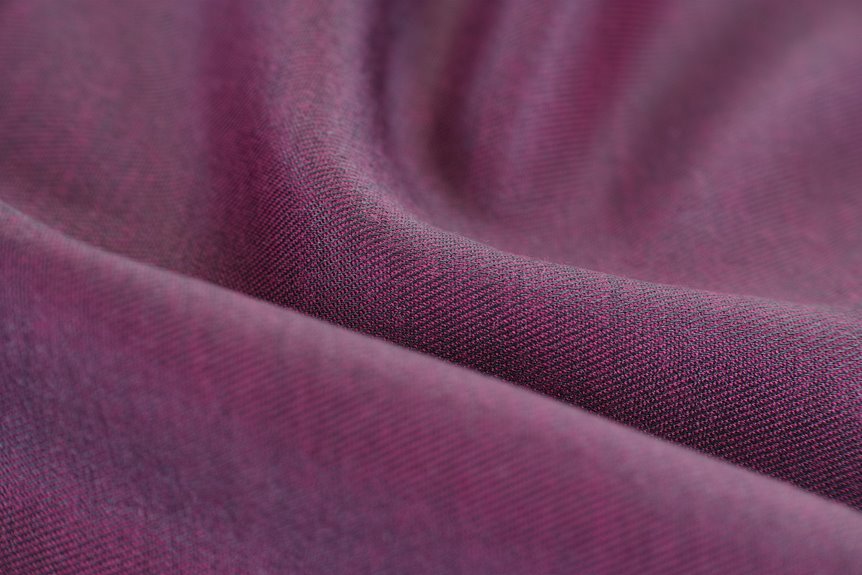
You’ll find velvet isn’t very breathable because its dense weave and plush texture trap heat and limit airflow. It feels soft and luxurious but holds warmth, making it less comfy in hot weather. While velvet works great for cozy clothing and upholstery, it’s not ideal if you need ventilation or moisture-wicking. If you want to understand how fiber types and fabric weight impact velvet’s comfort, keep exploring this guide.
Key Takeaways
- Velvet’s dense weave and plush pile limit airflow, making it less breathable than cotton, linen, or silk fabrics.
- Natural fiber velvets offer better ventilation than synthetic blends, enhancing breathability and comfort in clothing.
- Velvet is ideal for cooler weather clothing like jackets and dresses but unsuitable for hot, humid conditions.
- As upholstery, velvet traps heat and moisture, potentially causing warmth and mildew without proper maintenance.
- Blending velvet with natural or synthetic fibers can improve moisture management, durability, and overall breathability.
What Makes Velvet Unique in Texture and Weave
Velvet stands out because of its distinctive texture and weaving method. When you touch velvet, you feel its soft, plush surface created by tiny loops or cut fibers that rise above the base fabric. This pile gives velvet that luxurious, smooth feel you often associate with elegance.
The weaving process involves two layers of fabric woven simultaneously, then cut apart to create the pile, making the fabric dense and rich. This unique construction not only affects how velvet looks and feels but also influences how it interacts with air and moisture.
Understanding this texture and weave helps you appreciate why velvet behaves differently compared to other fabrics, especially when it comes to comfort and airflow.
Factors Affecting Velvet’s Breathability
Although the luxurious feel of velvet is appealing, its breathability depends on several key factors you should consider. The fiber type, fabric weight, and weave density all influence how well velvet lets air pass through. Natural fibers like cotton or silk offer better ventilation than synthetic ones. Heavier or densely woven velvet traps heat and moisture, reducing breathability. When choosing velvet for comfort, paying attention to these details helps you find the right balance between softness and airflow.
| Factor | Effect on Breathability |
|---|---|
| Fiber Type | Natural fibers improve airflow |
| Fabric Weight | Heavier velvet limits ventilation |
| Weave Density | Tighter weave reduces breathability |
Comparing Breathability: Velvet vs. Other Fabrics
Understanding how fiber type, fabric weight, and weave density affect breathability can help you better compare velvet to other fabrics.
Considering fiber, weight, and weave density is key to comparing fabric breathability like velvet versus others.
Velvet’s dense weave and pile often trap heat, making it less breathable than lighter fabrics. Here’s how velvet stacks up:
- Cotton: Lightweight and loosely woven, cotton offers excellent airflow, keeping you cool.
- Linen: Known for its natural breathability and moisture-wicking, linen surpasses velvet comfortably.
- Silk: Though smooth, silk’s fine weave allows moderate breathability, better than thick velvet.
- Velvet: Its plush texture provides warmth but limits air circulation, making it less ideal in hot conditions.
When choosing fabric for comfort, consider velvet’s warmth versus the cooling properties of other materials to suit your needs perfectly.
Velvet in Clothing: Comfort and Suitability
If you’re considering velvet for your wardrobe, comfort and suitability depend largely on the garment’s purpose and the climate.
Velvet feels soft and luxurious against your skin, making it great for special occasions or cooler weather. However, it’s less breathable than cotton or linen, so wearing velvet in hot or humid conditions might leave you feeling warm and uncomfortable.
You’ll find velvet works well for jackets, dresses, or skirts intended for evening wear or fall and winter seasons.
When choosing velvet clothing, look for blends with natural fibers to improve breathability and moisture management.
Ultimately, velvet can add elegance and comfort if you match it to the right environment and occasion—just avoid wearing it when you expect to get hot or sweaty.
Using Velvet for Upholstery: Heat and Moisture Considerations
When you choose velvet for upholstery, you should consider how it handles heat and moisture to keep your furniture comfortable and durable.
Velvet tends to trap heat due to its dense pile, which can make sitting for long periods feel warm. It also absorbs moisture, which may lead to stains or mildew if not properly maintained.
Here’s what you need to know:
- Velvet’s thickness limits airflow, so it’s less breathable than some fabrics.
- It can retain body heat, making it cozy but potentially warm in hot climates.
- Moisture absorption means spills require quick cleaning to avoid damage.
- Choose velvet blends with synthetic fibers for better moisture resistance and durability.
Understanding these factors helps you enjoy velvet upholstery without compromising comfort.
Frequently Asked Questions
How Should Velvet Be Cleaned to Maintain Its Softness?
You should gently vacuum or brush velvet to remove dust, spot clean with mild detergent, and avoid soaking it. For best results, take velvet items to a professional cleaner to keep them soft and plush.
Can Velvet Cause Allergies or Skin Irritation?
Velvet itself rarely causes allergies, but you might react to dust mites or chemicals used in manufacturing. If you have sensitive skin, test a small area first to avoid irritation or consult a dermatologist before use.
What Is the Environmental Impact of Producing Velvet?
You should know velvet production often consumes lots of water and energy, especially synthetic types. It can involve chemicals harming ecosystems. Choosing eco-friendly or recycled velvet reduces your environmental footprint considerably.
Are There Different Types of Velvet for Various Uses?
Think of velvet as a versatile chameleon; you’ll find silk velvet for luxury garments, cotton velvet for casual wear, and synthetic velvet for upholstery. Each type suits different needs, balancing comfort, durability, and style perfectly.
How Does Velvet Age Over Time With Regular Use?
You’ll notice velvet softens and develops a unique patina with regular use. However, it can also show wear like crushing or fading, so rotating cushions and gentle cleaning help keep it looking fresh longer.