
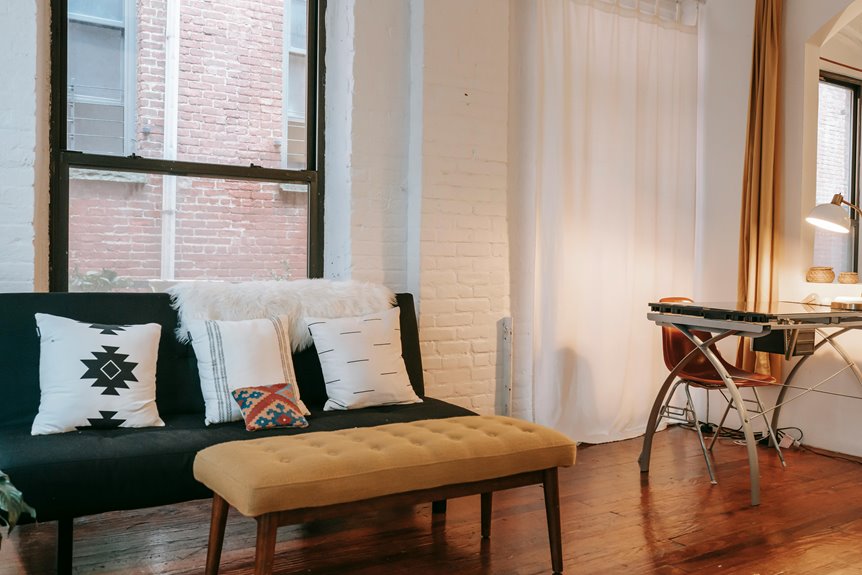
If you’re considering suede fabric for your sofa, you’ll appreciate its soft, luxurious texture and cozy appeal. It’s durable enough for everyday use but can stain easily and needs careful maintenance like regular brushing and protection. Suede adds warmth and elegance but may fade in direct sunlight and attract dust, so it’s best for low-traffic areas. If you want a balance of style and care, exploring suede’s pros and cons further can help you decide.
Key Takeaways
- Suede offers a soft, luxurious texture that enhances comfort and aesthetic appeal in sofas.
- It is durable but requires careful maintenance to prevent stains, fading, and wear.
- Suede is breathable, providing warmth without trapping heat, ideal for cozy living spaces.
- Regular cleaning and protection sprays are necessary to maintain suede’s appearance and longevity.
- Suede sofas are a higher-cost investment best suited for low-traffic areas and mindful owners.
What Is Suede Fabric?
Suede fabric is a type of leather with a soft, napped finish created by sanding the underside of animal hide. When you touch it, you’ll notice its velvety texture, which comes from this unique process.
Unlike traditional leather, suede doesn’t have a glossy surface—it feels more casual and inviting. You can find suede made from various animal skins, such as lamb, goat, or calf, each offering slightly different softness and durability.
Because it’s the inner layer, suede tends to be thinner and more flexible than full-grain leather. When you choose suede, you’re opting for a material that combines natural leather’s strength with a plush, tactile appeal.
It’s this blend that sets suede apart in both fashion and home décor.
Key Characteristics of Suede for Upholstery
One of the main draws of this fabric for upholstery is its soft, luxurious feel that instantly adds warmth and comfort to any sofa.
When you choose suede, you’ll notice its unique napped texture that gives it a velvety surface, making it inviting to touch.
Suede is also breathable, which means it won’t trap heat, keeping your seating cozy without overheating.
It’s a flexible material, allowing it to conform nicely to the sofa’s shape, enhancing both fit and aesthetics.
While suede can show marks from water or stains, its natural fibers offer durability if you handle it with care.
Understanding these key characteristics helps you appreciate why suede remains a popular choice for those valuing style and tactile comfort in upholstery.
Advantages of Using Suede on Sofas
When you pick a fabric that feels as inviting and durable as suede, you’re already setting your sofa up for style and comfort.
Suede offers a unique blend of softness and resilience that enhances your living space. You’ll appreciate how it elevates the look and feel of your sofa, making it a cozy spot for relaxation.
Here are some advantages of using suede on sofas:
- Luxurious texture that feels soft to the touch
- Warmth and comfort, perfect for cozy settings
- Visually appealing matte finish with subtle depth
- Durable enough to withstand daily use
- Easily complements various interior design styles
Choosing suede means you’re investing in both elegance and function for your sofa.
Common Drawbacks of Suede Sofas
Although suede adds a touch of luxury to your sofa, it demands extra care to keep its appearance intact.
You’ll find that suede easily shows stains and watermarks, so spills can quickly become a problem. It’s also prone to fading if exposed to direct sunlight for long periods, which can dull its rich look.
Suede tends to attract dust and pet hair, requiring frequent vacuuming or brushing to stay clean. You should know that it’s less durable than some other fabrics, so heavy use may lead to quicker wear and tear.
Suede attracts dust and pet hair, needing regular cleaning and may wear out faster with heavy use.
Plus, cleaning suede isn’t straightforward—you can’t just throw it in the wash, and professional cleaning might be necessary to avoid damage.
These drawbacks mean you’ll need to be mindful before choosing suede for your sofa.
Comparing Suede to Other Sofa Fabrics
Understanding suede’s limitations helps when you compare it to other sofa fabrics like leather, microfiber, or cotton. Each material offers unique benefits and drawbacks, so knowing these differences can guide your choice.
- Leather is durable and easy to clean but can feel cold and may crack over time.
- Microfiber resists stains and is budget-friendly but lacks the luxury feel suede offers.
- Cotton feels breathable and natural but stains easily and wears faster.
- Suede provides a soft, elegant texture but requires careful upkeep and isn’t water-resistant.
- Synthetic suede alternatives mimic the look but can vary in quality and durability.
Maintenance Tips for Suede Upholstery
Since suede requires delicate care, you’ll need to adopt specific maintenance habits to keep your sofa looking its best. Regularly brushing the fabric with a suede brush helps lift dirt and maintain softness. Avoid water spills as they can stain; instead, blot immediately with a dry cloth. Use a suede protector spray to guard against stains and fading.
| Task | Frequency | Tip |
|---|---|---|
| Brushing | Weekly | Use a soft suede brush |
| Vacuuming | Bi-weekly | Use a brush attachment |
| Spot Cleaning | As needed | Blot, don’t rub |
| Protectant Spray | Every 6 months | Apply evenly in a well-ventilated area |
| Avoid Direct Sunlight | Always | Prevent color fading |
These simple habits will keep your suede sofa fresh and inviting.
How Suede Holds Up to Daily Wear and Tear
You’ll want to know how suede stands up to daily wear and tear, especially when it comes to scratches and stains.
Suede can be delicate, so understanding its durability is key to keeping your sofa looking great.
Let’s explore how it handles those everyday challenges.
Durability Against Scratches
Although suede looks luxurious, it requires careful handling to stay scratch-free. This fabric is more prone to visible marks compared to tougher materials, so you’ll want to take extra precautions.
Here’s what you should keep in mind to protect your suede sofa from scratches:
- Avoid placing sharp objects nearby.
- Keep pets’ nails trimmed to prevent accidental damage.
- Use a soft brush to gently lift fibers and minimize scratch visibility.
- Rotate cushions regularly to distribute wear evenly.
- Address minor scratches promptly with a suede eraser or specialized cleaner.
If you follow these steps, your suede sofa can maintain its elegant look longer, but remember, it won’t withstand rough treatment as well as some other fabrics.
Handle it gently to preserve its beauty.
Resistance to Stains
One challenge you’ll face with suede sofas is their sensitivity to stains from everyday spills and dirt. Suede’s porous texture easily absorbs liquids, making stains tricky to remove. You’ll need to act quickly to blot spills and avoid rubbing, which can damage the fabric. While suede can resist light dust and dirt with regular brushing, heavy soiling requires professional cleaning. Here’s a quick look at suede’s stain resistance compared to other materials:
| Fabric Type | Stain Resistance |
|---|---|
| Suede | Low – absorbs stains |
| Leather | High – easy to wipe |
| Microfiber | Moderate – water-resistant |
| Cotton | Low – stains easily |
| Velvet | Moderate – delicate |
Knowing suede’s limits helps you keep your sofa looking fresh longer.
Ideal Living Spaces for Suede Sofas
You’ll want to choose the right room for your suede sofa to keep it looking great.
Consider how your climate affects suede’s durability and how often the sofa will be used. These factors play a big role in making suede a smart choice for your living space.
Best Room Choices
When choosing the best room for your suede sofa, consider spaces that balance comfort with moderate use. Suede offers a soft, inviting texture that works well in rooms where you want to relax but avoid heavy wear and tear.
Think about areas that get good light but aren’t exposed to direct sunlight all day to preserve suede’s look.
Ideal rooms for suede sofas include:
- Living rooms with controlled foot traffic
- Cozy reading nooks
- Formal sitting rooms
- Guest lounges
- Home offices with casual seating
These spaces let you enjoy suede’s luxurious feel without risking damage from spills or excessive friction.
Climate Suitability
Although suede sofas bring a luxurious touch to any room, their comfort depends heavily on the surrounding climate.
If you live in a dry, temperate area, suede can be an excellent choice because it breathes well and won’t trap moisture. However, in humid or damp climates, suede may absorb excess moisture, leading to mildew or damage over time.
You’ll want to avoid placing suede sofas in rooms with high humidity, like bathrooms or poorly ventilated basements. Conversely, in cooler, dry environments, suede feels soft and cozy without becoming sticky or uncomfortable.
Ultimately, if you’re mindful of your local climate and maintain proper ventilation, a suede sofa can enhance your living space beautifully without compromising durability or comfort.
Usage Frequency Impact
A suede sofa works best in spaces where usage is moderate rather than constant. If you use your sofa heavily every day, suede can wear out quickly and show stains or marks more easily.
To keep your suede sofa looking great, consider placing it in areas with less traffic. Ideal spots include:
- Formal living rooms
- Guest rooms
- Home offices
- Reading nooks
- Lounges or sitting areas
In these settings, your suede sofa will maintain its softness and elegance without enduring constant abrasion.
If you have kids or pets, suede mightn’t be the best choice for your main seating. Instead, save it for spaces where you can enjoy its luxury without worrying about heavy wear and tear.
Cost Considerations When Choosing Suede
Since suede offers a luxurious look and soft texture, you might expect it to come with a higher price tag compared to other fabrics.
Suede sofas often cost more upfront due to the quality of the leather and the detailed manufacturing process.
Keep in mind, though, that maintenance costs can add up. Suede requires special cleaners and regular care to maintain its appearance, so you’ll want to budget for that too.
On the upside, investing in suede means you’re getting durability and style that can last for years if properly cared for.
If you’re on a tight budget, consider faux suede alternatives, which mimic the look but cost less and are easier to maintain.
Ultimately, balance your desire for luxury with your financial comfort zone.
Frequently Asked Questions
Can Suede Sofas Be Customized With Different Colors or Patterns?
You can customize suede sofas with various colors, but patterns are trickier since suede’s texture suits solid shades best. Still, you can find dyed options or combine suede with other fabrics for patterned looks.
Is Suede Fabric Hypoallergenic for Sensitive Individuals?
You might find suede fabric isn’t the best if you’re sensitive, as it can trap dust and allergens. It’s not hypoallergenic, so cleaning often helps reduce irritation and keeps your space comfortable for you.
How Environmentally Friendly Is the Production of Suede Upholstery?
Imagine knights debating sustainability! You’ll find suede upholstery production uses chemicals and water, impacting the environment. Unless you choose eco-friendly options, it’s not the greenest pick. Look for vegetable-tanned or recycled suede alternatives instead.
Are There Any Notable Brands Specializing in Suede Sofas?
You’ll find brands like Restoration Hardware and West Elm offering suede sofas known for quality and style. They specialize in durable, comfortable designs, so you can trust their suede pieces to enhance your living space beautifully.
Can Suede Sofa Cushions Be Replaced or Reupholstered Easily?
Think of suede sofa cushions like puzzle pieces; you can replace or reupholster them, but it takes skill and care. You’ll want a professional to guarantee the fabric stays soft and the fit stays perfect.