
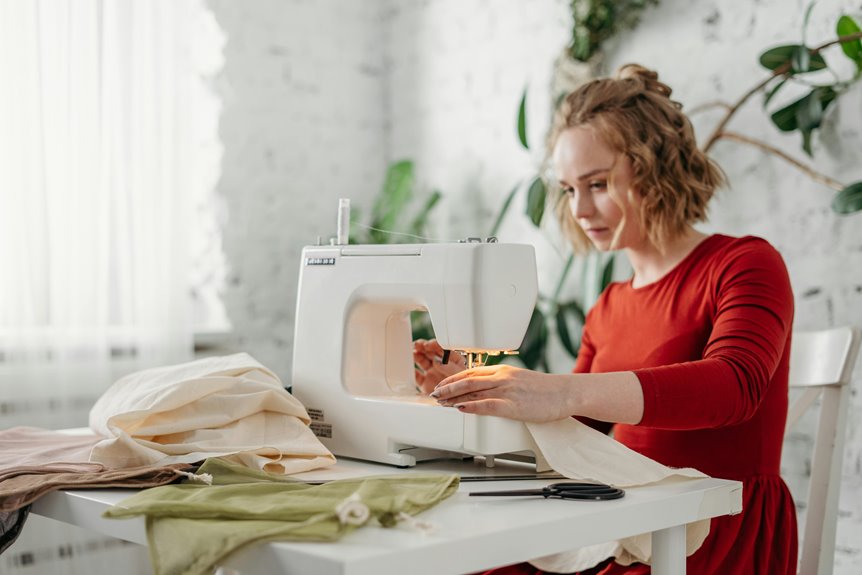
You’ll find scuba knit fabric great for crafts because it’s durable, smooth, and has a bit of stretch that helps you shape projects easily. It holds its form well, so your creations look polished and professional. While its thickness can make cutting and sewing a bit tricky, using the right tools and techniques keeps it manageable. If you want to explore popular craft ideas and tips for working with scuba knit, there’s plenty more to discover.
Key Takeaways
- Scuba knit fabric holds shape well, making it ideal for structured and three-dimensional craft projects.
- Its smooth, thick texture offers durability and a polished, professional look for crafts.
- Slight stretch in scuba knit allows easy shaping without tearing during crafting.
- The fabric resists wrinkles and frays minimally, reducing finishing work and maintaining neatness.
- Sewing scuba knit can be challenging due to thickness, requiring specific needles and stitches for best results.
Characteristics of Scuba Knit Fabric
Scuba knit fabric stands out for its smooth texture, thickness, and slight stretch, making it both durable and flexible. When you work with it, you’ll notice its neoprene-like feel, offering a bit of cushion without being too heavy.
It resists wrinkles and holds its shape well, so your projects won’t sag or lose form over time. The fabric’s thickness adds structure, which helps when you want clean lines or a sculpted look. You’ll also find it has a subtle sheen, giving your creations a polished finish.
Because it’s a double-knit fabric, it’s reversible and doesn’t fray easily, which means less hemming and finishing work for you. Overall, scuba knit is a versatile fabric with unique properties that make it stand out.
Advantages of Using Scuba Knit in Craft Projects
With its smooth texture and sturdy structure, this fabric offers several advantages for craft projects. You’ll find scuba knit holds its shape well, making it ideal for three-dimensional creations like bags or decorative items.
Its slight stretch lets you work with ease, shaping pieces without worrying about tearing or fraying. The fabric’s thickness gives your crafts a polished, professional look while providing durability.
Plus, scuba knit’s resistance to wrinkles means your finished projects stay crisp and neat without extensive ironing. You’ll also appreciate how easy it’s to sew, whether by hand or machine, thanks to its stable knit.
Potential Challenges When Crafting With Scuba Knit
Although this fabric offers many benefits, you might encounter a few challenges when crafting with it. Scuba knit’s thickness and stretch can make it tricky to cut precisely, so you’ll want sharp scissors or a rotary cutter to get clean edges.
Sewing can be a bit challenging too; the fabric’s bulk may cause your machine to skip stitches or create uneven seams unless you adjust the tension and use a ballpoint needle. Also, seams can become bulky, affecting the final shape of your project.
Because scuba knit doesn’t fray much, you might be tempted to skip finishing edges, but it’s still best to secure them for durability.
Finally, if your project requires intricate details, this fabric’s firmness might limit delicate shaping or draping.
Popular Craft Ideas Using Scuba Knit Fabric
You’ll find plenty of creative ways to use scuba knit fabric in your projects. Its smooth texture and stretch make it perfect for crafting stylish bags and clutches that hold their shape well.
You can also create modern home décor items like cushion covers or sleek table runners, adding a polished look to your space.
If you enjoy wearable crafts, scuba knit works great for making structured skirts, dresses, or even trendy tops that fit comfortably yet maintain a crisp silhouette.
For accessories, consider crafting bold headbands or statement scarves. Its durability means your creations will last.
With its versatility and easy-to-clean surface, scuba knit lets you experiment confidently across a range of stylish and functional projects.
Tips for Working Effectively With Scuba Knit
Because scuba knit has a thick, stretchy texture, handling it requires specific techniques to get clean, professional results.
First, use sharp scissors or a rotary cutter to achieve precise cuts without fraying. Pin your fabric carefully but sparingly, since too many pins can leave marks or distort the stretch.
When sewing, opt for a stretch stitch or a narrow zigzag to maintain fabric flexibility. Use a walking foot or a stretch needle on your machine to prevent skipped stitches.
Avoid pressing seams too hard; instead, use a low-heat iron with a pressing cloth to protect the fabric’s surface.
Finally, test your techniques on scrap pieces before working on your actual project to avoid costly mistakes and guarantee your craft turns out just right.
Frequently Asked Questions
Is Scuba Knit Fabric Eco-Friendly or Sustainable?
You won’t find scuba knit fabric very eco-friendly since it’s usually made from synthetic fibers like polyester and nylon. These rely on petrochemicals and aren’t biodegradable, so they don’t rank high in sustainability.
Can Scuba Knit Fabric Be Used for Clothing Alterations?
If altering clothing feels like fitting puzzle pieces, scuba knit fabric’s stretch and structure make it a perfect match. You’ll find it easy to sew and reshape, giving your garments a sleek, modern twist effortlessly.
How Does Scuba Knit Fabric Compare to Neoprene?
You’ll find scuba knit fabric softer and more stretchable than neoprene, making it easier to sew. Neoprene’s thicker and sturdier, perfect for structured projects. Both have unique benefits depending on your crafting needs.
Is Scuba Knit Fabric Suitable for Outdoor Craft Projects?
When it comes to outdoor crafts, you can count on scuba knit fabric to hold its own. It’s water-resistant and durable, so you won’t have to worry about it falling apart in the rain or sun.
Where Can I Buy Scuba Knit Fabric in Bulk?
You can buy scuba knit fabric in bulk from online fabric stores like Fabric.com, Mood Fabrics, or Etsy. Check wholesale suppliers and local textile markets too—they often offer better prices and allow you to feel the fabric before buying.