
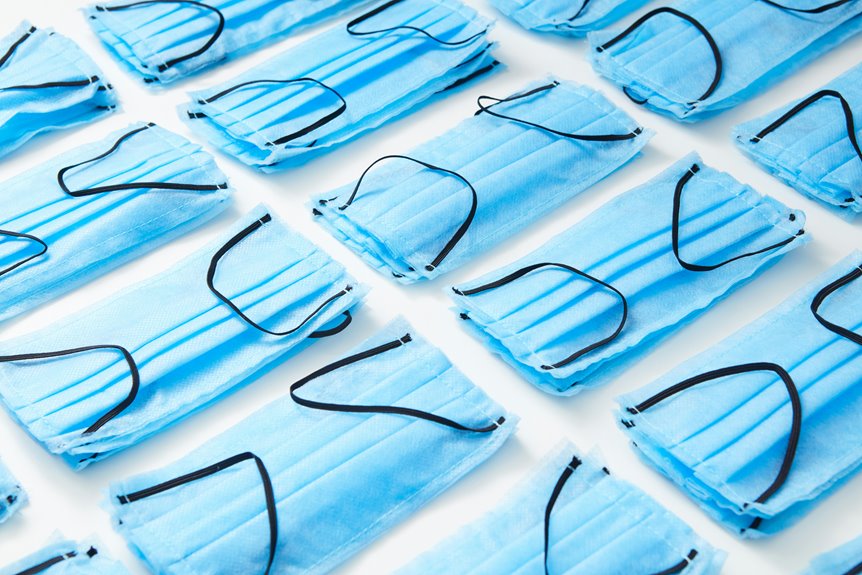
You can trust polypropylene fabric for face masks since it’s lightweight, moisture-resistant, and filters particles effectively. Medical masks use multiple polypropylene layers, including an electrostatic meltblown filter that enhances protection. Consumer masks also offer comfort and durability but make sure they’re medical-grade to avoid skin irritation or poor filtration. While safe to wear, keep in mind their environmental impact and proper disposal. If you want to understand more about these masks’ benefits and precautions, keep exploring.
Key Takeaways
- Polypropylene is safe for face masks when medical-grade or food-grade, offering effective filtration and moisture resistance.
- Medical masks use spunbond and meltblown polypropylene layers for durability and particle filtration with electrostatic charge.
- Consumer polypropylene masks provide breathability, lightweight comfort, and moisture repellence suitable for extended wear.
- Avoid masks with dyes or chemicals to prevent skin irritation; monitor for redness or itching and discontinue if reactions occur.
- Proper disposal is crucial as polypropylene masks are not biodegradable and can pollute environments if not handled responsibly.
What Is Polypropylene Fabric?
Polypropylene fabric is a type of synthetic material made from polymer fibers. When you look at it, you’ll find it lightweight, durable, and resistant to moisture.
You mightn’t realize it, but polypropylene is commonly used in everyday products like reusable shopping bags, carpets, and even upholstery. The fibers are created through a process called polymerization, which transforms propylene gas into solid strands.
These strands are then woven or nonwoven into fabric sheets. Because it’s synthetic, polypropylene doesn’t absorb water easily, making it quick-drying and less prone to bacteria growth.
Woven or nonwoven, polypropylene fabric resists water, dries quickly, and helps reduce bacteria growth.
You’ll also notice it’s relatively inexpensive to produce, which is why manufacturers favor it for various applications. Understanding what polypropylene fabric is helps you appreciate why it’s chosen for face masks and other protective gear.
Properties of Polypropylene Relevant to Face Masks
One key advantage you’ll notice in this fabric is its excellent filtration capability, which plays an essential role in face masks.
Polypropylene’s unique combination of properties makes it ideal for blocking particles without making breathing difficult. Here’s what you should know:
- Hydrophobic nature: It repels moisture, preventing droplets from penetrating the mask, which enhances protection.
- Lightweight yet durable: You can wear masks made from polypropylene comfortably for extended periods without discomfort.
- Electrostatic charge retention: This fabric can hold an electrostatic charge that attracts and traps airborne particles, boosting filtration efficiency.
These characteristics guarantee polypropylene fabric not only filters effectively but also remains breathable and comfortable during use.
How Polypropylene Is Used in Medical Face Masks
When you wear a medical face mask, its effectiveness largely depends on how well the materials inside filter out harmful particles. Polypropylene plays a vital role here.
Manufacturers use spunbond and meltblown polypropylene layers to create a barrier that captures airborne droplets and microscopic particles. The spunbond layers provide structure and durability, while the meltblown layer acts as the primary filter.
This meltblown polypropylene is electrostatically charged, which helps trap viruses and bacteria more efficiently without making it hard to breathe. Because polypropylene is lightweight, breathable, and moisture-resistant, it enhances comfort during extended wear.
Medical masks combine multiple polypropylene layers to balance filtration and breathability, ensuring you get reliable protection in clinical settings. This specific design makes polypropylene indispensable in the performance of medical face masks.
Consumer Face Masks Made With Polypropylene
When you choose consumer face masks made with polypropylene, you get lightweight, breathable protection that filters particles effectively.
It’s important to know how this material keeps you safe while staying comfortable.
You’ll also want to contemplate proper use and cleaning to maintain the mask’s benefits.
Material Benefits Explained
Although you mightn’t notice it at first, polypropylene fabric offers several key benefits that make it ideal for consumer face masks. When you choose masks made from this material, you get durability, comfort, and effective filtration, all in one.
Here’s why polypropylene stands out:
- Lightweight and Breathable: It allows air to flow easily, so you won’t feel suffocated during extended wear.
- Moisture-Resistant: Polypropylene repels water, reducing dampness and keeping the mask dry and comfortable.
- Electrostatic Filtering: The fabric can trap tiny particles, enhancing protection without adding bulk.
These advantages mean you get a mask that fits well, feels comfortable, and offers solid defense against airborne particles during everyday use.
Safety Considerations
Polypropylene fabric offers impressive benefits for face masks, but understanding safety considerations is just as important to ascertain you’re protected.
When you choose a mask made from polypropylene, verify it’s made with food-grade or medical-grade material to avoid harmful additives. You should also check for certifications or testing that verify filtration efficiency and breathability.
While polypropylene is generally safe, poorly manufactured masks might shed microfibers, so always buy from reputable sources. Additionally, avoid masks that contain dyes or chemicals that could irritate your skin or cause allergic reactions.
Proper cleaning and handling are essential too; polypropylene masks often resist moisture but should be replaced regularly to maintain effectiveness.
Breathability and Comfort of Polypropylene Masks
Since you’ll likely wear a face mask for extended periods, breathability and comfort become essential factors.
Polypropylene fabric is known for being lightweight and allowing air to pass through easily, which helps you breathe more comfortably compared to denser materials.
Here are three key points about polypropylene masks’ breathability and comfort:
- Moisture-Wicking: Polypropylene repels moisture, keeping the inside of the mask dry and reducing discomfort caused by sweat buildup.
- Soft Texture: The fabric feels smooth on your skin, minimizing irritation during long wear.
- Flexible Fit: Polypropylene masks often adapt well to your face shape, ensuring a snug but comfortable seal without excessive pressure.
Potential Allergies or Skin Reactions to Polypropylene
While polypropylene masks offer comfort and breathability, some people may experience allergies or skin reactions when wearing them. If you have sensitive skin, you might notice redness, itching, or irritation after prolonged use. These reactions are usually mild but can be uncomfortable. To help you understand, here’s a quick overview:
| Symptom | Cause | Recommendation |
|---|---|---|
| Redness | Friction or material allergy | Use masks with soft liners |
| Itching | Allergic contact dermatitis | Apply hypoallergenic barrier creams |
| Rash | Prolonged moisture contact | Take breaks and keep dry |
If you notice persistent discomfort, consider switching fabrics or consulting a dermatologist. Remember, proper mask hygiene also reduces skin issues.
Effectiveness of Polypropylene Masks in Filtration
When you choose a mask, filtration efficiency plays an essential role in your protection.
Polypropylene masks stand out due to their strong ability to filter particles while remaining breathable. Here’s why they’re effective:
- Electrostatic Properties: Polypropylene fibers carry an electrostatic charge that attracts and traps airborne particles, including viruses and bacteria.
- Multiple Layers: Masks often use several nonwoven layers of polypropylene, enhancing filtration without sacrificing comfort.
- Particle Size Filtration: These masks can filter out droplets and aerosols as small as 0.3 microns, covering a broad range of airborne contaminants.
Environmental Impact of Polypropylene Face Masks
You mightn’t realize that polypropylene face masks pose challenges because they don’t biodegrade easily.
If you don’t recycle or dispose of them properly, they can contribute to environmental pollution.
Let’s explore how waste management plays an essential role in reducing their impact.
Biodegradability Challenges
Because polypropylene is a durable plastic, it doesn’t break down easily in the environment. When you discard polypropylene face masks, they can persist for decades, leading to several biodegradability challenges.
You should understand these to grasp the environmental impact fully:
- Slow Decomposition: Polypropylene can take hundreds of years to decompose naturally, meaning masks accumulate in landfills and ecosystems.
- Microplastic Formation: As masks degrade, they fragment into microplastics, which contaminate soil and water, harming wildlife and entering food chains.
- Lack of Natural Enzymes: Unlike biodegradable materials, polypropylene resists microbial breakdown because natural enzymes can’t easily digest its chemical structure.
Knowing these challenges highlights why proper disposal and alternatives matter when considering polypropylene masks’ environmental footprint.
Recycling and Waste Management
Addressing the biodegradability challenges of polypropylene face masks means tackling how we handle their disposal and recycling.
You should know that these masks aren’t biodegradable, so improper disposal adds to landfill waste.
Recycling polypropylene is possible, but it requires specialized facilities since masks often mix with other materials or get contaminated.
To reduce environmental impact, you can look for mask recycling programs or drop-off points designed specifically for PPE.
Avoid throwing masks in regular bins without considering local recycling options.
By separating and properly disposing of polypropylene masks, you help prevent them from ending up in oceans or landfills.
Taking responsibility for mask waste guarantees better recycling outcomes and supports sustainability efforts while keeping public health in mind.
Environmental Pollution Concerns
While polypropylene face masks protect public health, they also contribute considerably to environmental pollution. When you discard these masks improperly, they often end up in oceans and landfills, where they can take hundreds of years to decompose.
As you use more masks, the environmental burden grows, especially since polypropylene is a plastic derived from fossil fuels. Here are three key pollution concerns you should consider:
- Microplastic Release: Over time, masks break down into tiny microplastics, contaminating water and soil.
- Wildlife Harm: Animals can ingest mask fragments or get entangled, causing injury or death.
- Carbon Footprint: Production and disposal of masks emit greenhouse gases, contributing to climate change.
Being mindful about mask disposal and choosing reusable options when possible can help reduce these impacts.
Comparing Polypropylene With Other Mask Materials
Although many materials are available for face masks, polypropylene stands out for its unique combination of filtration efficiency and breathability.
Polypropylene uniquely balances effective filtration with comfortable breathability in face masks.
When you compare it to cotton, polypropylene filters out finer particles better while still allowing easier airflow, making it more comfortable for extended wear.
Unlike polyester or nylon, polypropylene’s electrostatic properties help trap airborne particles without adding stiffness.
You might find natural fibers softer, but they often lack the same protective qualities.
Polypropylene also dries quickly, reducing the chance of moisture buildup, which can harbor bacteria.
While materials like silk offer some filtration, they typically don’t match polypropylene’s balance of safety and comfort.
Guidelines for Safe Use and Disposal of Polypropylene Masks
To guarantee polypropylene masks provide effective protection, you need to use and dispose of them properly. Follow these guidelines to assure safety and maintain mask efficiency:
- Use Once, Then Dispose: Polypropylene masks are typically designed for single use. Don’t reuse them, as contamination and reduced filtration can occur.
- Avoid Touching the Mask Surface: Handle masks by the ear loops or ties to prevent transferring germs to your hands or face.
- Dispose Responsibly: Place used masks in a sealed trash bag to minimize environmental contamination and wash your hands immediately afterward.
Frequently Asked Questions
Can Polypropylene Masks Be Reused After Washing?
You shouldn’t reuse polypropylene masks after washing because water and detergent can damage their filtration layers. Instead, use disposable masks as designed, or opt for reusable cloth masks specifically made to withstand washing safely.
How Does Polypropylene Fabric Affect Mask Fit and Seal?
You want a snug fit, yet polypropylene’s stiffness can make seals tricky. It holds shape well, unlike softer fabrics, but you might struggle to get that perfect contour, impacting comfort and protection. Adjust carefully!
Are There Any Treatments Applied to Polypropylene Masks?
Yes, manufacturers often treat polypropylene masks with antimicrobial coatings or electrostatic charges to improve filtration. These treatments help trap particles better and reduce bacterial growth, enhancing your mask’s protective performance and hygiene.
What Is the Cost Difference Between Polypropylene and Other Mask Materials?
Imagine you’re comparing masks: polypropylene ones often cost less than cotton or silk masks. For example, polypropylene masks typically run about 30-50% cheaper, making them a budget-friendly option without sacrificing essential protection.
Do Polypropylene Masks Cause Environmental Pollution When Incinerated?
When you incinerate polypropylene masks, they can release harmful chemicals and pollutants into the air. You should consider proper disposal methods to minimize environmental impact and avoid contributing to air pollution and toxic emissions.