
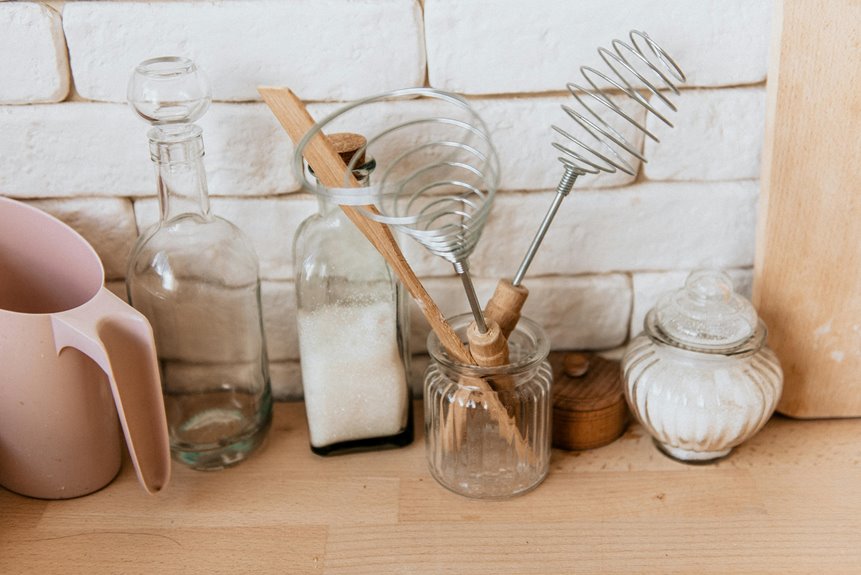
You can safely use polyamide kitchen utensils and containers as long as they meet food-grade or FDA-approved standards. Polyamide is durable, heat-resistant, and lightweight, making it great for everyday cooking. However, be cautious of low-quality products that might leach chemicals, especially at high heat or with acidic foods. Always choose reputable brands and check for visible wear before use. If you want to understand more about safety and benefits, keep exploring the details.
Key Takeaways
- Polyamide kitchenware is generally food-safe when it meets FDA and EFSA regulations for food contact materials.
- High-quality polyamide resists heat, stains, and odors, making it suitable for cooking utensils and containers.
- Low-grade or damaged polyamide may release harmful chemicals, especially under high heat or with acidic foods.
- Always choose polyamide products labeled as food-grade and free from harmful additives like BPA or phthalates.
- Inspect polyamide utensils regularly for wear and avoid using items with cracks to maintain safety and hygiene.
Understanding Polyamide and Its Uses in Kitchenware
Polyamide, commonly known as nylon, plays a significant role in kitchenware due to its durability and heat resistance. When you choose kitchen tools made from polyamide, you’re opting for items that withstand high temperatures without melting or warping.
This material feels lightweight yet sturdy, making utensils like spatulas, tongs, and ladles easy to handle during cooking. You’ll also find polyamide in food storage containers and lids because it resists cracking and maintains its shape over time.
Since it doesn’t absorb moisture, polyamide products help keep your kitchen hygienic and reduce the risk of bacterial growth. Its versatility and resilience make it a popular choice for everyday kitchen essentials you rely on for safe and efficient food preparation.
Safety Standards and Regulations for Polyamide in Food Contact
When you use kitchenware made from polyamide, you want to be sure it meets strict safety standards to protect your health.
Polyamide products intended for food contact must comply with regulations set by agencies like the FDA in the US and EFSA in Europe. These regulations limit harmful substances, ensuring polyamide won’t leach unsafe chemicals into your food.
Polyamide kitchenware meets FDA and EFSA standards to prevent harmful chemical leaching into your food.
Manufacturers test polyamide utensils and containers for migration levels, durability, and heat resistance before approval.
Look for certifications or labels indicating compliance with food safety laws. This way, you can confidently use polyamide kitchenware without worrying about contamination.
Always buy from reputable brands that follow these guidelines, so your utensils remain safe during everyday cooking and food storage.
Advantages of Using Polyamide in Utensils and Containers
Because you use utensils and containers every day, choosing materials that combine durability and safety matters.
Polyamide stands out because it’s strong and heat-resistant, making your kitchen tools last longer without warping or melting. You’ll appreciate how polyamide resists stains and odors, keeping your utensils fresh and clean with minimal effort.
It’s also lightweight, so handling your containers and tools feels comfortable and effortless. Plus, polyamide’s flexibility means it won’t easily crack or break, even with regular use.
Since it’s compatible with dishwashers, cleaning won’t be a hassle for you. Overall, polyamide offers a practical balance of toughness, safety, and ease of maintenance, helping you maintain a hygienic and efficient kitchen environment every day.
Potential Health Concerns Related to Polyamide
Although polyamide offers many benefits, you should be aware of potential health concerns linked to its use in food utensils and containers.
One issue is the possibility of chemical migration, especially when polyamide is exposed to high heat or acidic foods. Some polyamide products may contain additives or residual monomers that could leach into your food, posing health risks over time.
Additionally, not all polyamide materials are created equal—low-quality or improperly manufactured items might release harmful substances. You should also consider that repeated use and wear can degrade polyamide surfaces, increasing the chance of contamination.
While research is ongoing, it’s important to use polyamide products as intended and avoid exposing them to extreme conditions that could compromise their safety.
Tips for Choosing Safe Polyamide Kitchen Products
To guarantee your polyamide kitchen products are safe, you need to pay close attention to their quality and certifications. Look for products labeled as food-grade or FDA-approved, which confirms they meet safety standards.
Choose items from reputable brands that provide transparent information about their materials. Avoid polyamide products that contain harmful additives like BPA or phthalates.
Check for heat resistance ratings to verify they won’t release chemicals when exposed to high cooking temperatures. Inspect for any visible damage or wear before use, as cracks can harbor bacteria and increase chemical leaching.
Finally, follow the manufacturer’s care instructions carefully to maintain product integrity. By staying vigilant, you can confidently select polyamide kitchen tools that are both durable and safe for everyday cooking.
Frequently Asked Questions
How Does Polyamide Compare to Silicone in Heat Resistance?
You’ll find polyamide handles heat well, typically up to 400°F, but silicone outperforms it, resisting temperatures up to 500°F or more. So, if you need stronger heat resistance, silicone’s your better choice.
Can Polyamide Utensils Be Recycled Easily?
You might find recycling polyamide utensils challenging because they require specialized facilities. Not all curbside programs accept them, so check local recycling options carefully to guarantee your polyamide items are processed properly and don’t end up in landfill.
What Is the Environmental Impact of Polyamide Production?
Oh, you’ll love how polyamide production chugs along, guzzling fossil fuels and belching greenhouse gases like a champ. You’re basically hosting a climate party, but hey, at least your utensils look sleek while the planet heats up!
Are Polyamide Kitchen Tools Dishwasher Safe?
You can usually put polyamide kitchen tools in the dishwasher, but check the manufacturer’s instructions first. High heat might cause some items to warp or degrade, so hand washing is often safer to keep them lasting longer.
Does Polyamide Retain Odors or Stains From Food?
Like a stubborn guest, polyamide sometimes holds onto odors and stains from strong foods. You’ll notice slight retention, but regular washing usually clears it up, keeping your utensils fresh and ready for the next meal.