
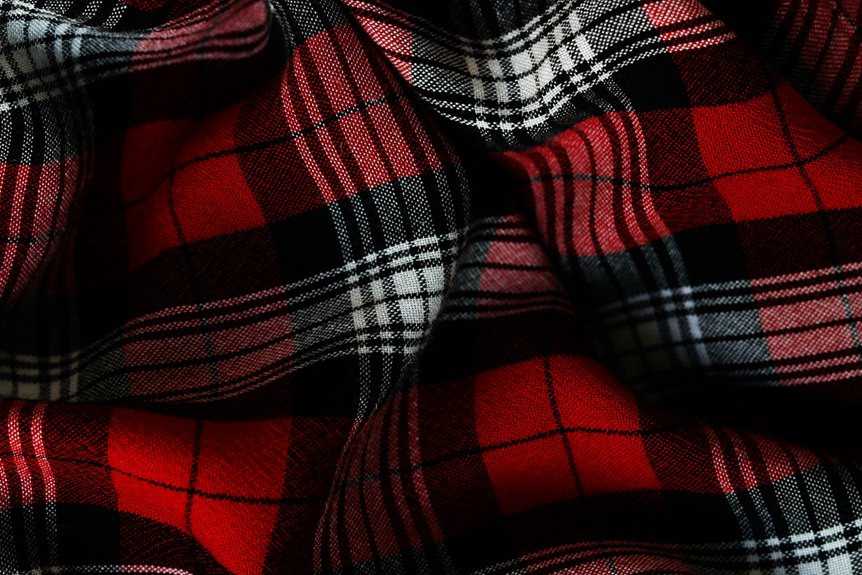
Percale and flannel aren’t the same—they have distinct feels and uses. Percale is a tightly woven, crisp, and cool cotton fabric, perfect for warm weather thanks to its breathability. Flannel, on the other hand, is brushed for softness and warmth, making it ideal for colder seasons. Both offer comfort but serve different needs. If you want to pick the right fabric for your sheets or clothes, exploring their unique qualities will help you decide.
Key Takeaways
- Percale is a tightly woven, crisp, and lightweight cotton fabric with a smooth matte finish, while flannel is soft, brushed, and fuzzy for warmth.
- Percale promotes breathability and coolness, ideal for warm climates, whereas flannel traps heat, making it suitable for cold weather.
- Percale’s plain weave creates a smooth, cool surface, in contrast to flannel’s brushed weave that produces a cozy, napped texture.
- Percale is more durable and wrinkle-resistant, lasting longer with proper care, while flannel tends to wear faster due to its brushed fibers.
- Percale is commonly used for summer bedding and lightweight clothing, whereas flannel is preferred for winter sheets, pajamas, and warm accessories.
What Is Percale Fabric?
Percale fabric is a type of closely woven cotton or cotton-blend material known for its crisp, cool feel. When you touch percale, you’ll notice its smooth, matte finish, which comes from a simple one-over-one-under weave.
This weave gives the fabric durability and a lightweight texture that breathes well, making it perfect for warmer climates or those who tend to sleep hot. You’ll find percale sheets popular because they maintain a fresh, cool sensation throughout the night.
Plus, they tend to get softer with each wash without losing their firmness. If you prefer a clean, crisp look and a revitalizing feel in your bedding, percale is a great choice that balances comfort and durability effortlessly.
What Is Flannel Fabric?
While percale offers a cool and crisp feel, flannel provides a contrasting experience that’s all about warmth and softness.
When you choose flannel fabric, you’re opting for comfort during chilly nights. Here’s what you should know:
- Flannel is typically made from cotton, wool, or synthetic fibers, giving it a cozy touch.
- It feels soft because of its brushed surface, which traps heat effectively.
- Flannel is perfect if you want insulation without bulk, keeping you snug.
- You’ll often find flannel in bedding and shirts designed for colder seasons.
The Weave and Texture Differences
Because the weave and texture directly affect how fabric feels and performs, understanding their differences is key when choosing between percale and flannel.
Percale features a tight, plain weave with a one-over-one-under pattern, creating a crisp, smooth surface that feels cool and breathable against your skin. You’ll notice percale’s matte finish and lightweight texture, perfect for warmer climates or if you prefer a fresh, airy feel.
Flannel, on the other hand, uses a twill or plain weave but is brushed after weaving to create a soft, fuzzy texture. This brushing raises the fibers, giving flannel a cozy, warm feel that traps heat well.
Material Composition of Percale and Flannel
The feel and performance you get from percale and flannel don’t just come from their weave; the fibers they’re made from play a big role too.
Understanding what each fabric contains helps you pick the right bedding for your needs.
- Percale is usually made from 100% cotton, giving it a crisp, lightweight feel.
- Flannel often uses cotton too, but it can include wool or synthetic blends for extra softness.
- Cotton fibers in percale create a smooth surface that stays cool and fresh.
- Flannel’s napped surface comes from brushing the fibers, making it extra cozy but slightly heavier.
Knowing these material differences lets you choose between a cool, crisp sheet or a warm, plush one without guessing.
Breathability and Warmth Comparison
If you tend to sleep hot or live in a warm climate, you’ll appreciate how percale’s crisp weave promotes excellent airflow, keeping you cool throughout the night.
Percale’s lightweight and breathable nature helps wick moisture away, preventing overheating.
Percale’s breathable weave efficiently wicks moisture, keeping you comfortably cool and dry all night long.
On the other hand, flannel is designed to trap warmth with its brushed, fuzzy surface.
If you often feel chilly or want cozy bedding for cold seasons, flannel provides superior insulation by holding in body heat.
While percale excels at breathability and staying cool, flannel shines in warmth and softness.
Choosing between them depends on your temperature preferences: pick percale for a fresh, airy feel or flannel for snug comfort during colder months.
Both fabrics cater to different needs in breathability and warmth.
Durability and Care Instructions
You’ll want to contemplate how long each fabric lasts and how it handles regular wear.
Taking care of your sheets properly can extend their life and keep them looking fresh.
Let’s look at the best washing and maintenance tips for percale and flannel.
Longevity and Wear
Although both percale and flannel offer comfort, their longevity depends on how you care for them and the wear they endure.
Percale, with its tight weave, generally resists pilling and maintains crispness longer, making it ideal if you prefer a cooler, smooth feel.
Flannel, softer and warmer, can show wear faster, especially if exposed to heavy friction.
To maximize lifespan, keep these points in mind:
- Avoid overstretching or rough use to prevent fabric distortion.
- Rotate your bedding regularly to distribute wear evenly.
- Store in a cool, dry place to avoid mildew or fabric weakening.
- Address small tears or snags promptly to prevent worsening damage.
Washing and Maintenance
Since proper washing and maintenance directly impact the durability of your bedding, you’ll want to follow specific care instructions for percale and flannel.
Percale, made from tightly woven cotton, thrives with regular machine washing in cold or warm water using a gentle detergent. Avoid bleach to keep colors vibrant and tumble dry on low heat to prevent shrinkage.
For flannel, use cold water and a mild detergent to preserve its softness and prevent pilling. Skip high heat when drying; instead, tumble dry on low or air dry to maintain its cozy texture.
Both fabrics benefit from prompt removal after washing to minimize wrinkles. By following these tailored steps, you’ll extend the life and comfort of your percale and flannel bedding.
Seasonal Suitability for Each Fabric
You’ll want to think about warmth and breathability when choosing between percale and flannel.
Percale offers a cool, crisp feel perfect for warmer months, while flannel provides cozy insulation for colder seasons.
Understanding their ideal seasonal use helps you pick the right fabric to stay comfortable year-round.
Warmth and Breathability
When choosing between percale and flannel, understanding their warmth and breathability helps you pick the right fabric for each season.
Percale, with its crisp weave, offers excellent breathability, keeping you cool when temperatures rise. Flannel, on the other hand, is brushed to trap heat, providing cozy warmth in colder weather.
Consider these points:
- Percale’s tight weave allows air circulation, preventing overheating.
- Flannel’s napped surface creates insulation by trapping body heat.
- Percale feels lightweight and crisp, ideal if you tend to sweat at night.
- Flannel feels soft and plush, perfect for chilly evenings or cooler climates.
Knowing these traits, you can select the fabric that best matches your comfort needs throughout the year.
Ideal Seasonal Usage
Although both percale and flannel offer unique benefits, choosing the right fabric depends largely on the season you plan to use it.
Percale’s crisp, breathable nature makes it perfect for warmer months. You’ll stay cool and comfortable on hot summer nights since it promotes airflow and wicks moisture effectively.
On the other hand, flannel shines during colder seasons. Its soft, brushed texture traps heat, keeping you cozy when temperatures drop.
If you want year-round versatility, you might switch between the two depending on the weather—use percale sheets in spring and summer, then switch to flannel for fall and winter.
Popular Uses of Percale Fabric
Percale fabric shines in bedding thanks to its crisp texture and breathable weave. You’ll find it perfect for keeping cool on warm nights.
Ideal for warm nights, percale fabric offers a crisp texture and breathable weave for cool, comfortable bedding.
Beyond bedding, here are four popular uses you should know about:
- Bed Sheets and Pillowcases: Percale offers a smooth, matte finish that feels fresh and cool, ideal for everyday sleep comfort.
- Lightweight Shirts: Its durability and breathability make percale a favorite for casual, breathable shirts.
- Summer Dresses: The fabric’s crispness holds shape well, giving summer dresses a structured, neat appearance.
- Table Linens: Percale’s tight weave resists wrinkles and stains, making it a practical choice for tablecloths and napkins.
You’ll appreciate percale’s versatility, especially when you want a fabric that’s crisp, cool, and easy to care for.
Common Applications of Flannel Fabric
Because flannel is soft, warm, and cozy, it’s a top choice for cold-weather clothing and home textiles. You’ll find flannel commonly used in everything from comfy pajamas to snug bedding, helping you stay warm and comfortable.
Here’s a quick look at common flannel fabric applications:
| Category | Item Examples | Purpose |
|---|---|---|
| Clothing | Pajamas, shirts | Warmth, softness |
| Bedding | Sheets, blankets | Comfort, insulation |
| Accessories | Scarves, hats | Heat retention |
| Home Decor | Curtains, throws | Cozy ambiance |
When you choose flannel, you’re opting for fabric that combines practicality with a cozy feel, perfect for chilly days and nights.
Price Points and Value Considerations
When choosing between percale and flannel, you’ll notice some differences in cost that reflect their materials and manufacturing.
You should also weigh how durable each fabric is against its price to get the best value.
Thinking about long-term benefits can help you make a smarter investment for your bedding.
Cost Differences Explained
Understanding the cost differences between percale and flannel can help you make a smarter purchase.
Both fabrics vary in price due to their unique qualities and production processes. Here’s what you should consider:
- Material Quality: Percale is often woven from long-staple cotton, making it pricier than some flannel options.
- Weave Density: Percale’s tight weave can raise costs, while flannel’s looser weave usually means lower prices.
- Finish and Feel: Flannel’s brushed finish adds warmth but involves extra processing, which can increase its price.
- Brand and Source: Premium brands or organic materials for either fabric will impact the cost.
Durability Versus Expense
Although percale and flannel differ in price, their durability often justifies the expense.
When you invest in percale, you get a tightly woven fabric that stands up well to frequent washing and daily use without losing its crisp feel.
Flannel, made from brushed fibers, offers warmth but can show wear faster, especially if you don’t care for it properly.
You’ll find that percale’s longevity means fewer replacements, saving you money over time despite the higher upfront cost.
Flannel might be cheaper initially, but its softer texture can wear out sooner, meaning you might spend more replacing it.
So, when deciding, consider how long you want your fabric to last against its price.
Durability directly impacts value, helping you make a smart choice.
Long-Term Investment Benefits
Choosing between percale and flannel goes beyond just price and durability; it’s about how each fabric serves your needs over time.
You want to evaluate the long-term investment benefits to get the best value. Here’s what to keep in mind:
- Initial Cost: Percale tends to be more affordable upfront, while flannel usually carries a higher price due to its warmth and texture.
- Longevity: Percale’s crisp weave resists pilling and stays smooth after many washes, giving you lasting quality.
- Seasonal Use: Flannel’s warmth makes it a smart choice for colder months, potentially reducing your need for extra blankets.
- Maintenance: Percale is easier to care for, saving you time and money on special washing instructions.
Think about your lifestyle and climate to decide which fabric truly offers the best long-term value.
How to Choose Between Percale and Flannel
How do you decide which fabric suits your needs best?
Start by considering your climate and sleep preferences. If you tend to get hot at night or live in a warmer area, percale’s crisp, breathable feel is ideal. It keeps you cool and comfortable.
On the other hand, if you prefer warmth and softness, especially in colder months, flannel’s cozy, brushed texture will suit you better.
Next, think about maintenance: percale resists pilling and gets softer with washing, while flannel may require gentler care to maintain its plushness.
Finally, factor in your budget and style preference—both fabrics offer durability but differ in look and feel.
Choose the one that matches your comfort needs and lifestyle.
Frequently Asked Questions
Can Percale and Flannel Be Mixed in Bedding Sets?
You can mix percale and flannel in bedding sets, but expect different textures and warmth. Percale is crisp and cool, while flannel feels soft and cozy. Combining them adds variety and comfort to your sleep space.
Are Percale and Flannel Fabrics Eco-Friendly?
You’d think soft, cozy fabrics like flannel and crisp percale scream “eco-warrior,” but nope. Their eco-friendliness depends on cotton sourcing and production methods, so you’ll want to check labels before feeling green about your sheets.
Do Percale and Flannel Fabrics Shrink After Washing?
You’ll find both percale and flannel can shrink after washing, especially if you use hot water or high heat drying. To prevent this, wash in cold water and tumble dry low or air dry your fabrics carefully.
Which Fabric Is Better for People With Sensitive Skin?
Soft, smooth, and soothing, percale pampers your sensitive skin better than flannel’s fuzzy feel. You’ll find percale’s crisp, clean cotton causes less irritation, making it a smarter, safer sleep solution for sensitive sleepers.
Can Percale or Flannel Fabrics Be Used for Upholstery?
You can use flannel for upholstery since it’s soft and warm, but percale isn’t ideal because it’s lightweight and crisp. Flannel’s durability and cozy feel make it better suited for furniture coverings.