
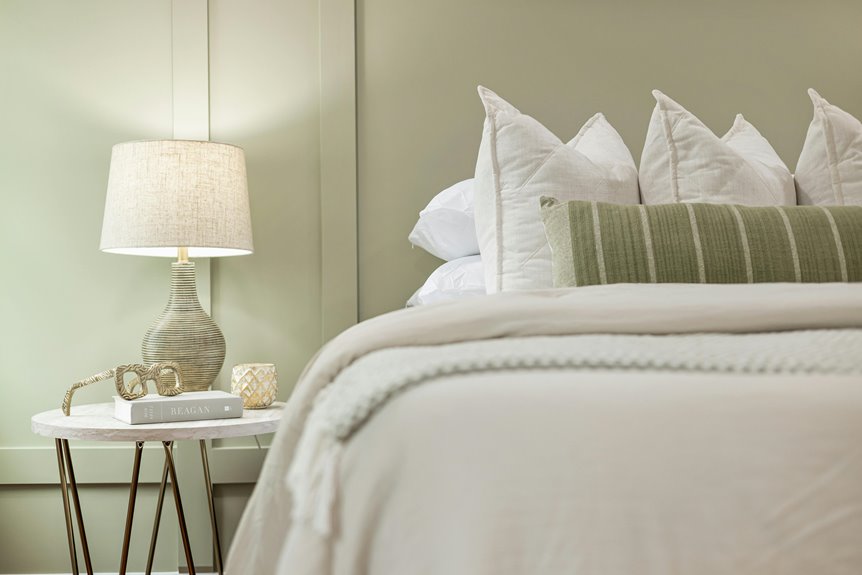
You’ll find percale generally more durable than sateen because its tight, plain weave resists friction and wear better over time. Percale’s crisp texture holds up well with regular use, especially if made from long-staple cotton or blended fibers. Sateen feels softer with a silky sheen but is more prone to snagging and pilling due to its satin weave floats. If you want to maximize your sheets’ lifespan, understanding these factors will help you make a lasting choice.
Key Takeaways
- Percale’s tight one-over, one-under weave makes it more resistant to abrasion and daily wear than sateen’s satin weave.
- Sateen’s longer float threads provide softness but increase susceptibility to snagging and pilling over time.
- High-quality long-staple cotton in percale enhances strength, often making it more durable than sateen with typical cotton fibers.
- Percale fabrics with moderate thread counts balance durability and breathability better than the denser, heavier sateen weaves.
- Proper care, including gentle washing and low-heat drying, extends the lifespan of both, but percale generally withstands wear better.
Understanding Percale Weave Structure
Percale weave creates a crisp, matte fabric by weaving threads in a simple one-over, one-under pattern.
When you look closely, you’ll see this tight, balanced structure gives percale its durability. Each thread crosses over one and under one, ensuring even tension across the fabric.
This method not only makes percale feel cool and breathable but also strengthens the material, helping it resist wear and tear over time.
You’ll find this weave common in high-quality bed linens that need to withstand frequent washing without losing shape or texture.
Unlike more complex weaves, percale’s straightforward construction minimizes friction between threads, so the fabric stays smooth and intact longer.
If durability matters to you, understanding this weave is essential.
Characteristics of Sateen Weave
While percale‘s simple weave emphasizes durability and breathability, sateen takes a different approach with its structure. You’ll notice sateen uses a satin weave, which means more threads float on the surface, giving it a smooth, silky feel.
This weave affects durability and texture in several ways:
- Float Threads: Longer floats make sateen softer but less resistant to abrasion.
- Luster: The weave reflects light, creating a subtle sheen.
- Weight: Sateen tends to feel heavier and denser than percale.
- Pilling: The surface is more prone to pilling due to the floats catching on rough surfaces.
Understanding these traits helps you decide if sateen’s luxurious feel outweighs its slightly lower durability compared to percale.
Fiber Types Commonly Used in Percale and Sateen
Because the fabric’s feel and durability largely depend on the fibers used, knowing which materials are common in percale and sateen can help you make a better choice.
Percale often features cotton fibers, especially long-staple cotton like Egyptian or Pima, which offer strength and breathability. You’ll also find blends with polyester that increase durability and wrinkle resistance without sacrificing much comfort.
Sateen typically uses cotton as well but tends to favor fibers with a silkier finish, enhancing softness. Some sateen fabrics incorporate synthetic fibers too, boosting resilience and sheen.
When you choose either weave, focus on fiber quality—high-quality cotton will last longer and feel better. That way, you get a fabric that suits your durability needs and comfort preferences perfectly.
Impact of Thread Count on Durability
You might wonder how thread count affects the durability of percale and sateen sheets.
Thread count refers to the number of threads woven into one square inch of fabric, and higher counts often mean a denser weave.
However, more threads don’t always guarantee stronger sheets, so it’s important to understand the balance between count and quality.
Thread Count Basics
Understanding thread count is key when comparing the durability of percale and sateen sheets. Thread count refers to the number of threads woven into one square inch of fabric. Here’s what you need to know:
- A higher thread count usually means tighter weaving, which can enhance durability.
- Too low a thread count might make sheets feel rough and wear out faster.
- Extremely high thread counts don’t always guarantee better durability and may affect breathability.
- Both percale and sateen have ideal thread count ranges that balance strength and comfort.
Higher Count Effects
While increasing thread count can strengthen fabric, it doesn’t always guarantee better durability for percale and sateen sheets.
When you go beyond a certain thread count, typically around 300 to 400, the benefits start to plateau. For percale, a higher thread count means a tighter weave, which can resist wear and tear better, but pushing it too high can make the fabric less breathable and prone to pilling.
In sateen, a higher thread count gives a smoother, silkier feel, but the long floats in the weave become more vulnerable to snagging and abrasion over time.
How Weave Density Influences Longevity
Because weave density directly impacts fabric strength, it plays an essential role in determining how long percale and sateen sheets last.
When you choose sheets, understanding weave density helps you pick options that withstand daily use better.
Here’s how it influences longevity:
- Tight Weaves Increase Durability – Higher density means threads are closely packed, reducing wear.
- Loose Weaves Wear Out Faster – Gaps between threads can cause quicker fabric breakdown.
- Percale’s Plain Weave – Typically has a balanced, tight weave, enhancing its lifespan.
- Sateen’s Satin Weave – Though denser, its floats can snag, affecting durability despite high density.
Resistance to Wear and Tear: Percale vs. Sateen
Though both percale and sateen offer unique textures, their resistance to wear and tear differs considerably.
When you choose percale, you get a fabric woven tightly with a plain weave, making it more resilient to daily friction and abrasion. This means percale holds up better over time, especially if you toss and turn a lot in bed.
Sateen, with its satin weave, feels smoother and silkier but tends to be more prone to snagging and pilling. If you’re rough on your sheets or have pets with claws, sateen might show signs of wear sooner.
Effects of Washing and Care on Fabric Life
Understanding how percale and sateen respond to washing and care helps you extend their lifespan beyond just their natural durability.
Both fabrics require gentle handling, but the nuances in their weave mean you should adjust your approach slightly.
- Wash percale in cool or warm water to prevent fiber weakening, while sateen benefits from cold water to maintain its smooth finish.
- Use mild detergents to avoid harsh chemicals that break down fibers.
- Avoid high heat drying; air drying is best for both, though sateen is more prone to damage from heat.
- Iron percale on medium heat to keep its crispness, but use low heat for sateen to preserve its sheen.
Fading and Color Retention Over Time
When you choose between percale and sateen, considering how each fabric holds color over time can impact your satisfaction.
Percale’s matte finish and tighter weave typically resist fading better, so your sheets retain their original hue longer, even after frequent washing.
On the other hand, sateen’s silky sheen tends to show wear in color faster, especially with exposure to sunlight and harsher detergents.
If you want vibrant colors that last, percale is usually the safer bet.
However, taking care of either fabric by washing in cold water and avoiding bleach will help preserve their shades.
Ultimately, understanding how fading affects each fabric helps you pick sheets that maintain their look and feel for years to come.
Comfort and Durability Trade-offs
While both percale and sateen offer unique benefits, you’ll find that their comfort levels often come with trade-offs in durability.
When choosing between them, consider these points:
- Percale’s crisp, breathable feel makes it ideal if you prefer a cooler sleep, but its tighter weave can lead to quicker wear.
- Sateen feels silky and smooth, offering luxurious comfort, yet its softer weave tends to snag and wear down faster.
- You’ll notice percale resists pilling better, extending its lifespan despite a slightly rougher texture initially.
- Sateen’s sheen and softness may fade with frequent washing, so you trade some durability for that silky feel.
Understanding these trade-offs helps you pick sheets that balance comfort and longevity to fit your needs.
Recommendations for Prolonging Sheet Lifespan
To keep your percale or sateen sheets looking and feeling their best, you’ll want to follow a few key care tips.
Always wash them in cold or lukewarm water with a gentle detergent to prevent fabric weakening. Avoid bleach, which can break down fibers over time.
Wash sheets in cold or lukewarm water with gentle detergent; avoid bleach to protect fibers.
When drying, choose a low heat setting or air dry to minimize shrinkage and wear. Rotate your sheets regularly to distribute wear evenly and reduce stress on any one set.
Also, avoid overloading the washing machine, as crowded loads cause friction that can damage fibers.
Finally, store your sheets in a cool, dry place away from direct sunlight to prevent fading and fiber degradation.
These simple steps help extend the life of both percale and sateen sheets.
Frequently Asked Questions
Are Percale and Sateen Sheets Hypoallergenic?
You might think all sheets are the same, but percale and sateen differ. Both can be hypoallergenic if made from natural fibers, but you’ll want to check for chemical treatments that might irritate sensitive skin.
Which Fabric Is Better for Hot Sleepers?
If you’re a hot sleeper, you’ll love percale sheets. They’re crisp, breathable, and wick moisture away better than sateen, which is smoother but traps more heat. So, go with percale for cooler nights.
How Do Percale and Sateen Differ in Environmental Impact?
Think of percale as a crisp breeze—it’s often made with less water and fewer chemicals, making it eco-friendlier. Sateen feels silky but usually requires more resources, so you’ll want to check labels for sustainable choices.
Can Percale or Sateen Sheets Be Used for Upholstery?
You can use percale or sateen sheets for upholstery, but they’re not designed for heavy wear. Percale’s crisp texture suits casual looks, while sateen’s smooth finish adds elegance. Consider durability and care needs before choosing.
Do Percale and Sateen Sheets Shrink After Washing?
Like a shrinking violet, both percale and sateen sheets can shrink after washing if you use hot water or high heat drying. You’ll want to follow care labels carefully to keep them fitting just right.