
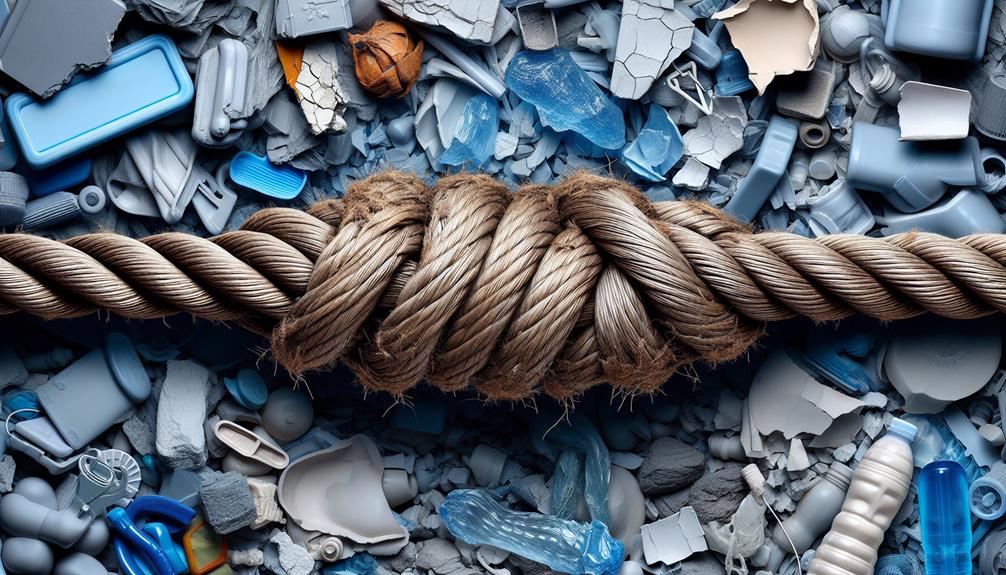
Absolutely, I've found nylon plastic to be super durable! It boasts incredible strength and can really handle tough conditions like wear, abrasion, and even harsh chemicals. Plus, it's awesome in outdoor gear, thanks to its resistance to weather, UV rays, and heavy wear. Whether it's clothes or industrial materials, nylon holds up impressively under stress and friction, making it perfect for active lifestyles or demanding industries. It also stands out compared to other plastics, especially in terms of impact resistance and dealing with heavy loads. There's a lot more to discover about its capabilities!
Key Takeaways
- Nylon plastic boasts exceptional durability, resisting wear, abrasion, and impacts effectively.
- It maintains strength under various environmental conditions, including UV rays and chemicals.
- Nylon's wear resistance makes it ideal for high-stress applications in outdoor gear and industrial materials.
- The material's ability to absorb moisture without significant degradation enhances its longevity.
- Compared to other plastics like PVC and ABS, nylon offers superior tensile strength and toughness.
Understanding Nylon Plastic
Let's dive into what makes nylon plastic such a standout choice for durability and versatility. When I think about why I often choose nylon for projects, it's mainly due to its exceptional strength and durability. This material just doesn't give up easily, making it perfect for items that need to withstand tough conditions.
Delving deeper, it's the wear properties of nylon that impress me the most. Whether it's gears, bearings, or even kitchen utensils, nylon handles repeated use and abrasion like a champ. I've noticed it doesn't just resist wear; it seems to shrug it off, prolonging the life of products significantly.
Another aspect I can't overlook is its chemical resistance. In environments where exposure to harsh chemicals is a daily affair, nylon stands strong. This resistance ensures that the material doesn't degrade or lose its integrity, which is crucial for safety and reliability in many of my projects.
Understanding these traits, it's clear why nylon is often my go-to material. It's not just about surviving; it's about thriving in challenging environments, making it a smart, cost-effective choice for both hobbyists and industry professionals alike.
Key Properties of Nylon
Let's talk about what makes nylon such a standout material.
First, its strength characteristics are impressive; it's not only strong but also resists wear like a champ. Plus, it can handle heat well and doesn't soak up moisture quickly, which adds to its versatility in various uses.
Nylon Strength Characteristics
Nylon consistently impresses with its exceptional strength and durability, making it a top choice for tough applications. This material's high strength isn't just hype; it's proven in its resistance to tearing and blunt impacts.
Nylon's wear and tear resistance is a game-changer, outperforming many alternatives. That's why you'll find it replacing lighter metals in some pretty demanding spots. Custom parts manufacturers love working with nylon because it holds up under the stresses and strains of everyday use without a hitch.
It's not just about lasting longer; it's about maintaining integrity in environments that would wear down lesser materials. So, if you're looking for a material that punches well above its weight, nylon's a solid bet.
Thermal Resistance
When considering materials for high-heat environments, nylon's impressive thermal resistance really stands out. This material isn't just about being tough; it's superbly resilient to heat exposure. With a typical operating temperature range from -40°C to 120°C, nylon holds up where others might buckle.
Its high thermal stability ensures that even at elevated temperatures, it maintains structural integrity and mechanical properties. This means no significant deformation or loss of strength—key for applications that experience thermal fluctuations.
For even more extreme conditions, there are heat-stabilized versions of nylon, boosting its temperature resistance further. So, if you're dealing with components that face heat on the regular, nylon is a reliable choice to consider.
Moisture Absorption Impact
One crucial aspect to consider about nylon is how its high moisture absorption rate can significantly alter its mechanical properties and dimensional stability. When nylon absorbs moisture, it can affect its tensile strength, impact resistance, and elongation at break. This means that in humid or wet environments, nylon parts mightn't perform as expected.
Each type of nylon absorbs moisture differently, depending on its formulation. So, it's vital for manufacturers to choose the right type of nylon for their specific applications. By understanding and planning for these changes, they can design parts that maintain their integrity and function over time.
Proper material selection and design adjustments are key to mitigating the effects of moisture absorption on nylon's performance.
Durability in Various Applications
When we look at nylon's use in outdoor gear, its strength really stands out. It's not just about lasting longer; it also resists wear superbly in clothing applications.
And in the industrial sphere, this material's longevity can't be beaten, especially when you're talking about heavy-duty use.
Outdoor Gear Strength
Nylon's ruggedness makes it a top choice for outdoor gear, enduring tough conditions like heavy wear, moisture, and UV exposure. Its durability isn't just about lasting a long time; it's about maintaining performance where it matters most. When I'm packing for a trek or setting up camp, I rely on gear that won't let me down.
- Abrasion Resistance: Nylon resists wear and tear, keeping my gear functional on rough terrain.
- High Tensile Strength: It stands up to heavy loads, perfect for securing equipment or hoisting a pack.
- Weather Resilience: Rain or shine, it holds up against the elements, ensuring my adventures aren't cut short.
Apparel Wear Resistance
While I've touched on how well nylon holds up in outdoor gear, it's also unbeatable in apparel like jackets and pants where durability really counts. Nylon fabric's superpower lies in its wear resistance. This makes it a top pick for clothes that face daily wear and tear.
Imagine your go-to hiking pants or that tough-as-nails jacket. They likely stay in shape, resist tears, and manage not to fade even after countless adventures and wash cycles. What's key here is nylon's ability to handle stress and friction without a hitch, which is crucial for active lifestyles.
Industrial Material Longevity
Nylon's exceptional toughness extends beyond clothing, proving itself as a sturdy industrial material in various demanding applications. This material isn't just about looking good; it's built to last, tackling the toughest jobs with ease. Nylon's durability is a game-changer in industries where materials face serious wear and tear daily.
Here's why Nylon stands out:
- Resistance to tearing: Even under intense stress, it holds up.
- Blunt force resilience: It takes a beating and keeps on performing.
- Longevity in applications: From automotive to aerospace, nylon components ensure reliability over time.
These advantages make nylon an ideal choice for anyone aiming to master the art of material selection in environments that demand nothing but the best.
Resistance to Wear and Tear
Nylon plastic really stands out for its ability to resist wear and tear, making it a top choice for heavy-duty applications. This material's stellar performance in facing daily abuse is a big win, especially when longevity is key. Think about all the stuff we use day in, day out—nylon's in a lot of it precisely because it can take the beating and keep on ticking.
From the gears in your food processor to the rollers in your sliding door, it's nylon's resistance to wear that keeps these items running smoothly far longer than many other plastics could manage. Custom plastic parts manufacturers get why nylon's a favorite. They lean on it because they know it'll endure the rough and tumble of everyday use without breaking a sweat.
It's not just about being tough, though. Nylon's proven resilience boosts its reputation big time, making it a reliable pick for both manufacturers and consumers looking for quality that lasts. Remember, durability isn't just about surviving; it's about maintaining performance without losing functionality. And in that arena, nylon's a true champ.
Nylon's Tensile Strength
When it comes to tensile strength, nylon plastic is a powerhouse, resisting stretching and breaking even under intense pressure. This characteristic makes it not just strong and durable, but also a go-to choice for applications where materials need to maintain their shape and withstand serious strain. I've seen how this durable material handles the demands of everyday items and industrial applications, and it's impressive every time.
Here's why nylon's tensile strength stands out:
- Resists Deformation: Where other materials might warp or stretch, nylon holds its own. It's built to endure without losing its form, which is crucial for high-performance parts.
- Handles Heavy Loads: Whether it's gears or automotive components, nylon can take on substantial weight without breaking a sweat. Its ability to bear heavy loads makes it indispensable in many sectors.
- Long-lasting Reliability: Products made from nylon aren't just temporary fixes; they're long-term solutions. Its endurance under physical stress means fewer replacements and repairs.
Understanding nylon's high tensile strength really highlights why it's such a reliable choice. It's not just about being strong; it's about delivering performance that lasts, making it a truly durable material in the world of plastics.
Impact of Environmental Factors
Environmental elements like UV rays, heat, and chemicals really put materials to the test, but nylon stands up remarkably well to these challenges. I've noticed its incredible resilience firsthand, especially when considering its durability under harsh conditions. It's no surprise that nylon is often a top choice for outdoor gear and equipment. Its resistance to environmental factors isn't just about enduring sunlight or summer heat; it's also about battling moisture and chemical wear.
Nylon's water-resistant properties are a game changer. They prevent damage from moisture, which is crucial for items exposed to the elements. Plus, its quick-drying nature means it doesn't hold dampness, which enhances its durability even further. I've seen nylon products hold up without a hitch, season after season, without succumbing to mold or decay.
Moreover, nylon's resistance to chemical corrosion adds another layer of longevity, making it suitable for various settings, whether industrial or everyday environments. This resistance ensures that nylon remains robust and functional, no matter what gets thrown its way. As someone who values reliable and long-lasting materials, I find nylon's performance in challenging conditions truly impressive.
Comparison With Other Plastics
Shifting focus, let's now compare nylon's durability to other plastics like PVC and ABS. When we talk about durability in plastics, it's crucial to consider aspects like strength, resistance to wear, and overall toughness. Nylon plastic really stands out in these areas. Here's why:
- Higher Impact Resistance: Nylon is notably more resilient against impacts compared to PVC and ABS. This makes it a superior choice for items that must endure rough handling or high-impact environments.
- Superior Wear Resistance: Thanks to its semi-crystalline structure, nylon withstands abrasion and wear far better than polyethylene and polypropylene. This property is a huge plus for applications where parts are in constant motion against each other.
- Exceptional Strength and Toughness: Nylon's robustness isn't just about surviving impacts; it also means the material can handle heavier loads and more intense mechanical stress without deforming or breaking.
Longevity in Daily Use
Nylon's durability shines in daily use, effortlessly handling the wear and tear of regular activities. This tough material isn't just strong; it's also incredibly versatile, adapting to a range of uses from kitchen utensils to car parts. One of the key advantages of nylon is how it maintains integrity over time. I've noticed that items I use daily, like my nylon backpack and kitchen tools, really stand up to the challenge.
What impresses me most is how products made from nylon don't just survive but thrive under everyday demands. This resilience is due to nylon's inherent strength and ability to resist environmental stresses like friction and impacts. That means the gear I rely on consistently performs well, without showing premature signs of wear.
Moreover, custom parts crafted from nylon are a testament to its longevity. These items are tailored to endure regular usage, which is crucial for both personal and professional applications. In my experience, whether it's electronic casings or mechanical components, nylon parts have a knack for outlasting expectations, proving that this material isn't just about initial performance but about lasting quality too.
Maintenance and Care Tips
To keep your nylon items in top shape, regularly clean them with mild soap and water. This simple step ensures your durable nylon stays looking great and lasts even longer. We all want our stuff to look good and function well, right?
Nylon's reputation for being easy to clean isn't just talk; it's a real advantage in our busy lives. Here are a few more pointers I've learned to keep those nylon products in top-notch condition:
- Avoid Harsh Chemicals: Always steer clear of strong cleaners and abrasive materials that might damage the nylon. Stick to the gentle stuff.
- Proper Storage: Don't just throw your nylon items anywhere. Store them properly to avoid unnecessary stress and stretching. It's all about preserving their shape and strength.
- Routine Checks: Every now and then, give your nylon goods a once-over to catch any issues early. It's all part of smart maintenance.
Innovations in Nylon Technology
As we explore the world of nylon, it's clear that there's been some exciting progress in recent years. Enhanced nylon formulations have really upped the game when it comes to durability and functionality.
Plus, advances in nylon recycling are making this versatile material even more appealing to environmentally conscious industries.
Enhanced Nylon Formulations
Several enhanced nylon formulations have emerged, significantly boosting wear resistance and longevity for various applications. Innovations like MOS2 and oil-filled nylons are game changers, especially when you're looking at parts that need to last under constant friction.
Here's a quick rundown of what's been cooking in the world of nylon:
- Heat-stabilized nylon excels in high-temperature applications, keeping its cool when the heat is on.
- Glass-filled nylon brings the brawn, enhancing stiffness and strength for those tough, structural jobs.
- FDA-compliant nylon meets rigorous safety standards, ensuring that products touching your food are top-notch.
These advancements make nylon not just durable, but also versatile and more reliable than ever.
Nylon Recycling Advances
After exploring enhanced nylon formulations, let's now look at the significant strides in nylon recycling technologies. Innovations have really kicked up the game, enabling the use of advanced technologies to recycle nylon materials more effectively.
This shift not only helps in creating sustainable products but also bolsters recycled nylon usage across various industries. We're seeing everything from clothing to bags and even industrial components being made out of recycled nylon.
What's super impactful is the development of closed-loop recycling systems, which dramatically increase the circularity of nylon production. These sustainable practices are crucial as they minimize waste and conserve resources, ensuring that we're not just making durable items but also protecting our planet.
Frequently Asked Questions
What Are the Disadvantages of Nylon Plastic?
I've found that nylon plastic isn't breathable, traps odors, and isn't eco-friendly. It's less comfortable than natural fibers and contributes to water pollution and a significant carbon footprint during production and disposal.
What Is the Lifespan of Nylon Plastic?
Nylon plastic's lifespan varies widely based on how it's used. Properly maintained, it can last from several years to decades, serving well in industries that need durable, wear-resistant materials.
Is Nylon Stronger Than Plastic?
Yes, I'd say nylon is generally stronger than many plastics. Its high tensile strength and impact resistance make it standout, especially in applications where durability and resistance to wear are crucial.
Is Nylon a Good or Bad Material?
I'd say nylon is a great material. It's strong, wear-resistant, and cost-effective compared to metals. Plus, its fire-retardant properties and versatility make it ideal for many long-lasting and safe applications.