
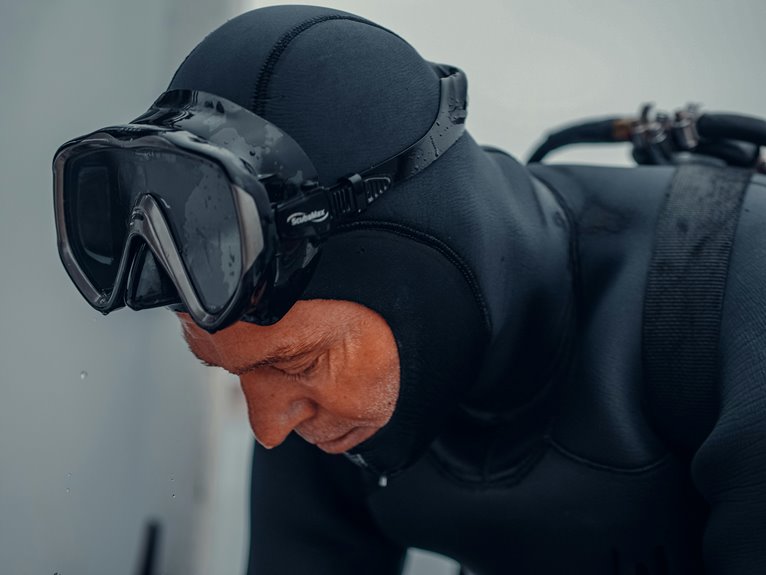
Neoprene scuba fabric isn’t completely waterproof, but it’s highly water-resistant. It traps gas bubbles in a closed-cell structure, slowing water absorption and keeping you insulated underwater. A thin layer of water may seep in, but your body heat warms it, creating a protective barrier. Thickness and fit also affect how well it keeps water out. If you want to know more about how neoprene works and its care, keep exploring the details.
Key Takeaways
- Neoprene has a closed-cell structure that significantly resists water absorption but is not completely waterproof.
- It traps gas bubbles to limit water penetration, maintaining insulation during dives.
- A snug fit with seals minimizes water exchange, enhancing neoprene’s water resistance.
- A thin layer of water seeps in but is quickly warmed by body heat, creating a thermal barrier.
- Thicker neoprene increases water protection but may reduce flexibility and comfort underwater.
What Is Neoprene and How Is It Made?
Neoprene is a synthetic rubber widely used in scuba diving suits because of its flexibility and insulating properties.
When you explore how it’s made, you’ll find it starts as a liquid polymer called chloroprene. Manufacturers polymerize chloroprene through a chemical reaction, turning it into solid sheets of neoprene.
These sheets are then processed with nitrogen gas to create tiny bubbles inside, making the material lightweight and stretchy. You’ll notice that this foam structure helps neoprene retain warmth, which is essential underwater.
Finally, the neoprene sheets get cut and glued or sewn together, forming the shape of your wetsuit. Understanding this process shows you why neoprene feels both soft and durable, perfect for the demanding conditions of scuba diving.
The Water Resistance Properties of Neoprene
Although it’s designed to keep you warm underwater, the fabric’s ability to resist water penetration plays a crucial role in its effectiveness. Neoprene’s closed-cell structure traps tiny gas bubbles, creating a barrier that prevents water from easily seeping through.
When you wear neoprene, this barrier limits water absorption, helping maintain insulation and buoyancy. While not completely waterproof, neoprene is highly water-resistant, meaning it slows water movement and restricts how much water can enter.
This resistance reduces heat loss and keeps you more comfortable during your dive. However, some water can still penetrate the material over time, so neoprene works best when paired with a snug fit and seals that minimize water exchange between your suit and the environment.
How Neoprene Interacts With Water During a Dive
When you enter the water, neoprene’s water resistance slows absorption, keeping you insulated.
Some water seeps in, but your body heat warms this thin layer, creating an effective barrier.
Understanding this balance helps you appreciate how neoprene keeps you comfortable underwater.
Water Resistance Properties
Because it traps a thin layer of water between your skin and the fabric, the scuba suit made from neoprene provides insulation and warmth during a dive. Neoprene’s water resistance properties play an essential role in keeping you comfortable underwater. It repels water effectively, preventing excessive seepage that would cool you down quickly.
However, it’s not completely waterproof—water can penetrate slightly but is quickly warmed by your body heat.
When you dive with neoprene, you’ll notice:
- A snug fit that limits water flow
- Durable resistance against pressure changes
- Lightweight feel despite its protective layer
- Flexibility that lets you move freely
- Confidence knowing it shields you from cold currents
These properties help you enjoy your dive without harsh chills.
Absorption and Insulation
Even though neoprene isn’t fully waterproof, it manages water absorption in a way that enhances insulation during your dive.
When you enter the water, a thin layer seeps between your skin and the neoprene. This water quickly warms up to your body temperature, creating a thermal barrier that helps retain heat.
The closed-cell structure of neoprene traps tiny gas bubbles, reducing water flow and limiting heat loss. Because of this, you stay warmer even in cold water.
However, if too much water floods your suit, it can reduce insulation efficiency. That’s why a snug fit is essential—it minimizes water exchange and keeps that warm layer intact.
Differences Between Waterproof and Water-Resistant Materials
Although both waterproof and water-resistant materials protect you from moisture, they do so in very different ways. Waterproof fabrics create a complete barrier, preventing any water from getting through.
Water-resistant materials, on the other hand, resist water penetration but can eventually let moisture in under pressure or prolonged exposure.
When choosing between them, consider how you want to feel and perform:
- Stay dry no matter what, even underwater.
- Avoid discomfort from dampness during brief rain or splashes.
- Feel confident in your gear’s reliability.
- Experience freedom of movement without heavy, bulky layers.
- Trust your equipment in unpredictable conditions.
Understanding this difference helps you pick the right scuba fabric for your needs, balancing protection and comfort effectively.
The Role of Neoprene Thickness in Water Protection
You’ll find that neoprene thickness plays a big role in how well it protects you from water.
Thicker neoprene not only blocks water more effectively but also keeps you warmer by providing better insulation.
Understanding these differences helps you choose the right gear for your underwater needs.
Thickness Variations Impact
When you choose neoprene for scuba gear, the thickness directly affects how well it keeps water out. Thicker neoprene means fewer chances for water to seep through, offering you better protection.
However, the thicker the material, the less flexible it becomes, which can impact your comfort and movement underwater. Here’s what thickness variations mean for you:
- Feel confident in a snug, water-resistant barrier
- Experience changes in your mobility and ease of movement
- Balance protection with comfort based on your dive conditions
- Avoid unexpected chills from thinner, less protective layers
- Understand how thickness influences the suit’s durability and performance
Thermal Insulation Benefits
Since neoprene thickness plays an essential role in water protection, it also greatly enhances thermal insulation for scuba divers. The thicker the neoprene, the better it traps a thin layer of water between your skin and the suit, which your body heats, keeping you warm. This insulation is critical in cold water environments.
| Thickness (mm) | Thermal Protection Level | Ideal Water Temperature (°C) |
|---|---|---|
| 2 | Low | >24 |
| 3 | Moderate | 20-24 |
| 5 | High | 10-20 |
| 7 | Very High | 5-10 |
| 9 | Extreme | <5 |
Choosing the right thickness guarantees you stay comfortable and protected during your dive.
Common Misconceptions About Neoprene’s Waterproof Abilities
How waterproof is neoprene scuba fabric really? You might think it’s completely waterproof, but that’s not the full story. Neoprene blocks water well but isn’t entirely impervious.
Here are some common misconceptions that might surprise you:
- Neoprene keeps you dry like rain gear (it doesn’t; water seeps in slowly)
- All neoprene suits have the same waterproof level (thickness and quality vary)
- Water never enters a neoprene suit (small amounts always do)
- Once wet, neoprene loses protection (it still insulates, but feels damp)
- Waterproof means no water contact at all (neoprene resists water but doesn’t fully block it)
Understanding these helps you appreciate neoprene’s true function underwater without false expectations.
How Neoprene Maintains Insulation Underwater
Although neoprene isn’t completely waterproof, it keeps you warm underwater by trapping a thin layer of water between your skin and the suit. This water heats up quickly from your body temperature, creating an insulating barrier.
The neoprene’s closed-cell structure, filled with tiny nitrogen gas bubbles, reduces heat loss by limiting water movement and conduction. When you wear a properly fitting suit, that little trapped water doesn’t flush out easily, so your body heat stays locked in.
This is why a snug fit is essential—too loose, and cold water will flow in and out, cooling you down. By understanding how neoprene works, you can appreciate that its insulation relies more on trapping and warming water than on keeping water out entirely.
Alternatives to Neoprene for Waterproof Dive Gear
Neoprene’s ability to trap and warm water helps keep you comfortable underwater, but it doesn’t make the fabric fully waterproof.
If you want gear that offers better water resistance, consider these alternatives:
- Titanium-lined suits: Reflect heat and block water penetration effectively.
- Membrane wetsuits: Use waterproof breathable fabrics to keep you dry.
- Dry suits with latex or silicone seals: Prevent water entry completely.
- Polyurethane-coated fabrics: Provide a tough, waterproof barrier.
- Hybrid suits: Combine neoprene with waterproof membranes for warmth and dryness.
Each option offers unique benefits depending on your dive conditions and preferences.
Choosing the right gear guarantees you stay warm, dry, and comfortable no matter how challenging the underwater environment gets.
Tips for Caring for Your Neoprene Scuba Suit
To keep your neoprene scuba suit in top shape, you’ll need to follow a few essential care steps. Always rinse your suit with fresh water immediately after diving to remove salt, sand, and chlorine. Hang it inside out on a wide hanger to dry in a shaded, ventilated area—never expose it to direct sunlight. Store your suit flat or loosely folded to prevent creases. Avoid using harsh detergents or bleach, as they can damage the neoprene.
| Care Step | Why It’s Important | Quick Tip |
|---|---|---|
| Rinse with Fresh Water | Removes corrosive salt and chemicals | Use cool water, not hot |
| Dry in Shade | Prevents material breakdown | Hang inside out |
| Proper Storage | Maintains suit shape and flexibility | Avoid tight folds |
Frequently Asked Questions
Can Neoprene Cause Allergic Reactions for Some Divers?
Like a hidden reef beneath calm waters, neoprene can cause allergic reactions for some divers. You might experience itching or rash, so you should test it first or choose hypoallergenic alternatives to stay comfortable underwater.
How Does Neoprene Scuba Fabric Affect Buoyancy?
Neoprene scuba fabric increases your buoyancy because it contains tiny gas bubbles that trap air. This helps you float, but you’ll need to adjust your weights to maintain neutral buoyancy while diving.
Is Neoprene Environmentally Friendly or Recyclable?
You’ll find neoprene isn’t very eco-friendly since it’s petroleum-based and hard to recycle. However, some brands now offer recycled or limestone-based neoprene, helping reduce environmental impact while still providing durability for your gear.
What Is the Typical Lifespan of a Neoprene Wetsuit?
You can expect your neoprene wetsuit to last about 3 to 5 years with proper care. Notably, frequent exposure to sun and saltwater can reduce its lifespan by up to 50%, so rinse and store it properly.
Can Neoprene Withstand Exposure to Saltwater and Sun?
You can rely on neoprene to handle saltwater and sun exposure, but it’s best to rinse it with fresh water after use. Prolonged sun can degrade it, so store your gear away from direct sunlight whenever possible.