
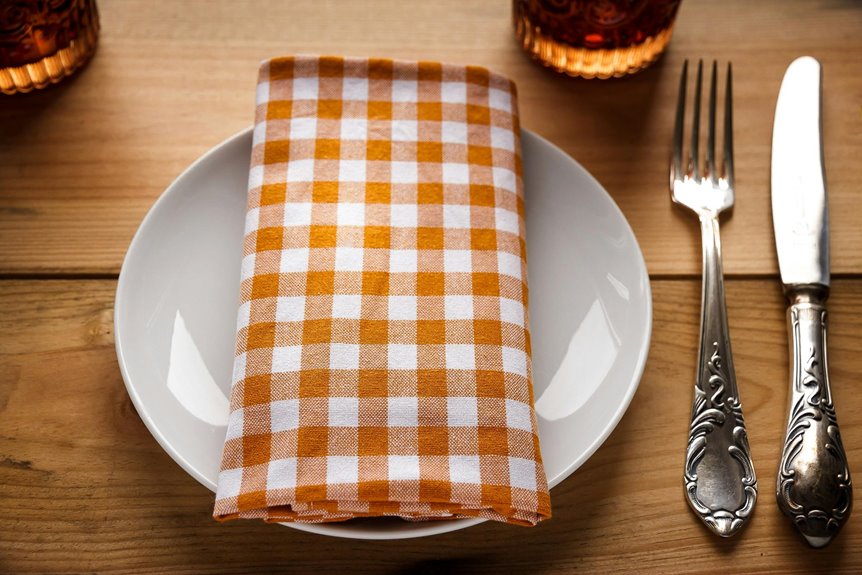
Gingham isn’t a fabric but a pattern you’ll find on various materials, usually featuring evenly sized checks in two colors like white plus another shade. It’s created by weaving colored and white threads in a plain weave, producing its classic checkered look. Cotton and polyester often carry gingham, making it popular in clothing and decor. If you want to explore how gingham’s history, colors, and uses make it so timeless, keep exploring what comes next.
Key Takeaways
- Gingham is a pattern characterized by evenly sized checks, not a specific type of fabric.
- It appears on various fabrics, including cotton, polyester, and blends.
- The pattern features alternating colored and white stripes intersecting at right angles.
- Gingham defines the visual checked design rather than the material composition.
- It is distinct from fabrics like plaid and checks due to its consistent two-color pattern.
What Defines Gingham: Fabric or Pattern?
Gingham often confuses people because it refers to a pattern rather than a specific fabric. When you see gingham, you’re looking at a distinct checked design, usually made up of white and another color in a regular, repeating grid.
Gingham is a classic checked pattern, typically white and another color, not a type of fabric.
This pattern can appear on various fabrics, such as cotton, polyester, or blends. So, gingham isn’t tied to one material; it’s all about the visual style.
If you pick up a shirt or tablecloth labeled gingham, you’re recognizing the classic checkered pattern, not the fabric itself. Understanding this helps you choose gingham items based on texture or durability, separately from the pattern’s appearance.
In short, gingham defines the look, not the fabric type.
Historical Origins of Gingham
Although many people associate it with classic Americana, the checked pattern actually has roots that stretch back several centuries and across continents. When you trace gingham’s history, you’ll see it originated in Southeast Asia before becoming popular in Europe during the 17th century. Its name comes from the Malay word “genggang,” meaning striped.
You’ll find that:
- Originally, gingham was a striped fabric before evolving into the checked pattern we recognize today.
- It became widely produced in England and the Netherlands, where manufacturers adopted and refined the design.
- By the 18th and 19th centuries, gingham was commonly used for clothing due to its affordability and durability.
Understanding this background helps you appreciate gingham beyond its simple, charming look.
How Gingham Patterns Are Created
When you look at a gingham pattern, it’s all about how the threads are woven together in a specific way.
You’ll notice the color choices play a big role in creating its classic checkered look.
Understanding how the pattern repeats helps you see why gingham is so recognizable.
Weaving Techniques Explained
If you want to understand how the classic gingham pattern comes to life, you need to look at the weaving process behind it. Gingham is created through a simple yet precise interlacing of threads, where colored and white yarns cross at right angles. This weaving technique forms the distinctive checks you see.
The process relies heavily on the arrangement of the warp (vertical threads) and the weft (horizontal threads), which alternate colors in a specific sequence to produce the pattern.
Here’s what’s involved:
- Alternating colored and white yarns in both warp and weft directions
- Using a plain weave where each weft thread passes over and under each warp thread
- Aligning threads carefully to create crisp, even checks across the fabric
This technique gives gingham its timeless, clean look.
Color Selection Process
Since color plays an essential role in defining gingham’s signature checks, you’ll want to choose hues that contrast well yet complement each other. Typically, one color is paired with white to create the crisp, clean look gingham is known for.
You can pick classic combinations like red and white or blue and white, which highlight the pattern’s simplicity. When selecting colors, consider the fabric’s purpose; softer tones work well for casual wear, while bolder shades make a statement.
Keep in mind that the intersecting lines of the two colors blend, forming a third shade at the overlaps, which adds depth. By thoughtfully choosing your colors, you guarantee the gingham pattern stands out clearly and maintains its timeless appeal.
Pattern Repetition Basics
Choosing the right colors sets the stage for the gingham pattern’s visual impact, but the pattern itself comes from how those colors repeat and intersect. When creating gingham, you weave stripes of equal width in both the warp and weft directions.
These stripes cross over each other, forming a checkered grid of solid, overlapping hues and lighter mixed shades. This repetition creates the classic gingham look.
Here’s how it works in simple steps:
- You alternate two colors in stripes of equal size.
- The stripes intersect at 90-degree angles.
- The overlapping areas blend the two colors, creating a third tone.
Understanding this repetition helps you appreciate how gingham patterns maintain their balanced, timeless appeal.
Common Colors and Variations in Gingham
Although gingham is traditionally known for its classic red and white checkered pattern, you’ll find it in a wide array of colors and variations today.
Blue and white are popular choices, offering a fresh and timeless look. You can also spot gingham in black and white, giving a bold and modern appeal. Some gingham patterns feature smaller or larger checks, changing the visual impact.
Beyond the usual two-tone checks, multicolor gingham adds playful complexity to the design. Whether you prefer pastel hues for a soft touch or vibrant shades for a statement, gingham adapts easily.
This variety lets you pick a gingham pattern that fits your style, whether casual or sophisticated, keeping the charm of its checkered roots intact.
Traditional Fabrics Used for Gingham
Gingham traditionally comes from lightweight, woven fabrics that balance comfort and durability. When you choose gingham, you’ll often find it made from natural fibers that feel soft yet sturdy.
Gingham features lightweight, woven fabrics that combine softness with lasting durability for everyday wear.
This fabric’s classic look is supported by materials that suit everyday wear and maintain the crisp pattern after washing.
Here are the traditional fabrics used for gingham:
- Cotton: Breathable and soft, cotton is the go-to choice for casual shirts and dresses.
- Cotton blends: Mixing cotton with synthetic fibers adds wrinkle resistance and stretch.
- Linen: Perfect for warmer climates, linen gingham offers a slightly textured, airy feel.
Gingham in Fashion Through the Decades
You’ve probably noticed gingham’s classic charm, especially from its 1950s heyday when it was everywhere.
Today, gingham keeps popping up in fresh, modern styles that mix vintage vibes with current trends.
Let’s explore how this timeless pattern has evolved through the decades.
Gingham’s 1950s Popularity
Few patterns captured the spirit of the 1950s like gingham did. You’d see it everywhere—from dresses to tablecloths—symbolizing a fresh, wholesome vibe. Gingham became a go-to for casual and summer styles, embraced for its cheerful and approachable look.
If you wanted to channel that classic ’50s charm, gingham was your fabric pattern. Icons like Audrey Hepburn popularized gingham dresses, making them a timeless fashion statement.
Here’s why gingham stood out in the 1950s:
- Its checkered pattern evoked simplicity and innocence.
- It was versatile, fitting both everyday wear and special occasions.
- Celebrities and movies highlighted gingham, boosting its popularity instantly.
In short, gingham wasn’t just a pattern; it was a 1950s cultural symbol you couldn’t miss.
Modern Gingham Trends
Anyone interested in fashion knows that gingham has evolved far beyond its 1950s roots. Today, you see gingham in a variety of bold colors and unconventional combinations, making it fresh and versatile.
Designers incorporate it into everything from casual dresses to tailored suits, giving you plenty of options to express your style. You’ll find gingham patterns on accessories, shoes, and even tech cases, proving its broad appeal.
Whether you prefer classic small checks or oversized prints, gingham fits seamlessly into modern wardrobes. It’s no longer just a nostalgic pattern—it’s a dynamic trend that adapts to your taste, season, and occasion.
Embracing gingham now means tapping into a timeless yet contemporary look that keeps evolving with you.
Gingham’s Role in Home Decor
Although gingham originated as a simple fabric pattern, it quickly became a favorite in home decor for its timeless charm and versatility.
You can easily incorporate gingham to add a cozy, classic touch to any room without overwhelming your space. It works well in both casual and formal settings, offering a balance between simplicity and style.
Here’s how you can use gingham in your home decor:
- Accent Pillows: Add gingham throw pillows to your sofa or bed for a subtle pattern boost.
- Table Linens: Use gingham tablecloths or napkins to create a warm, inviting dining atmosphere.
- Curtains and Upholstery: Choose gingham fabric for curtains or chairs to brighten up rooms with a cheerful, structured look.
Gingham’s adaptability makes it a must-have pattern for your home.
Differences Between Gingham and Similar Patterns
Gingham’s distinctive checkered pattern often gets mixed up with similar designs like plaid and check. When you look closely, gingham features evenly sized, balanced squares formed by overlapping stripes of two colors, usually white and another shade.
Plaid, on the other hand, is more complex, with varying line widths and multiple colors creating irregular patterns. Checks are broader and less uniform, often involving larger blocks of color without the fine grid structure gingham has.
If you want a clean, classic, and consistent look, gingham’s the pattern to pick. It’s simpler and more symmetrical compared to the often busier plaid or the chunkier check.
Understanding these differences helps you choose the right pattern for your style or project.
Caring for Gingham Fabric and Maintaining Pattern Quality
When you care for gingham fabric properly, you protect both its texture and the crispness of its pattern.
Start by washing gingham in cold water to prevent colors from bleeding and fading. Use a gentle cycle and mild detergent to avoid damaging the fabric’s fibers.
Wash gingham in cold water with mild detergent on a gentle cycle to preserve color and fabric quality.
After washing, air dry your gingham items rather than using a high-heat dryer, which can shrink or distort the fabric.
Iron on a low to medium setting while the fabric is still slightly damp to keep the pattern sharp and vibrant.
- Wash in cold water with mild detergent
- Air dry or tumble dry on low heat
- Iron while slightly damp on low to medium heat
These steps help maintain gingham’s classic look and extend the life of your garment.
Frequently Asked Questions
Can Gingham Fabric Be Made From Synthetic Fibers?
You might think gingham’s only cotton, but it’s not. You can find gingham fabric made from synthetic fibers like polyester. So, you can enjoy its classic look with added durability and wrinkle resistance.
Is Gingham Suitable for Outdoor Clothing?
You can wear gingham outdoors, but it’s best for light activities since it’s usually cotton and not water-resistant. Consider layering or choosing treated fabrics if you need durability or weather protection during your adventures.
Does Gingham Have Any Cultural or Symbolic Meanings?
You might say gingham carries a gentle charm that whispers tradition and simplicity. It often symbolizes innocence and rural life, making you feel connected to cozy, timeless memories whenever you wear or see it.
How Does Gingham Fabric Perform in Different Climates?
You’ll find gingham performs best in warm climates since its lightweight cotton breathes well. In cooler weather, it might not keep you warm, so layering’s a smart choice to stay comfortable throughout the seasons.
Are There Eco-Friendly Options for Producing Gingham Fabric?
Imagine soft, breathable gingham crafted from organic cotton or recycled fibers. You’ll find eco-friendly options that reduce pesticide use and waste, letting you enjoy stylish patterns while caring for the planet—sustainable fashion is within your reach.