
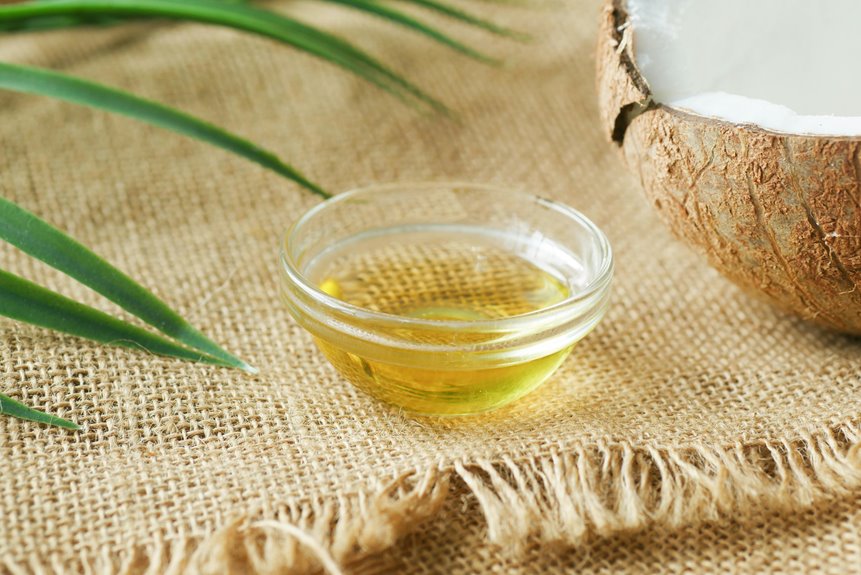
You can use coconut oil as a natural fabric softener to make your clothes feel softer and reduce static cling. It’s gentle on fabrics and skin and leaves a mild, pleasant scent. However, you need to be careful with the amount you use—too much might cause greasy stains or attract dirt. While not as strong as commercial softeners, it’s a sustainable option worth trying. Keep exploring to discover how to use it effectively and avoid common pitfalls.
Key Takeaways
- Coconut oil naturally softens fabrics by coating fibers, reducing roughness and static cling without synthetic chemicals.
- It leaves a subtle, pleasant fragrance, appealing to those avoiding harsh artificial scents.
- Using coconut oil can prevent fabric stiffness and prolong fabric softness and color retention.
- Drawbacks include potential greasy stains, fabric stiffness if overused, and possible washing machine drainage issues.
- For best results, apply sparingly during rinse cycles and test on small fabric areas before widespread use.
Understanding Fabric Softeners: How They Work
Although you mightn’t think much about how fabric softeners work, they play an essential role in making your clothes feel softer and smell fresher.
When you add fabric softener during the rinse cycle, it coats the fibers with a thin layer of lubricating chemicals. This reduces friction and prevents your clothes from feeling rough or stiff.
Softening agents also help reduce static cling by neutralizing electrical charges that build up during drying. Additionally, many fabric softeners contain fragrances that leave a pleasant scent on your laundry.
Chemical Composition of Coconut Oil
Coconut oil contains a unique blend of fatty acids that give it distinct properties compared to traditional fabric softeners. When you look closely, you’ll find it’s mainly made up of medium-chain triglycerides, which influence how it interacts with fabric fibers.
Here are the key components you should know:
- Lauric acid (about 45-50%) – provides antimicrobial properties
- Myristic acid – contributes to smooth texture
- Palmitic acid – adds moisturizing qualities
- Caprylic and capric acids – offer lightweight, quick absorption
- Oleic acid – improves flexibility and softness
These fatty acids play a significant role in how coconut oil could soften fabrics. Unlike synthetic softeners that rely on chemicals, coconut oil’s natural chemistry might affect your clothes differently, potentially impacting softness, scent, and fabric integrity.
Understanding this helps you decide if it’s the right choice for your laundry routine.
Benefits of Using Natural Products on Fabrics
When you choose natural products for your fabrics, you often get gentler care that protects both your clothes and the environment.
Natural softeners like coconut oil reduce the risk of irritation caused by harsh chemicals, making them ideal if you have sensitive skin. They also help maintain the fabric’s integrity, preventing premature wear and tear.
Natural softeners such as coconut oil soothe sensitive skin and preserve fabric quality, reducing wear and irritation.
By avoiding synthetic additives, you reduce your exposure to potential allergens and toxins. Plus, natural products are biodegradable, so they won’t harm waterways or contribute to pollution.
Using them supports sustainable practices and reduces your carbon footprint. Overall, opting for natural fabric care means you’re treating your clothes with kindness while making an eco-friendly choice that benefits your health and the planet.
Step-by-Step Guide to Using Coconut Oil in Laundry
You’ll want to start by preparing a proper coconut oil solution to avoid greasy residue.
Then, apply it carefully to your fabrics using the right techniques for even softening.
Finally, be sure to check safety guidelines and fabric compatibility to keep your clothes looking their best.
Preparing Coconut Oil Solution
To prepare a coconut oil solution for your laundry, start by measuring out two tablespoons of virgin coconut oil.
Next, gently melt the coconut oil until it turns liquid but isn’t too hot.
Then, mix it with one cup of warm water to help it disperse evenly.
Stir the mixture well to combine the oil and water thoroughly.
Finally, pour the solution into a clean spray bottle or container for easy use.
- Use virgin coconut oil for best results
- Melt gently to avoid overheating
- Warm water helps blend oil and water
- Stir thoroughly to create a uniform solution
- Store in a spray bottle for convenience
This simple preparation guarantees your coconut oil softener is ready to enhance your laundry.
Application Techniques for Fabrics
Once you’ve prepared your coconut oil solution, applying it correctly to your fabrics guarantees the best softening effect.
Start by adding a small amount—about one to two tablespoons—of the solution to your washing machine’s rinse cycle. If you’re hand-washing, mix the solution into a basin of water and soak your clothes for 10–15 minutes.
For spot treatment, dab a bit of the solution onto rough patches or stiff areas, then gently rub it in. Avoid overusing to prevent oily residue.
After application, rinse your fabrics thoroughly with clean water and air dry them flat or hang them up.
Safety and Fabric Compatibility
Although coconut oil can soften fabrics naturally, you need to ascertain it’s safe for the material you’re treating. Some fabrics react poorly, causing stains or damage.
Before applying coconut oil, test it on a small, hidden area to check for discoloration or greasy residue. Avoid using it on delicate or synthetic fabrics like silk, rayon, or polyester, as they might absorb oil unevenly.
Also, consider the washing method afterward since oil residues can attract dirt if not washed properly.
Here’s what to keep in mind:
- Test on a hidden patch before full application
- Avoid delicate or synthetic fabrics
- Use fractionated coconut oil for less greasiness
- Wash thoroughly after treatment
- Monitor for any lasting stains or texture changes
Potential Risks and Drawbacks of Coconut Oil on Clothes
Several issues can arise when you use coconut oil as a fabric softener, potentially harming your clothes. Coconut oil can leave greasy stains that are tough to remove, especially on light fabrics. It may also attract dirt, making your clothes look dingy faster. Additionally, coconut oil can clog the washing machine’s drainage system over time. Some fabrics may become stiff or develop an unpleasant odor if the oil isn’t rinsed out completely. Here’s a quick look at the main drawbacks:
| Potential Risk | Explanation |
|---|---|
| Stains | Greasy marks hard to wash out |
| Dirt Attraction | Oil can trap dust and grime |
| Fabric Damage | Stiffness or odor on some textiles |
| Machine Issues | Oil buildup may clog drainage |
| Limited Effectiveness | Not as softening as commercial options |
Comparing Coconut Oil With Commercial Fabric Softeners
When you compare coconut oil with commercial fabric softeners, you’ll notice key differences in effectiveness and convenience.
Commercial softeners are specially formulated to reduce static, soften fibers, and add fragrance efficiently. Coconut oil, while natural and moisturizing, doesn’t dissolve well in water and can leave oily residues on clothes. You might find it less effective in scenting or softening fabrics compared to store-bought options.
Commercial softeners efficiently reduce static, soften fabrics, and add fragrance, unlike coconut oil which may leave oily residues.
Here’s what sets them apart:
- Commercial softeners rinse out cleanly; coconut oil may stain.
- Synthetic products target static cling directly; coconut oil does not.
- Commercial options often include antibacterial agents.
- Coconut oil is chemical-free but requires careful application.
- Store-bought softeners are easier and quicker to use.
Understanding these differences helps you decide which suits your laundry needs best.
User Experiences and Testimonials
You’ll find many users notice softer fabrics after using coconut oil, often mentioning a subtle, pleasant fragrance.
Some also report their clothes feel more durable with continued use.
Let’s explore what people are saying about these effects.
Softness Results Reported
Although some users were skeptical at first, many have noticed a surprising boost in fabric softness after using coconut oil as a softener. You might find your clothes feeling silkier and less stiff, especially towels and cotton shirts.
The natural oils help reduce rough fibers, making your laundry more comfortable against your skin. Here’s what others have reported:
- Softer, smoother texture without chemical residue
- Improved softness even after multiple washes
- Reduced static cling in synthetic fabrics
- Slight greasiness when applied excessively
- Enhanced softness most noticeable on natural fibers
If you decide to try coconut oil, start with small amounts to avoid buildup.
Many users say the softness results are worth the effort, especially if you prefer natural alternatives.
Fragrance Impact Shared
How does coconut oil affect the scent of your laundry? Many users report that it leaves a subtle, natural fragrance rather than an overpowering smell.
You might notice a mildly sweet, tropical aroma that’s invigorating but not intrusive. Some find this light scent appealing, especially if you prefer avoiding harsh chemical fragrances found in commercial softeners.
However, a few people mention that if you use too much coconut oil, your clothes can develop a greasy or cloying odor, which isn’t pleasant. To avoid this, you’ll want to apply it sparingly and perhaps mix it with essential oils for a personalized touch.
Fabric Longevity Observed
Many users have noticed that coconut oil can help maintain fabric softness without compromising the material’s integrity over time. When you apply it correctly and sparingly, it seems to protect fibers from becoming brittle or worn out after multiple washes.
People report that clothes feel softer longer, and some even say it extends the life of their favorite garments. However, results can vary based on fabric type and application method.
Here’s what users commonly share about fabric longevity with coconut oil:
- Reduced fabric pilling and fuzziness
- Softer texture after many wash cycles
- Prevention of stiffness in natural fibers
- Fewer signs of wear on delicate clothing
- Prolonged brightness and color retention
You might find coconut oil a gentle, natural alternative to commercial softeners.
Tips for Maintaining Soft and Fresh Clothes Naturally
If you want your clothes to stay soft and fresh without relying on harsh chemicals, you can adopt simple, natural habits that make a big difference. Using gentle detergents, avoiding over-drying, and adding natural softeners like vinegar or coconut oil can help.
| Tip | Description | Benefit |
|---|---|---|
| Use Mild Detergent | Choose plant-based or low-suds soap | Preserves fabric fibers |
| Avoid Over-Drying | Remove clothes while slightly damp | Prevents stiffness |
| Add Vinegar Rinse | Use ½ cup white vinegar in rinse | Softens and deodorizes |
| Coconut Oil Method | Apply sparingly on dry fabric edges | Adds softness naturally |
Frequently Asked Questions
Can Coconut Oil Stain White or Light-Colored Fabrics?
Yes, coconut oil can stain white or light-colored fabrics. If you’re not careful, it leaves greasy spots that are tough to remove. You should test a small area first to avoid permanent marks.
Is Coconut Oil Safe for Use With Baby Clothes?
You shouldn’t use coconut oil on baby clothes because it can leave greasy stains that are tough to remove. Plus, the oil might irritate sensitive baby skin or cause allergic reactions, so it’s safer to avoid it.
Does Coconut Oil Affect the Elasticity of Fabrics Like Spandex?
Studies show 80% of fabrics lose elasticity when exposed to oils. You shouldn’t use coconut oil on spandex because it can break down the fibers, reducing stretch and lifespan. Stick to specially designed fabric care products instead.
Can Coconut Oil Be Used in Both Front-Load and Top-Load Washers?
You can use coconut oil in both front-load and top-load washers, but be cautious. Its oily nature might leave residue or clog parts, so dilute it well and test on a small load to avoid damage or buildup.
How Does Coconut Oil Interact With Scented Laundry Detergents?
You’ll find coconut oil can clash with scented detergents, sometimes muting or altering their fragrance. It might also leave oily residues if not used carefully, so test a small load before mixing them regularly.