
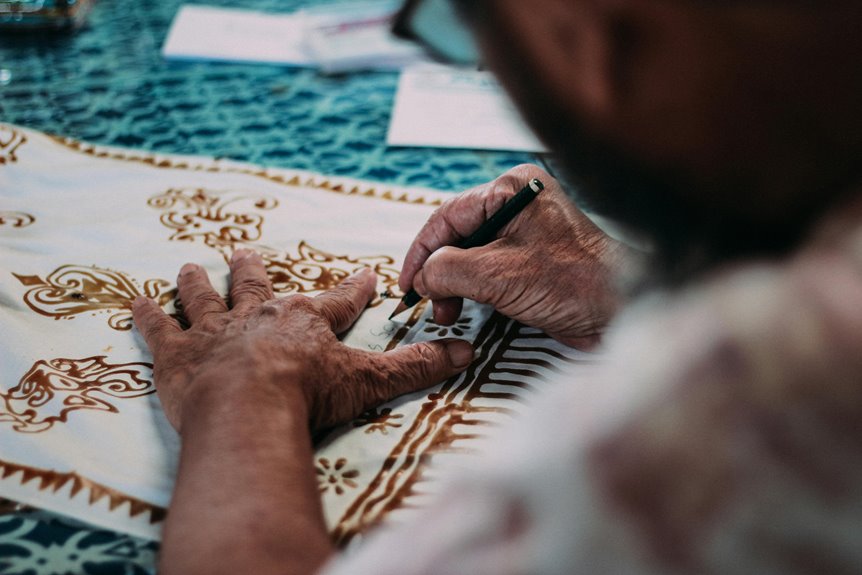
You’ll find that batik isn’t a fabric itself but a technique applied to cloth, typically using tightly woven natural fibers like cotton or silk. These fabrics are chosen because their tight weave holds wax and dye well, allowing for intricate, vibrant patterns without bleeding. So when you handle batik, you’re actually appreciating both the artistry and the quality of fabric. Keep exploring, and you’ll uncover how fabric choice and care truly impact batik’s beauty and durability.
Key Takeaways
- Batik fabrics are typically made from natural fibers like cotton and silk, which are often tightly woven for better dye and wax application.
- A tightly woven fabric prevents dye bleeding, preserving the intricate patterns characteristic of batik textiles.
- The weave density in batik fabric is important for maintaining design detail and color vibrancy.
- Smooth, tightly woven textures allow for precise wax application, essential for the batik dyeing process.
- While batik can vary, high-quality batik generally uses tightly woven fabrics to enhance appearance and durability.
The Origin and Meaning of Batik
Batik traces its roots back to ancient Indonesia, where artisans developed this unique fabric dyeing technique centuries ago.
When you look closely, you’ll see batik isn’t just about fabric but a rich cultural expression. You use wax to create intricate patterns on cloth, then dye it; the wax resists the dye, preserving the original color beneath.
This method lets you craft detailed designs full of symbolism and stories. Batik often represents social status, local identity, or philosophical meanings, so it’s more than decoration.
Batik weaves rich stories and symbols, reflecting social and cultural identities beyond mere decoration.
As you explore batik, you’ll realize it’s an art form that’s both functional and deeply meaningful, reflecting the history and beliefs of the communities that keep this tradition alive.
Types of Fabrics Used in Batik
You’ll find batik most often on cotton and silk fabrics, known for their breathability and smooth texture.
These materials hold the wax and dye well, creating vibrant designs that last.
Understanding the fabric’s weave and feel helps you appreciate how batik art truly comes to life.
Common Batik Fabric Choices
Many artisans prefer natural fabrics like cotton and silk when creating batik, as these materials absorb wax and dye more effectively.
When you choose fabric for batik, you want something that holds the intricate patterns well and allows colors to shine vividly.
Cotton, with its breathable and soft texture, is a favorite for everyday wear. Silk offers a luxurious feel and a beautiful sheen, perfect for special occasions. Sometimes, linen is also used for its durability and unique texture.
Here are common fabric choices for batik:
- Cotton: Soft, breathable, and widely accessible for vibrant dyeing.
- Silk: Smooth, glossy, and ideal for elegant patterns.
- Linen: Strong, textured, and offers a rustic appeal.
Selecting the right fabric guarantees your batik art turns out beautifully.
Characteristics of Batik Textiles
Although choosing the right fabric can seem straightforward, understanding the unique characteristics of textiles used in batik will help you appreciate the art even more.
Batik typically uses natural fibers like cotton and silk because they absorb wax and dye better, allowing for sharper, more vibrant designs. Cotton offers breathability and durability, making it ideal for everyday wear. Silk, on the other hand, provides a smooth texture and lustrous finish, perfect for formal or decorative pieces.
The weave density matters too; tightly woven fabrics prevent dye from bleeding, preserving intricate patterns. You’ll find that the fabric’s weight influences the drape and final look of batik textiles. Knowing these traits empowers you to select or evaluate batik pieces with a keener eye.
Understanding Fabric Weave and Tightness
When examining fabric weave and tightness, it helps to know how threads interlace to form the material’s structure. You’ll notice that the weave pattern and thread density directly impact how tightly woven a fabric feels.
Tight weaves pack threads closely, making the fabric sturdy and less porous. Looser weaves leave more gaps, resulting in a softer, airier texture.
Visualize the fabric’s construction like this:
- Threads crossing over and under at right angles, creating a grid
- Dense thread arrangements that limit space between fibers
- Looser, more open patterns where you can glimpse light through holes
Understanding these basics lets you better grasp why some fabrics feel firm while others drape gently, a key factor when evaluating batik fabric’s weave tightness.
How Fabric Choice Affects Batik Quality
Since the fabric you choose sets the foundation for batik quality, you’ll want to take into account factors like fiber type, weave density, and texture carefully.
Natural fibers such as cotton or silk absorb wax and dye more effectively, enhancing the batik’s detail and color vibrancy. A tighter weave prevents wax from bleeding through, ensuring crisp, clean patterns.
On the other hand, loosely woven fabrics may result in blurred designs due to wax seepage. Texture also plays a role; smoother fabrics allow for more precise wax application, while rough textures can distort the pattern.
Differences Between Batik and Other Textile Techniques
You might notice that batik stands apart from weaving because it uses a wax-resist dyeing method instead of interlacing threads.
This technique affects the texture and structure of the fabric, making it less about tight weaving and more about surface design.
Understanding these differences helps you appreciate batik’s unique qualities compared to other textiles.
Batik vs. Weaving
Batik and weaving create textiles in very different ways, and understanding these differences helps you appreciate each technique’s unique qualities.
When you look at batik, it’s all about applying wax and dye to fabric, creating intricate patterns on a pre-woven cloth. Weaving, on the other hand, involves interlacing threads to build the fabric itself from scratch.
Here’s how you can visualize the difference:
- Batik: Imagine painting detailed, colorful designs on a plain white cloth.
- Weaving: Picture threads crossing over and under each other to form a grid.
- Finished fabric: Batik’s surface sports vivid patterns, while woven fabric shows texture from the thread structure.
Knowing this, you can see batik isn’t about how tight the fabric weave is, but about surface artistry.
Wax-Resist Dyeing Method
Although many textile techniques rely on weaving or printing, the wax-resist dyeing method stands apart by using wax to block dye from reaching certain fabric areas.
When you create batik, you apply hot wax to the fabric in specific patterns before dyeing it. The wax prevents those covered parts from absorbing color, allowing you to build intricate designs through multiple dyeing and waxing stages.
Unlike printing, which deposits pigment on fabric surfaces, or weaving, which forms patterns by interlacing threads, batik’s method focuses on controlling dye penetration.
This process gives you the flexibility to achieve detailed motifs and subtle color shifts that other techniques can’t replicate as easily.
Texture and Fabric Structure
The wax-resist dyeing method not only shapes batik’s visual appeal but also influences its texture and fabric structure in ways that set it apart from other textile techniques.
When you handle batik, you’ll notice the fabric’s surface isn’t uniformly smooth. The wax creates subtle stiffness in dyed areas, giving batik a unique tactile contrast. Unlike tightly woven fabrics that feel consistent throughout, batik’s texture varies depending on wax application and dye absorption.
This process doesn’t alter the fabric’s weave but adds a layered complexity you won’t find in printed or embroidered textiles.
Imagine these sensations:
- Slightly raised, wax-coated patterns that you can feel under your fingertips
- Soft, porous areas where dye deeply penetrates the cotton or silk
- Variations in fabric stiffness corresponding to the design’s outlines and fills
This makes batik not just a visual art but a tactile experience.
Caring for Batik Fabrics and Their Weave Integrity
When you care for batik fabrics properly, you help preserve both their vibrant patterns and the strength of their weave.
Always hand wash batik in cold water using mild detergent; avoid harsh chemicals that can weaken fibers. Don’t wring or twist the fabric—gently squeeze out excess water instead.
Dry it flat in the shade to prevent fading and distortion. Iron on the reverse side at a low temperature to protect the dye and fabric structure.
Store batik in a cool, dry place away from direct sunlight to maintain weave integrity.
Frequently Asked Questions
Can Batik Designs Be Printed Instead of Hand-Drawn?
You can print batik designs instead of hand-drawing them, you can mass-produce patterns instead of crafting each one, and you can save time instead of spending hours—printed batik offers speed and consistency without losing style.
What Tools Are Used in the Batik Waxing Process?
You use a canting, a small copper tool with a spout, to apply hot wax precisely on fabric. Sometimes, you also use a stamp called a cap for larger, repeated patterns in the batik waxing process.
How Long Does It Take to Complete a Batik Piece?
Creating a batik piece is like painting with time—you’ll spend anywhere from several hours to days, depending on complexity. Each wax application and dye bath demands patience, letting the design slowly come alive under your hands.
Are Batik Fabrics Eco-Friendly or Sustainable?
You’ll find batik can be eco-friendly since it uses natural dyes and traditional techniques. However, sustainability depends on materials and processes, so choosing handmade, organic batik helps support the environment and local artisans.
Can Batik Techniques Be Applied to Synthetic Fabrics?
You can apply batik techniques to synthetic fabrics, but the wax and dye might behave differently than on natural fibers. You’ll need to test and adjust your process to get the best results with synthetics.