
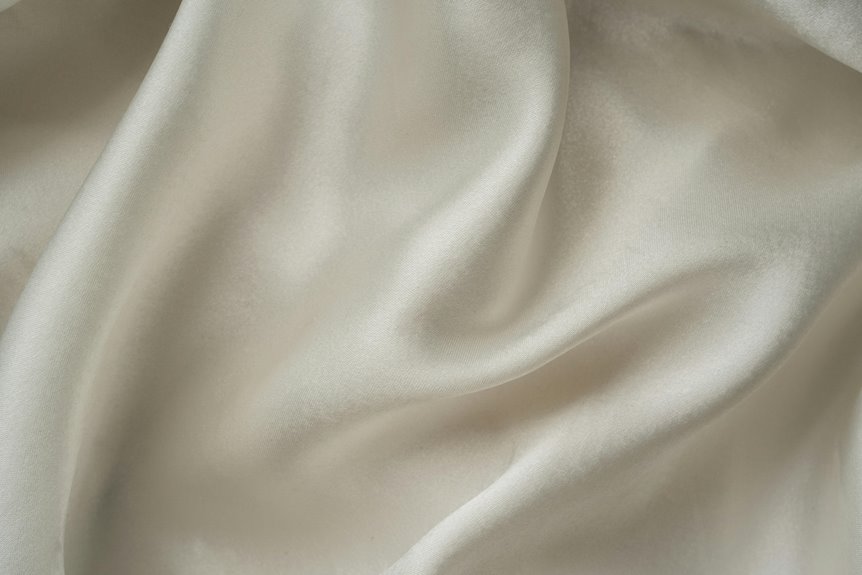
If you want an elegant, shiny gown without spending a fortune, acetate satin is a smart choice. It mimics silk’s luxurious sheen and feels soft and smooth, though it’s less breathable and can wrinkle more easily. You’ll need gentle care to avoid damage, especially with heat or moisture. Acetate holds color well and resists shrinking, making it great for formal styles. Keep exploring to find out how acetate balances beauty, comfort, and cost for your bridal look.
Key Takeaways
- Acetate satin offers an elegant, silky sheen similar to silk at a more affordable price, ideal for budget-conscious bridal wear.
- It is moderately durable but prone to snagging, wrinkling, and heat damage, requiring careful handling and storage.
- The fabric has low breathability, which may cause warmth during wear, potentially affecting comfort for long ceremonies.
- Acetate satin gowns suit popular bridal styles like A-line, ball gowns, and sheath dresses due to their smooth, voluminous drape.
- Environmental impact depends on cellulose sourcing, so brides mindful of sustainability should weigh aesthetics against eco-friendliness.
Understanding Acetate Fabric
Acetate fabric is a type of synthetic textile made from cellulose fibers derived from wood pulp. When you choose acetate, you’re selecting a material that mimics the look and feel of silk but at a more affordable price.
It’s known for its smooth surface and ability to hold vibrant colors, which makes it popular in fashion. You’ll find acetate used in linings, formalwear, and decorative fabrics.
However, acetate isn’t as durable or breathable as natural fibers like cotton or silk, so you’ll want to handle it with care. It can wrinkle easily and is sensitive to heat, so ironing requires caution.
Acetate is less durable and heat-sensitive, requiring gentle care and careful ironing.
Understanding these basics helps you decide if acetate fits your needs for bridal satin without surprises.
Characteristics of Acetate Satin
Although satin is traditionally associated with luxury, acetate satin offers an affordable alternative that still delivers a smooth, glossy finish. You’ll notice it drapes beautifully and feels silky against your skin. However, acetate satin can be less durable and more prone to wrinkles than other fabrics, so you’ll need to handle it with care.
Here’s a quick look at its key characteristics:
| Feature | Description | Impact on Bridal Wear |
|---|---|---|
| Sheen | High gloss | Elegant, eye-catching |
| Texture | Smooth, soft | Comfortable to wear |
| Durability | Moderate | Requires gentle handling |
| Wrinkle Resistance | Low | Needs careful storage |
| Breathability | Limited | May feel warm |
Knowing these traits helps you decide if acetate satin suits your bridal needs.
Comparing Acetate Satin to Traditional Satin
When choosing fabric for your bridal gown, understanding how acetate satin stacks up against traditional satin can help you make the best decision.
Acetate satin offers a luxurious shine similar to traditional satin but tends to feel softer and lighter. While traditional satin is often made from silk or polyester, acetate provides a more affordable option with a smooth, glossy finish that mimics silk’s elegance.
You’ll notice acetate satin drapes beautifully, giving your dress a graceful flow. However, it’s more prone to wrinkles and can be less breathable compared to traditional satin.
If you want the classic satin look without the high cost, acetate satin is a strong contender. Just keep in mind its unique care needs to keep your gown looking flawless on your big day.
Durability and Strength of Acetate Fabric
If you’re planning to wear your bridal satin for hours on your big day, you’ll want a fabric that can hold up well.
Acetate satin offers moderate durability but isn’t as strong as silk or polyester options. It resists wrinkles and holds its shape fairly well, which helps maintain that polished look throughout your event.
However, acetate fibers can be prone to snagging and may weaken if exposed to moisture or heat. You’ll need to handle it delicately during fittings and avoid rough surfaces.
While acetate satin can withstand typical wear, it’s not the toughest choice if you expect heavy use or multiple wears. Knowing these limits will help you decide if acetate satin matches your durability needs for bridal wear.
Comfort and Breathability for Bridal Wear
When choosing bridal satin, you want a fabric that keeps you comfortable throughout your big day.
Acetate offers a different level of breathability compared to traditional satin, which can affect how warm you feel.
Let’s explore how this impacts your overall comfort in various settings.
Breathability Compared to Satin
Although acetate fabric offers a smooth, luxurious feel similar to satin, it doesn’t breathe as well, which can affect your comfort during a long wedding day.
Satin, especially when made from natural fibers like silk, allows better air circulation, helping you stay cool and reducing sweat buildup. In contrast, acetate tends to trap heat and moisture against your skin, which might leave you feeling sticky or overheated as the day goes on.
If you’re planning an outdoor or summer wedding, this difference in breathability becomes even more important. You’ll want a fabric that helps regulate your body temperature so you can focus on enjoying your special day without distractions from discomfort.
Choosing satin over acetate can make a noticeable difference in how fresh and comfortable you feel.
Comfort Levels in Warmth
Your comfort on a wedding day goes beyond just breathability; how warm your fabric keeps you plays a big role too.
Acetate fabric tends to feel cooler against your skin, making it a decent option if you’re getting married in warmer months. It doesn’t trap heat as much as some synthetics, so you’re less likely to overheat.
However, acetate isn’t the best at insulating, so if your wedding is in a chilly setting, you might feel a bit cold. Satin made from acetate offers a smooth, lightweight feel but lacks warmth.
If warmth is a priority, layering or choosing satin blends with natural fibers might serve you better on your special day.
Care and Maintenance of Acetate Satin
You’ll want to handle acetate satin with care to keep its sheen and texture intact.
Always choose gentle cleaning methods and avoid harsh chemicals that can damage the fabric.
Proper storage, like hanging your bridal gown in a cool, dry place, will also help maintain its beauty over time.
Cleaning Tips
Since acetate satin requires gentle care, you should handle it with special attention to preserve its smooth texture and shine.
Always check the garment’s care label before cleaning. When washing, opt for hand washing in cold water with a mild detergent to avoid damaging the fibers. Avoid wringing or twisting the fabric; instead, gently press out excess water.
If you prefer machine washing, use a delicate cycle inside a mesh laundry bag. Never use bleach or harsh chemicals, as they can weaken the fabric.
For drying, lay the acetate satin flat on a clean towel—never tumble dry, as heat can cause shrinkage or distortion.
If ironing is necessary, use the lowest heat setting and place a pressing cloth between the iron and fabric to prevent burns or shine marks.
Storage Recommendations
Proper cleaning helps maintain acetate satin’s delicate texture, but how you store it also plays a big role in preserving its look and feel.
When storing your bridal satin, avoid hanging it for long periods, as acetate can stretch and lose shape. Instead, fold the fabric gently and place it in a breathable cotton garment bag to prevent moisture buildup and yellowing.
Keep it in a cool, dry place away from direct sunlight to avoid fading and deterioration. Avoid plastic bags, which trap humidity and encourage mildew.
If your satin develops wrinkles, use a low-heat iron with a pressing cloth to protect the fabric.
Environmental Impact of Acetate Fabric
Although acetate fabric offers a luxurious look and feel, its environmental impact is worth considering before you choose it for your bridal satin. Acetate is made from cellulose, derived mostly from wood pulp, which means it relies on natural resources.
However, the production process involves chemicals that can be harmful if not managed properly. You should also know that acetate isn’t biodegradable as quickly as natural fibers, which affects landfill waste.
Keep these points in mind about acetate’s environmental footprint:
- Production uses solvents that require careful disposal to prevent pollution.
- The fabric’s biodegradability is slower compared to pure natural fabrics.
- Sustainable sourcing of cellulose can vary, influencing overall eco-friendliness.
Considering these factors will help you make an informed, environmentally conscious choice.
Cost Considerations for Acetate Satin Gowns
When choosing acetate satin gowns, you’ll find they often come at a more affordable price point compared to silk or other natural satin fabrics. This makes acetate a practical option if you’re working within a budget but still want that elegant, shiny finish.
You won’t have to compromise much on style, as acetate satin still offers a luxurious look without the hefty price tag. Keep in mind, though, that the lower cost can sometimes mean acetate satin may not have the same durability or breathability as higher-end fabrics.
Still, if you want a beautiful gown that won’t break the bank, acetate satin can be a smart choice to balance cost and appearance for your big day.
Popular Bridal Styles Using Acetate Satin
Because acetate satin offers a smooth, glossy finish, it’s become a favorite for a variety of bridal styles.
Acetate satin’s smooth, glossy finish makes it a beloved choice for elegant bridal gowns.
You’ll find it especially popular in gowns that emphasize elegance and structure. Its natural sheen highlights clean lines and sophisticated silhouettes, making it ideal if you want a timeless look without breaking the bank.
Here are some popular bridal styles using acetate satin:
- A-line gowns: The fabric flows beautifully, providing a flattering shape that suits many body types.
- Ball gowns: Acetate satin holds volume well, giving you that dramatic, princess-like effect.
- Sheath dresses: Its smooth texture complements sleek, minimalist designs for a modern bride.
If you want a dress that balances luxury and affordability, acetate satin could be your perfect match.
Expert Opinions on Acetate for Wedding Dresses
While some brides might hesitate over acetate’s synthetic nature, experts often praise its affordability and striking appearance for wedding dresses. You’ll find that professionals appreciate acetate for mimicking the luxurious sheen of silk satin without the hefty price tag. However, they also caution about its lower breathability and tendency to wrinkle. To help you decide, here’s a quick expert overview:
| Aspect | Pros | Cons |
|---|---|---|
| Appearance | Lustrous, elegant finish | Less natural shine than silk |
| Comfort | Smooth feel | Less breathable, can feel warm |
| Durability | Resistant to shrinking | Prone to wrinkles and heat damage |
Frequently Asked Questions
Can Acetate Satin Be Dyed Easily for Custom Bridal Colors?
You might think acetate satin won’t take color well, but it actually dyes evenly and vibrantly. You’ll find it’s great for custom bridal colors, giving you beautiful, personalized shades that stand out on your special day.
Does Acetate Fabric Cause Allergic Reactions or Skin Irritations?
You won’t usually experience allergic reactions with acetate fabric, but if you have sensitive skin, it might cause irritation. Always test a small patch first to be safe, especially for prolonged contact or special occasions.
How Does Acetate Satin Perform in Humid or Rainy Wedding Conditions?
You’ll love acetate satin’s glossy look, but don’t let humidity fool you—it can wrinkle and lose shape in rain. While it feels smooth, be ready for potential clinginess and less breathability during damp wedding moments.
Is Acetate Satin Suitable for Destination Beach Weddings?
You might find acetate satin less ideal for destination beach weddings since it wrinkles easily and doesn’t breathe well in heat and humidity. However, if you prioritize shine and affordability, it could still work with proper care.
Can Acetate Fabric Be Combined With Lace or Other Bridal Materials?
Imagine acetate as a graceful dancer twirling with lace’s delicate partner; you’ll find they blend beautifully. You can easily combine acetate fabric with lace or other bridal materials to create an elegant, harmonious wedding gown ensemble.