
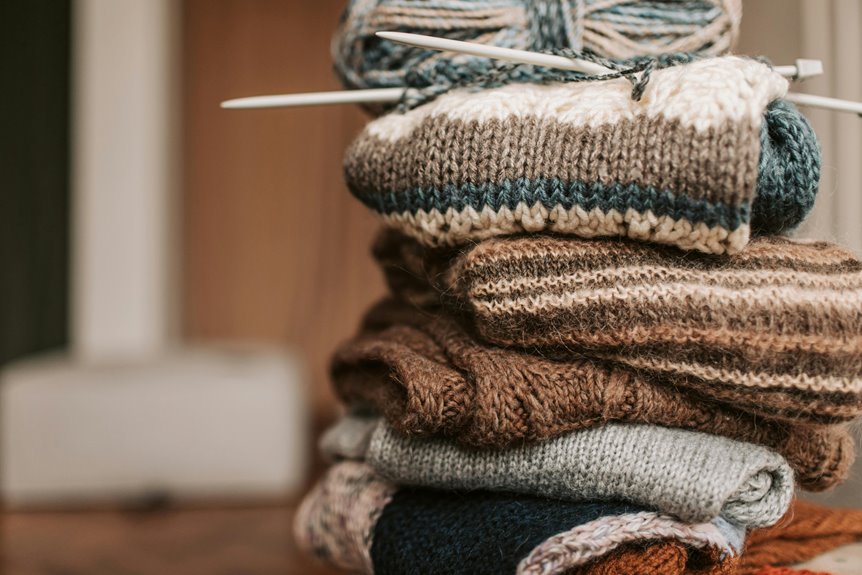
A wool-polyamide blend gives you the best of both worlds—natural warmth, breathability, and moisture-wicking from wool, combined with the strength, durability, and quick-drying perks of polyamide. You’ll get a fabric that’s comfortable, flexible, and built to last, perfect for activewear, outerwear, or everyday use. While it’s durable and versatile, understanding care and environmental impacts helps you make smarter choices. Keep exploring to see how this blend truly stands out.
Key Takeaways
- Wool-polyamide blends combine wool’s natural warmth and moisture-wicking with polyamide’s strength and quick-drying properties for versatile performance.
- The blend enhances fabric durability and elasticity, reducing tearing and shrinking compared to pure wool fabrics.
- These blends are ideal for activewear, outerwear, and accessories like socks and gloves, offering comfort and long-lasting wear.
- While wool is renewable and biodegradable, polyamide’s synthetic nature reduces overall sustainability, requiring careful sourcing and recycling.
- Choosing wool-polyamide garments balances style, comfort, and durability but requires attention to care instructions to maintain fabric quality.
Understanding Wool-Polyamide Blends
Although wool on its own offers warmth and breathability, blending it with polyamide enhances its durability and elasticity, giving you a fabric that performs better in everyday wear.
When you choose a wool-polyamide blend, you’re getting the natural comfort of wool combined with the strength and stretch of synthetic fibers. This mix helps the fabric resist tearing and shrinking, so your clothes maintain their shape longer.
Polyamide also speeds up drying time, making the blend more practical for active use. You’ll notice the fabric feels smoother and more flexible, adapting well to movement.
Benefits of Wool in Fabric
You’ll appreciate wool’s natural insulation that keeps you warm without overheating.
It also wicks moisture away from your skin, helping you stay dry and comfortable.
These benefits make wool a smart choice in blended fabrics.
Natural Insulation Properties
Wool’s natural insulation properties keep you comfortable by regulating temperature effectively. Whether you’re in chilly or mild conditions, wool helps maintain your body heat without overheating. This means you stay cozy without feeling stuffy.
Here’s why wool’s insulation works for you:
- Air-trapping fibers: Wool fibers trap air, creating a natural barrier that locks in warmth.
- Breathability: It lets excess heat escape, so you don’t get too hot.
- Adaptability: Wool adjusts to temperature changes, keeping you warm in cold and cool when it’s warmer.
When blended with polyamide, these insulating benefits combine with durability, making your fabric both warm and long-lasting.
You get the best of both worlds—comfort and strength in one fabric.
Moisture-Wicking Abilities
When moisture builds up during activity, wool pulls it away from your skin to keep you dry and comfortable. This natural fiber absorbs moisture vapor and transports it to the fabric’s surface, where it evaporates quickly. You won’t feel clammy or sticky, even during intense workouts or long days outside.
The polyamide blend enhances this ability by adding durability and faster drying times without compromising wool’s breathability. Together, they create a fabric that manages sweat efficiently, preventing discomfort and skin irritation.
Advantages of Polyamide in Textiles
Polyamide offers several key advantages that make it a popular choice in textile manufacturing. When you choose polyamide fabrics, you get durability, flexibility, and resistance that stand out.
Polyamide stands out in textiles for its exceptional durability, flexibility, and resistance.
Here are three main benefits you’ll appreciate:
- High Strength and Durability – Polyamide fibers are incredibly strong, so your clothes last longer and resist wear and tear better.
- Lightweight and Flexible – You’ll find polyamide fabrics comfortable because they’re light and move easily with your body.
- Quick-Drying and Moisture Resistant – Polyamide doesn’t absorb much water, so it dries fast, keeping you comfortable in various conditions.
These qualities make polyamide a smart addition to fabrics, especially when combined with natural fibers like wool.
How the Blend Enhances Fabric Performance
When you combine wool with polyamide, you get a fabric that’s both strong and long-lasting.
You’ll notice it handles moisture better, keeping you comfortable in different conditions.
Let’s explore how these qualities make the blend stand out.
Durability and Strength
Although wool offers natural resilience, blending it with polyamide greatly boosts the fabric’s durability and strength. When you choose a wool-polyamide blend, you get a material that withstands wear and tear much better than pure wool. This means your garments last longer without losing shape or integrity.
Here’s why it works:
- Polyamide fibers add tensile strength, preventing easy tearing or stretching.
- The blend improves abrasion resistance, so the fabric resists pilling and rough use.
- It maintains elasticity, allowing the fabric to bounce back after movement without damage.
Moisture Management Benefits
Beyond durability, the wool-polyamide blend also excels at managing moisture, keeping you comfortable throughout the day.
Wool naturally absorbs moisture without feeling damp, pulling sweat away from your skin. Polyamide complements this by drying quickly, preventing that clammy sensation you dislike. Together, they create a fabric that balances moisture absorption and evaporation effectively.
When you’re active, the blend helps regulate your body temperature by wicking sweat away and allowing it to evaporate fast. This means you stay dry and fresh longer, whether you’re at work or outdoors.
Plus, it reduces odor buildup since moisture doesn’t linger. Choosing this blend means you get a fabric that adapts to your body’s needs, providing comfort in various conditions without sacrificing performance.
Common Uses for Wool-Polyamide Fabrics
Since wool-polyamide blends combine durability with comfort, they suit a wide range of applications. You’ll find these fabrics popular in clothing and accessories where strength and softness are essential.
Wool-polyamide blends offer the perfect balance of durability and comfort for versatile, everyday wear.
Here are three common uses:
- Activewear: The fabric’s moisture-wicking and stretch properties make it ideal for hiking, cycling, and running gear.
- Suits and Outerwear: Wool-polyamide blends offer a polished look with enhanced durability, perfect for professional and casual jackets or coats.
- Socks and Gloves: Their ability to retain warmth while resisting wear makes them great for everyday and outdoor accessories.
When you choose wool-polyamide fabrics, you get a versatile material that performs well in both demanding and casual settings without sacrificing comfort.
Care Tips for Wool-Polyamide Clothing
When you care for wool-polyamide clothing properly, you extend its lifespan and keep it looking great. Always check the care label first, as some blends may require delicate handling. Wash your garments in cold water using a gentle cycle or hand wash to prevent shrinkage and fabric damage. Avoid harsh detergents; opt for wool-specific or mild detergents instead. Dry flat away from direct heat to maintain shape and prevent stretching.
| Care Aspect | Recommendation |
|---|---|
| Washing | Cold water, gentle cycle/hand |
| Detergent | Wool-specific or mild |
| Drying | Flat, away from direct heat |
| Ironing | Low heat, use a pressing cloth |
| Storage | Cool, dry place; avoid hanging |
Following these tips will keep your wool-polyamide blend clothing durable and fresh.
Comparing Wool-Polyamide to Other Fabric Blends
Although wool-polyamide blends offer excellent durability and warmth, you might wonder how they stack up against other fabric blends. When choosing the right fabric, consider these key points:
- Wool-Cotton blends provide softness and breathability but lack the durability of polyamide.
- Wool-Polyester blends can be more affordable and resistant to wrinkles, but they may not feel as natural or breathable.
- Wool-Silk blends offer luxury and softness, yet they’re often less durable and require delicate care.
Wool-polyamide strikes a balance by combining natural warmth with synthetic strength, making it a versatile choice for everyday wear where durability and comfort matter most.
You’ll get a blend that holds up better over time compared to many other fabric combinations.
Environmental Impact of Wool-Polyamide Materials
Understanding the environmental impact of wool-polyamide materials is essential if you want to make responsible fabric choices.
Wool is a natural, renewable fiber, biodegradable and produced with relatively low energy compared to synthetic fibers. However, sheep farming can contribute to methane emissions and land degradation if not managed sustainably.
Polyamide, a synthetic fiber, relies on petrochemicals and energy-intensive processes, resulting in higher carbon emissions and non-biodegradability.
Blending wool with polyamide reduces wool’s overall biodegradability and recyclability, but it also improves durability, extending the garment’s life and reducing waste.
When you opt for wool-polyamide blends, look for brands emphasizing sustainable sourcing and recycling programs.
Style and Comfort Factors in Wool-Polyamide Apparel
Style and comfort play key roles in choosing wool-polyamide apparel. When you wear these blends, you get the best of both fibers, enhancing your daily comfort and style effortlessly.
Here’s why you’ll appreciate wool-polyamide clothing:
- Softness with Durability: You enjoy wool’s natural softness paired with polyamide’s strength, so your clothes feel great and last longer.
- Moisture Management: Wool wicks away sweat, while polyamide dries quickly, keeping you comfortable during active days.
- Versatile Style: These blends hold shape well, resist wrinkles, and maintain color, so you look sharp whether at work or casual outings.
Frequently Asked Questions
Can Wool-Polyamide Blends Cause Allergies or Skin Irritation?
Sensitive skin sometimes struggles with scratchy, synthetic strands. You might notice mild irritation or itching if you’re allergic, but many people wear wool-polyamide blends comfortably. Always test first to prevent pesky problems.
How Does the Cost of Wool-Polyamide Compare to Pure Wool?
You’ll find wool-polyamide blends usually cost less than pure wool because polyamide is cheaper to produce. This blend offers durability and affordability, making it a smart choice if you want quality without paying wool’s full price.
Are Wool-Polyamide Fabrics Suitable for High-Performance Sportswear?
You’ll feel like you’re wearing a second skin because wool-polyamide fabrics wick moisture and resist abrasion superbly. They’re perfect for high-performance sportswear, combining durability and comfort, letting you push your limits without worry or distraction.
Can Wool-Polyamide Blends Be Recycled Effectively?
You’ll find recycling wool-polyamide blends challenging since separating fibers is tough. However, some innovative processes can recycle them partially, so while not perfect, you can still contribute to sustainability by choosing brands using recycled blends.
Do Wool-Polyamide Fabrics Have Static Electricity Issues?
Imagine sparks jumping when you pull off a sweater—wool-polyamide blends can cause static, especially in dry air. But you’ll find this less often than with synthetic fabrics alone, thanks to wool’s natural moisture.