
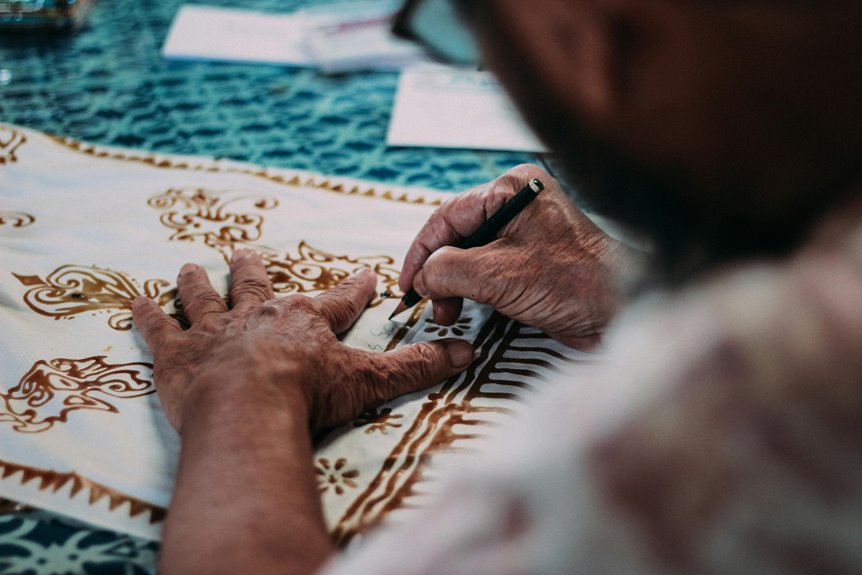
You can transform batik fabric into vibrant fashion accessories like headbands, fabric belts, and statement earrings. Use it to create unique wall art by framing panels or making tapestries for a cultural touch. Upcycle furniture by decoupaging batik on surfaces for a fresh look, or craft reusable gift wraps and personalized stationery for a creative finish. With so many possibilities, exploring more ideas will inspire you to make stunning, one-of-a-kind projects with batik.
Key Takeaways
- Craft vibrant fashion accessories like headbands, clutch bags, and fabric-covered jewelry using batik fabric for unique personal style.
- Transform batik fabric into striking wall art by framing panels or creating tapestries with cultural flair.
- Upcycle furniture by adhering batik fabric with decoupage techniques, sealing with varnish for durability and visual appeal.
- Use batik fabric as eco-friendly gift wraps, reusable bags, or personalized stationery embellishments for sustainable, artistic packaging.
- Incorporate batik fabric accents in quilting and décor to add rich colors, cultural significance, and layered texture to projects.
Customized Fashion Accessories With Batik Fabric
Although batik fabric is traditionally used for clothing, you can easily transform it into unique fashion accessories that showcase your personal style.
Start by crafting headbands or hair ties that add a pop of color and intricate patterns to your look. You can also sew batik fabric into stylish clutch bags or wallets, giving everyday items a creative twist.
Craft headbands, hair ties, or clutch bags with batik fabric for vibrant, creative accessories.
If you’re into jewelry, try wrapping batik strips around bangles or making fabric-covered earrings for a bold statement.
Even simple projects like fabric belts or bow ties allow you to wear batik in fresh, unexpected ways.
With just basic sewing skills and a bit of creativity, you’ll turn traditional fabric into standout accessories that truly reflect who you are.
Creating Unique Wall Art and Home Décor
You can transform your space by framing vibrant batik panels to create eye-catching wall art.
Hanging batik fabric as tapestries adds texture and cultural flair to any room.
These simple projects let you personalize your home décor with unique patterns and colors.
Framed Batik Panels
When you frame batik fabric panels, you instantly transform vibrant textiles into striking wall art that adds character and warmth to any room.
Choose a pattern or color scheme that complements your décor, then stretch the fabric over a sturdy backing like foam board or canvas. Secure it tightly to avoid wrinkles and place it in a simple frame that highlights the intricate designs without overwhelming them.
You can create a gallery wall by grouping several framed panels, mixing sizes and patterns for dynamic visual interest. This approach not only preserves the batik’s beauty but also makes it easy to swap out panels seasonally or whenever you want a fresh look.
Framed batik panels offer a personal, artistic touch that’s both affordable and customizable.
Batik Fabric Wall Hangings
Since batik fabric boasts rich patterns and vibrant colors, it makes an excellent choice for unique wall hangings that instantly elevate your home décor.
You can transform a simple wall by stretching batik fabric over a wooden frame or mounting it on a canvas for an eye-catching centerpiece. Its intricate designs add texture and cultural flair to any room. Plus, you can customize the size and shape to fit your space perfectly.
Try these ideas for batik fabric wall hangings:
- Create a patchwork wall quilt using various batik pieces
- Use a wooden dowel rod to hang a large batik panel as a tapestry
- Combine batik fabric with macramé for a boho-chic vibe
- Layer smaller batik squares in a grid for modern art display
These DIY projects bring warmth and personality to your home instantly.
Upcycling Furniture Using Batik Fabric
Before you start upcycling furniture with batik fabric, make sure to clean and sand the surfaces for better adhesion.
You’ll want to carefully apply fabric glue or decoupage medium to secure the batik in place.
This technique transforms old pieces into vibrant, eye-catching accents for your home.
Preparing Furniture Surfaces
To successfully upcycle furniture using batik fabric, you’ll need to prepare the surfaces carefully to guarantee lasting adhesion and a smooth finish.
Start by cleaning the furniture thoroughly to remove dust, grease, or old polish. Next, sand the surface lightly to create a texture that the fabric glue can grip.
If the furniture has any cracks or dents, fill them with wood filler and sand again once dry. Finally, wipe the surface with a damp cloth to remove all sanding residue before applying any adhesive.
- Clean with mild detergent and water
- Sand evenly with fine-grit sandpaper
- Repair imperfections with wood filler
- Remove all dust with a tack cloth or damp rag
Proper prep sets your project up for success.
Applying Batik Fabric Techniques
Once your furniture surface is prepped and ready, you can start applying batik fabric to bring new life to your piece. Cut the fabric to fit your furniture shape, allowing extra for wrapping edges. Use a strong adhesive or decoupage medium to secure the fabric smoothly, avoiding wrinkles. Seal it with a clear varnish for durability.
Here’s a quick guide to different batik application methods:
| Method | Best For |
|---|---|
| Decoupage | Flat surfaces |
| Upholstery | Chairs, cushions |
| Inlay | Drawer fronts, panels |
Choose the method that suits your furniture and enjoy the vibrant, unique texture batik fabric adds.
Handmade Gift Wraps and Packaging Ideas
Using batik fabric for gift wraps and packaging adds a unique, eco-friendly touch that stands out from traditional paper. You’ll not only impress with vibrant patterns but also reduce waste by reusing fabric.
Batik’s rich colors and textures make any gift feel special and thoughtfully wrapped. Here are some creative ways to use batik fabric in your gift packaging:
- Wrap gifts with a simple knot or bow using batik squares for an elegant finish.
- Create reusable fabric gift bags that can double as storage or decor.
- Add fabric strips as decorative ribbons or accents on plain boxes.
- Line gift boxes with batik fabric for an unexpected pop of color inside.
These ideas make your presents memorable while supporting sustainable gifting.
Designing Personalized Stationery With Batik Patterns
Batik fabric’s vibrant patterns don’t have to stop at gift wraps—you can bring their unique charm to your personalized stationery as well.
Start by scanning or photographing your favorite batik designs, then print them onto high-quality paper or cardstock. You can create custom letterheads, envelopes, or greeting cards that showcase the intricate motifs and colors.
Scan or photograph batik designs, then print on quality paper to create unique letterheads, envelopes, or greeting cards.
Another idea is to use small batik fabric scraps to craft textured embellishments, like corner accents or borders, by adhering them with glue or double-sided tape. This adds depth and tactile appeal to your stationery.
Whether for personal letters or special invitations, incorporating batik patterns lets your stationery stand out with a distinctive, artistic flair that reflects your creativity and appreciation for traditional craftsmanship.
Crafting Batik Fabric Jewelry and Embellishments
Transform your accessories by incorporating vibrant batik fabric into jewelry and decorative embellishments. You can create unique pieces that reflect your style and add a splash of color to any outfit.
Start by cutting batik fabric into small shapes or strips, then combine them with beads, wire, or leather for a handcrafted look. You’ll love how easy it’s to personalize earrings, bracelets, and necklaces.
Try these ideas to get started:
- Fabric-wrapped bangles for a bold, textured effect
- Batik fabric pendants sealed with resin
- Statement earrings using fabric-covered buttons
- Embellished hair clips or brooches with batik accents
These projects let you showcase batik’s intricate patterns in wearable art that’s truly one-of-a-kind.
Incorporating Batik in Quilting and Patchwork Projects
When you add batik fabrics to your quilting or patchwork projects, you bring rich colors and intricate patterns that instantly elevate your designs.
Batik’s unique wax-resist dyeing technique creates textures that add depth and visual interest to quilt blocks. Mix and match batik prints to create vibrant contrasts or harmonious blends, depending on your desired effect.
The wax-resist dyeing of batik adds rich texture and vibrant contrasts to quilts.
You can use batik pieces as focal points or as complementary fabrics to enhance traditional patterns. Since batik fabric tends to be slightly stiffer, pre-washing helps soften it and prevent color bleeding.
Incorporate batik in smaller patches or borders to highlight its beauty without overwhelming your quilt. By using batik in quilting, you give your project a distinctive look that’s both artistic and culturally rich.
Frequently Asked Questions
How Do I Properly Care for and Wash Batik Fabric?
You should hand wash batik fabric in cold water with mild detergent to preserve colors. Avoid bleach and wringing. Let it air dry away from direct sunlight to keep the fabric vibrant and prevent damage.
What Types of Batik Fabric Are Best for Outdoor Projects?
Though delicate batik cotton feels soft, you’ll want sturdy, wax-resistant polyester blends for outdoor projects. They resist fading and moisture better, ensuring your vibrant designs last despite sun and rain. Choose durability over just beauty.
Can Batik Fabric Be Used in Sewing Machine Embroidery?
You can definitely use batik fabric in sewing machine embroidery. Its unique patterns add vibrant texture, but make certain to stabilize the fabric well to prevent puckering and guarantee your stitches come out crisp and beautiful every time.
Are There Eco-Friendly Dyes Used in Batik Fabric Production?
You’ll find eco-friendly dyes in batik fabric production, like natural plant-based colors and low-impact synthetic dyes. These options reduce environmental harm and keep your projects sustainable, so you can craft responsibly and creatively.
Where Can I Source Authentic Batik Fabric Affordably?
Like hunting for hidden treasure, you can find authentic batik fabric affordably at local markets, online ethnic stores, or craft fairs. Don’t forget to check out wholesale suppliers—they often offer better prices for bulk purchases.