
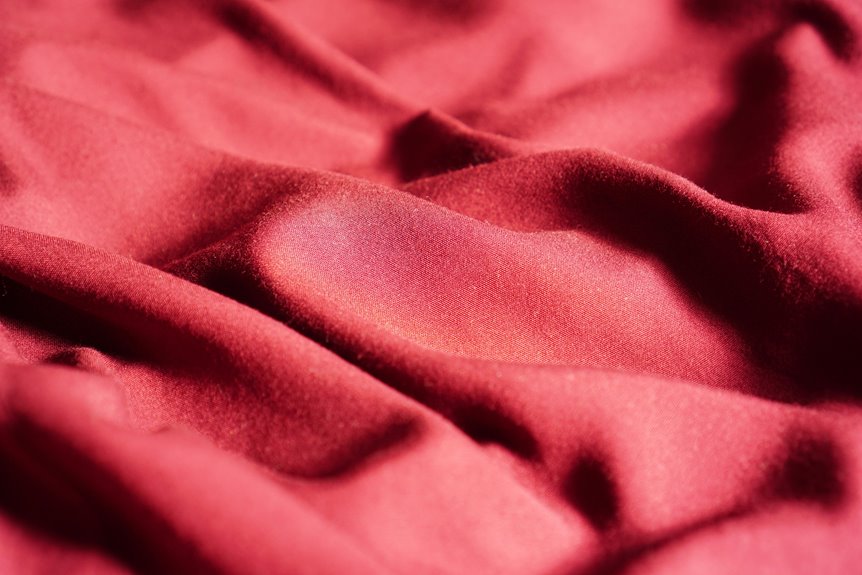
When identifying velvet, start by checking its fiber content—silk velvet shines and feels soft, cotton velvet is plush and breathable, while polyester velvet offers durability and sheen. Examine the weave: cut pile gives a smooth surface, uncut pile feels textured, and double velvet is double-layered. Feel for dense, even pile without bare spots or snags to spot quality. Watch for defects like flattening or color inconsistency. Keep these basics in mind, and you’ll understand what makes velvet truly special.
Key Takeaways
- Identify velvet fiber by feel and appearance: silk is lustrous and soft, cotton is plush and matte, polyester is smooth with synthetic sheen.
- Examine pile type: cut pile provides plush upright fibers, uncut pile shows loops, and double velvet has two layers with pile on one side.
- Check pile height and density; short piles feel smooth and refined, longer piles are softer but delicate; even pile distribution indicates quality.
- Inspect for defects like uneven pile height, snags, bare spots, flattened areas, and color inconsistencies affecting fabric integrity.
- Maintain velvet by avoiding sunlight, using soft brushes for dust, blotting spills gently, and following specific cleaning instructions on care labels.
Understanding Velvet Fiber Types
Although velvet is known for its soft texture and luxurious appearance, you mightn’t realize it comes in various fiber types. When you’re identifying velvet fabric, understanding these fibers helps you gauge durability and care needs.
Cotton velvet is breathable and strong but can crush easily. Polyester velvet offers durability and resists wrinkles, making it a practical choice for everyday use. Rayon velvet feels silky and drapes beautifully but requires gentle care. Velvet can also be made from blends, combining fibers to balance softness and strength.
When you examine velvet, pay attention to the fiber content label or test the fabric’s feel and appearance, as these clues will guide you in selecting the right velvet for your project or wardrobe.
Characteristics of Silk Velvet
When you explore velvet varieties, silk velvet stands out for its unmatched luster and softness. You’ll notice its smooth, shimmering surface that feels luxurious against your skin. Silk velvet drapes beautifully, making it ideal for elegant garments and upholstery. Its natural fibers offer excellent breathability but require gentle care to preserve their delicate texture.
| Feature | Description |
|---|---|
| Fiber Content | 100% silk or silk blend |
| Texture | Soft, smooth, and glossy |
| Durability | Moderate; needs careful handling |
| Appearance | Lustrous with rich depth |
Understanding these traits helps you appreciate silk velvet’s unique appeal and informs your choice when selecting velvet fabrics.
Cotton Velvet Attributes
Cotton velvet offers a plush texture and sturdy feel that sets it apart from other velvet types. When you touch cotton velvet, you’ll notice its soft, natural warmth combined with durability, making it ideal for upholstery and clothing.
It’s breathable, so it feels comfortable against your skin, especially in warmer climates. The fabric’s pile tends to be thicker and less shiny than silk velvet, giving it a matte, rich appearance.
You’ll also find that cotton velvet wrinkles more easily, so it requires gentle care and occasional steaming to maintain its smooth look. Because it’s made from natural fibers, cotton velvet can absorb dye well, offering vibrant and lasting colors.
When identifying cotton velvet, look for these tactile and visual cues to distinguish it confidently.
Polyester Velvet Features
Polyester velvet brings a different set of qualities compared to natural fiber options like cotton velvet. You’ll notice it’s more durable and resistant to wrinkles, making it ideal for heavy-use upholstery or garments that need frequent washing. Polyester velvet often feels smoother and has a synthetic sheen, unlike the matte finish of cotton. It also dries quickly and resists shrinking, so it’s low-maintenance. However, it’s less breathable, which can affect comfort in warm weather.
| Feature | Description |
|---|---|
| Durability | High resistance to wear and tear |
| Appearance | Smooth texture with synthetic shine |
| Maintenance | Easy to clean, wrinkle-resistant |
| Comfort | Less breathable, may feel warmer |
This balance of traits makes polyester velvet a practical, stylish choice.
Blended Velvet Fabrics Explained
Although blending fibers can complicate fabric care, blended velvet fabrics offer a unique combination of qualities you won’t find in single-fiber velvets.
Blended velvet combines unique qualities beyond what single-fiber velvets can offer, despite care complexities.
When you choose blended velvet, you get enhanced durability, improved texture, and often better cost efficiency. These fabrics typically mix natural and synthetic fibers to balance comfort and resilience.
Here’s what you should know about blended velvet:
- Durability: Synthetic fibers like polyester add strength, making the fabric more resistant to wear and tear.
- Softness: Natural fibers such as cotton or silk contribute to a luxurious feel against your skin.
- Maintenance: Blends often resist wrinkles and stains better, but always check care labels as care requirements vary.
Understanding these points helps you select velvet suited to your needs.
Recognizing Velvet Weave Structures
When you look closely at velvet, you’ll notice different weave patterns that create its unique texture.
Recognizing common velvet weaves helps you understand how the fabric’s pile stands and moves.
Pay attention to the pile direction—it can change the way velvet feels and reflects light.
Common Velvet Weaves
Velvet weaves come in several distinct types that give the fabric its signature softness and luster.
When you’re identifying velvet, recognizing these common weaves helps you understand the fabric’s texture and quality.
Here are three popular velvet weave types:
- Cut Pile Velvet – Features upright, cut loops that create a plush, dense surface, offering a smooth feel.
- Uncut (Loop) Pile Velvet – Shows uncut loops on the surface, giving a textured, durable finish with a distinct look.
- Double Velvet – Made by weaving two layers of velvet simultaneously, then cutting them apart, resulting in two pieces with pile on one side.
Identifying Pile Directions
Understanding the different velvet weaves sets the stage for spotting how the pile direction affects the fabric’s appearance and feel.
When you run your hand across velvet, you’ll notice the pile’s texture changes—this is because the tiny loops or cut fibers lie in a certain direction. Typically, velvet’s pile runs either vertically or horizontally, and this affects how light reflects off the surface, creating variations in shade.
To identify pile direction, tilt the fabric under light and observe the color changes; the pile facing toward you appears darker, while the opposite side looks lighter.
Knowing pile direction helps you handle the fabric correctly during cutting and sewing, ensuring the finished product maintains its luxurious look and uniform texture.
Distinguishing Cut Pile Velvet
Cut pile velvet catches your eye with its soft, raised texture created by cutting the loops of yarn. This process gives the fabric a plush, luxurious feel and a distinctive sheen.
When distinguishing cut pile velvet, focus on these key features:
- Texture Variation: Run your fingers over the fabric; cut piles feel smooth and velvety, unlike uncut loops which feel more bumpy.
- Light Reflection: Notice how the fabric reflects light differently as you tilt it—cut pile velvet shows a rich depth and shine due to the cut fibers.
- Pile Length: Check for uniform, short fibers standing upright, which contribute to its characteristic softness and dense appearance.
Identifying Uncut Pile Velvet
While cut pile velvet stands out with its plush softness and sheen, uncut pile velvet offers a different tactile and visual experience.
When you examine uncut pile velvet, you’ll notice its loops remain intact, giving the fabric a textured, matte surface. Run your fingers over it, and you’ll feel a slight raised pattern, often softer and less shiny than cut pile.
Uncut pile velvet features intact loops, creating a soft, textured surface with a gentle, matte finish.
This style tends to show less wear because the loops resist crushing, making it ideal for upholstery. Visually, uncut pile velvet can appear more muted, with shadows created by the loops adding depth.
To identify it, look closely for the characteristic looped fibers rather than the trimmed, upright strands typical of cut pile velvet. This distinction helps you understand velvet’s varied uses and qualities.
Evaluating Velvet Density and Pile Height
Because the density and pile height greatly affect velvet’s look and feel, you should learn how to evaluate these factors carefully.
These two characteristics determine the fabric’s softness, durability, and visual richness.
To assess velvet density and pile height:
- Feel the fabric: Run your hand over the surface; dense velvet feels plush and substantial, while low-density velvet feels sparse.
- Examine the pile length: Use a ruler or your fingers to measure the pile height. Short piles create a smooth, refined texture; longer piles offer more softness but can be delicate.
- Check for uniformity: Look closely for even pile distribution—uneven pile indicates lower quality or wear.
Signs of High-Quality Velvet Fabric
Although velvet comes in many varieties, you can spot high-quality fabric by paying attention to specific details like texture, weight, and craftsmanship.
When you touch premium velvet, it feels soft yet substantial, with a smooth pile that shifts color subtly in the light. The fabric should have a dense, even pile without bare spots or matting.
High-quality velvet also has a firm backing that supports the pile, preventing excessive stretch or distortion. Check the edges and seams; they should be neatly finished without loose threads.
Finally, inspect the overall weight—it should feel neither flimsy nor overly stiff. By focusing on these signs, you’ll confidently identify velvet that stands out for durability and luxurious feel, ensuring your investment lasts and looks exceptional.
Common Velvet Defects to Watch For
Defects in velvet fabric can quickly diminish its beauty and durability, so you’ll want to know what to look for before making a purchase.
Here are common velvet defects you should watch out for:
- Uneven Pile: Check if the velvet’s pile height is inconsistent or flattened in spots, which can indicate poor weaving or wear.
- Snags and Pulls: Inspect for loose threads or pulled fibers that disturb the smooth texture and can worsen over time.
- Color Inconsistencies: Look for patches where the color fades or varies, often caused by uneven dyeing or exposure to sunlight.
Spotting these flaws early helps you choose velvet that maintains its luxurious look and lasts longer.
Care Tips to Maintain Velvet Quality
When you want to keep your velvet looking rich and soft, proper care is essential. Always avoid direct sunlight exposure, as it can fade the fabric’s vibrant colors.
Use a soft brush or a lint roller to gently remove dust and debris without flattening the pile. If a spill happens, blot it immediately with a clean cloth—never rub, as that can damage the fibers.
For cleaning, check the care label carefully; many velvets require dry cleaning or gentle hand washing with cold water.
When storing velvet items, keep them in a cool, dry place and avoid folding them sharply to prevent creases.
Following these simple steps helps maintain velvet’s luxurious texture and appearance over time.
Frequently Asked Questions
Can Velvet Fabric Be Recycled or Is It Environmentally Friendly?
You can recycle some velvet fabrics, especially natural fibers, but synthetic ones are trickier. Velvet’s environmental impact depends on its fiber content and production. Choosing eco-friendly options helps you reduce waste and support sustainability.
What Are the Historical Origins of Velvet Fabric?
You’ll find velvet originated in ancient Mesopotamia, flourishing during the Renaissance in Italy. It’s tied to luxury and nobility, with its rich texture crafted by skilled weavers using silk fibers, symbolizing wealth and elegance.
How Is Velvet Used in Fashion Versus Home Décor?
Velvet wraps you like a royal hug in fashion, elevating gowns and jackets. In home décor, it cushions your comfort, adding rich texture and warmth to sofas and curtains, turning spaces into cozy, elegant retreats you’ll love.
Are There Hypoallergenic Velvet Options Available?
You can find hypoallergenic velvet options, especially those made from synthetic fibers like polyester or microfiber. These reduce allergens compared to natural fibers, helping you enjoy the luxurious feel without triggering sensitivities or allergies.
How Does Lighting Affect the Appearance of Velvet Colors?
Ever noticed how velvet seems to change color in different lights? That’s because lighting affects its sheen and depth, making colors look richer or duller. You’ll want to check velvet under various lights before buying.