
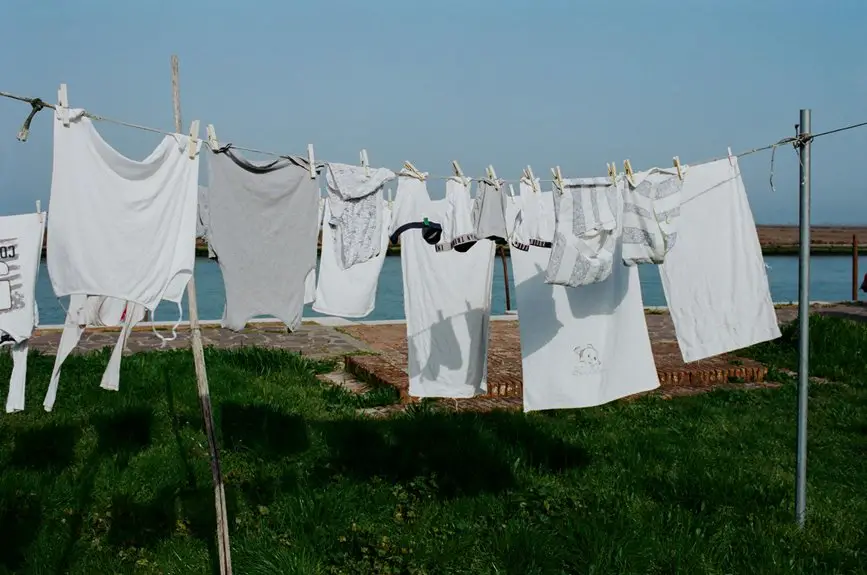
To wash your batik fabric, always hand wash it in cool or lukewarm water with a mild, color-safe detergent to prevent fading or bleeding. Gently swirl the fabric without wringing or scrubbing, and avoid harsh chemicals like bleach. After washing, squeeze out excess water carefully and air dry in the shade to preserve colors. When ironing, use low heat and press gently inside out. Following these steps will keep your batik looking vibrant and durable—there’s more to know about caring for this delicate fabric.
Key Takeaways
- Test colorfastness by dabbing a damp white cloth on a hidden area before washing batik fabric.
- Hand wash batik in cool or lukewarm water using a mild, color-safe detergent to prevent damage and fading.
- Avoid wringing or scrubbing; gently swirl the fabric and rinse thoroughly to maintain the design’s integrity.
- Air dry batik flat or hang in shaded areas, away from direct sunlight to preserve vibrant colors.
- Store batik in breathable cotton bags, folded along natural creases, in a cool, dry place to prevent damage.
Understanding Batik Fabric and Its Characteristics
Batik fabric is a unique textile made using a wax-resist dyeing technique that creates intricate patterns. You’ll notice the wax prevents dye from coloring certain areas, resulting in detailed designs that are both vibrant and delicate.
This process means batik fabric often feels slightly stiffer where the wax was applied, and the colors can be rich yet subtle. Because the patterns are hand-crafted, no two pieces are exactly alike, making each batik special.
You should also know that batik fabric typically uses natural fibers like cotton or silk, which absorb dye well but require gentle care. Understanding these characteristics helps you treat the fabric properly and maintain its beauty over time without causing damage.
Preparing Batik for Washing
Before you wash your batik fabric, you’ll want to take a few important steps to protect its colors and patterns. Start by checking for colorfastness—dab a damp white cloth on a hidden area to see if any dye transfers. Next, remove any loose dirt by gently shaking or brushing the fabric. Always separate your batik from other laundry to avoid color bleeding.
| Step | Purpose | Tip |
|---|---|---|
| Test Colorfastness | Prevent dye bleeding | Use a white cloth |
| Remove Loose Dirt | Avoid fabric damage | Shake or brush lightly |
| Separate Laundry | Preserve vibrant colors | Wash batik separately |
These preparations guarantee your batik fabric stays vibrant and intact during washing.
Choosing the Right Washing Method
When you choose how to wash your fabric, consider its delicate nature and vibrant dyes. Hand washing is usually your best bet, as it gently cleans without risking damage.
Use cool or lukewarm water to prevent colors from fading or bleeding. Avoid wringing or scrubbing harshly; instead, gently swirl the fabric in the water.
If you prefer machine washing, opt for a delicate cycle with cold water, and place the batik inside a mesh laundry bag to protect it.
Avoid tumble drying; instead, air dry your batik flat or hang it away from direct sunlight to preserve its colors.
These careful methods help maintain your batik’s beauty and longevity with minimal risk of damage.
Best Detergents and Cleaning Agents for Batik
Choosing the right detergent can make all the difference in preserving your fabric’s vibrant colors and delicate texture.
You’ll want to avoid harsh chemicals like bleach or strong stain removers that can fade the batik’s intricate patterns. Instead, opt for mild, color-safe detergents designed for delicate fabrics.
Liquid detergents work best since they dissolve easily and rinse out thoroughly, preventing residue buildup. If you prefer natural options, gentle soaps such as castile soap or a mixture of water and white vinegar can help maintain the fabric’s brightness without damage.
Always test any cleaning agent on a small, hidden area first.
Drying and Ironing Batik Fabric
Although batik fabric is delicate, you can safely dry and iron it by following a few simple steps.
After washing, gently squeeze out excess water without wringing to avoid damage. Lay the fabric flat on a clean towel or hang it in a shaded area to air dry, keeping it away from direct sunlight to preserve its colors.
When it’s completely dry, turn the fabric inside out before ironing to protect the design. Set your iron to a low or medium heat setting, and avoid using steam, which can affect the wax patterns.
Press gently and move the iron continuously to prevent scorching. By handling your batik fabric this way, you’ll keep its vibrant patterns and texture intact for years to come.
Storing Batik to Preserve Its Quality
To keep your batik fabric looking its best, you’ll want to store it properly to prevent fading, creasing, or damage.
Always store batik in a cool, dry place away from direct sunlight, which can cause colors to fade over time. Avoid plastic bags or containers that trap moisture and may lead to mildew; instead, use breathable cotton or muslin bags.
Store batik in cool, dry areas free from sunlight; use breathable bags to prevent mildew.
Fold your batik gently along natural creases to minimize sharp folds and creases that can weaken the fabric. If you need to hang it, use padded hangers to maintain its shape without stretching.
Additionally, avoid placing heavy items on top of stored batik to prevent permanent marks.
Frequently Asked Questions
Can Batik Fabric Be Machine Washed Instead of Hand Washed?
You can machine wash batik fabric, but you shouldn’t. It’s delicate and might fade or bleed colors. If you must, use cold water, a gentle cycle, and put it inside a mesh laundry bag for protection.
How Often Should I Wash My Batik Fabric?
Think of your batik fabric as a cherished diary—wash it only when it’s truly needed, like after a story’s told. Usually, washing after several wears keeps its vibrant colors singing and fabric feeling fresh.
Is It Safe to Use Bleach on Batik Fabric?
You shouldn’t use bleach on batik fabric because it can damage the delicate dyes and patterns. Instead, stick to gentle, mild detergents to keep your batik looking vibrant and intact without risking color fading or fabric harm.
Can Batik Fabric Be Dry Cleaned?
Think of dry cleaning batik fabric like sending a delicate letter through the mail—you want it handled with care. Yes, you can dry clean it, but always inform the cleaner about the fabric’s unique dyes to avoid damage.
Will Batik Colors Fade Over Time With Washing?
Yes, batik colors can fade over time if you wash them frequently or with harsh detergents. You’ll want to wash gently in cold water and avoid strong chemicals to keep the vibrant colors lasting longer.