
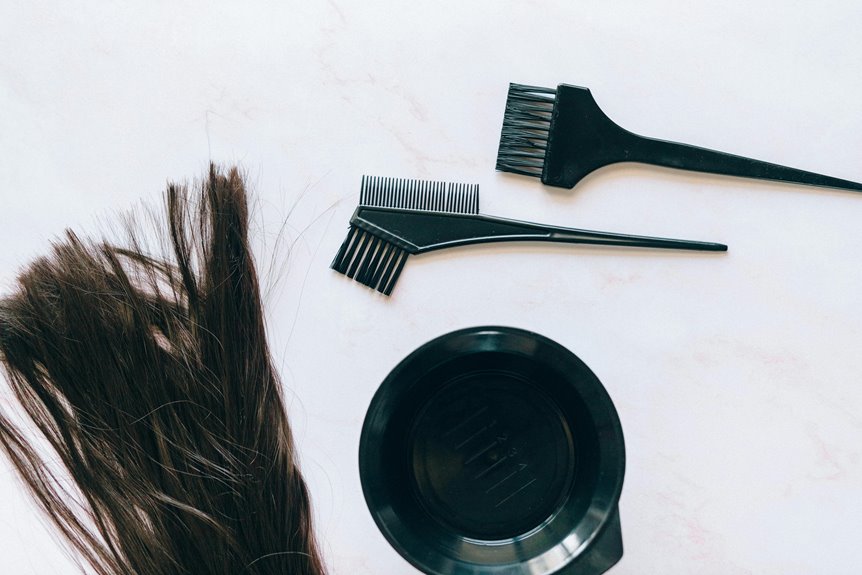
To use bleach for reverse tie-dye, start with a dark, natural-fiber garment for the best results. Tie or fold the fabric to create your desired pattern, then carefully apply diluted bleach using a spray bottle or brush to lighten specific areas. Work in a well-ventilated space, wear gloves, and rinse immediately after bleaching to stop the process. With the right techniques, you’ll achieve stunning designs—keep going to discover how to perfect each step for vibrant, lasting effects.
Key Takeaways
- Choose dark natural fiber garments for vibrant contrast when using bleach in reverse tie-dye techniques.
- Fold and tie fabric using spiral, accordion, or scrunch methods to create unique patterns before applying bleach.
- Apply bleach carefully with spray bottle or brush, diluting for subtle effects or full strength for bold lightening.
- Work in a well-ventilated area wearing gloves and old clothes, covering surfaces to prevent bleach stains.
- Rinse fabric immediately with cold water after bleaching, then wash separately and air dry to preserve the design.
Choosing the Right Fabric and Supplies
To get the best results with reverse tie-dye, start by picking the right fabric. Natural fibers like cotton, linen, and rayon absorb bleach better, creating crisp, vibrant patterns. Avoid synthetic blends since bleach doesn’t react well with them and might damage the fabric unevenly.
Choose natural fibers like cotton or linen for vibrant, crisp reverse tie-dye patterns; avoid synthetic blends.
Choose dark-colored garments; bleach lightens the fabric, so the contrast is key for striking designs.
Next, gather your supplies: rubber bands or string to create patterns, a spray bottle or squeeze bottle for applying bleach, and gloves to protect your hands.
You’ll also need a plastic surface or bag to work on and a bucket or sink for rinsing. Having everything ready guarantees a smooth, safe process and helps you achieve the sharp, creative effects you’re aiming for.
Preparing Your Workspace and Safety Tips
Setting up your workspace properly is essential for a safe and effective reverse tie-dye project. Choose a well-ventilated area and cover surfaces with plastic or old newspapers to protect from bleach spills. Always wear gloves and old clothes to avoid skin contact and damage. Keep a spray bottle or bucket handy for applying bleach carefully.
Here’s a quick safety and setup checklist:
| Task | Why It’s Important |
|---|---|
| Ventilate the workspace | Prevents inhaling harmful fumes |
| Protect surfaces | Avoids permanent bleach stains |
| Wear gloves and old clothes | Protects skin and clothing from bleach |
Following these tips helps you create safely and confidently.
Techniques for Tying and Folding Your Garment
Although the way you fold and tie your garment directly shapes your design, mastering these techniques is easier than you might think. You just need to experiment with different methods to create unique patterns.
Mastering fold and tie techniques is simpler than expected—just explore different methods to craft unique patterns.
Start by folding or scrunching your fabric, then secure it tightly with rubber bands or string to control where the bleach will bleach the color.
Try these simple tying and folding techniques:
- Accordion Fold: Fold your garment back and forth like a fan, then bind sections with rubber bands for stripes.
- Spiral Technique: Pinch the center and twist the fabric into a spiral, securing it with bands to create a circular pattern.
- Random Scrunch: Crumple the fabric randomly and tie it for organic, abstract designs.
These basic methods set the stage for your bleach application.
Applying Bleach for Desired Effects
Once you’ve secured your garment, applying bleach carefully will determine how your design emerges.
Use a spray bottle for lighter, misty effects or apply bleach with a brush for sharper lines. If you want subtle fades, dilute the bleach with water, but for bold contrasts, use it full strength.
Target areas by spraying or dabbing bleach only where you want the color to lighten. Remember, the longer bleach stays on the fabric, the lighter the color becomes, so keep an eye on your garment.
You can always add more bleach, but you can’t undo over-bleaching. Work in small sections to control the process and avoid unwanted spreading.
Wearing gloves and working in a well-ventilated area also helps keep you safe while creating your design.
Rinsing, Washing, and Setting Your Design
After applying bleach and watching your design lighten to the desired shade, it’s time to stop the bleaching process and preserve your pattern.
Rinse the fabric immediately under cold running water to remove excess bleach and prevent further fading. Next, wash your garment separately in cold water with a mild detergent to clean any remaining bleach residue.
Finally, set your design by drying it according to the fabric’s care instructions—air drying is often best to maintain color integrity.
To summarize:
- Rinse thoroughly with cold water to halt bleaching.
- Wash separately using mild detergent.
- Dry carefully, preferably air drying, to set the design.
Following these steps guarantees your reverse tie-dye pattern stays vibrant and well-defined for many wears.
Frequently Asked Questions
Can I Use Colored Bleach for Different Effects?
You can try colored bleach for unique effects, but be cautious. Colored bleach might not work like regular bleach and could damage fabric or colors unpredictably. Test on a small area first to see how it reacts.
How Long Does a Reverse Tie-Dye Design Typically Last?
Your reverse tie-dye design can last forever if you treat it right—but realistically, expect vibrant colors for about 10-15 washes. To keep it sharp, wash cold and avoid harsh detergents or bleach.
Is Reverse Tie-Dye Safe for Children’s Clothing?
You can safely reverse tie-dye children’s clothing if you handle bleach carefully. Always work in a well-ventilated area, wear gloves, and thoroughly rinse the fabric afterward to remove any bleach residue before letting kids wear it.
Can I Combine Bleach With Other Dyes Afterward?
You can combine bleach with other dyes afterward, but make sure the fabric is completely dry and neutralized first. Test a small area to avoid unwanted colors or damage, and always use proper safety precautions when handling bleach.
What Should I Do if Bleach Spills on My Skin?
If bleach spills on your skin, rinse it immediately with plenty of cold water for at least 15 minutes. Avoid scrubbing, and remove any contaminated clothing. If irritation persists, seek medical attention promptly.