
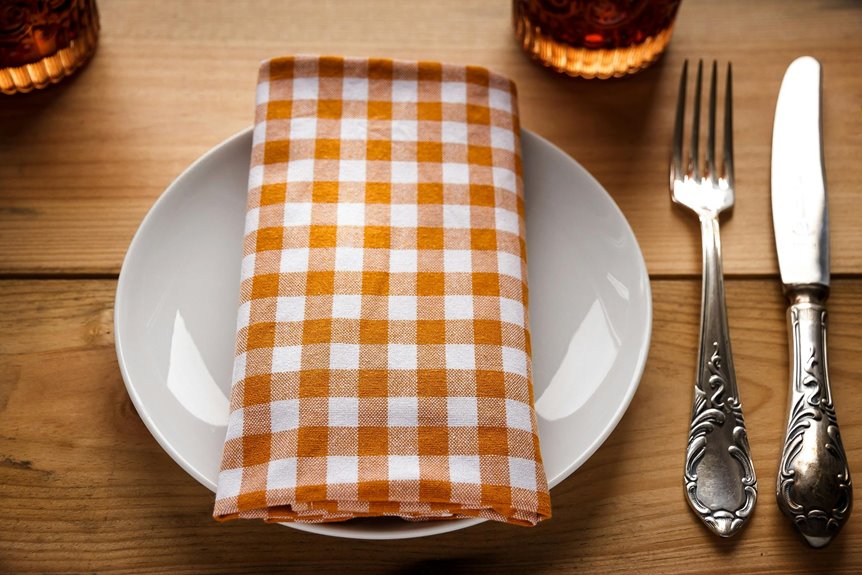
You can tell the right side of gingham fabric by checking for sharper, crisper checks that have more vibrant color saturation compared to the back, which looks slightly faded. Run your fingers over both sides—the right side usually feels smoother with a tighter weave, while the wrong side is rougher. Look for the selvedge edge without the pattern and any manufacturer tags, which often appear on the wrong side. If you want to get even more confident identifying the front, there’s more helpful detail to explore.
Key Takeaways
- The right side shows crisper, sharper gingham checks with clear color boundaries compared to the faded back side.
- The color saturation on the right side is richer and more vibrant due to better dye penetration.
- The texture of the right side is smoother and tighter, while the wrong side feels rougher or looser.
- Holding the fabric up to light reveals the right side’s deeper colors and sharper pattern contrast.
- Manufacturer tags or printed markings are typically found on the wrong side, helping to identify the fabric front.
Understanding the Weave of Gingham Fabric
The weave of gingham fabric is what gives it its distinctive checkered pattern. When you look closely, you’ll notice the fabric is woven with equal-width stripes of colored and white yarns crossing each other at right angles. This creates the classic checks you recognize.
You’ll feel the weave as a smooth, even texture without any raised areas. Because the pattern results from the weaving process itself, both sides of gingham fabric often look very similar.
However, the side where the yarns are tighter and the pattern appears sharper is usually considered the right side. When handling gingham, pay attention to the crispness and clarity of the checks, as this subtle detail helps you identify the fabric’s front for sewing or crafting projects.
Examining the Color Saturation on Both Sides
When you examine gingham fabric, you’ll notice that the color saturation can vary slightly between the front and back sides. The front side usually has more vibrant and richer colors because the dye is applied more heavily or evenly on this side.
The back side tends to look a bit faded or muted since the dye doesn’t penetrate as deeply. By holding the fabric up to light, you can often see this contrast more clearly.
Pay close attention to how intense the colors appear; the side with the deeper, more consistent saturation is likely the right side. This subtle difference helps you distinguish the fabric’s face without relying on other markers.
Checking the Sharpness of the Pattern
Although gingham fabric is known for its simple checkered pattern, you should still check how sharply the lines and edges are printed.
When you hold the fabric up to the light or view it closely, the right side will have crisp, well-defined checks with clear boundaries between colors.
On the wrong side, these lines often look blurred or faded because the dye hasn’t fully penetrated the fibers or the print appears slightly smudged.
Take your time to compare both sides under good lighting. If the pattern looks sharp and vibrant on one side and less distinct on the other, you’ve identified the fabric’s right side.
This method helps guarantee your finished project showcases the gingham’s classic, clean look.
Feeling the Texture Differences
When you feel gingham fabric, notice if it’s smooth or rough to the touch—this affects comfort and use.
Look closely for visual clues like tight or loose weaves that hint at texture.
Trust your hands to guide you toward the right fabric choice.
Smooth vs. Rough Texture
Because texture plays a crucial role in how gingham fabric feels against your skin, you’ll want to pay close attention to whether it’s smooth or rough. Usually, the right side of gingham fabric feels smoother, while the wrong side has a slightly rougher texture. Running your fingers gently over both sides helps you detect these subtle differences. This tactile cue guarantees you select the side that feels better for your project, especially for clothing or upholstery.
| Texture Type | Right Side Feel | Wrong Side Feel |
|---|---|---|
| Smooth | Soft and even | Less soft, slightly uneven |
| Rough | Rare, minimal roughness | Noticeable roughness |
| Weave Impact | Tighter weave visible | Looser weave visible |
Trust your touch to find the smoother, right side.
Visual Texture Clues
Besides feeling the texture, you can often spot visual clues that help identify the right and wrong sides of gingham fabric.
Look closely at the pattern’s clarity—the right side usually shows sharper, more vibrant checks, while the wrong side appears duller or slightly faded. You might notice that the weave on the right side is tighter and more uniform, making the colors stand out better.
On the wrong side, the threads may seem looser or uneven, causing the pattern to look less defined. Also, the right side often has a slight sheen, especially under light, whereas the wrong side tends to be more matte.
Identifying the Selvedge Edge for Orientation
Although it might seem subtle at first, identifying the selvedge edge is crucial for properly orienting gingham fabric. The selvedge is the tightly woven edge running along the length of the fabric, designed to prevent fraying.
When you locate this edge, you’ll notice it’s usually smoother and often has a different texture or color thread running through it. This edge doesn’t have the typical gingham check pattern continuing into it, which helps you distinguish it from the main fabric body.
Using Light to Differentiate the Fabric Sides
When you hold gingham fabric up to the light, you’ll quickly notice subtle differences between the front and back sides.
The front side usually appears more vibrant because the dye saturates the threads fully, creating a clearer checkered pattern. On the back, the colors often look duller or slightly faded, as the dye doesn’t penetrate as deeply.
Light shining through the fabric also reveals the weave’s texture; the front tends to have a smoother, tighter look, while the back may show looser or uneven weaving.
Comparing the Finish of the Fabric Surface
When comparing gingham fabric, pay close attention to the texture differences between surfaces.
You’ll also notice how color vibrancy and print sharpness can vary depending on the finish.
These factors help you choose the best side for your project.
Texture Differences
Because gingham fabric comes in various weaves and materials, you’ll notice differences in the texture that affect both appearance and feel.
When you run your fingers over the fabric, the right side often feels smoother or more finished compared to the reverse. For example, cotton gingham usually has a crisp, slightly raised texture on the front, while the back might feel flatter or rougher.
In blends or polyester ginghams, the front can feel slicker or shinier, which helps you identify the correct side. Pay attention to the weave tightness too—the right side typically displays a more defined pattern with clearer lines.
Color Vibrancy
A gingham fabric’s color vibrancy depends largely on its surface finish, which influences how light interacts with the material.
When you examine both sides, the right side usually appears brighter and more vivid because the finish enhances the color intensity. The wrong side tends to look duller or washed out since the finish doesn’t reflect light as effectively.
You’ll notice that the right side often has a subtle sheen or a smoother surface, making the colors pop. This difference is especially clear in natural light.
By holding the fabric up and observing how vibrant the colors seem, you can quickly identify the right side.
Print Sharpness
Although it might seem subtle at first, print sharpness plays an essential role in choosing gingham fabric since it directly affects the overall appearance and quality.
When you examine the fabric closely, the right side will display crisp, well-defined checks with clean edges. The colors won’t bleed into each other, and the pattern will appear precise and consistent.
On the reverse side, you often notice a fuzzier, less distinct print where the colors may blur slightly or look faded. This difference happens because the printing or weaving process finishes the front side with more care to showcase the design sharply.
Observing the Fabric’s Thread Density
When you examine gingham fabric, pay close attention to its thread density, as this factor directly affects durability and texture. The right side often has a tighter weave with threads packed closely together, making it feel smoother and more resilient. On the wrong side, the weave might appear looser and less uniform. By comparing thread density, you can better identify the fabric’s front.
| Feature | Right Side |
|---|---|
| Thread Density | Tightly packed, uniform |
| Texture | Smooth, firm |
| Visual Appearance | Crisp check pattern, clear lines |
Checking thread density isn’t just about feel; it gives you clues about the fabric’s quality and which side will hold up better over time.
Using Markings or Manufacturer Tags
Since manufacturers often place tags or markings on the wrong side of gingham fabric, you can use these indicators to quickly identify the fabric’s front.
Look closely for any printed symbols, labels, or ink markings—these are usually applied to the back to avoid showing on the finished product. If you find a tag sewn along an edge, it’s almost certainly on the wrong side.
Additionally, some fabrics feature a selvage with printed information; check which side this printing appears on. By noting these subtle clues, you can confidently distinguish the right side without guesswork.
Just remember to handle the fabric gently so the markings stay intact until you’re ready to cut or sew. This method saves time and prevents costly mistakes during your project.
Tips for Practicing and Testing Before Cutting
Before you make any cuts, take time to visually inspect the gingham fabric for color consistency and pattern alignment.
You’ll also want to create test swatches to check how the fabric behaves when washed or sewn.
These simple steps help you avoid surprises and guarantee your project turns out just right.
Visual Inspection Techniques
A careful visual inspection is essential to confirm your gingham fabric is free of flaws and perfectly aligned before you start cutting.
Begin by holding the fabric up to the light to check for any irregularities in the weave or color inconsistencies. Look closely at the checks; the right side typically has crisper, more vibrant colors and a clearer pattern.
Run your fingers over the fabric to feel for any uneven texture or snags that might affect your project. Lay the fabric flat on a smooth surface and verify the checks line up straight along both the warp and weft threads.
Taking these steps helps you avoid costly mistakes and confirms your finished piece looks professional and polished.
Test Swatch Methods
After visually inspecting your gingham fabric to confirm it’s flawless and properly aligned, you’ll want to test how it behaves in real use.
Cut a small swatch from the fabric, ideally matching your pattern’s scale. Handle it just as you’d the final piece—wash, iron, and stretch it gently to see how the colors hold up and if the weave distorts.
Check which side feels smoother or shows brighter colors under natural light. Pin or baste the swatch to see how it reacts to stitching and whether the pattern lines stay consistent.
Testing this way prevents costly mistakes and verifies you’re confident about the fabric’s right side before cutting into your project. This hands-on approach guarantees precise results every time.
Frequently Asked Questions
Can the Right Side of Gingham Fabric Change After Washing?
You might notice slight changes after washing, but the right side of gingham fabric usually stays the same. Colors or texture may fade a bit, but the pattern’s orientation won’t flip or switch sides unexpectedly.
Is the Wrong Side of Gingham Fabric Suitable for Lining?
You can use the wrong side of gingham fabric for lining if you prefer a subtler look. Just keep in mind it might not be as crisp or vibrant as the right side, but it’s still functional.
How Does the Right Side Affect Sewing Machine Settings?
You’ll want to adjust your sewing machine settings based on fabric texture and thickness. The right side of gingham is usually smoother, so you might use a slightly lighter tension and stitch length for cleaner seams.
Can I Dye Gingham Fabric to Enhance the Right Side?
Imagine you dye gingham fabric to deepen its colors; yes, you can enhance the right side by carefully using fabric dye. Just test a small spot first to avoid bleeding and preserve the pattern’s crispness.
Does the Right Side of Gingham Fabric Wear Out Faster?
You’ll find the right side of gingham fabric doesn’t necessarily wear out faster, but it may show wear more visibly due to the pattern. Handle both sides gently to keep your fabric looking fresh longer.