
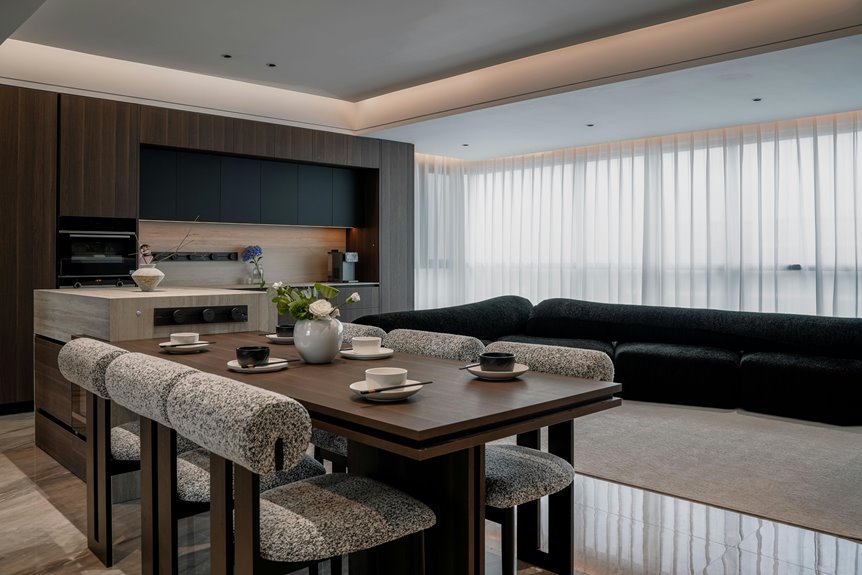
To style casement fabric curtains for an airy living room, choose lightweight, sheer fabrics like linen or voile in soft neutrals or pastels to let in natural light and create flow. Measure windows carefully for a perfect fit, then layer sheer and opaque panels for depth and privacy control. Pair your curtains with sleek rods and subtle tiebacks to enhance the look without overwhelming the space. Keep exploring styles and accessories to perfectly balance brightness and texture in your room.
Key Takeaways
- Choose lightweight, sheer casement fabrics in light neutrals or pastels to maximize natural light and enhance an airy atmosphere.
- Measure windows accurately and install curtain rods slightly wider than the frame for fuller coverage and elegant draping.
- Layer sheer casement curtains with light linen or voile panels for added depth, texture, and versatile light control.
- Use tiebacks or holdbacks in complementary materials to elegantly pull curtains aside and invite more sunlight.
- Maintain curtains by regular dusting and spot cleaning to preserve fabric brightness and airy softness over time.
Choosing the Right Fabric for Light and Flow
When selecting fabric for your casement curtains, consider how much natural light you want to let in and how the material will move with the breeze.
Lightweight fabrics like linen, voile, or cotton blends allow sunlight to filter through softly, creating an airy atmosphere. They also flutter gently, enhancing the room’s sense of flow.
Linen, voile, and cotton blends softly filter sunlight while fluttering gently to enhance your room’s airy flow.
If you prefer more privacy or insulation, you might choose slightly heavier fabrics, but keep in mind they won’t billow as freely.
Sheer or semi-sheer materials work best if you want to maintain a bright, open feel without sacrificing airiness.
Also, think about texture—smooth fabrics tend to drape elegantly, while textured ones add subtle visual interest without overwhelming the space.
Choose fabrics that balance light control with graceful movement to complement your living room’s vibe.
Selecting Colors to Enhance Brightness
To make your space feel brighter, start by choosing light neutral shades for your casement curtains.
You can also add soft pastel tones to create a gentle, airy vibe.
Don’t be afraid to use complementary bright colors to give your room an extra pop of energy.
Choose Light Neutral Shades
Although darker colors can create a cozy atmosphere, choosing light neutral shades for your casement fabric curtains will instantly brighten your space and make it feel more open.
Light neutrals reflect natural light, enhancing your living room’s airy vibe without overwhelming other decor elements. When selecting these shades, consider:
- Soft whites that evoke a crisp, clean look
- Warm beiges adding subtle warmth without heaviness
- Pale grays for a modern, understated elegance
- Cream tones that bring a gentle softness
- Light taupes blending seamlessly with various furnishings
These colors create a versatile backdrop, allowing you to switch up accent pieces easily.
Plus, they help your curtains serve as a light, flowing frame to your windows, maximizing brightness and airiness in your living room.
Incorporate Pastel Tones
How can you brighten your space while adding a touch of color? Incorporating pastel tones into your casement fabric curtains is a simple way to achieve that airy, fresh feel.
Soft hues like blush pink, mint green, pale blue, or lavender allow light to filter through gently, enhancing your room’s brightness without overwhelming it. These subtle colors bring warmth and personality, creating a soothing atmosphere that complements natural light.
When selecting pastel curtains, consider the existing color palette in your living room to guarantee harmony. Pastels work well with whites, creams, and other muted shades, maintaining an open, inviting vibe.
Use Complementary Bright Colors
When you want to make your space truly vibrant, choosing complementary bright colors for your casement fabric curtains can transform the room instantly.
These colors don’t just add energy; they create contrast that highlights other décor elements. To pick the right hues, consider pairing colors opposite each other on the color wheel. For example, vivid orange curtains look stunning against a deep blue wall.
Here’s how you can visualize it:
- Sunlit yellow curtains bringing warmth against cool lavender walls
- Crisp teal drapes paired with coral cushions for a lively vibe
- Bright red curtains accentuating a pale green sofa
- Bold purple panels contrasting with soft yellow accessories
- Vibrant turquoise curtains energizing a neutral beige room
With these combos, your living room feels both airy and full of life.
Measuring Your Windows for a Perfect Fit
To achieve a flawless look with your casement fabric curtains, start by carefully measuring your windows. Use a steel tape measure for accuracy.
Measure the width of your window frame from edge to edge, then add extra inches—typically 4 to 6 inches on each side—to guarantee your curtains fully cover the window and create a fuller appearance.
Next, measure the height from the top of the window frame or curtain rod down to where you want the curtains to end, whether that’s the windowsill, below it, or all the way to the floor.
Double-check your measurements to avoid mistakes. Accurate sizing is key to preventing gaps and guaranteeing your curtains hang beautifully, enhancing the airy feel you want in your living room.
Layering Curtains for Depth and Texture
Adding multiple layers to your casement fabric curtains instantly boosts depth and texture, transforming a simple window treatment into a striking focal point.
You can create a cozy, inviting atmosphere by thoughtfully layering fabrics with different weights and finishes. Start with a solid base, then build up to add interest and dimension.
Consider these layering ideas:
- Pair a linen panel with a heavier cotton drape
- Add a textured velvet curtain behind a plain fabric
- Use a patterned fabric over a neutral base
- Incorporate subtle color variations for richness
- Layer curtains with different lengths for dynamic flow
This approach not only enhances visual appeal but also allows you to control light and privacy effectively, making your living room feel both airy and sophisticated.
Combining Sheer and Opaque Fabrics
Layering different curtain fabrics opens up exciting possibilities, especially when you combine sheer and opaque materials. You can enjoy the best of both worlds: sheers soften natural light, creating an airy atmosphere, while opaque fabrics offer privacy and block harsh sunlight when needed.
Start by hanging sheer curtains closest to the window. Then, add opaque panels on the outside to frame the window and provide depth. Choose colors and textures that complement each other—neutral sheers with rich, solid casement fabrics work beautifully.
When you want a bright, open feel, keep the opaque curtains pulled back. For cozy evenings, draw them closed. This combination lets you easily adjust mood and light, enhancing your living room’s comfort and style without sacrificing functionality.
Picking Curtain Rods and Hardware Styles
When picking curtain rods for your casement fabric curtains, consider the material to match your room’s style and durability needs.
Don’t forget to choose finial designs that complement both the rod and your overall decor. These details can really pull your window treatment together.
Choosing Rod Materials
Selecting the right rod material is essential to complement your casement fabric curtains and enhance the overall look of your space. The material you pick not only supports your curtains but also sets the tone for your living room’s style.
Think about durability, finish, and how it interacts with the light, especially if you want an airy feel.
Consider these popular rod materials:
- Brushed nickel: sleek, modern, and subtle
- Antique brass: warm, vintage charm
- Matte black metal: bold, contemporary contrast
- Wood: natural, cozy texture
- Chrome: shiny, reflective, and clean
Choose a material that harmonizes with your curtain fabric and existing décor to keep your space feeling light and inviting.
Selecting Finial Designs
Anyone can transform the look of their casement fabric curtains by choosing the right finial designs. Finials are the decorative end pieces on curtain rods, and they add personality and style to your window treatment.
You’ll want to pick finials that complement your curtain fabric and overall room decor. For an airy feel, consider sleek metallic or minimalist wooden finials that don’t overpower the lightness of your curtains.
Ornate or bulky finials can weigh down the look, so steer clear if you want to maintain openness. Also, match the finial’s finish with your rod material for a cohesive appearance.
Styling Tips for Different Window Sizes
Different window sizes call for tailored styling approaches to make the most of your casement fabric curtains.
Tailor your casement fabric curtains to each window size for optimal style and function.
For small windows, choose lightweight fabrics that let in plenty of light, and hang curtains slightly above the frame to create height.
Medium windows benefit from fuller panels that add softness without overwhelming the space.
Large windows call for floor-to-ceiling curtains to emphasize grandeur and airiness.
Here are some tips to guide you:
- For narrow windows, use slim curtain rods to avoid crowding.
- Wide windows work well with multiple panels for balanced coverage.
- Floor-length curtains enhance tall windows by drawing the eye upward.
- Shorter curtains suit windows with radiator units beneath.
- Consider layering sheer casement curtains for added depth without blocking light.
These strategies help you tailor your curtains beautifully to any window size.
Accessorizing With Tiebacks and Holdbacks
Tiebacks and holdbacks add both function and flair to your casement fabric curtains. They let you neatly pull your curtains aside, inviting natural light in while keeping your space airy and open.
Choose tiebacks in complementary fabrics or textures to enhance your room’s style without overpowering the curtains. Holdbacks, often fixed on the wall, offer a more permanent way to frame your windows elegantly. Opt for metallic or wooden holdbacks if you want to add subtle sophistication.
When placing tiebacks or holdbacks, position them at about two-thirds of the curtain’s length from the top to create a balanced, polished look. These accessories not only keep your curtains in place but also emphasize the window’s shape, boosting your living room’s inviting and breezy atmosphere.
Maintaining and Cleaning Casement Fabric Curtains
While casement fabric curtains add charm to your windows, keeping them looking fresh requires regular care. You’ll want to maintain their airy feel without damaging the fabric.
Start by dusting them weekly with a soft brush or vacuum attachment. For cleaning, check the care label—some fabrics need gentle hand washing or dry cleaning. Spot clean stains immediately with mild detergent and a damp cloth. Avoid harsh scrubbing to preserve texture.
Rotate curtains occasionally to prevent uneven fading from sunlight.
- Gently vacuum dust buildup
- Spot clean spills promptly
- Use mild detergent for hand washing
- Air dry to avoid shrinkage
- Rotate panels for even wear
Frequently Asked Questions
Can Casement Fabric Curtains Help With Sound Insulation?
You can use casement fabric curtains to help with sound insulation, but they won’t block noise completely. Thicker, denser fabrics work better, so choose heavy materials if you want to reduce sound in your living space.
Are Casement Curtains Suitable for Rooms With Pets?
You’ll find casement curtains suitable for rooms with pets if you choose durable, pet-friendly fabrics. They resist scratching and are easy to clean, helping keep your space looking tidy while accommodating your furry friends comfortably.
Do Casement Fabric Curtains Provide UV Protection?
Imagine your sunroom’s furniture fading less with casement fabric curtains—they do provide UV protection! You’ll find many fabrics block harmful rays, preserving interiors and reducing glare, so you can enjoy sunlight without worry.
Can I Use Casement Fabric Curtains in Humid Climates?
You can use casement fabric curtains in humid climates, but you’ll want breathable, moisture-resistant materials like linen or treated cotton. Regular cleaning and proper ventilation will help prevent mold and keep your curtains fresh and durable.
How Do Casement Curtains Impact Room Temperature?
Like a gentle breeze on a summer day, casement curtains help regulate room temperature by allowing airflow while filtering sunlight. You’ll keep things cooler in summer and warmer in winter, enhancing your comfort naturally.