
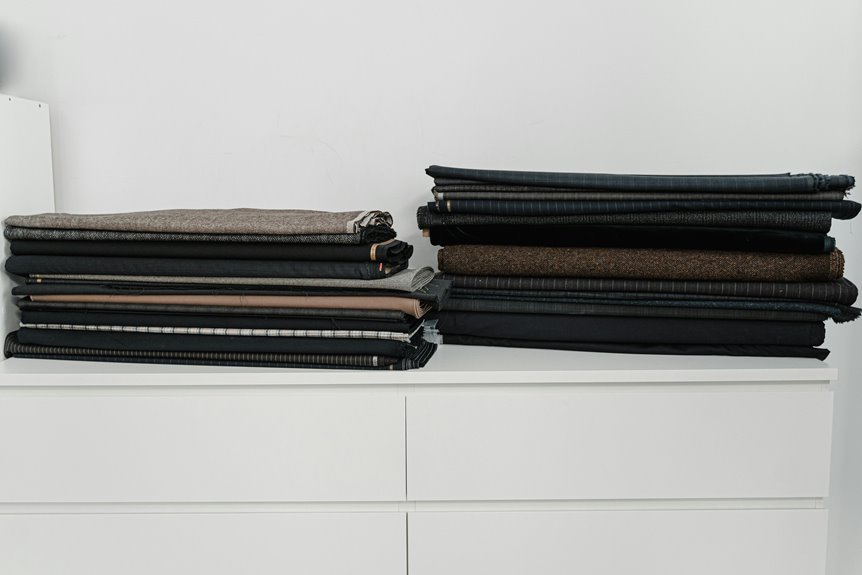
To stop a bleeding quilt from ruining other fabrics, act fast! Remove the quilt immediately to prevent further damage. Blot the affected areas and rinse with cold water. Wash it separately in cold water with gentle detergent, using color catchers. For stubborn stains, apply a gentle stain remover and soak. Always monitor your quilt for early signs of bleeding and damage. Learn more tips on preserving your quilt’s integrity and preventing dye transfer effectively.
Key Takeaways
- Inspect the quilt for color transfer and test for bleeding using a damp white cloth before washing.
- Wash the quilt separately in cold water with gentle detergent to prevent dye transfer to other fabrics.
- Use color catchers in the wash to absorb excess dye and protect lighter fabrics from staining.
- Store the quilt away from direct sunlight and moisture to prevent fading and potential dye bleeding.
- Regularly monitor the quilt for signs of bleeding and address any issues immediately to avoid damage.
Identifying and Assessing the Bleeding
How can you tell if your quilt is bleeding? Start by inspecting the fabric for any signs of color transfer. If you notice vibrant colors fading or staining nearby fabrics, your quilt might be bleeding.
Look for areas where the colors seem to run or smudge, especially after washing. You can also conduct a simple test: dampen a white cloth and gently rub it against the quilt. If you see color on the cloth, it’s a clear indication of bleeding.
Additionally, consider the fabric types used in your quilt; some dyes are more prone to bleeding than others. By identifying these signs early, you can better prepare for the next steps to protect your quilt and other fabrics from damage.
Immediate Actions to Limit Damage
When you notice your quilt bleeding, act fast to limit the damage.
Remove the quilt immediately and gently blot the affected areas with a clean cloth.
Next, rinse the spots with cold water to stop the bleeding in its tracks.
Remove Quilt Immediately
Remove the quilt from the area immediately to prevent further damage. The longer it stays, the more likely the bleeding fabric will stain other materials nearby.
Carefully lift the quilt, ensuring you don’t rub or press it against other fabrics, as that can spread the dye. If the quilt is heavy or large, you might need a friend’s help to avoid accidents.
Make sure to carry it away from any delicate surfaces where it might leave marks. Once you’ve relocated the quilt, assess the surrounding area for any potential stains.
Taking swift action now is essential to minimizing the impact of the bleeding dye. You’re on the right track to salvage your other fabrics!
Blot Affected Areas
Once you’ve safely relocated the quilt, focus on blotting the affected areas to minimize damage.
Grab a clean, dry cloth or paper towel and gently press it against the stained fabric. Don’t rub or scrub, as this can spread the dye further or damage the fibers.
Instead, use a blotting motion, absorbing as much of the bleeding dye as possible. You might need to change the cloth frequently to guarantee you’re not just reapplying the dye.
If the stain is large, work from the outside towards the center to prevent it from spreading. Keep blotting until you notice the cloth picking up less dye.
This quick action can greatly reduce the risk of permanent staining on surrounding fabrics.
Rinse With Cold Water
To effectively limit the damage from bleeding dye, rinse the quilt with cold water as soon as possible. This immediate action helps to remove excess dye before it sets. Make sure you use a sink or bathtub, and keep the quilt flat while rinsing. Avoid scrubbing, as this can spread the dye further.
Here’s a quick reference table to guide you:
| Step | Action | Purpose |
|---|---|---|
| 1. Rinse | Use cold water | Remove excess dye |
| 2. Blot | Use a clean cloth | Absorb remaining moisture |
| 3. Air Dry | Lay flat in shade | Prevent further bleeding |
Washing and Treating the Quilt
When you notice your quilt bleeding color, addressing the issue promptly is essential to prevent permanent damage.
Start by washing the quilt in cold water using a gentle detergent. Avoid using bleach, as it can worsen the bleeding or damage the fabric. If you have color catchers, toss one in the wash to help absorb excess dye.
Wash the quilt in cold water with gentle detergent, avoiding bleach to prevent further damage. Use color catchers for best results.
After washing, inspect the quilt for any remaining bleeding. If you see any, you might need to repeat the wash.
Once you’re satisfied with the results, air dry the quilt or use a low-heat setting in the dryer. This process helps set the colors and minimize further bleeding.
Removing Stubborn Stains
Although stains can be frustrating, removing stubborn ones from your quilt is possible with the right approach.
First, identify the stain type—whether it’s food, ink, or grease. Once you’ve done that, try these effective methods:
- Cold Water Rinse: Always start with cold water to prevent the stain from setting.
- Stain Remover: Use a gentle stain remover, applying it directly to the affected area.
- Soak: Let your quilt soak in a mixture of cold water and detergent for at least 30 minutes.
- Gentle Scrubbing: For tough stains, use a soft brush to gently scrub the area.
With patience and the right techniques, you can restore your quilt to its former beauty!
Preventative Measures
Removing stubborn stains is just one part of maintaining your quilt’s beauty. To prevent your quilt from bleeding onto other fabrics, it’s essential to take some proactive steps.
Always wash your quilt separately, especially after the first few uses. Use cold water and a gentle detergent designed for delicate fabrics.
Before the first wash, soak your quilt in a solution of vinegar and water to help set the dyes. Consider using color catchers in the wash, as they can absorb any loose dye.
Keep your quilt away from direct sunlight to prevent fading and bleeding. Finally, store your quilt in a cool, dry place, away from moisture and excessive heat.
These simple measures can save you from future headaches.
Ongoing Monitoring and Care
To keep your quilt looking its best, you need to monitor it regularly after each wash.
Using color catchers can help minimize bleeding, so make them a part of your routine.
Additionally, proper storage techniques will protect your quilt from fading and damage over time.
Inspect After Each Wash
After every wash, it’s crucial to inspect your quilt for any signs of bleeding or damage.
This ongoing monitoring helps you catch potential issues before they worsen.
Here’s what to look for:
- Color Transfer: Check for any areas where colors may have bled onto lighter fabrics.
- Fabric Integrity: Look for fraying threads, tears, or weakened seams.
- Stains: Spot any new marks that might’ve appeared during the wash.
- Overall Appearance: Assess the quilt’s colors and patterns for any noticeable changes.
Use Color Catchers Regularly
Using color catchers regularly can greatly reduce the risk of color bleeding in your quilt during washes.
These innovative sheets capture loose dyes from fabrics, preventing them from transferring to other materials. When washing your quilt, simply toss a color catcher into the load along with your fabric.
It’s an easy step that provides extra protection, especially if your quilt has vibrant colors or is made from various fabrics.
Make it a habit to use color catchers every time you wash your quilt to guarantee it stays looking fresh and vibrant.
You’ll appreciate the peace of mind knowing that you’re taking proactive measures to protect your quilt and other fabrics from unwanted color transfer.
Proper Storage Techniques
While you might think that washing is the only way to keep your quilt in good shape, proper storage techniques are just as essential.
To prevent color bleeding and fabric damage, follow these tips for effective storage:
- Use breathable storage bags: Avoid plastic, as it can trap moisture and cause mildew.
- Keep it away from direct sunlight: UV rays can fade colors and weaken fibers.
- Store in a cool, dry place: High humidity can lead to mold growth and fabric deterioration.
- Regularly check for pests: Inspect your quilt for signs of moths or other insects that might cause damage.
Understanding Dye Transfer
How can you prevent dye transfer in your quilts? Understanding how dye transfer occurs is essential. When fabrics with excess dye come into contact with lighter or untreated fabrics, the dye can bleed, causing unsightly stains. This can happen during washing, drying, or even while storing quilts.
To minimize the risk, always pre-wash your fabrics before sewing. Use cold water and a gentle detergent to help set the dye.
Always pre-wash your fabrics with cold water and gentle detergent to set the dye and reduce the risk of bleeding.
When washing your quilt, avoid mixing it with lighter items. If you notice bleeding during the wash, use a color catcher sheet to absorb excess dye.
Finally, consider using a dye fixative to help secure the colors. By taking these precautions, you can protect your quilts and keep them looking vibrant.
The Importance of Colorfastness
Understanding colorfastness is essential for maintaining the beauty and longevity of your quilts. When fabrics bleed, they can ruin not only your quilt but also other textiles they come into contact with.
By guaranteeing your materials are colorfast, you protect your creations and preserve their vibrant hues. Here are some key points to reflect on:
- Colorfast fabrics resist fading when washed or exposed to sunlight.
- They prevent dye transfer to other fabrics during cleaning.
- Using colorfast materials reduces the risk of ruining your hard work.
- Testing for colorfastness before starting your project can save you headaches later.
Prioritizing colorfastness not only enhances the look of your quilt but also assures it stands the test of time.
Storing Your Quilt Safely
To keep your quilt in pristine condition, it’s essential to store it properly when not in use.
First, find a cool, dry place away from direct sunlight, as UV rays can fade colors and weaken fabrics.
Use a breathable cotton bag or acid-free tissue to wrap your quilt, avoiding plastic which can trap moisture and lead to mildew.
If you fold your quilt, make sure to change the fold regularly to prevent creases.
Avoid hanging it, as this can distort its shape over time.
Finally, check on your quilt periodically to guarantee it’s staying safe and sound.
Frequently Asked Questions
Can I Use Bleach to Remove Dye Stains From My Quilt?
You shouldn’t use bleach on your quilt to remove dye stains. It can damage the fabric and worsen the issue. Instead, try color-safe detergents or specific stain removers designed for fabric to tackle those stains effectively.
How Can I Tell if My Quilt Fabric Is Colorfast?
To check if your quilt fabric’s colorfast, dampen a hidden area with water. If the dye bleeds, it’s not colorfast. Remember, even the strongest dyes can run, much like a river in a storm.
What Should I Do if My Quilt Has Permanent Dye Stains?
If your quilt has permanent dye stains, try using a color remover specifically designed for fabrics. Test on a small area first, and if that doesn’t work, consider consulting a professional cleaner for help.
Is It Safe to Use Fabric Softeners on Quilts?
When you cradle your quilt in softener’s embrace, remember this: it can dull colors and weaken fibers. Instead, opt for gentle care, washing with mild detergent to keep your quilt vibrant and strong.
Can I Machine Dry My Quilt After Washing?
Yes, you can machine dry your quilt after washing. Just make certain to use a low heat setting to prevent damage. Check periodically to verify it’s drying evenly and not getting too hot.