
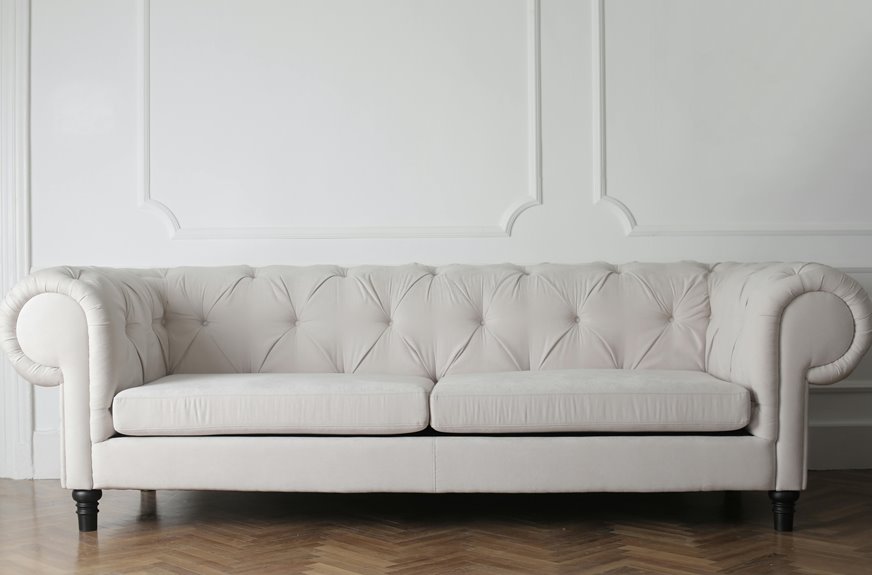
To stitch a ripped seam on your leather sofa, first clean and trim the torn edges, then gather strong, waxed thread and a heavy-duty leather needle. Warm the leather slightly, align the edges flush, and hold them in place. Use a saddle stitch or running stitch to sew the seam tightly, matching the thread color for a neat finish. Secure the thread with a knot and trim excess. With a few simple steps, you can restore your sofa’s strong, seamless look—here’s how to do it right.
Key Takeaways
- Clean and dry the ripped leather area thoroughly, trimming any loose threads for a neat repair surface.
- Use a heavy-duty curved leather needle and strong, waxed thread that matches the sofa color for discreet and durable stitching.
- Align the torn edges carefully, ensuring they sit flush without overlaps, and secure with clips if needed before stitching.
- Choose a suitable stitch type: running stitch for small tears or saddle stitch for stronger, longer-lasting repairs.
- Stitch slowly and evenly, pulling the thread taut without puckering the leather to maintain a smooth, professional finish.
Assessing the Damage and Gathering Materials
Before you begin repairing your leather sofa, carefully evaluate the ripped seam to determine the extent of the damage. Check if the tear is clean or if the leather is frayed and whether the seam has completely separated or just loosened slightly. This helps you decide the best stitching approach.
Next, gather all necessary materials for the repair. You’ll need a strong, heavy-duty thread that matches your sofa’s color, a curved leather needle, and possibly a thimble to protect your fingers. Additionally, have scissors ready to trim any loose threads and a leather adhesive if reinforcement is needed later.
Preparing the Leather for Repair
Since your leather sofa’s surface can be sensitive, you’ll want to clean and dry the area around the ripped seam thoroughly before stitching.
Use a mild leather cleaner or a damp cloth with a small amount of gentle soap to remove dirt and oils. Avoid soaking the leather; instead, lightly wipe the area and pat it dry with a clean towel. Make certain no moisture remains, as this can weaken the stitching and affect adhesion.
Next, gently smooth the edges of the rip to align them as closely as possible. If the leather is curled or frayed, carefully trim any loose threads or fibers with small scissors.
Preparing the surface properly guarantees a stronger, neater repair when you begin stitching the seam.
Selecting the Right Needle and Thread
Although stitching leather requires patience, choosing the right needle and thread makes the job much easier and guarantees a durable repair.
For leather sofas, use a heavy-duty, sharp leather needle—usually size 90/14 or 100/16—to pierce through the tough material without causing additional damage. Avoid regular sewing needles, as they may bend or break.
Next, select a strong, waxed thread designed specifically for leatherwork; polyester or nylon threads are excellent choices because they resist stretching and fraying. Make certain the thread color closely matches your sofa to keep the repair discreet.
Using a waxed thread also helps reduce friction, making your stitches smoother and longer-lasting. Investing time in picking the right needle and thread guarantees your repair holds up to daily use and looks professional.
Aligning the Edges of the Rip
With the right needle and thread in hand, you’re ready to focus on aligning the edges of the rip.
Begin by gently pulling the torn leather edges together so they sit flush without overlapping. Use your fingers to smooth out any wrinkles or folds along the tear. If the leather is stiff, warm it slightly with a hairdryer to soften it, making alignment easier.
Gently align leather edges flush, smoothing wrinkles; warm stiff areas to soften for easier handling.
Pinch the edges carefully and hold them steady. You might find it helpful to use binder clips or small clamps to keep the leather in place temporarily.
Make certain the edges are perfectly matched, as uneven alignment can cause puckering or weak points once stitched. Take your time here—precision at this step guarantees a clean, durable repair.
Stitching Techniques for Leather Seams
When stitching leather seams, you’ll want to pick the right type of stitch to guarantee durability and a clean look.
Using a suitable needle designed for leather makes the process smoother and prevents further damage.
Plus, choosing the right thread will help your repair hold up over time without standing out.
Types of Leather Stitches
Stitching techniques play an essential role in repairing a ripped seam on your leather sofa. When you choose the right stitch, your repair will be strong and nearly invisible.
The running stitch is simple and works well for small tears—it’s a straight, even stitch that holds leather together neatly. For more durability, consider the saddle stitch. It involves two needles passing through each hole from opposite sides, creating a tight, long-lasting seam.
Another option is the whip stitch, which loops around the edge, ideal for edge repairs but less strong for seams under tension. Pick the stitch that matches your tear’s location and stress level.
Using the right stitch guarantees your leather sofa stays sturdy and looks great after repair.
Choosing the Right Needle
Choosing the right needle can make all the difference in how well your leather repair holds up.
Leather is tough and requires needles designed to pierce without tearing. Here’s what you should consider:
- Use a sharp, strong needle like a leather or glovers needle.
- Opt for a size that matches the thickness of your leather.
- Choose needles with a slightly triangular point for easier penetration.
- Avoid ballpoint needles, as they can damage the leather fibers.
- Select a needle length that allows smooth, controlled stitching.
Thread Selection Tips
Since the thread you pick directly affects the durability and appearance of your repair, you’ll want to select one designed specifically for leather.
Opt for a heavy-duty, polyester or nylon thread because it resists wear and won’t easily break under tension. Avoid cotton threads, as they tend to weaken and fray over time.
Choose a thread color that closely matches your sofa to keep the repair discreet. If you can’t find an exact match, lean toward a slightly darker shade rather than a lighter one.
Also, consider using a waxed thread—it slides through leather smoothly and adds extra strength to your stitches.
Securing the Seam and Finishing Touches
Once you’ve carefully aligned the edges of the ripped seam, you’ll want to secure your stitches to prevent them from unraveling. To do this, tie a strong knot at the end of your thread, making sure it’s tight against the leather. Then, trim any excess thread close to the knot.
For a polished look, gently press the seam flat. Finally, protect your work with some finishing touches:
- Apply a small amount of leather glue along the seam for extra hold
- Use a leather conditioner to blend the repaired area
- Smooth the surface with a soft cloth
- Avoid stretching the seam for 24 hours
- Keep the sofa away from direct sunlight during drying
Following these steps will give your repair durability and a clean appearance.
Caring for Your Repaired Leather Sofa
After securing and finishing your repaired seam, maintaining your leather sofa properly will keep it looking great and extend its lifespan.
Regularly dust your sofa with a soft cloth to prevent dirt buildup, and avoid using harsh cleaners that can damage the leather.
Apply a leather conditioner every 3-6 months to keep the material supple and prevent cracking.
Keep your sofa away from direct sunlight and heat sources, as these can dry out and fade the leather.
If spills occur, blot them immediately with a clean, dry cloth—never rub.
Finally, avoid placing sharp objects on the sofa to prevent new tears.
Frequently Asked Questions
Can Professional Leather Repair Services Fix Large Tears Better?
You’ll find professional leather repair services handle large tears much better because they use specialized tools and materials. They can restore your sofa’s look and durability, saving you time and ensuring a seamless, long-lasting fix.
How Long Does a Leather Seam Repair Typically Last?
Did you know quality leather repairs last up to 5 years? If you stitch the seam properly, your repair can last several years, especially if you avoid heavy stress and keep the leather conditioned regularly.
What Types of Leather Are Easiest to Repair at Home?
You’ll find that top-grain and corrected-grain leathers are easiest to repair at home because they’re more forgiving with patching and stitching. Full-grain leather is tougher and might need professional help for durable repairs.
Are There Any Special Tools for Repairing Antique Leather Furniture?
Oh sure, you’ll need a wizard’s wand—or just a curved needle, beeswax thread, and leather conditioner. These special tools help you handle antique leather delicately, so you don’t turn heirlooms into modern art mishaps!
Can Color-Matching Products Restore the Leather’S Original Look?
You can use color-matching products to restore your leather’s original look, but results vary. They blend well with the existing color, hiding imperfections, though perfect matching depends on product quality and your application skill.