
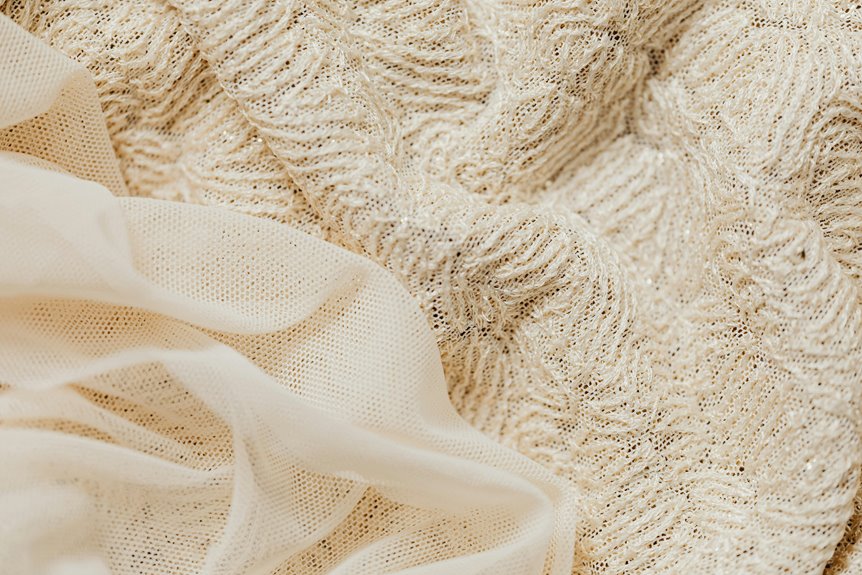
To sew with guipure lace flawlessly, start by choosing a fine, sharp needle (size 70/10 or 75/11) and lightweight matching thread to avoid damage. Prepare your fabric by laying it flat and using pattern weights instead of pins. Use stabilizers like water-soluble spray to keep lace steady, and cut carefully following the lace motifs. Pin sparingly and baste to secure seams, then sew with a narrow zigzag stitch. Finish edges with bias tape or French seams and press gently with low heat. Keep these tips in mind, and you’ll master advanced techniques next.
Key Takeaways
- Use fine, sharp needles (size 70/10 or 75/11) and lightweight thread to avoid damaging delicate guipure lace fibers.
- Pin lace sparingly along motifs with fine pins or use water-soluble stabilizers to prevent distortion and shifting.
- Cut lace on a flat surface, following the lace pattern to maintain design alignment and avoid stretching.
- Employ narrow zigzag or straight stitches with a walking foot for even feeding and secure seams without bulk.
- Finish seams with French or flat-felled techniques and press gently using a pressing cloth to preserve lace texture.
Choose the Right Needle and Thread
Selecting the right needle and thread is essential when sewing with guipure lace. You’ll want to use a fine, sharp needle—typically a size 70/10 or 75/11—because thicker needles can damage the intricate lace patterns. A universal or microtex needle works best to pierce through the dense motifs without snagging.
For thread, choose a lightweight polyester or cotton thread that matches your lace color closely. This guarantees your stitches blend seamlessly and don’t overpower the delicate design. Avoid heavy or thick threads, as they can create bulky seams and distort the lace’s natural flow.
Using the appropriate needle and thread not only protects the lace but also gives your project a clean, professional finish that highlights guipure lace’s unique texture and beauty.
Prepare Your Fabric With Care
Once you’ve chosen the right needle and thread, handling your guipure lace fabric carefully becomes the next priority. Start by gently pressing the lace on a low heat setting to remove any wrinkles without damaging the delicate fibers. Always test on a scrap piece first. When cutting, use sharp scissors or a rotary cutter to maintain clean edges. Lay the fabric flat on a clean surface and avoid stretching it. Pin sparingly to prevent distortion.
| Step | Action | Tip |
|---|---|---|
| Pressing | Use low heat, test first | Protect with a pressing cloth |
| Cutting | Sharp scissors or rotary | Cut slowly to avoid fraying |
| Laying Out Fabric | Flat, avoid stretching | Use a clean, stable surface |
| Pinning | Pin sparingly | Pin within motifs to hide marks |
Use Stabilizers to Prevent Stretching
Although guipure lace is beautiful, it can easily stretch and lose its shape while you sew. To avoid this, using stabilizers is essential. They provide support and keep the lace’s delicate structure intact.
Here’s how you can effectively use stabilizers:
- Choose a water-soluble stabilizer for easy removal after sewing.
- Use a tear-away stabilizer for added firmness during stitching.
- Apply adhesive spray to temporarily hold the lace in place.
- Pin the lace carefully without stretching it.
- Test on a scrap piece to find the best stabilizer type for your project.
Cut Guipure Lace With Precision
Cutting guipure lace with precision is vital to maintaining its intricate patterns and preventing fraying. Use sharp fabric scissors or a rotary cutter for clean edges. Always cut on a flat surface under good lighting to avoid mistakes. Follow the lace’s motifs or open areas to preserve its design integrity. Avoid cutting through thick cords unless necessary, as this can weaken the lace.
| Tip | Reason |
|---|---|
| Use sharp scissors | Prevents snagging and uneven cuts |
| Cut on flat surface | Guarantees accuracy and control |
| Follow lace motifs | Maintains design continuity |
| Avoid cutting thick cords | Preserves lace strength |
| Cut slowly and steadily | Reduces errors and fraying |
Pin and Baste Strategically
After you’ve carefully cut your guipure lace, the next step is to pin and baste it thoughtfully to keep the delicate patterns aligned and stable.
Pin and baste guipure lace carefully to maintain pattern alignment and stability.
You want to avoid shifting or stretching the lace, which can ruin the design. Here’s how to pin and baste strategically:
- Use fine, sharp pins to prevent snagging the lace threads.
- Pin along the motifs’ edges rather than the mesh areas to maintain pattern integrity.
- Place pins perpendicular to the edge for easy removal while sewing.
- Baste with a contrasting thread in long, loose stitches to hold pieces securely.
- Remove pins and basting stitches promptly after sewing to avoid marks or holes.
This careful approach preserves your lace’s beauty and guarantees your finished project looks seamless.
Sew With a Narrow Zigzag Stitch
When you start sewing guipure lace, choose a narrow zigzag stitch to secure the delicate fabric without damaging it. This stitch allows flexibility and prevents the lace from puckering or tearing.
Set your machine’s stitch width between 1.5 to 2 mm and length around 1.5 mm for ideal results. Sew slowly to maintain control and align the needle precisely with the lace motifs or edges you want to join.
Avoid straight stitches, as they can cause holes or weaken the fabric. The narrow zigzag also accommodates slight stretch or movement, preserving the lace’s intricate patterns.
Always test your settings on a scrap piece before stitching your project to verify the stitch holds without distorting the lace’s beauty.
Seam Allowances and Finishing Techniques
Mastering your stitch technique sets a strong foundation, but paying close attention to seam allowances and finishing techniques will guarantee your guipure lace project looks polished and lasts longer.
Start by allowing wider seam allowances—about ½ to ¾ inch—to accommodate the lace’s open structure.
Use these tips to finish seams neatly:
- Trim seam allowances carefully to reduce bulk without damaging motifs.
- Use French seams or flat-felled seams for durability and a clean look.
- Consider stay-stitching edges to prevent stretching.
- Finish raw edges with narrow bias tape or a serger to avoid fraying.
- Press seams gently with a pressing cloth to maintain lace integrity.
Handle Embellishments and Appliqués Gently
Although guipure lace is sturdy, you’ll want to handle embellishments and appliqués with extra care to prevent damage.
When attaching these delicate details, always use fine needles and matching thread to avoid snagging the lace’s intricate patterns. Pin or baste appliqués lightly before stitching to keep everything aligned without stretching the fabric.
Avoid pulling or tugging on the lace, as this can distort its shape or loosen embellishments. If you’re sewing beads or sequins, secure them with small, tight stitches, but don’t overcrowd the area, which could weigh down the lace.
Take your time to guarantee each embellishment lays flat and integrates seamlessly with the lace. This gentle approach helps maintain guipure lace’s beauty and durability throughout your project.
Press With Low Heat and a Protective Cloth
Since guipure lace is delicate and intricate, you’ll want to press it with low heat to prevent damage. High temperatures can melt or distort the lace’s threads, ruining your project.
Always use a protective cloth, like a clean cotton pressing cloth or muslin, between the iron and the lace. This barrier safeguards the fabric while allowing you to smooth out seams and wrinkles.
Keep these tips in mind when pressing guipure lace:
- Set your iron to the lowest heat setting suitable for synthetics or silk.
- Avoid using steam directly on the lace to prevent stretching.
- Press gently without sliding the iron back and forth.
- Test on a scrap piece to verify no damage.
- Let the lace cool flat before moving it.
This careful approach preserves your lace’s beauty and structure.
Plan Your Pattern Layout for Best Results
After carefully pressing your guipure lace, the next step is to plan your pattern layout thoughtfully.
Since guipure lace has an open, intricate design, you’ll want to place pattern pieces to showcase its motifs while minimizing waste. Lay your lace flat on a large surface and position your pattern pieces to align motifs symmetrically.
Avoid cutting through key design elements to maintain the lace’s visual appeal. Use pattern weights instead of pins to prevent distortion.
Remember, guipure lace lacks a stable grainline, so focus on balancing the design rather than strict fabric grain. Take your time to visualize how pieces will match at seams for a seamless, polished finish.
Planning carefully guarantees your final garment highlights the lace’s beauty perfectly.
Frequently Asked Questions
Can Guipure Lace Be Hand Washed Without Damage?
You can hand wash guipure lace without damage if you’re gentle. Use cold water and mild detergent, avoid wringing, and let it air dry flat. This careful method keeps the lace’s intricate patterns intact.
How Do I Remove Stains From Guipure Lace?
To remove stains from guipure lace, gently dab with a mild detergent mixed in cold water. Avoid rubbing, rinse thoroughly, and air dry flat. Always test on a hidden area first to prevent damage or discoloration.
What Types of Garments Are Best Suited for Guipure Lace?
You’ll find guipure lace perfect for elegant dresses, bridal gowns, and evening wear. Its bold texture adds sophistication, so use it for overlays, sleeves, or accents where you want a standout, luxurious look.
Can Guipure Lace Be Dyed or Customized With Color?
Did you know 80% of guipure lace can be successfully dyed? You can customize its color using fabric dyes, but test a small piece first to avoid damage and guarantee vibrant, even results for your unique design.
How to Store Guipure Lace to Prevent Yellowing or Damage?
You should store guipure lace in a cool, dry place, away from direct sunlight. Wrap it in acid-free tissue paper and avoid plastic bags to prevent yellowing and damage. Keep it flat or gently rolled for best results.