
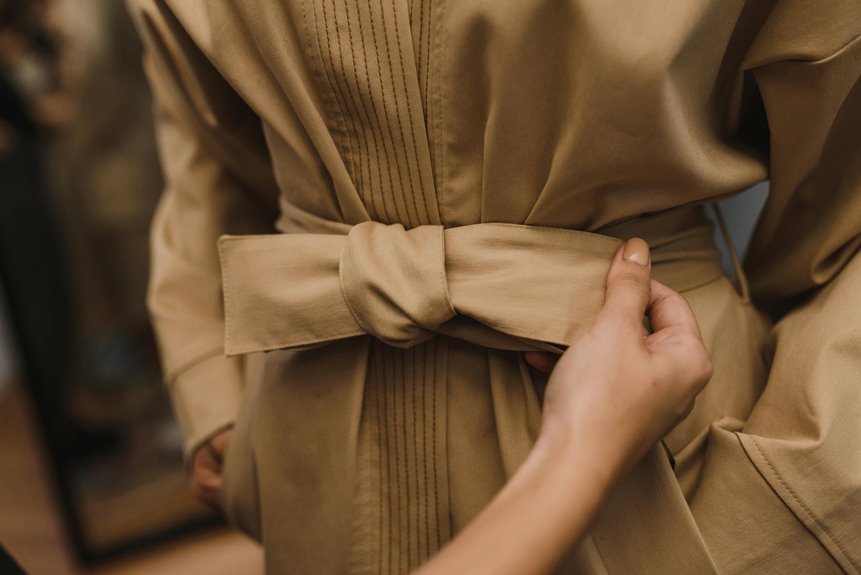
When sewing with acetate fabric, use a fine, sharp needle (size 70/10 or 60/8) and lightweight polyester thread to prevent snags and puckering. Cut slowly and stabilize pieces by basting or using tissue paper under the fabric to avoid slipping. Choose straight or French seams with gentle pressing on low heat using a pressing cloth. Handle the fabric gently to maintain its smooth texture and prevent damage. Keep these tips in mind, and you’ll discover even more techniques to achieve a flawless finish.
Key Takeaways
- Use a fine, sharp needle (size 70/10 or 60/8) and lightweight polyester thread to prevent snags and puckering.
- Pre-wash acetate fabric gently and dry away from sunlight to avoid shrinkage and color fading.
- Employ French seams or serged edges to enclose raw edges and prevent fraying for durable, clean finishes.
- Sew slowly with adjusted tension and stitch length (2.0-2.5 mm), using a walking or Teflon foot for smooth feeding.
- Press seams carefully on low heat with a pressing cloth, avoiding direct steam or prolonged contact to prevent melting.
Understanding the Characteristics of Acetate Fabric
Acetate fabric offers a lustrous sheen and smooth texture that can enhance any sewing project. When working with acetate, you’ll notice it drapes beautifully, adding elegance to dresses, linings, and scarves.
However, it’s sensitive to heat and prone to melting, so you’ll need to handle it carefully when pressing or stitching. This fabric is lightweight but tends to wrinkle easily, so minimizing creases is key.
Handle acetate with care—avoid high heat and minimize wrinkles for the best results.
You’ll also find acetate has a slight stretch, which affects how it moves and fits. Since it can be slippery, pinning and cutting require extra attention to prevent shifting.
Understanding these traits helps you manage acetate confidently, ensuring your final piece looks polished and professional.
Choosing the Right Sewing Tools for Acetate
Although working with slippery, delicate fabrics can be tricky, choosing the right sewing tools makes a big difference in your results.
Start with a fine, sharp needle—size 70/10 or 60/8 works best to prevent snags and holes in acetate. Use a lightweight polyester thread to match the fabric’s smooth texture and avoid puckering.
Opt for a straight stitch plate and a walking foot or Teflon foot to feed the fabric evenly without slipping. Pins can leave marks, so use fine silk pins or clips to hold pieces gently.
Finally, adjust your sewing machine’s tension and stitch length to accommodate acetate’s delicate nature. With these tools, you’ll handle acetate confidently and achieve a flawless finish every time.
Preparing Acetate Fabric for Sewing
Before you start sewing, it’s important to prep your acetate fabric properly by pre-washing it to prevent shrinkage later.
You’ll also want to manage static electricity to keep the fabric from clinging or shifting.
Finally, use careful cutting and marking techniques to guarantee clean, precise seams.
Pre-washing Techniques
You’ll want to pre-wash your fabric at least once to prevent any future shrinkage or color bleeding.
Start by filling a basin with lukewarm water and add a mild detergent designed for delicate fabrics. Gently submerge the acetate, avoiding any harsh agitation that could damage the fibers.
Let it soak briefly—about five minutes—then rinse thoroughly with cool water. Avoid wringing; instead, press the fabric gently between towels to remove excess moisture.
Lay it flat or hang it to dry away from direct sunlight to preserve color and prevent warping.
Pre-washing helps you work with the fabric’s true dimensions and texture, making your sewing process smoother and your finished project more durable.
Skipping this step risks altering your garment after completion, so don’t skip it!
Handling Static Electricity
Since acetate fabric tends to generate static electricity, you’ll need to manage this issue carefully to assure smooth handling during sewing.
Static can cause the fabric to cling, making it difficult to pin, cut, or feed through your machine evenly. To minimize static, lightly mist the fabric with water or use an anti-static spray designed for textiles.
You can also run a dryer sheet over the fabric before you start working. Handling the fabric in a slightly humid environment helps reduce static buildup as well.
Additionally, grounding yourself by touching a metal surface can prevent static shocks. Taking these simple steps guarantees your acetate stays manageable, letting you focus on precise sewing without frustrating cling or unwanted slips.
Cutting and Marking Tips
Although acetate fabric can be slippery and prone to shifting, careful cutting and marking will help you achieve clean, accurate pieces.
To keep your fabric steady, lay it flat on a smooth surface and use weights instead of pins. When marking, choose tools that won’t damage the delicate fibers.
Here are some tips to guide you:
- Use sharp fabric scissors or a rotary cutter for clean edges.
- Mark with tailor’s chalk or a water-soluble pen to avoid permanent stains.
- Cut slowly and avoid pulling the fabric to prevent distortion.
Techniques to Prevent Slipping and Shifting
Mastering three key techniques can help you keep acetate fabric from slipping and shifting as you sew. First, use sharp pins or fine clips to secure layers without damaging the fabric. Second, baste your pieces together by hand or machine to stabilize the fabric before permanent stitching. Third, place tissue paper under the fabric while sewing to reduce friction and slipping.
| Technique | Benefit |
|---|---|
| Sharp pins/clips | Hold fabric securely in place |
| Basting | Prevents movement during sewing |
| Tissue paper | Adds grip and reduces sliding |
Recommended Stitch Types and Seam Finishes
When sewing acetate, you’ll want to choose stitch types that keep seams strong without puckering the fabric.
Using finishes like French seams or bias binding helps prevent fraying and gives your project a polished look.
Let’s explore which stitches and seam finishes work best to keep your acetate looking smooth and professional.
Best Stitch Types
Since acetate fabric tends to be slippery and delicate, choosing the right stitch types and seam finishes is essential to guarantee strong, neat seams.
You’ll want stitches that provide durability without damaging the material. Here are the best stitch types to use:
- Straight stitch: Use a fine needle and a shorter stitch length (2.0-2.5 mm) to avoid puckering and maintain clean seams.
- French seams: Ideal for sheer acetate, these enclose raw edges, preventing fraying and adding strength.
- Zigzag stitch: Use on edges that may stretch slightly; it offers flexibility and helps prevent seam breakage.
Seam Finishing Techniques
Two key seam finishing techniques will help you keep your acetate garments looking polished and lasting longer.
First, consider using a French seam, which encloses raw edges neatly. This technique is perfect for acetate’s delicate texture, preventing fraying without bulky finishes. Sew the seam wrong sides together first, trim the allowance, then sew right sides together to encase the edges.
Second, a serged or overlocked seam finish works well if you have the right machine. It trims and binds edges simultaneously, giving a clean, durable finish. Use a fine needle and polyester thread to avoid damaging the fabric.
Both methods reduce bulk and maintain acetate’s smooth drape, ensuring your garment stays elegant and wearable through multiple washes and wears.
Preventing Fabric Puckering
Although acetate fabric offers a beautiful sheen and smooth texture, it can be prone to puckering if you don’t use the right stitch types and seam finishes. To prevent puckering, choose stitches that distribute tension evenly and avoid pulling the fabric too tight.
Opt for fine needles and adjust your stitch length for a delicate finish. Here are some tips to keep your seams smooth:
- Use a small, straight stitch (around 2.0–2.5 mm) to reduce fabric distortion
- Employ French seams or flat-felled seams for clean, secure edges
- Press seams gently with a low-heat iron and a pressing cloth to avoid damage
Following these techniques will help you achieve flawless seams and maintain acetate’s elegant drape.
Handling and Pressing Acetate Safely
How should you handle and press acetate fabric to avoid damage?
First, always wash your hands before working with acetate to prevent oils or dirt from transferring. Handle the fabric gently to avoid snags or stretching.
Always wash hands before handling acetate to keep fabric clean and prevent damage from oils or dirt.
When pressing, use a low heat setting on your iron—acetate melts easily under high temperatures. It’s best to place a pressing cloth between the iron and fabric to protect the surface and prevent shine.
Avoid steam directly on acetate, as moisture can cause distortion. Press from the wrong side whenever possible to keep the fabric’s finish smooth and intact.
Keep your iron moving steadily to prevent scorching, and test on a scrap piece before pressing your project.
These steps will help maintain acetate’s crisp look and extend your garment’s life.
Tips for Sewing Linings and Delicate Details
Once you’ve mastered handling and pressing acetate carefully, sewing linings and delicate details requires equal attention to preserve the fabric’s integrity.
When working with acetate, you want to maintain its smooth texture and avoid puckering or stretching. Here are some tips to help:
- Use fine, sharp needles (size 70/10 or 60/8) to prevent snags and holes.
- Employ a lightweight, fine thread like polyester or cotton-wrapped polyester for smooth seams.
- Stitch slowly and avoid pulling the fabric; let the feed dogs guide it to prevent distortion.
Frequently Asked Questions
Can Acetate Fabric Be Dyed at Home?
Dyeing delicate acetate demands daring diligence. You can’t just toss it in typical dyes; instead, choose specialized synthetic fabric dyes. Test a tiny swatch first, then soak carefully to achieve colorful, enchanting results without calamity.
How Do I Remove Stains From Acetate Fabric?
You can remove stains from acetate fabric by gently blotting with cold water and mild detergent. Avoid rubbing, then rinse thoroughly. For tough stains, try a gentle stain remover, but always test on a hidden spot first.
Is Acetate Fabric Environmentally Friendly?
Oh sure, acetate’s a tree hugger’s dream—except it’s made from wood pulp treated with chemicals, so it’s not exactly Mother Nature’s favorite. You might want to think twice if you care about eco-friendly fashion.
Can Acetate Fabric Be Machine Washed?
You shouldn’t machine wash acetate fabric because it can shrink or get damaged. Instead, hand wash it gently in cold water with mild detergent, then air dry to keep it looking smooth and vibrant longer.
What Are Common Uses for Acetate Fabric in Fashion?
You’ll find acetate fabric commonly used in linings, evening wear, blouses, and scarves. Its silky feel and sheen make it perfect for elegant garments, but you’ll want to handle it carefully to keep it looking great.