
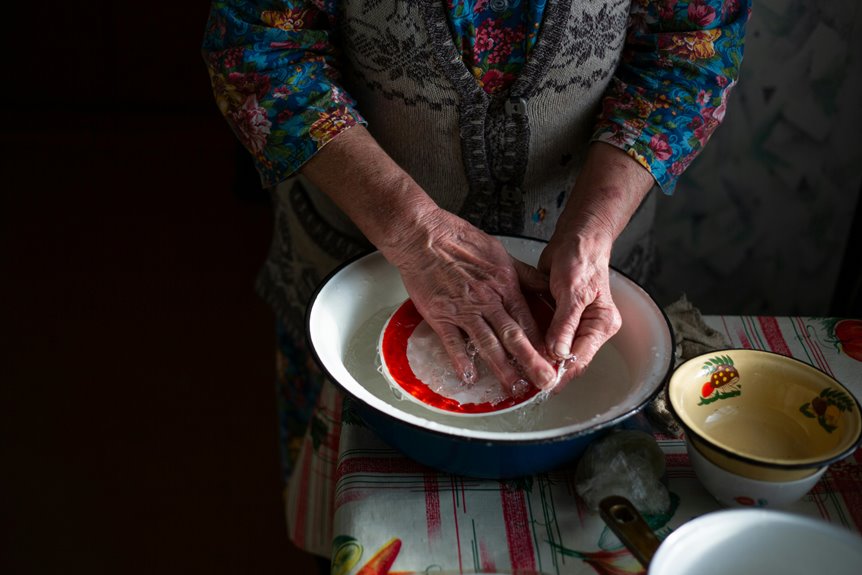
To safely wash viscose and polyamide blends, always check the care label first. Use cold or lukewarm water with a gentle, enzyme-free detergent to protect the fibers. Hand wash or select a delicate machine cycle, avoiding harsh agitation. Don’t wring; instead, gently squeeze out excess water and lay flat to dry away from direct heat or sunlight. Iron on low heat with a cloth if needed. Follow these steps to keep your garment looking great, and discover more tips to extend its life.
Key Takeaways
- Wash viscose and polyamide blends in cold or lukewarm water using a gentle cycle to prevent fabric weakening and shrinkage.
- Use a mild, enzyme-free liquid detergent without bleach or fabric softeners to protect delicate fibers.
- Sort laundry by color and fabric type to avoid color bleeding and damage from heavier items or zippers.
- Avoid wringing; gently squeeze out water, reshape the garment, and dry flat away from direct sunlight or heat sources.
- Iron inside out on low heat with a pressing cloth, and store garments flat or on padded hangers to maintain shape and prevent stretching.
Understanding Viscose and Polyamide Fabric Properties
Viscose and polyamide each bring unique qualities to fabric blends that affect how you should care for them.
Viscose is a semi-synthetic fiber made from wood pulp, known for its softness, breathability, and drape. However, it can weaken when wet and tends to wrinkle easily.
Polyamide, commonly known as nylon, is a durable synthetic fiber that adds strength, elasticity, and resistance to abrasion and moisture.
When these fibers combine, you get a fabric that balances comfort and durability but requires careful handling. You should avoid harsh agitation and high temperatures since viscose fibers can stretch or shrink, while polyamide can degrade under intense heat.
Understanding these traits helps you wash your blend gently to maintain its look and feel over time.
Checking Care Labels Before Washing
Before you toss your viscose and polyamide blend into the washing machine, make sure to check the care labels carefully.
These labels provide essential information about the ideal water temperature, washing cycle, and drying method. Ignoring them can lead to shrinking, color fading, or fabric damage.
Care labels reveal ideal water temperature, washing cycle, and drying method to prevent shrinking, fading, or damage.
Look for symbols indicating whether the item should be hand-washed, machine-washed on a gentle cycle, or dry-cleaned. Pay attention to temperature limits—viscose is sensitive to heat, so cold or lukewarm water is often recommended.
Also, check if the label advises against tumble drying to prevent fabric distortion. By following the specific instructions on the care label, you’ll protect your garment’s texture and shape, ensuring it lasts longer and looks great after every wash.
Sorting Your Laundry Properly
Although it might seem tedious, sorting your laundry properly is essential for preserving the quality of your viscose and polyamide blends. Start by separating your clothes by color—keep darks, lights, and whites apart to prevent color bleeding.
Also, group delicate fabrics like viscose-polyamide blends separately from heavier items such as denim or towels to avoid abrasion during washing. Check for any garments with zippers or hooks that could snag your delicate blends and wash those separately or inside out.
Sorting by fabric type and color guarantees your pieces maintain their texture, shape, and vibrancy. Taking these steps helps you avoid damage, shrinkage, or color transfer, ultimately extending the life of your favorite viscose and polyamide blend garments.
Choosing the Right Detergent
Since your viscose and polyamide blends require gentle care, choosing the right detergent plays a significant role in keeping them looking their best. You want a detergent that cleans effectively without damaging the fibers. Opt for mild, liquid detergents free from harsh chemicals and enzymes. Avoid bleach and fabric softeners, which can weaken the fabric.
Here’s a quick guide to help you decide:
| Detergent Type | Suitable For | Avoid If |
|---|---|---|
| Mild Liquid | Delicate fabrics | Stains requiring strong agents |
| Enzyme-free | Sensitive blends | Heavy soiling |
| No Bleach | Color preservation | Whitening needs |
Selecting the Appropriate Water Temperature
You should wash viscose and polyamide blends in cool to lukewarm water, ideally between 30°C and 40°C.
Hot water can cause the fibers to shrink or lose their shape, damaging your garment.
Sticking to the right temperature helps keep your clothes looking their best.
Ideal Water Temperature Range
When selecting the ideal water temperature for washing viscose and polyamide blends, you need to balance cleaning effectiveness with fabric care.
Aim for a cool to lukewarm range, typically between 30°C and 40°C (86°F to 104°F). This temperature range gently removes dirt and oils without stressing the delicate viscose fibers or causing shrinkage.
Using water that’s too cold mightn’t clean thoroughly, while hotter water risks damaging the fabric’s structure and elasticity. Always check the garment’s care label for specific guidance.
If in doubt, stick closer to 30°C to protect the blend’s softness and shape.
Effects of Hot Water
Balancing water temperature plays a key role in caring for viscose and polyamide blends, but understanding the impact of hot water is just as important. Hot water can cause viscose to shrink and lose shape while damaging the polyamide fibers, reducing the garment’s lifespan. Avoid washing these blends above 30°C (86°F) to maintain their integrity.
| Temperature | Viscose Effect | Polyamide Effect |
|---|---|---|
| Cold (<20°C) | Gentle, safe | Maintains strength |
| Warm (20-30°C) | Safe, minimal risk | Slight softening |
| Hot (40°C+) | Shrinking, weakening | Fiber damage |
| Very Hot (60°C+) | Severe shrinkage | Significant weakening |
| Boiling | Fabric ruin | Fabric ruin |
Stick to cooler temperatures to keep your clothes looking fresh and lasting longer.
Hand Washing vs. Machine Washing
Although both hand washing and machine washing can clean viscose and polyamide blends effectively, choosing the right method depends on the garment’s care label and your washing preferences.
If the label allows machine washing, use a gentle cycle with cold water and a mild detergent to protect the fabric’s integrity. Place the garment in a mesh laundry bag to reduce friction and avoid damage.
On the other hand, hand washing gives you more control and reduces the risk of stretching or snagging. Use lukewarm water with a gentle detergent, and gently agitate the fabric without wringing.
Either way, avoid harsh detergents and hot water, as they can weaken fibers. By following these guidelines, you’ll maintain the blend’s softness and durability for longer.
Drying Techniques for Viscose and Polyamide Blends
Since viscose and polyamide blends are delicate, you’ll want to dry them carefully to maintain their shape and texture.
After washing, gently squeeze out excess water without wringing, which can distort the fabric.
Lay your garment flat on a clean, dry towel and roll it up to absorb moisture.
Then, reshape the item and lay it flat on a drying rack or another dry towel in a well-ventilated area away from direct sunlight or heat sources.
Avoid hanging your blend, as this can stretch the fabric.
Skip the tumble dryer entirely since its heat and tumbling action can damage fibers and cause shrinkage.
Ironing Tips to Prevent Fabric Damage
When you iron viscose and polyamide blends, you’ll want to use a low heat setting to avoid scorching or melting the fibers.
Here’s how to iron safely without damaging your garment:
Here’s how to iron safely without damaging your garment using simple, effective techniques.
- Turn the garment inside out to protect the fabric’s surface from direct heat.
- Use a pressing cloth between the iron and fabric to prevent shiny marks and burns.
- Avoid steam or use it sparingly since viscose can weaken when wet and hot simultaneously.
- Move the iron gently and quickly rather than letting it sit in one place to prevent fabric distortion.
Following these tips helps maintain your garment’s texture and appearance, ensuring it lasts longer and looks great after every wear.
Storing Your Garments to Maintain Fabric Quality
To keep your viscose and polyamide blends looking their best, store them in a cool, dry place away from direct sunlight.
Use padded hangers or fold them carefully to prevent creases.
Also, make sure your storage area is well-ventilated to protect against moisture buildup.
Ideal Storage Conditions
Although storing your viscose and polyamide blends properly might seem simple, it plays an essential role in preserving their texture and durability.
To keep your garments in top shape, follow these ideal storage conditions:
- Keep them cool and dry – Avoid humid areas to prevent mold and fabric weakening.
- Use breathable storage – Opt for cotton garment bags or boxes, not plastic, to allow airflow.
- Store flat or hang carefully – Fold knit blends flat to avoid stretching; use padded hangers for woven fabrics.
- Avoid direct sunlight – Prolonged exposure can fade colors and degrade fibers.
Avoiding Fabric Creases
Proper storage goes beyond just keeping your viscose and polyamide blends in the right environment; how you position your garments can make a big difference in preventing creases.
Always hang your items on padded or wide hangers to maintain their shape and avoid sharp fold lines. If hanging isn’t an option, gently fold garments along natural seams rather than creating new, sharp creases.
Avoid overcrowding your wardrobe, as tight spaces cause wrinkles and pressure marks. When storing folded pieces, place tissue paper between folds to reduce friction and creasing.
Taking these simple steps guarantees your fabrics stay smooth, preserving their delicate texture and appearance, so your viscose and polyamide blend garments look fresh and ready to wear every time.
Protecting Against Moisture
Since moisture can easily damage viscose and polyamide blends, you’ll want to keep your garments in a dry, well-ventilated space.
Proper storage helps maintain their shape and fabric quality. To protect your clothes from moisture damage, follow these steps:
- Store garments in breathable fabric bags instead of plastic to prevent condensation.
- Place silica gel packets or moisture absorbers in your closet to reduce humidity.
- Avoid storing clothes in damp basements or areas prone to mold.
- Hang items on padded hangers to allow air circulation and avoid fabric deformation.
Frequently Asked Questions
Can I Use Bleach on Viscose and Polyamide Blends?
Oh sure, just douse your delicate viscose and polyamide blend in bleach—because who doesn’t love ruined clothes? Seriously, don’t. Bleach can damage fibers; stick to gentle detergents and avoid harsh chemicals to keep your garment safe.
How Often Should I Wash Viscose and Polyamide Garments?
You should wash viscose and polyamide garments only when necessary to preserve their quality. Spot clean minor stains, and avoid frequent washing to prevent damage. Always follow care labels for the best results.
Are Viscose and Polyamide Blends Suitable for Dry Cleaning?
Yes, you can dry clean viscose and polyamide blends safely. Dry cleaning helps protect the fabric’s texture and shape. Just make sure you check the garment’s care label before deciding on the best cleaning method.
Can I Use Fabric Softener With Viscose and Polyamide Fabrics?
You can use fabric softener with viscose and polyamide fabrics, but do so sparingly. Too much softener might damage fibers or reduce fabric breathability, so always follow care label instructions to keep your clothes soft and intact.
How Do I Remove Stains From Viscose and Polyamide Blends?
Before you act, know stains on viscose and polyamide blends need gentle care. Dab with cold water and mild detergent, avoid rubbing hard. Test any stain remover first, then gently blot until the mark fades away.