
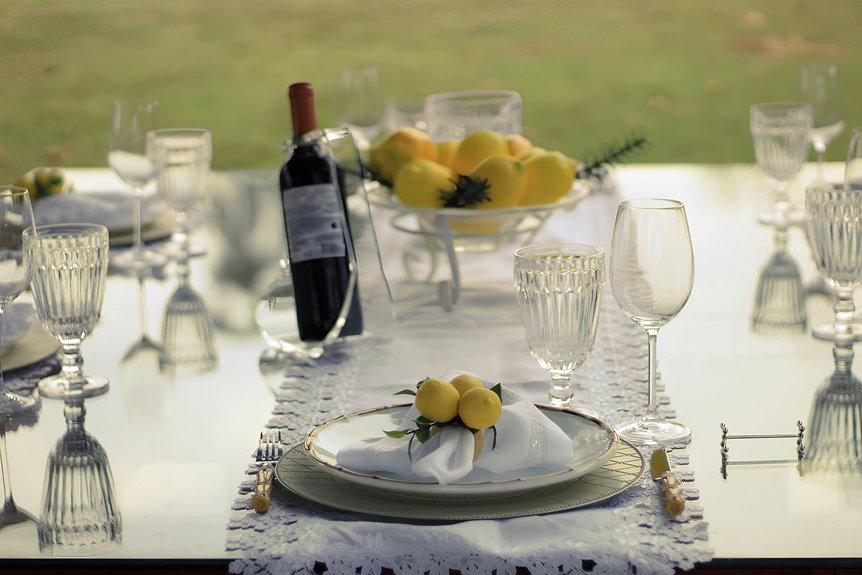
To remove old wine stains from your tablecloth, start by gently blotting the stain with a clean cloth. Then, mix equal parts white vinegar and water and apply it to the stain. You can also sprinkle baking soda on the stain and let it fizz before blotting. For tougher stains, a paste of baking soda and water or diluted hydrogen peroxide may work. Keep following these methods to discover the best solutions for stubborn stains.
Key Takeaways
- Mix equal parts of white vinegar and water, dampen a cloth, and gently blot the old wine stain.
- Apply baking soda to the stain and let it fizz for 15 minutes to help lift the pigment.
- Create a paste of baking soda and water, rub it onto the stain, and allow it to sit before rinsing.
- For persistent stains, use diluted hydrogen peroxide, testing it on a hidden area first to avoid damage.
- Consider professional cleaning for delicate tablecloth fabrics, especially if home methods fail.
Immediate Action Steps for Wine Stains
When you spill wine, acting quickly can make all the difference in removing the stain. First, grab a clean cloth or paper towel and gently blot the area. Don’t rub, as that can push the wine deeper into the fabric.
Act fast after a wine spill: gently blot with a cloth, avoiding rubbing to keep the stain from spreading.
Next, sprinkle some salt or baking soda on the stain to absorb excess liquid. Let it sit for a few minutes, then carefully brush it off.
If you have club soda, pour a small amount over the stain to help lift it. Blot again with a clean cloth.
Remember to always work from the outside of the stain toward the center to prevent spreading. Following these steps promptly can greatly improve your chances of getting rid of that pesky wine stain.
Common Cleaning Methods to Try
When it comes to tackling old wine stains, several effective cleaning methods can help you out.
You might want to try vinegar and baking soda, or even table salt, as both options can work wonders.
Club soda is another popular treatment that many swear by, so let’s explore these methods further.
Vinegar and Baking Soda
Vinegar and baking soda are two powerful, everyday ingredients that can tackle those stubborn old wine stains with ease.
Start by mixing equal parts of white vinegar and water in a bowl. Dampen a clean cloth with this solution and gently blot the stained area. This helps lift the stain without damaging the fabric.
Next, sprinkle baking soda directly onto the stain. You’ll notice a fizzing reaction; that’s a good sign! Let it sit for about 15 minutes, then blot again with a clean cloth. Rinse the area with cold water afterward.
If necessary, repeat the process until the stain is gone. This method is effective, cost-efficient, and safe for most tablecloth fabrics.
Table Salt Application
If you find yourself dealing with an old wine stain, consider using table salt as a quick and effective solution.
Start by sprinkling a generous amount of salt directly onto the stain. The salt works by absorbing moisture and drawing out the wine pigments.
Let it sit for about 10 to 15 minutes, allowing the salt to soak up as much of the stain as possible.
Afterward, gently brush off the salt with a clean cloth or your hand. You might need to repeat this process for stubborn stains.
Once you’re satisfied, launder the tablecloth as usual, following the care instructions.
This method can appreciably lighten the stain, making it easier to remove completely.
Club Soda Treatment
One effective method for tackling old wine stains is using club soda.
Start by blotting the stain gently with a clean cloth to absorb any excess wine. Then, pour a generous amount of club soda directly onto the stain. The carbonation works to lift the wine pigment from the fabric.
Let it sit for a few minutes, allowing the bubbles to work their magic. After that, blot the area again with a clean cloth, moving from the outside of the stain toward the center to avoid spreading it.
Rinse the cloth with cold water and repeat the process if needed. Finally, launder the tablecloth as usual, and check to verify the stain’s completely gone before drying.
Advanced Techniques for Stubborn Stains
Although old wine stains can be particularly stubborn, employing advanced techniques can greatly improve your chances of success.
Start by mixing equal parts white vinegar and dish soap, then apply it directly to the stain. Gently blot with a clean cloth, working from the outside in to avoid spreading the stain.
For tougher marks, you can create a paste using baking soda and water. Rub the paste onto the stain and let it sit for about 30 minutes before rinsing with cold water.
If the stain persists, consider using hydrogen peroxide diluted with water, applying it carefully to avoid discoloring the fabric.
Always test any solution on a hidden area first to guarantee it won’t damage your tablecloth.
Specialized Tools and Products for Effective Removal
When it comes to tackling old wine stains, using specialized tools and products can make a significant difference in your cleaning efforts.
Start with a high-quality stain remover specifically designed for wine stains. Look for enzymatic cleaners that break down the compounds in the stain. A soft-bristle brush can help gently agitate the stain without damaging the fabric.
Begin with a quality wine stain remover and use a soft-bristle brush to gently treat the fabric.
You might also want a spray bottle to apply the cleaning solution evenly. For stubborn stains, consider using oxygen bleach, which is effective yet safe for most fabrics.
Always keep clean, white cloths on hand to blot away excess liquid. With the right tools and products, you can boost your chances of restoring your tablecloth to its former glory.
Tips for Cleaning Different Fabric Types
Since different fabrics have unique properties, knowing how to approach cleaning wine stains on each type can save you time and frustration.
For cotton and linen, act quickly; dab the stain with cold water and apply a mixture of dish soap and hydrogen peroxide.
For polyester blends, use a stain remover specifically designed for synthetic fibers, as harsher chemicals might damage them.
If you’re dealing with silk or wool, avoid rubbing; instead, blot gently with a mixture of white vinegar and water.
For delicate fabrics, consider professional cleaning to guarantee no damage occurs.
Always test any cleaning solution on an inconspicuous area first, so you don’t inadvertently ruin your favorite tablecloth.
Long-Term Prevention Strategies for Stains
To keep wine stains at bay, it’s essential to adopt proactive strategies that protect your fabrics from accidental spills. Start by using a tablecloth that’s stain-resistant or treated with a protective coating. Always keep a spill kit handy, stocked with essential cleaning supplies. When entertaining, place coasters under glasses to minimize drips. If you’re hosting outdoors, consider using plastic tableware to avoid breakage and spills. Finally, regularly check for stains and treat them promptly.
| Strategy | Description |
|---|---|
| Stain-Resistant Fabrics | Use tablecloths treated against stains |
| Spill Kit | Have cleaning supplies ready |
| Coasters | Prevent drips under glasses |
| Plastic Tableware | Reduce risk of spills |
| Prompt Treatment | Address stains immediately |
Frequently Asked Questions
Can I Use a Steam Cleaner for Wine Stain Removal?
Sure, you could use a steam cleaner for wine stains, but it’s like trying to tame a wild dragon with a feather. Instead, focus on targeted methods that battle those stubborn stains effectively. You’ll save time!
How Do I Know if a Stain Is Permanent?
To determine if a stain’s permanent, check its color and texture after cleaning attempts. If it remains visible and feels different from the surrounding fabric, it’s likely a permanent stain that won’t come out easily.
Is It Safe to Machine Wash Stained Tablecloths?
Yes, it’s generally safe to machine wash stained tablecloths, but check the care label first. Use cold water and a gentle cycle to avoid damaging the fabric. Always pre-treat stains for the best results.
What Should I Avoid Using on Silk Tablecloths?
Silk, a delicate fabric, can lose up to 30% of its strength when wet. You should avoid using bleach, harsh detergents, or hot water on silk tablecloths, as they can damage the fibers and colors.
How Can I Remove Wine Stains From Upholstery?
To remove wine stains from upholstery, blot the area immediately with a clean cloth. Then, mix equal parts water and white vinegar, applying it gently. Rinse with cold water and let it air dry.