
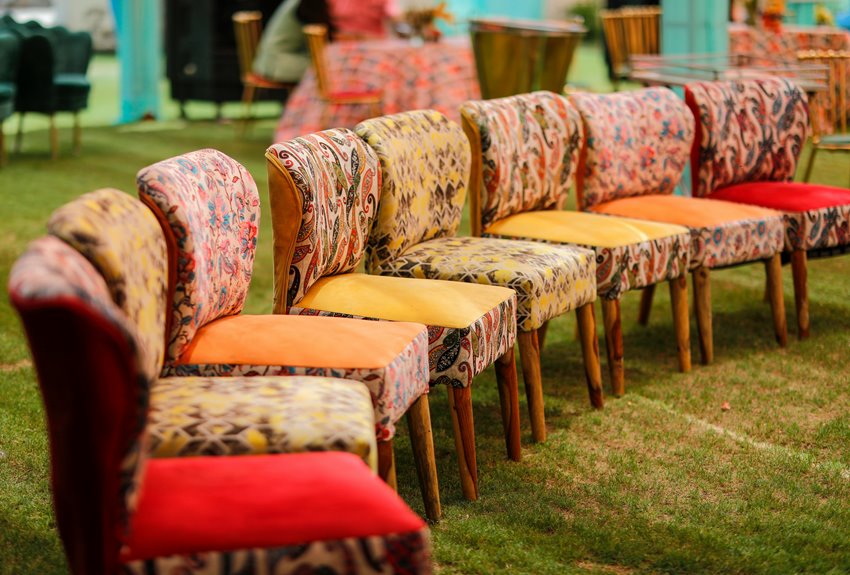
To remove mold from your lawn furniture fabrics, first brush off loose mold outside while wearing gloves. Mix a mild cleaner like white vinegar and water, then apply it to the affected areas. Let it sit for 10-15 minutes, gently scrub with a soft brush, and rinse thoroughly with clean water. Dry your fabrics completely in sunlight to prevent mold’s return. Keep them dry and clean regularly to avoid future growth. You’ll find more tips to keep your outdoor fabrics fresh and mold-free.
Key Takeaways
- Identify mold by looking for fuzzy spots, discoloration, musty smells, and slimy fabric texture on lawn furniture fabrics.
- Move furniture outdoors, remove loose debris, detach cushions, and wear protective gloves and a mask before cleaning.
- Use a white vinegar and water solution or a diluted bleach mix, testing first on a hidden area for tougher mold.
- Apply solution, let sit 10-15 minutes, scrub gently with a soft brush, rinse thoroughly, and dry completely in sunlight.
- Prevent mold by storing fabrics dry in ventilated spaces, cleaning regularly, ensuring dryness before storage, and using breathable containers.
Identifying Mold on Lawn Furniture Fabrics
How can you tell if your lawn furniture fabrics have mold? Look closely for fuzzy, discolored spots that appear black, green, or white.
Mold often forms in damp, shaded areas where moisture lingers. If your furniture’s fabric smells musty or earthy, that’s another clear sign mold may be present. You might also notice the fabric feels slimy or sticky to the touch.
Don’t confuse dirt or mildew with mold—mold tends to spread and has a fuzzy texture. Check seams, folds, and underneath cushions, since mold loves hidden, moist places.
Catching mold early is key because it can damage fabric fibers and cause health issues. By spotting these signs, you’ll be ready to take the next step in cleaning your lawn furniture effectively.
Preparing Your Lawn Furniture for Cleaning
Before you start cleaning, prepare your lawn furniture properly to guarantee the best results.
First, move your furniture to a well-ventilated outdoor area, preferably under the sun. This helps prevent mold spores from spreading indoors.
Next, remove any loose dirt, leaves, or debris using a soft brush or vacuum with a brush attachment.
Check for removable cushions or covers and take them off for separate cleaning. If your furniture has any detachable parts, disassemble them to access all fabric surfaces.
Wearing gloves and a mask protects you from inhaling mold spores during this process.
Finally, test a small hidden area of the fabric to verify it can withstand cleaning without damage.
Once prepared, you’ll be ready to tackle mold effectively and safely.
Choosing the Right Cleaning Solutions
Once your lawn furniture is prepped and free from loose debris, selecting the right cleaning solution becomes your next step. You want a product that’s effective against mold but gentle enough not to damage the fabric.
A mixture of white vinegar and water works well as a natural, non-toxic option. For tougher mold, a diluted bleach solution can be effective, but you must test it on a small, hidden area first to prevent discoloration.
Avoid harsh chemicals that might weaken the fabric fibers. Commercial mold removers designed specifically for outdoor fabrics are also available and usually safe.
Whichever solution you choose, make sure it’s suitable for your furniture’s material and follow the manufacturer’s guidelines to protect both your furniture and your health during cleaning.
Step-by-Step Mold Removal Process
Start by brushing off any loose mold and debris from your lawn furniture fabrics using a soft brush.
Next, prepare your chosen cleaning solution—whether it’s diluted vinegar, mild detergent, or a commercial mold remover.
Apply the solution generously to the affected areas and let it sit for 10 to 15 minutes to break down the mold.
Then, scrub gently with a soft brush or sponge to lift the mold without damaging the fabric.
Rinse thoroughly with clean water to remove all residue.
After rinsing, allow the fabric to dry completely in direct sunlight if possible, as sunlight helps kill remaining spores.
If mold persists, repeat the process until the fabric is clean.
Always wear gloves and work in a well-ventilated area for safety.
Preventing Mold Growth on Outdoor Fabrics
To keep mold from coming back, store your outdoor fabrics in a dry, well-ventilated place when you’re not using them.
Make cleaning your lawn furniture a regular habit to prevent dirt and moisture buildup.
These simple steps will help protect your fabrics and extend their lifespan.
Proper Fabric Storage
Proper fabric storage plays an essential role in preventing mold growth on your outdoor furniture.
When you store your cushions and covers correctly, you reduce moisture exposure and create an environment mold can’t thrive in.
Here’s how you can store your fabrics to keep them mold-free:
- Always make sure the fabrics are completely dry before storing them.
- Use breathable storage bags or containers to allow air circulation.
- Store fabrics in a cool, dry place away from direct sunlight.
- Avoid plastic bags or sealed containers that trap moisture.
Routine Cleaning Habits
Keeping your outdoor fabrics stored correctly is just one part of preventing mold. You also need to establish routine cleaning habits to keep mold at bay.
After each use, brush off dirt and debris to stop moisture buildup. Rinse your fabrics with clean water regularly, especially after rain or heavy use. Let them dry completely in the sun before storing them—moisture encourages mold growth.
Consider using a mild detergent to clean fabrics monthly, scrubbing gently to avoid damage. If you spot early mold signs, treat them immediately with a vinegar-water solution to prevent spreading.
Drying and Caring for Cleaned Fabrics
Several factors influence how you should dry and care for your lawn furniture fabrics after cleaning. Proper drying prevents mold from returning and keeps your fabrics looking fresh.
Proper drying is key to preventing mold and maintaining the freshness of your lawn furniture fabrics.
You’ll want to:
- Air dry fabrics in direct sunlight when possible, as UV rays help kill mold spores.
- Avoid using high heat from dryers, which can damage synthetic fibers or shrink natural ones.
- Make certain the fabric is completely dry before storing or using it again to stop mold growth.
- Store furniture in a well-ventilated area to reduce moisture buildup between uses.
When to Seek Professional Mold Removal Services
If you notice mold spreading rapidly or deeply embedded in your lawn furniture fabrics, it’s time to call in a professional.
They’ve the right tools and expertise to remove severe infestations safely and effectively.
Don’t risk damaging your furniture or your health by handling tough mold problems on your own.
Signs of Severe Infestation
How do you know when mold on your lawn furniture has gone beyond a simple cleanup? If the mold spreads rapidly or covers large areas, it’s a clear sign you need expert help.
Here are key signs of severe infestation to watch for:
- Mold growth has penetrated deep into the fabric, making surface cleaning ineffective.
- You notice a persistent, musty odor that won’t go away after cleaning.
- Mold returns quickly after your attempts to clean it, indicating spores remain embedded.
- You or your family experience allergic reactions, like sneezing or skin irritation, after contact with the furniture.
When you see these signs, it’s time to contemplate professional mold removal services to prevent further damage and health risks.
Benefits of Professional Help
When mold infestation reaches a severe level, handling the cleanup on your own can become overwhelming and ineffective. That’s when you should consider professional mold removal services. Experts have specialized equipment and expertise to eliminate mold safely and thoroughly, preventing health risks and further damage to your lawn furniture fabrics.
Here’s a quick overview of the benefits:
| Benefit | Why It Matters | Result |
|---|---|---|
| Expertise | Proper identification & removal | Complete mold eradication |
| Safety | Use of protective gear & methods | Reduced health risks |
| Efficiency | Faster, thorough cleaning | Saves you time and effort |
Calling in professionals guarantees your furniture is mold-free and safe to use again without hassle.
Frequently Asked Questions
Can Mold on Lawn Furniture Fabrics Cause Health Problems?
Yes, mold on lawn furniture fabrics can cause health problems, especially if you’re sensitive or have allergies. It can trigger respiratory issues, skin irritation, or worsen asthma, so you should clean it promptly to avoid risks.
Are Certain Fabric Types More Resistant to Mold?
You might be surprised, but yes—some fabrics resist mold better. Synthetic materials like acrylic or polyester often fend off mold growth, while natural fibers like cotton absorb moisture, making them more vulnerable to mold’s stubborn hold.
How Often Should Lawn Furniture Fabrics Be Cleaned to Prevent Mold?
You should clean your lawn furniture fabrics at least once a month, especially during humid seasons. Regular cleaning helps prevent mold buildup and keeps your furniture looking fresh and lasting longer.
Can Mold Stains Be Removed Without Chemicals?
You can scrub, rinse, and sun-dry mold stains without chemicals. You’ll need patience, elbow grease, and fresh air. While natural methods work, stubborn stains might require stronger solutions to fully vanish and prevent recurrence.
Is It Safe to Use Bleach on All Outdoor Fabrics?
You shouldn’t use bleach on all outdoor fabrics because it can weaken fibers and cause discoloration. Test a small hidden area first, and consider gentler cleaners suited for delicate or colored fabrics to stay safe.