
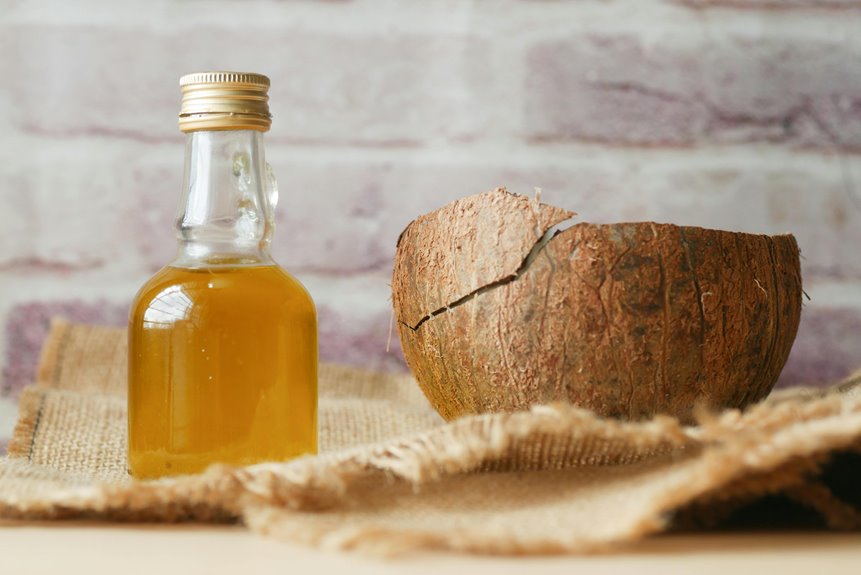
To effectively remove coconut oil stains from your jeans, start by blotting excess oil gently without rubbing. Sprinkle baking soda or cornstarch on the stain and let it sit for at least 30 minutes to absorb the grease, then brush it off. Apply dish soap to the area, rub it in gently, and soak in warm water before rinsing. Wash your jeans inside out with warm water and skip fabric softeners. For more tips on thorough stain removal and care, keep exploring.
Key Takeaways
- Blot excess coconut oil gently with a paper towel, avoiding rubbing to prevent spreading the stain.
- Apply baking soda or cornstarch on the stain and let it sit for 30 minutes to absorb oil.
- Rub dish soap into the stain and soak in warm water for 10-15 minutes to break down the grease.
- Wash jeans inside out in warm water with a heavy-duty detergent, avoiding fabric softeners.
- Air-dry jeans and avoid heat drying to prevent setting any remaining oil stains.
Identifying the Stain and Preparing Your Jeans
How can you tell if the stain on your jeans is from coconut oil? You’ll notice a translucent, greasy spot that feels slick to the touch. Unlike water stains, it won’t dry clear—it stays shiny or darkened. Fresh stains might smell faintly of coconut, but older ones lose that scent.
Once you spot the stain, don’t rub it; you risk spreading the oil deeper into the fabric. Instead, gently blot any excess oil with a paper towel or cloth.
Next, check the care label on your jeans to understand any washing restrictions. Preparing your jeans properly means working on the stain as soon as possible to prevent it from setting. Acting quickly gives you the best chance of removing it completely later.
Applying Absorbent Powders to Lift the Oil
Once you’ve gently blotted the excess oil from your jeans, the next step is to apply an absorbent powder to draw out the remaining coconut oil.
Sprinkle a generous amount of baking soda, cornstarch, or talcum powder directly onto the stained area. These powders work by soaking up the oil, making it easier to remove later.
Let the powder sit on the stain for at least 30 minutes, or longer if possible, to maximize absorption.
Afterward, gently brush off the powder using a soft brush or cloth. You might notice the powder has turned slightly greasy, which means it’s doing its job.
If needed, repeat this process until the stain lightens considerably before moving on to deeper cleaning methods.
Using Dish Soap and Warm Water for Stain Removal
Although absorbent powders help lift much of the coconut oil, you’ll need dish soap and warm water to break down and remove the remaining grease.
Start by applying a small amount of dish soap directly onto the stained area. Dish soaps are designed to cut through grease, making them perfect for coconut oil stains. Gently rub the soap into the fabric with your fingers or a soft brush, working it in to loosen the oil.
Then, soak the stained area in warm water for about 10 to 15 minutes. The warmth helps open the fabric fibers and dissolve the oil.
After soaking, rinse thoroughly with warm water to flush out the soap and loosened oil. Repeat if necessary, but avoid harsh scrubbing to protect your jeans.
Washing and Drying Your Jeans Properly
After treating the stain with dish soap and warm water, you’ll want to wash your jeans carefully to remove any leftover residue.
Turn your jeans inside out to protect the fabric and set your washing machine to a warm water cycle, as hot water might set the stain further. Use a heavy-duty detergent designed to break down oils. Avoid using fabric softeners since they can lock in the stain.
Once washed, check if the stain is completely gone before drying. If any trace remains, repeat the washing process.
When drying, air-dry your jeans rather than using a dryer, because heat can permanently set any remaining oil. Hang them in a well-ventilated area away from direct sunlight to prevent fabric damage.
This method guarantees your jeans come out clean without damage.
Tips for Preventing Future Coconut Oil Stains
Preventing coconut oil stains on your jeans starts with being mindful of how you handle the oil. When cooking or applying coconut oil, avoid touching your jeans until your hands or surfaces are clean. Use utensils or paper towels to minimize direct contact.
If you’re using coconut oil as a moisturizer, apply it carefully and allow it to fully absorb before dressing. Consider wearing an apron or old clothes when working with coconut oil in the kitchen.
Keep a stain remover pen or wipes handy for quick action if you suspect a spill. Finally, treat jeans as you’d delicate garments—wash them promptly if they get any oil on them to prevent permanent stains.
Staying proactive will save you time and keep your jeans looking fresh.
Frequently Asked Questions
Can Coconut Oil Stains Damage the Fabric Fibers of Jeans?
You might worry coconut oil stains could damage your jeans’ fibers, but they usually don’t. However, if left untreated, the oil can weaken fabric over time, so it’s best to clean the stain promptly to protect your jeans.
Are There Eco-Friendly Alternatives to Dish Soap for Removing Oil Stains?
When it comes to removing oil stains, you don’t have to reinvent the wheel. You can use eco-friendly alternatives like baking soda, white vinegar, or castile soap—they’re gentle, effective, and kinder to the environment than traditional dish soaps.
How Long Should You Let Absorbent Powders Sit on the Stain?
You should let absorbent powders sit on the stain for at least 30 minutes to an hour. This gives them time to soak up the oil effectively before you brush or wash the fabric.
Does the Type of Denim Affect Stain Removal Success?
Think of denim as a canvas with different textures; yes, its weave and finish can influence stain removal. You’ll find lighter, softer denim easier to treat, while thicker, rigid fabric might hold onto stains a bit more stubbornly.
Can Coconut Oil Stains Be Removed From Colored Jeans Without Fading?
You can remove coconut oil stains from colored jeans without fading by treating the stain gently. Use mild detergent, avoid bleach, and test on a small area first. Cold water washes help preserve the color effectively.