
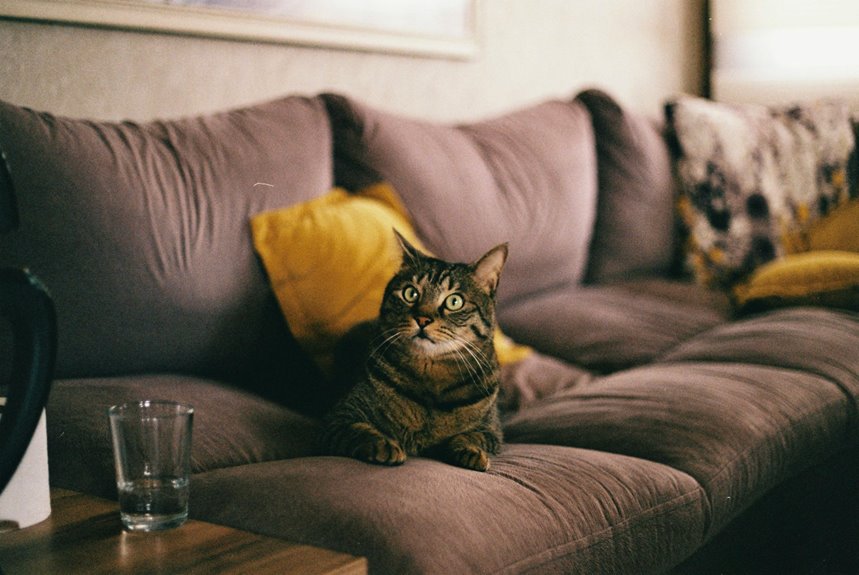
To protect your leather sofa from cats and dogs, choose durable, stain-resistant leather with protective finishes and darker colors that hide marks well. Train your pets with consistent boundaries and provide them comfy alternatives. Use waterproof or quilted covers to shield from spills and scratches. Clean spills quickly and condition the leather regularly to keep it supple. If you want tips on fixing damage and preventing future problems, exploring further can help you keep your sofa looking great longer.
Key Takeaways
- Use waterproof and padded slipcovers to shield leather sofas from scratches, spills, and pet hair.
- Choose durable, stain-resistant leather finishes like top-grain or semi-aniline for better protection.
- Train pets consistently to respect sofa boundaries and provide alternative comfortable resting spots.
- Clean leather regularly by wiping spills immediately and conditioning it every six months to maintain suppleness.
- Provide scratching posts and keep pet nails trimmed to reduce damage and preserve leather quality.
Understanding the Risks Leather Sofas Face From Pets
Pets can pose several challenges to leather sofas, from scratches to stains. When your cat sharpens its claws, those tiny scratches can quickly damage the leather’s smooth surface.
Dogs, on the other hand, might leave muddy paw prints or drool stains that seep into the material. You’ll also need to watch out for accidental spills from water bowls or pet food, which can cause discoloration or weaken the leather over time.
Plus, pets shed hair and oils that accumulate, dulling the sofa’s appearance. If you don’t address these risks promptly, the leather can crack or fade, reducing its lifespan.
Understanding these common pet-related issues helps you anticipate problems and take timely steps to protect your leather sofa effectively.
Choosing Pet-Friendly Leather and Sofa Finishes
When selecting a leather sofa, you’ll want to focus on types and finishes that stand up well to wear and tear from your furry companions.
Full-grain leather is durable and ages beautifully, but it can show scratches more easily. Top-grain leather offers a smoother surface with protective coatings that resist stains and claws better.
Look for sofas treated with a protective finish like aniline or semi-aniline, which provides some resistance without compromising leather’s natural feel. Avoid untreated or very soft leathers that scratch or stain quickly.
Additionally, consider darker colors or patterned finishes, as they conceal marks better.
Training Your Pets to Respect Furniture Boundaries
You need to set clear rules so your pets know which areas are off-limits.
Use positive reinforcement to encourage good behavior and keep training sessions consistent.
This approach helps your pets respect your leather sofa and keeps it looking great.
Establish Clear Rules
Although it might take some patience, establishing clear rules is essential for teaching your pets to respect your leather sofa.
Start by deciding which areas are off-limits and consistently enforce those boundaries. Use firm but calm commands like “no” or “off” whenever your pet approaches the sofa inappropriately.
Avoid mixed signals—if you allow pets on the sofa sometimes but not others, they’ll get confused. Set up alternative comfortable spots, such as pet beds nearby, to redirect their attention.
Be consistent with everyone in the household so your pets get a clear message.
Over time, your pets will learn to associate the sofa with the rule you’ve set and respect the boundary, helping protect your leather furniture from damage.
Use Positive Reinforcement
Since pets respond best to encouragement, using positive reinforcement can effectively train them to respect your leather sofa.
When your cat or dog stays off the furniture or uses a designated scratching post, immediately reward them with treats, praise, or affection. This creates a clear connection between good behavior and positive outcomes. Consistently acknowledging their efforts motivates your pet to repeat them.
Avoid punishment—it can cause fear or confusion, making training less effective. Instead, redirect unwanted behavior gently, then reward compliance.
Over time, your pet learns that respecting furniture boundaries earns rewards, helping protect your leather sofa from scratches or damage.
Consistent Training Schedule
When training your pets to respect furniture boundaries, establishing a consistent schedule makes a huge difference. Set specific times each day for training sessions, so your pets know when to expect guidance.
Keep sessions short but frequent—about 5 to 10 minutes, two or three times daily—to reinforce good behavior without overwhelming them. Consistency helps your pets learn faster and reduces confusion.
Always use the same commands and signals, so they clearly associate your instructions with the desired action. Stick to the schedule even when progress seems slow; patience pays off.
Over time, your pets will understand which areas are off-limits, protecting your leather sofa from scratches and damage. Remember, consistency is key to successful furniture boundary training.
Using Protective Covers and Furniture Guards
You can protect your leather sofa with various covers designed to resist pet scratches and spills.
Furniture guards add an extra layer of defense, especially on vulnerable edges.
Installing and maintaining these protections is simple and keeps your sofa looking great longer.
Types of Protective Covers
Although pets can quickly damage leather sofas, using protective covers and furniture guards offers a practical way to shield your furniture.
When choosing covers, you’ll find options like waterproof slipcovers, which protect against spills and pet accidents while being easy to clean.
Quilted or padded covers add extra cushioning, preventing scratches from claws. For a sleek look, try fitted leather or faux leather covers that blend seamlessly with your sofa.
You can also opt for washable fabric covers that you can toss in the laundry regularly.
Additionally, furniture guards—like clear vinyl protectors or corner shields—target high-wear areas without covering the entire sofa.
Selecting the right type depends on your pet’s habits and your style preferences, helping you maintain your sofa’s appearance longer.
Benefits of Furniture Guards
Three key benefits make furniture guards an excellent choice for protecting your leather sofa from pets.
First, they provide a durable barrier against scratches, preventing your cat’s claws or your dog’s nails from damaging the leather surface.
Second, furniture guards repel pet hair and dirt, keeping your sofa cleaner and reducing the need for frequent cleaning.
Third, they help preserve the sofa’s appearance by shielding it from spills, stains, and pet odors, extending its lifespan.
Using these guards means you won’t have to constantly worry about your pets causing costly damage.
Plus, they come in various materials and designs, so you can find one that blends seamlessly with your décor while keeping your leather sofa safe and looking great.
Installation and Maintenance Tips
Furniture guards and protective covers offer strong defense against pet-related damage, but their effectiveness depends on proper installation and upkeep.
When installing, make sure covers fit snugly without wrinkles or gaps where claws can catch. Secure furniture guards tightly using provided straps or adhesive pads to prevent shifting.
Regularly check for wear or loosened attachments and repair or replace as needed. Clean covers frequently according to manufacturer instructions to remove pet hair, dirt, and oils that can degrade materials.
For leather sofas, use breathable covers to avoid moisture buildup, which can damage the leather underneath.
Regular Cleaning and Maintenance Tips for Leather Sofas
To keep your leather sofa looking its best despite your pets, you should clean and maintain it regularly. Wipe spills immediately with a soft cloth to prevent stains. Use a gentle leather cleaner monthly to remove dirt and oils. Condition the leather every 6 months to keep it supple and prevent cracking. Vacuum crevices weekly to remove pet hair and debris that can scratch the surface.
| Task | Frequency | Tips |
|---|---|---|
| Wipe spills | Immediately | Use a damp, soft cloth |
| Clean leather | Monthly | Use pH-balanced leather cleaner |
| Condition leather | Every 6 months | Apply conditioner evenly |
Regular care helps your sofa stay durable and attractive, even with pets around.
Effective Solutions for Repairing Pet Damage on Leather
Leather sofas can suffer scratches, tears, and stains from your pets, but you don’t have to replace the entire piece. You can restore your sofa by taking these effective steps:
Pets can scratch and stain leather sofas, but with the right care, you can restore rather than replace them.
- Clean the area thoroughly – Use a mild leather cleaner to remove dirt and oils before any repair. This prepares the surface for better adhesion.
- Repair scratches and tears – For minor scratches, gently buff with a leather conditioner. For tears, apply a leather repair kit with adhesive and patches designed to blend seamlessly.
- Recolor and protect – Use a matching leather dye to restore color, then seal with a leather protector to prevent future damage and stains.
Frequently Asked Questions
Can Essential Oils Deter Pets From Scratching Leather Sofas?
You can use essential oils to deter pets from scratching, but be cautious. Some oils may irritate your pets or damage leather. Always dilute oils and test a small sofa area before applying to keep both safe.
Are There Specific Pet Breeds More Likely to Damage Leather Furniture?
You’ll find that certain breeds, like energetic dogs or curious cats with sharp claws, are more prone to damaging leather furniture. Knowing this helps you take extra precautions to protect your sofa effectively.
How Does Humidity Affect Leather Sofas With Pets in the Home?
Humidity’s like a sneaky thief stealing leather’s moisture, making it dry and cracked. You’ll want to keep indoor humidity balanced to prevent your sofa from becoming brittle, especially with pets that add extra wear and tear.
What Types of Pet Toys Best Distract Pets From Leather Furniture?
You’ll want to choose durable chew toys for dogs and interactive puzzle toys for cats. Soft, squeaky toys also grab their attention, keeping them entertained and away from your leather furniture, reducing damage risks effectively.
Is It Safe to Use Pheromone Sprays Near Leather Sofas?
Wondering if pheromone sprays play nice with leather? They usually do, but you should test a small spot first. Don’t let your sofa become an unintended science experiment—spray safely and keep your space fresh!