
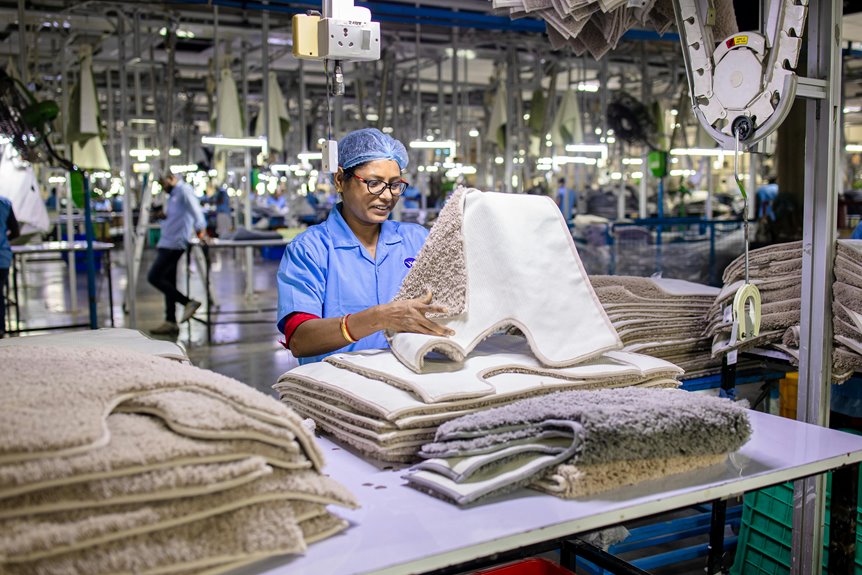
To prevent fabric bleeding in handmade garments, always pre-wash your fabrics to remove excess dye. Test for dye stability using a hot water method or squeeze test. Choose high-quality fabrics and use dye fixatives for better color retention. When washing, opt for cold water and gentle cycles with mild, color-safe detergents. Store garments properly in cool, dry areas and regularly check for wear. There’s more essential care advice that can help keep your creations vibrant and long-lasting.
Key Takeaways
- Always pre-wash fabrics to remove excess dye and soften the material before sewing or wearing.
- Conduct dye stability tests, such as the hot water test and squeeze method, to identify potential bleeding.
- Use dye fixatives and pre-soak fabrics in vinegar and water to enhance dye retention before washing.
- Wash handmade garments in cold water with gentle, color-safe detergents to minimize dye bleeding risks.
- Store clean garments in breathable bags and avoid direct sunlight to maintain fabric quality and prevent dye degradation.
Understanding Fabric Bleeding
Fabric bleeding occurs when dyes in a textile release and mix with water or other fabrics during washing or exposure to moisture. This issue often arises with new or brightly colored garments, as the dye hasn’t set properly.
When you wash these items, the loose dye can leach out, potentially staining lighter fabrics. To minimize this risk, always check care labels and wash similar colors together.
It’s also a good idea to use cold water, as hot water can exacerbate bleeding. Additionally, consider using a color catcher sheet in your wash. These sheets absorb loose dyes, helping to protect your other garments.
Importance of Pre-Washing
Before you wear that new garment, pre-washing it can make a significant difference in preventing fabric bleeding. This simple step helps to remove excess dye that may not have fully set in the fabric.
By washing your garment before you wear it, you’re allowing those loose dyes to wash away, reducing the risk of them transferring to other fabrics or your skin.
Additionally, pre-washing can help to soften the fabric, making it more comfortable to wear.
It also allows you to check for any unexpected issues, like shrinkage or colorfastness, before you’ve invested time and effort into wearing or styling the piece.
Testing Fabrics for Dye Stability
To guarantee your fabrics won’t bleed, you need to test their dye stability before washing.
You can use methods like hot water testing and the squeeze technique to identify any potential issues.
Hot Water Testing
How can you guarantee your fabrics won’t bleed when washed? One effective way is to conduct a hot water test.
Start by cutting a small swatch of your fabric. Fill a pot with hot water and submerge the swatch for about 10 minutes. After this, remove the fabric and let it cool.
Check the water for any color transfer—if you see dye in the water, your fabric isn’t stable and might bleed when washed. If the water remains clear, you’re likely safe to use that fabric in your handmade garments.
This simple test can save you from potential washing disasters and assure your garments maintain their vibrant colors for longer. Always err on the side of caution when selecting fabrics!
Squeeze Method Technique
After conducting the hot water test, you might want to try the squeeze method technique for an extra layer of assurance against dye bleeding. This method is simple and effective.
Start by dampening a white cloth or paper towel with water. Next, take a small section of the fabric you want to test and squeeze it gently into the damp cloth. If you see any color transfer onto the cloth, that’s a red flag. It means the dye isn’t stable and could bleed when exposed to water or washing.
Make sure to check multiple sections, as dye stability can vary. If your fabric passes this test, you can proceed with confidence in your project!
Identifying Bleeding Fabrics
Ever wondered if your fabric will bleed dye during washing? You can easily test for dye stability before diving into a project.
Grab a small swatch of your fabric and dampen it with cold water. Next, take a white cloth or paper towel and rub the damp fabric. If any color transfers onto the cloth, that fabric might bleed.
Another method is to soak the swatch in a bowl of cold water for about 30 minutes. Afterward, check the water for discoloration; if it’s tinted, you’ve got a potential bleeder.
These simple tests can save you from a laundry disaster and guarantee your handmade garments look great for years to come. Always be proactive to protect your work!
Chemical Treatments for Dye Retention
Although fabric dyeing can create stunning colors, it often comes with the risk of bleeding during washing. To combat this issue, you can use chemical treatments designed for dye retention.
Start by applying a dye fixative, which helps bond the dye to the fabric, reducing the chance of color loss. Look for products specifically formulated for the type of dye you’ve used, as compatibility is key.
Additionally, consider pre-soaking your fabric in a solution of vinegar and water, which can help stabilize the dye. After dyeing, wash your garments with a gentle detergent that contains color-safe properties.
Choosing Quality Fabrics
When it comes to preventing fabric bleeding, choosing quality fabrics is essential.
You’ll want to contemplate the type of fabric, as different materials react differently to dyes.
Plus, investing in reputable brands often means better quality, which can save you money in the long run.
Fabric Type Considerations
Choosing quality fabrics is essential for preventing fabric bleeding and guaranteeing your garments maintain their vibrant colors. When selecting fabrics, consider these factors:
- Fiber Content: Natural fibers like cotton and linen tend to bleed less than synthetic fibers. Check the blend for dyes that may run.
- Dye Type: Look for fabrics dyed with reactive or fiber-reactive dyes, as they bond better with the fibers, reducing the chance of bleeding.
- Finish and Treatment: Fabrics with a pre-wash treatment or colorfast finish often resist bleeding.
Always check the care instructions to guarantee proper maintenance.
Brand Reputation Importance
Brand reputation plays an essential role in guaranteeing you select high-quality fabrics that resist bleeding. When you choose fabrics from well-known brands, you’re more likely to receive materials that have undergone rigorous quality testing.
These brands invest in research and development to create dyes and treatments that minimize bleeding, giving you peace of mind in your projects. Trusting a reputable brand also guarantees that you’re getting consistent colorfastness across their fabric lines.
When you see positive reviews and testimonials, you can feel confident in your choice. Always check for certifications or standards that indicate the fabric’s quality.
Quality vs. Cost
Investing in high-quality fabrics often means paying a bit more upfront, but the long-term benefits far outweigh the initial cost.
Choosing quality fabrics can greatly reduce the risk of fabric bleeding and enhance your garment’s durability. Here’s why it’s worth it:
- Longevity: High-quality fabrics resist wear and tear, ensuring your garments last longer.
- Color Retention: Premium materials often undergo better dyeing processes, minimizing the chances of bleeding during washes.
- Comfort: Quality fabrics feel better against your skin, providing a more enjoyable wearing experience.
Pre-Washing Techniques for Quilting
While you might be enthusiastic to plunge into your quilting project, pre-washing your fabrics is an essential step that can save you from future headaches.
Start by sorting your fabrics based on color and fiber content. This helps prevent color transfer and guarantees proper care.
Use cold water and a gentle detergent to wash your fabrics, which helps remove any excess dye and finishes. Consider adding a color catcher to catch any loose dye during the wash.
After washing, tumble dry on low or lay your fabrics flat to dry, as this helps in reducing shrinkage.
Press the fabrics before cutting to guarantee a smooth sewing experience. Taking these steps will set a solid foundation for your quilting project!
Washing Tips for Preventing Bleeding
When it comes to washing your fabrics, using cold water is key to preventing bleeding.
You should also opt for a mild detergent to keep colors intact.
These simple steps can make a big difference in maintaining your fabric’s vibrancy.
Cold Water Wash
One of the simplest and most effective ways to prevent fabric bleeding is by washing your clothes in cold water. Hot water can open up the fibers in your fabric, allowing dyes to bleed out. By sticking to cold water, you help maintain the color integrity of your garments.
Here are some tips for cold water washing:
- Sort Your Laundry: Always separate darks from lights to minimize color transfer.
- Use a Gentle Cycle: This reduces agitation, which can cause fabrics to fray and release dye.
- Don’t Overload the Machine: Give your clothes space to move around, allowing for a more effective wash without dye mixing.
Implementing these practices will help keep your handmade garments looking vibrant and new.
Mild Detergent Use
Using a mild detergent can greatly reduce the risk of fabric bleeding, as harsher cleaners often strip away dyes from fibers.
When washing your handmade garments, always choose a gentle, pH-balanced detergent designed for delicate fabrics. This helps maintain the integrity of the dyes and minimizes color transfer.
Before washing, check for any care labels on your fabrics to guarantee compatibility. It’s also a good idea to test the detergent on a small, inconspicuous area first.
When you’re ready, wash your garments in cold water, as it’s less likely to cause bleeding than warm or hot water.
Finally, avoid fabric softeners, as they can interfere with dye stability.
The Role of Detergents and Soaps
Although you mightn’t think about it, the choice of detergents and soaps plays an essential role in preventing fabric bleeding.
Using the right products can keep your handmade garments looking fresh and vibrant. Here are three key points to reflect on:
- pH Balance: Choose a detergent with a balanced pH to protect dye integrity and prevent fading.
- Color-Safe Formulas: Opt for detergents specifically designed for colors; these help lock in dyes and minimize bleeding.
- Gentle Ingredients: Look for soaps with mild, natural ingredients; harsh chemicals can strip color and weaken fibers.
Storing and Caring for Handmade Garments
When you properly store and care for your handmade garments, you not only preserve their beauty but also extend their lifespan.
Always clean your garments before storing them to prevent stains from setting. Fold them neatly, avoiding hangers that could distort their shape. Use breathable garment bags to shield your pieces from dust while allowing air circulation.
Keep your clothes in a cool, dry place away from direct sunlight, which can fade colors. For delicate fabrics, consider using acid-free tissue paper for extra protection.
Regularly check your garments for any signs of wear or pests, addressing issues promptly.
Final Thoughts on Fabric Care
As you embrace the art of fabric care, remember that a little effort goes a long way in preserving your garments’ quality and longevity.
By following a few simple practices, you can keep your handmade pieces looking fresh and vibrant.
- Pre-wash fabrics: Always pre-wash your fabrics before sewing to minimize the risk of bleeding.
- Use cold water: When washing, opt for cold water and gentle cycle settings to protect colors.
- Avoid drying in direct sunlight: Hang your garments in the shade, as sunlight can fade colors over time.
Frequently Asked Questions
Can I Mix Fabrics With Different Dye Stability in One Garment?
Mixing fabrics with different dye stability in one garment’s like dancing with mismatched partners; it can lead to chaos. You’ll risk uneven fading, so consider harmonious blends to keep your creation looking vibrant and cohesive.
How Often Should I Pre-Wash New Fabrics?
You should pre-wash new fabrics every time before sewing. This helps remove any excess dye and finishes that might affect your project. It’s a simple step that saves you from potential issues later on.
Are There Specific Brands Known for Low-Bleeding Fabrics?
“An ounce of prevention is worth a pound of cure.” You’ll find brands like Kona, Robert Kaufman, and Moda often produce low-bleeding fabrics. Always check reviews to guarantee you’re choosing the best options for your projects!
What Should I Do if My Fabric Bleeds After Washing?
If your fabric bleeds after washing, soak it in cold water with a bit of vinegar or salt to set the dye. Rinse thoroughly, and then wash it separately to prevent further bleeding.
Can I Use Fabric Softener to Prevent Bleeding?
You might think fabric softener’s the solution, but it won’t prevent bleeding. Instead, it can even lock in colors, making the problem worse. So, be cautious and explore other methods to protect your fabrics instead.