
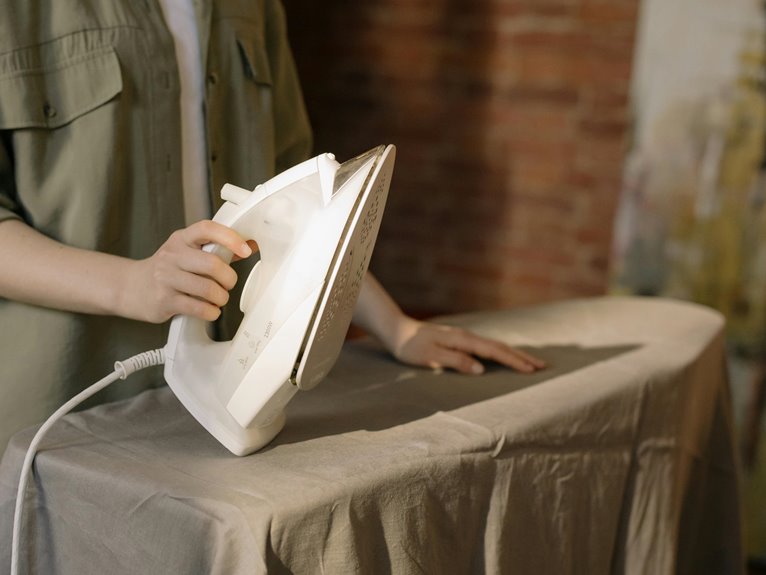
To press Tencel Lyocell like a pro, start by ensuring the fabric is clean and slightly damp or fully dry. Set your iron to low or medium heat (around 275°F to 320°F) and always use a pressing cloth to protect delicate fibers. Press gently without sliding the iron to prevent distortion, using steam cautiously. Cool the fabric completely before handling to keep that crisp look. Follow these steps carefully, and you’ll master the art of perfectly pressed Tencel — keep exploring for detailed tips and tricks.
Key Takeaways
- Use a low to medium iron temperature (275°F to 320°F) and always test on a hidden area before full pressing.
- Place a pressing cloth between the iron and fabric to protect delicate fibers from direct heat and avoid scorching.
- Press with gentle, deliberate movements without sliding the iron to prevent fabric distortion and damage.
- Keep the fabric flat and slightly damp or fully dry, smoothing wrinkles by hand before pressing each small section.
- Allow the fabric to cool completely after pressing to set the press and avoid excessive steam to prevent water spots.
Understanding the Properties of Tencel Lyocell
Although Tencel Lyocell looks and feels like traditional fabric, it has unique properties you should know before pressing. It’s made from wood pulp, giving it a smooth, soft texture and excellent moisture-wicking abilities.
You’ll notice it drapes beautifully but can be sensitive to high heat. Unlike cotton, Tencel resists wrinkles naturally, but excessive heat or steam can damage its fibers.
It’s also more delicate when wet, so you need to handle it gently during pressing. Since it’s eco-friendly and breathable, preserving its structure is key.
Knowing these traits helps you avoid common mistakes like scorching or leaving shiny marks. So, understanding Tencel’s nature guarantees you press it perfectly without compromising its look or feel.
Preparing Your Fabric for Pressing
Before you start pressing your Tencel Lyocell fabric, take a few essential steps to prepare it properly.
Begin by washing or steaming the fabric to remove any wrinkles and to relax the fibers. Make certain the fabric is completely dry or slightly damp, as pressing damp fabric can help achieve smoother results without causing damage.
Lay the fabric flat on your ironing board, smoothing out any folds or creases by hand. If your fabric is delicate or prone to shine, place a pressing cloth between the iron and the fabric to protect it.
Finally, test a small, inconspicuous area first to guarantee the fabric responds well to pressing, preventing any unwanted marks or damage before you move on to larger sections.
Selecting the Right Iron Settings
You’ll want to set your iron to a low to medium temperature to protect Tencel Lyocell’s delicate fibers.
Using steam can help remove wrinkles without damaging the fabric, but be careful not to overdo it to avoid shine.
Let’s go over how to balance these settings for the best results.
Ideal Temperature Range
When pressing Tencel Lyocell fabric, choosing the right iron temperature is essential to avoid damaging its delicate fibers.
Set your iron to a low to medium heat, typically between 275°F and 320°F (135°C to 160°C). This range is hot enough to smooth wrinkles but gentle enough to prevent scorching or melting.
Avoid using high heat, as it can cause permanent damage or shine on the fabric. Always start at the lower end of the range and gradually increase temperature if needed, testing on a hidden area first.
Using the correct temperature helps maintain the fabric’s softness and appearance, ensuring your garment looks crisp without compromising its integrity.
Steam Usage Tips
Dial in the right steam setting to keep your Tencel Lyocell fabric looking smooth without soaking or stretching it.
Use a medium steam level—too much moisture can weaken the fibers and cause distortion, while too little won’t soften wrinkles effectively.
If your iron has adjustable steam output, start low and increase gradually if needed. Always test steam on a hidden area first to see how the fabric reacts.
Avoid prolonged steam bursts in one spot; instead, apply short, even bursts while moving the iron steadily.
Keep the iron’s soleplate clean to prevent water stains, and use distilled water to minimize mineral buildup.
These careful steam choices help maintain Tencel’s natural sheen and strength while delivering crisp, wrinkle-free results.
Avoiding Fabric Shine
Although Tencel Lyocell fabric responds well to heat, selecting the right iron settings is essential to prevent unwanted shine.
Set your iron to a low to medium temperature, typically labeled as “synthetic” or “delicate.” Avoid high heat, which can crush the fibers and cause a glossy, shiny finish.
Use a pressing cloth between the iron and fabric to add a protective layer, further reducing shine risk. Always test on a hidden seam before pressing the entire garment.
Press gently without sliding the iron back and forth, as friction increases shine. If you notice any shine starting to form, reduce the temperature immediately and increase steam to relax the fibers instead.
Following these steps keeps your Tencel fabric looking smooth and natural.
Using a Pressing Cloth for Protection
One simple step you shouldn’t skip is using a pressing cloth to protect your Tencel lyocell fabric. This thin barrier prevents direct heat contact, reducing the risk of shine, scorch marks, or fabric damage. A pressing cloth also helps distribute heat evenly, ensuring your fabric stays smooth without getting flattened or glossy.
Here’s a quick guide to pressing cloth options:
| Material | Best For | Notes |
|---|---|---|
| Cotton muslin | General use | Breathable, heat-resistant |
| Linen | High heat pressing | Durable, natural texture |
| Silk | Delicate fabrics | Smooth surface, low friction |
| Polyester blend | Convenient, affordable | Use with low heat settings |
Choosing the right cloth keeps your Tencel looking fresh and professional every time you press it.
Techniques for Effective Pressing
When pressing Tencel lyocell fabric, you’ll want to use gentle, deliberate movements to avoid damaging its delicate fibers.
Start by setting your iron to a low or medium heat with steam on. Always press, don’t slide the iron—lift and press down repeatedly to prevent stretching or distorting the fabric.
Set iron to low/medium with steam; press down repeatedly without sliding to avoid fabric distortion.
Use a pressing cloth between the iron and fabric to protect the surface. Work in small sections, smoothing the fabric with your hands before pressing to eliminate wrinkles effectively.
Let the fabric cool completely before moving it to set the press. Avoid excessive steam, which can cause water spots.
Avoiding Common Mistakes When Pressing
You’ll want to keep your iron at the right temperature to prevent scorching your Tencel lyocell fabric.
Always use a pressing cloth to protect the fibers and avoid direct heat.
Plus, be careful with moisture—too much can cause damage or water spots.
Temperature Settings Tips
Although Tencel Lyocell fabric can withstand moderate heat, setting your iron too high risks damaging its smooth texture and natural sheen.
Always start with a low to medium heat setting, typically around 275°F to 300°F (135°C to 150°C). Avoid using the highest heat settings, as excessive heat can cause shiny spots or weaken the fibers.
If your iron has fabric-specific settings, choose the “synthetic” or “delicate” option. Test the iron on a small, inconspicuous area before pressing the entire garment to verify the temperature won’t harm the fabric.
Using Pressing Cloth
Since Tencel Lyocell fabric is delicate, using a pressing cloth is essential to protect it from direct heat and prevent shiny marks.
Always place a clean, lightweight cotton cloth between your iron and the fabric. This barrier diffuses the heat, reducing the risk of scorching or leaving a glossy finish.
Don’t skip the pressing cloth, even on low heat settings—it’s your best defense against damage. Avoid pressing too hard; gentle, even pressure works better with the cloth in place.
Also, keep the pressing cloth clean and dry to prevent transferring dirt or moisture onto your fabric.
Avoiding Moisture Damage
While using a pressing cloth shields your Tencel Lyocell fabric from direct heat, moisture can still cause unwanted damage during pressing. Avoid applying steam directly onto the fabric, as excessive moisture can weaken fibers and cause water spots.
Instead, use the steam function sparingly or rely on a dry iron setting. If you do need moisture, lightly mist the pressing cloth—not the fabric—to maintain control. Always make sure your iron’s water reservoir is clean to prevent mineral deposits from transferring.
After pressing, let the fabric air dry completely before handling or sewing to avoid distortion. By managing moisture carefully, you’ll preserve the fabric’s smooth texture and vibrant appearance without risking shrinkage or damage.
Stay vigilant against over-wetting to keep your Tencel looking flawless.
Maintaining the Look of Pressed Tencel Lyocell
To keep your Tencel Lyocell fabric looking crisp after pressing, you’ll want to handle it with care and store it properly.
Always hang your garments on padded or wide hangers to prevent unwanted creases. Avoid stuffing them tightly in your closet, as this can cause wrinkles to form again.
Hang garments on padded hangers and avoid overcrowding to keep wrinkles at bay.
When transporting, fold the fabric gently along natural seams instead of sharp creases. If wrinkles reappear, lightly steam the fabric instead of re-ironing, as excessive heat can damage the fibers.
Also, avoid wearing accessories that might snag or crush the fabric’s surface.
Frequently Asked Questions
Can Tencel Lyocell Fabric Be Machine Washed After Pressing?
You can machine wash Tencel Lyocell fabric after pressing, but use a gentle cycle with cold water to protect it. Avoid harsh detergents and dry it carefully to maintain its softness and shape.
Is Tencel Lyocell Environmentally Friendly Compared to Other Fabrics?
Back in the days of knights, you’d appreciate Tencel Lyocell’s eco-friendly nature—it’s made from sustainably harvested wood and uses less water and chemicals than cotton. You’ll find it’s a greener choice for your wardrobe.
How Long Does Tencel Lyocell Fabric Typically Last With Proper Care?
With proper care, your Tencel Lyocell fabric can last several years. It’s durable and maintains softness, but you’ll want to follow washing instructions and avoid harsh chemicals to keep it in great condition longer.
Can Tencel Lyocell Fabric Be Dyed at Home?
Dyeing delicate Tencel demands diligence. You can confidently color it at home using fiber-reactive dyes for vivid results. Just remember to pre-wash, use cool water, and avoid harsh chemicals to protect its soft sheen.
Does Tencel Lyocell Fabric Shrink After the First Wash?
Yes, Tencel Lyocell fabric can shrink slightly after the first wash. To minimize this, you should wash it in cold water and avoid high heat drying. Always follow care instructions to keep it looking great.