
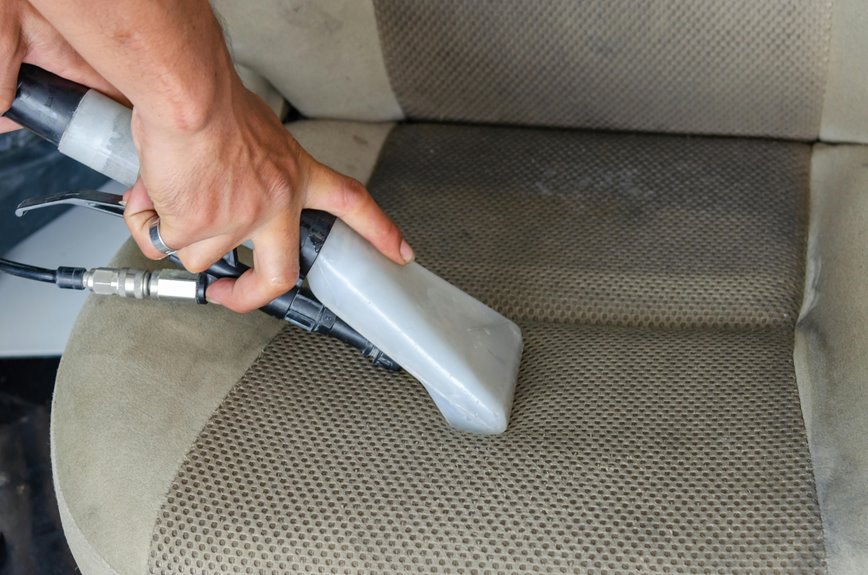
To permanently remove pet, smoke, and musty odors from upholstery, start by thoroughly vacuuming to lift dirt and debris. Then sprinkle baking soda to absorb lingering smells and vacuum again. Use a vinegar-water spray to break down deep odors, blotting afterward. For pet stains, enzyme cleaners target organic residues effectively. Activated charcoal can also help absorb smells over time. Keeping cushions rotated and protecting fabric prevents future odors. If you want to master long-lasting freshness, there’s more to discover.
Key Takeaways
- Thoroughly vacuum upholstery, including seams and crevices, to remove loose debris and pet hair trapping odors.
- Sprinkle baking soda generously, let sit 15+ minutes, then vacuum to neutralize pet, smoke, and musty smells.
- Apply a 1:1 white vinegar and water spray lightly, let sit 10-15 minutes, then blot to dissolve lingering odors.
- Use enzyme-based cleaners promptly on pet accidents to break down odor-causing bacteria and prevent permanent smells.
- Regularly clean, rotate cushions, and ensure good ventilation to maintain freshness and prevent odor buildup.
Understanding the Causes of Upholstery Odors
Although you mightn’t notice them right away, odors in upholstery often stem from everyday sources like spills, pet accidents, or trapped moisture.
When liquids seep into fabric or padding, they create a breeding ground for bacteria and mold, which cause unpleasant smells. Pets can leave behind urine or dander that penetrates deep into cushions, making odors stubborn.
Smoke particles cling to fibers, lingering long after the source is gone. Even regular use traps sweat and body oils, which degrade fabric freshness over time.
Understanding these causes helps you identify why your upholstery smells and how to tackle the problem effectively. By recognizing the specific source, you can choose the right cleaning approach to eliminate odors, rather than just masking them temporarily.
Preparing Your Upholstery for Odor Removal
Before you start deodorizing your upholstery, you need to prepare it properly to guarantee the best results.
Begin by removing any loose cushions and vacuum the entire surface thoroughly to eliminate dust, dirt, and pet hair. Pay close attention to seams and crevices where debris often hides.
Next, check the care label on your upholstery to understand which cleaning methods are safe to use. Test any cleaning product on a hidden area first to avoid discoloration or damage.
Always check your upholstery’s care label and test cleaners on a hidden spot to prevent damage.
If your upholstery has stains, treat them with an appropriate stain remover before tackling odors.
Finally, make sure the room is well-ventilated to help odors dissipate during cleaning. Taking these steps will set a solid foundation for effective odor removal.
Using Baking Soda to Neutralize Odors
Once your upholstery is clean and ready, you can move on to neutralizing odors with baking soda. Sprinkle a generous layer over the surface, making sure to cover every inch. Let it sit for at least 15 minutes—longer for stronger smells—so it can absorb odors effectively. Then, vacuum thoroughly to remove all the powder.
Visualize the process:
| Step | What You’ll Do |
|---|---|
| Sprinkle Baking Soda | Cover upholstery evenly |
| Let It Sit | Wait 15-30 minutes |
| Vacuum | Remove all baking soda residue |
| Smell Check | Enjoy fresh, odor-free fabric |
This simple method is safe, affordable, and works wonders at neutralizing pet, smoke, and musty odors.
Applying Vinegar Solutions for Deep Cleaning
When you want to tackle odors and stains more deeply, applying a vinegar solution can be highly effective.
Vinegar’s natural acidity breaks down grime and neutralizes stubborn smells, making your upholstery fresh again. Mix equal parts white vinegar and water in a spray bottle, then lightly mist the fabric without soaking it. Let it sit for 10-15 minutes before blotting with a clean cloth.
This method is safe for most fabrics but always test a hidden spot first.
Using vinegar solution will:
Using vinegar solution will dissolve odors, brighten fabrics, and refresh upholstery naturally and affordably.
- Dissolve lingering pet odors and smoke smells
- Remove musty, damp scents trapped deep inside
- Refresh and brighten faded fabrics without harsh chemicals
- Give you peace of mind with a natural, affordable cleaner
Give your upholstery a fresh start with this powerful, simple trick.
Utilizing Enzyme Cleaners for Pet and Organic Smells
Enzyme cleaners target the root cause of pet and organic odors by breaking down proteins and bacteria that cause smells.
When you apply an enzyme cleaner to your upholstery, it digests the organic material left behind by pets, food, or bodily fluids, eliminating the odor at its source rather than masking it.
To use, spray the affected area generously and let it sit for at least 15 minutes to allow the enzymes to work effectively.
Avoid rinsing immediately; instead, blot with a clean cloth to absorb excess moisture.
For stubborn odors, you might need to repeat the process.
Always test the cleaner on a hidden spot first to verify it won’t damage your upholstery.
This method is especially effective for pet urine and other organic stains.
Employing Activated Charcoal and Other Absorbers
Anyone dealing with stubborn odors in upholstery can turn to activated charcoal and other absorbers for effective results.
These materials trap and neutralize odor-causing molecules, making your furniture smell fresh again without harsh chemicals. You can simply place activated charcoal bags or odor absorbers near or on the upholstery, leaving them for several hours or overnight.
This method works well on pet smells, smoke, and musty odors.
- Feel relief as the unpleasant smells vanish naturally
- Enjoy a chemical-free, safe odor elimination process
- Restore comfort to your favorite chairs or sofas
- Breathe easier knowing your home smells clean and inviting
Activated charcoal and absorbers are easy, effective tools you can rely on to refresh your upholstery.
Preventative Measures to Keep Upholstery Odor-Free
Activated charcoal and absorbers are great for tackling existing odors, but preventing smells from settling in the first place saves you time and effort.
To keep your upholstery fresh, vacuum regularly to remove dust and pet hair that trap odors. Use slipcovers or washable throws to protect fabric from spills and stains. Avoid eating or smoking near furniture to prevent stubborn smells.
When pets share your space, groom them often and clean accidents immediately with enzyme-based cleaners. Confirm proper ventilation by opening windows or using air purifiers to reduce airborne odors.
Finally, rotate cushions and pillows frequently to allow even exposure to air and sunlight, which naturally neutralizes odors. These simple steps help you maintain a clean-smelling, inviting upholstery effortlessly.
Frequently Asked Questions
Can Professional Steam Cleaning Remove All Types of Upholstery Odors?
Think of steam cleaning like a rain shower washing away grime; it removes many odors but not all. You might find stubborn smoke or pet smells linger, so you’ll often need specialized treatments for complete freshness.
Are There Any Upholstery Fabrics That Are More Odor-Resistant?
You’ll find synthetic fabrics like polyester and microfiber more odor-resistant since they repel moisture and stains better. Natural fabrics, like cotton, tend to absorb odors more, so choosing the right material helps keep your upholstery fresher.
How Long Does It Take for Odors to Be Completely Eliminated?
It usually takes several hours to a few days for odors to completely disappear, depending on the severity and treatment method you use. You’ll speed things up by ventilating the area and using effective cleaning products.
Can Essential Oils Be Used Safely on Upholstery for Scent?
You can practically transform your upholstery into a fragrant paradise with essential oils, but don’t go wild! Dilute them properly and test a small spot first to avoid damage or stains. You’ll love the subtle scent!
Is It Safe to Use Homemade Cleaning Solutions on Antique Furniture?
You shouldn’t use homemade cleaning solutions on antique furniture without testing first. Some ingredients can damage finishes or wood. Always spot-test in an inconspicuous area and consider consulting a professional for valuable pieces to avoid harm.