
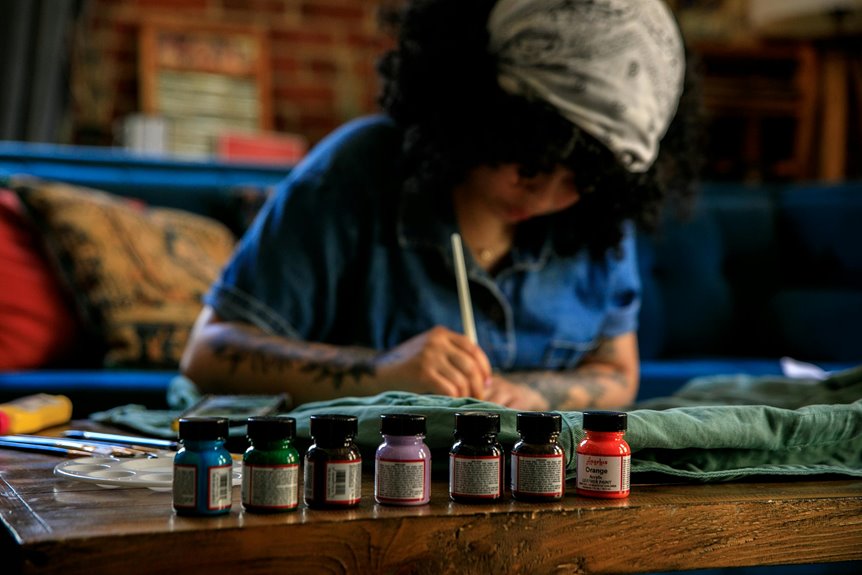
To over dye your linen gingham at home, start by washing it thoroughly and keeping it damp for better dye absorption. Choose a fiber-reactive dye for vibrant, lasting color. Set up a well-ventilated workspace, protect surfaces, and wear gloves. Soak the fabric in warm water, mix your dye carefully, then immerse and stir gently for 20–30 minutes. Rinse until clear and air dry. With the right steps, your linen gingham’s over-dye can look stunning—there’s more to explore for perfect results.
Key Takeaways
- Thoroughly wash and keep linen gingham damp to prepare for even dye absorption and remove any finishes or oils.
- Use fiber-reactive dyes for vibrant, durable colors that bond well with linen fibers and complement the gingham pattern.
- Set up a well-ventilated workspace covered with protective sheets, and gather gloves, measuring tools, and a large basin for dyeing.
- Soak the fabric in warm water, then submerge in mixed dye bath, stirring gently and checking color every 20-30 minutes.
- Rinse dyed fabric in cold water until clear, wash with mild detergent, and air dry to preserve the new color and fabric integrity.
Understanding Linen Gingham Fabric
Before you begin over dyeing, it’s important to understand linen gingham fabric.
Gingham is a lightweight, woven fabric characterized by its checked pattern, created by weaving dyed yarns in a crisscross design. When you work with linen gingham, you’re handling a natural fiber known for its breathability, durability, and slight texture.
This fabric’s absorbency means it readily takes in dyes, but the checkered pattern can react unpredictably during over dyeing. Keep in mind that the original colors and the weave structure will influence the final result.
Since linen gingham has both dyed threads and undyed ones, the over dye might blend or intensify certain areas differently. Understanding these properties helps you anticipate how the fabric will respond and achieve the look you want.
Selecting the Right Dye for Linen
When choosing a dye for linen, you’ll want to take into account the fabric’s natural fibers and how they absorb color. Linen is made from flax fibers, which are porous and soak up dye well, so selecting a dye that penetrates deeply guarantees vibrant, lasting results.
Fiber-reactive dyes are ideal because they bond chemically with linen’s cellulose fibers, offering excellent colorfastness. You can also consider all-purpose dyes for a simpler option, but they mightn’t be as durable.
Fiber-reactive dyes chemically bond with linen, ensuring vibrant, long-lasting color, unlike less durable all-purpose dyes.
Keep these tips in mind when selecting your dye:
- Opt for fiber-reactive dyes for bright, long-lasting colors
- Choose colors that complement the existing gingham pattern
- Avoid dyes with harsh chemicals to protect fabric integrity
- Test small fabric swatches to preview final results before full dyeing
Preparing Your Fabric for Over-Dyeing
Choosing the right dye sets the stage, but preparing your linen fabric properly guarantees the color takes evenly and lasts.
Start by thoroughly washing your fabric to remove any finishes, oils, or dirt that could block the dye. Use a mild detergent and skip fabric softeners.
After washing, keep the fabric damp—dye absorbs best when the material is wet. Next, check for any stains or spots; these might react unpredictably with your dye.
If you’re dyeing a garment, turn it inside out to protect seams and edges. Avoid ironing before dyeing; wrinkles help dye penetrate unevenly.
Finally, plan your dye bath or solution according to the fabric’s weight and size, ensuring even coverage. Proper prep sets the foundation for vibrant, lasting color on your linen.
Setting Up a Dyeing Workspace at Home
Although dyeing linen can be a messy process, setting up a dedicated workspace at home helps you stay organized and protects your surroundings.
Choose an area with good ventilation, like near an open window or outside. Cover surfaces with plastic sheets or old newspapers to catch spills and drips. Keep all your tools and materials within easy reach to avoid unnecessary movement during the dyeing process.
Here’s what you’ll need for your workspace setup:
- A large plastic tub or basin for soaking and dyeing
- Protective gloves and apron to keep your hands and clothes safe
- Measuring cups and stir sticks for accurate dye mixing
- Old towels or rags for quick cleanups and wiping spills
This setup will make your over-dyeing smoother and more enjoyable.
Step-by-Step Guide to Over-Dyeing Linen Gingham
Now that your workspace is ready, you can begin the process of over-dyeing linen gingham. First, soak your fabric in warm water to guarantee even dye absorption.
Mix your chosen dye according to the instructions, wearing gloves to protect your skin. Submerge the linen gingham into the dye bath, stirring gently to avoid uneven spots.
Keep it in the dye for 20 to 30 minutes, checking the color periodically. Once you reach the desired shade, remove the fabric and rinse it in cold water until the water runs clear.
Finally, wash the fabric with mild detergent and air dry it away from direct sunlight. This step-by-step method helps you transform your linen gingham with vibrant, lasting colors.
Tips for Achieving Even and Vibrant Colors
To get even and vibrant colors on your linen, start by preparing the fabric thoroughly—clean it well and remove any finishes that might block dye absorption.
Next, choose high-quality dyes designed specifically for natural fibers like linen to guarantee rich, lasting results.
These steps will help you achieve the bold, consistent look you want.
Preparing Fabric Properly
Properly preparing your linen fabric is essential for achieving even and vibrant colors when over dyeing. Before you start, make certain the fabric is clean and free of any finishes or residues that might block the dye.
Pre-washing removes oils and dirt, allowing the dye to penetrate evenly. Wet the fabric thoroughly to prevent blotchy patches during dyeing. Finally, handle the fabric gently to avoid creases that could cause uneven color absorption.
Here’s what to do:
- Pre-wash with a mild detergent and rinse well
- Remove any stains or finishes with a fabric-safe remover
- Soak the fabric in water to guarantee it’s thoroughly wet
- Smooth out wrinkles or folds before dyeing
Following these steps helps you get consistent, vibrant results every time.
Choosing Quality Dyes
Once your linen fabric is prepped and ready, the next step is picking the right dye to bring your project to life. Choose high-quality fiber-reactive dyes designed specifically for natural fibers like linen. These dyes bond well with the fabric, ensuring vibrant, long-lasting colors.
Avoid cheap, poorly pigmented dyes that may result in uneven fading or patchy spots. Consider liquid dyes for easier mixing and application, or powder dyes if you want more control over intensity.
Always test a small fabric swatch first to check how the color develops. Using soda ash as a fixative helps the dye set evenly.
Caring for Your Over-Dyed Linen Gingham Fabric
Caring for your over-dyed linen gingham fabric starts with gentle handling to maintain its vibrant colors and texture. To keep your fabric looking fresh, avoid harsh detergents and opt for mild, color-safe options.
Handle your over-dyed linen gingham gently and choose mild, color-safe detergents to preserve vibrancy.
Always wash in cold water to prevent fading and shrinkage. Air drying is best; direct sunlight can dull the colors, so dry in the shade or indoors. When ironing, use a low to medium heat setting and iron while the fabric is slightly damp to avoid scorching.
- Use a gentle cycle or hand wash your fabric
- Avoid bleach and fabric softeners that can damage dye
- Store in a cool, dry place away from direct sunlight
- Test a small hidden area before spot cleaning
These steps will help your over-dyed linen gingham stay vibrant and durable.
Frequently Asked Questions
Can I Over-Dye Linen Gingham With Multiple Colors?
You can over-dye linen gingham with multiple colors, but be careful. The fabric’s natural texture and original pattern might affect how colors blend. Test on a small piece first to avoid unwanted results.
How Long Does the Dyeing Process Take to Fully Set?
You’ll usually let the dye set for about 30 to 60 minutes, depending on the fabric and dye type. Make sure to follow the dye manufacturer’s instructions for best results and even color absorption.
Will Over-Dyeing Affect the Fabric’s Breathability?
You know what they say, “Don’t judge a book by its cover.” Over-dyeing might slightly alter your fabric’s breathability, but since linen’s natural fibers stay intact, you won’t notice much difference in comfort or airflow.
Can I Use Natural Dyes Instead of Synthetic Ones?
You can definitely use natural dyes instead of synthetic ones. They’re eco-friendly and give unique colors, but expect less colorfastness and longer dyeing times. Just make sure to prepare your linen properly for the best results.
Is It Safe to Machine Wash Over-Dyed Linen Fabric?
Washing over-dyed linen is like handling delicate silk—gentle care matters. You can machine wash it, but use cold water and a gentle cycle to prevent fading or damage. Always air dry to keep colors vibrant.