
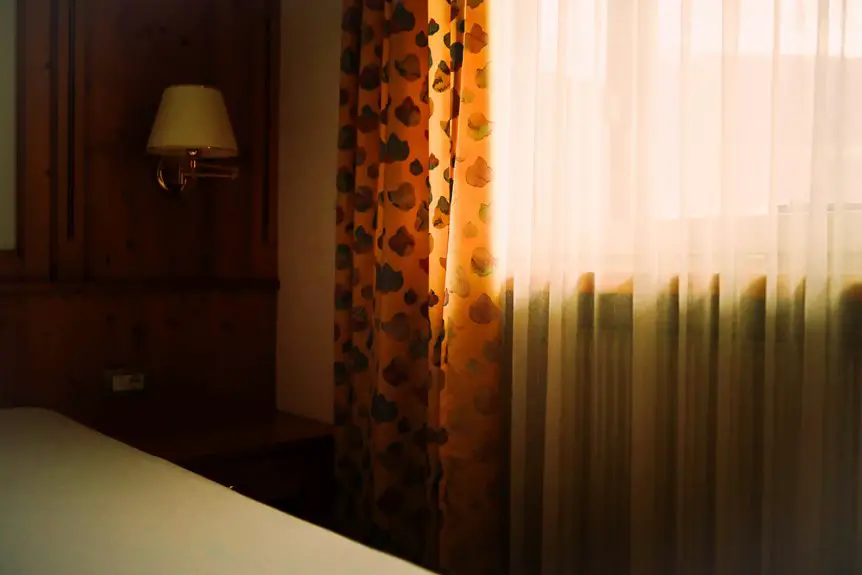
To match casement fabric curtains with your existing furniture, first consider your room’s color palette and choose curtain hues that complement or soften your furniture’s tones. Balance patterns by pairing bold furniture with simpler curtains, or vice versa. Coordinate curtain length and style to fit your furniture’s scale and design. Use curtains to highlight key pieces and add accessories like pillows or rugs that echo your curtains’ colors or textures. Keep going to discover how these tips create a seamless look.
Key Takeaways
- Choose curtain colors that complement or subtly contrast your furniture’s existing color palette for a harmonious look.
- Opt for simpler casement fabric patterns if your furniture has bold designs, or introduce patterns if furniture is mostly solid.
- Match curtain length and style to the scale and formality of your furniture for balanced room proportions.
- Use curtains to frame and highlight important furniture pieces by positioning and sizing them thoughtfully.
- Incorporate accessories like pillows or rugs that echo curtain colors or textures to unify the overall decor.
Consider the Color Palette of Your Room
Before choosing curtains, take a close look at the color palette of your room. You want your curtains to complement, not clash with, your existing furniture.
Identify the dominant colors in your walls, upholstery, and rugs. If your furniture features neutral tones, you have more flexibility with curtain colors—you might opt for bold or soft hues depending on the mood you want.
Focus on the main colors in your space; neutral furniture allows for more curtain color choices.
On the other hand, if your furniture has strong colors, choose curtains in shades that harmonize with those colors, like lighter or muted versions of the same tone.
Avoid picking curtains that introduce harsh contrasts unless you aim for a striking focal point. Keeping your room’s color palette in mind guarantees your curtains enhance the overall aesthetic and create a cohesive look.
Balance Patterns and Textures
When you choose curtains, balancing patterns and textures with your furniture can transform your room’s feel.
If your furniture features bold patterns, opt for curtains with simpler designs or solid colors to avoid overwhelming the space. Conversely, if your furniture is mostly solid or neutral, you can introduce patterned curtains to add visual interest.
Pay attention to textures, too—pair smooth, sleek fabrics with plush or textured upholstery for contrast. Mixing heavy fabrics like velvet curtains with lighter furniture materials creates depth and warmth.
You want your curtains to complement, not compete with, your furniture. By thoughtfully balancing patterns and textures, you create a harmonious, inviting atmosphere that highlights both your curtains and your existing decor.
Coordinate Curtain Length and Style With Furniture
Balancing patterns and textures sets a solid foundation, but coordinating curtain length and style with your furniture truly ties the room together.
Start by matching the curtain length to the scale of your furniture. If you have low-profile sofas or chairs, shorter curtains that just brush the window sill keep the space feeling balanced. For taller or more formal pieces, floor-length curtains add elegance and harmony.
Match curtain length to your furniture’s height for a balanced, elegant room feel.
Style matters too—sleek, modern furniture pairs well with simple, streamlined curtains, while traditional or ornate pieces call for richer fabrics and detailed designs.
Consider the curtain rod’s height; hanging curtains higher than the window frames elongates the room and complements tall furniture.
Use Curtains to Highlight Key Furniture Pieces
Although curtains primarily frame your windows, you can also use them to draw attention to your most important furniture pieces.
Choose curtain colors and patterns that complement or contrast with key items like your sofa or a favorite armchair. For instance, if your couch is a solid neutral, pick curtains with a subtle pattern or rich color to create visual interest nearby.
Position curtains so they visually anchor furniture, such as letting drapes fall just behind a statement chair or extending curtains wider than the window to encompass a larger area including your furniture. This technique highlights those pieces without overcrowding the space.
Incorporate Accessories to Tie the Look Together
To create a harmonious space, you’ll want to incorporate accessories that connect your curtains and furniture seamlessly.
Start by choosing throw pillows or cushions in colors or patterns that echo your casement fabric curtains. This subtle repetition creates visual unity without overwhelming the room.
Next, consider rugs or table runners that pick up on the curtain’s texture or hue to ground your furniture.
Don’t forget decorative items like vases, lampshades, or artwork that complement these tones, tying everything together effortlessly.
By thoughtfully selecting accessories that reflect both your curtains and furniture, you’ll craft a cohesive, inviting atmosphere that feels intentional and well-designed.
This approach guarantees each element supports the others, enhancing your room’s overall style and balance.
Frequently Asked Questions
How Do I Clean and Maintain Casement Fabric Curtains?
You should vacuum your casement fabric curtains regularly and spot clean stains promptly. Most can be machine washed on gentle cycles, but always check the care label first. Iron or steam them to keep them looking fresh.
What Are the Best Fabrics for Casement Curtains in Humid Climates?
Think of fabrics like breathable armor in humid climates. You’ll want lightweight, moisture-wicking materials like linen, cotton blends, or synthetic fabrics such as polyester that resist mold and mildew, keeping your casement curtains fresh and durable.
Can Casement Fabric Curtains Help With Soundproofing a Room?
You can use casement fabric curtains to help with soundproofing. Thick, heavy fabrics like velvet or lined curtains absorb noise better, reducing echoes and outside sounds, so your room feels quieter and more comfortable.
Are Casement Fabric Curtains Suitable for Rooms With Pets?
Imagine Max, your playful pup, tugging at curtains daily. Casement fabric curtains can be pet-friendly if you choose durable, tightly woven materials that resist snagging and are easy to clean, helping you maintain a stylish, pet-safe space.
How Do I Install Casement Fabric Curtains Securely?
You’ll want to securely mount the curtain rods into wall studs using appropriate anchors. Use a level to guarantee straight installation, then hang your casement fabric curtains, adjusting hooks or rings for smooth operation and a neat look.