
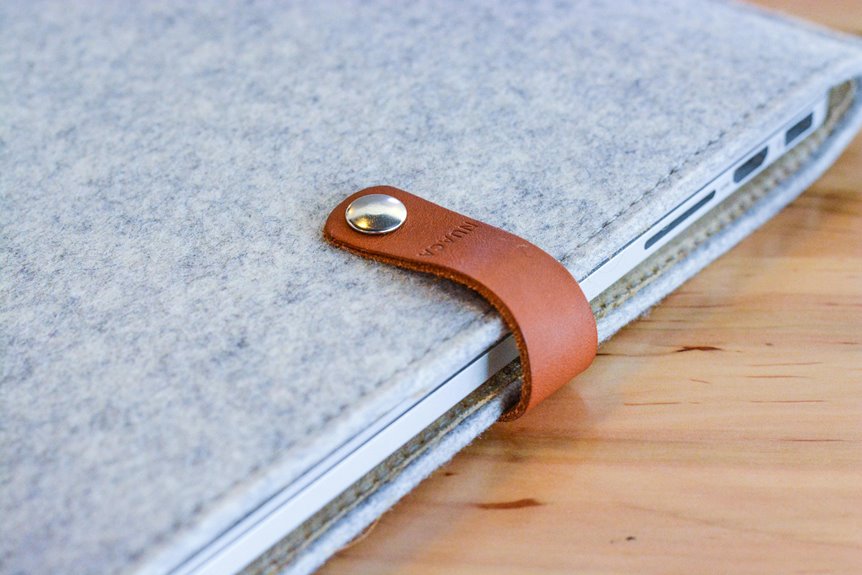
To make a fabric Kindle case, start by choosing durable fabrics like canvas or denim and soft lining to protect your device. Measure your Kindle carefully, then cut front, back, and lining pieces. Sew the main body with right sides together, leaving one edge open, and add padding for extra protection. Attach a closure like Velcro or snaps for easy use. Follow these steps to create a snug, stylish case, and you’ll soon discover helpful tips to personalize and perfect your project.
Key Takeaways
- Choose durable fabrics like canvas or denim and add soft batting for protective cushioning in your Kindle case.
- Measure your Kindle accurately and cut two main fabric pieces plus lining with sharp scissors for a perfect fit.
- Sew front and back pieces together with right sides facing, leaving one edge open for turning and press seams flat.
- Insert lightweight padding between outer fabric and soft lining, pin layers securely, and sew for a smooth interior finish.
- Attach your preferred closure type, such as Velcro or magnetic clasps, ensuring proper alignment and secure stitching.
Choosing the Right Fabric and Materials
When choosing the right fabric and materials for your Kindle case, focus on durability and comfort.
Pick a sturdy fabric like canvas or denim that can protect your device from scratches and minor bumps. If you want a softer touch, consider cotton blends, but be certain they’re thick enough to provide some cushioning.
Add a layer of batting or foam inside for extra protection without bulk. Don’t forget to select a lining fabric that feels smooth against your Kindle’s screen and won’t cause friction.
For closures, velcro, snaps, or magnets work well and are easy to sew. Also, choose thread that matches your fabric’s strength to guarantee your case holds up over time.
This careful material selection sets the foundation for a functional, stylish case.
Measuring and Cutting Fabric Pieces
Start by measuring your Kindle carefully to guarantee a perfect fit for your case. Use a flexible measuring tape to note the height, width, and depth. Don’t forget to add extra room for seam allowances and padding.
Once you have your measurements, transfer them onto your fabric with a fabric marker or chalk.
Keep these tips in mind when cutting your fabric pieces:
- Double-check measurements before cutting.
- Cut two main pieces: front and back.
- Include a lining fabric for protection.
- Add extra fabric for flap or closure.
- Use sharp fabric scissors for clean edges.
Accurate measuring and cutting are vital to make sure your Kindle case looks neat and fits snugly.
Precise measuring and cutting ensure your Kindle case fits perfectly and looks professionally made.
Take your time here—it sets the foundation for the whole project.
Sewing the Main Body of the Kindle Case
Grab your fabric pieces and align the front and back sections with the right sides facing each other. Pin the edges to hold the fabric in place and prepare for sewing.
Using a sewing machine, stitch around three sides—two long edges and one short edge—leaving one short edge open for turning the case right side out. Keep a consistent seam allowance, typically ¼ inch, for a neat finish.
After sewing, trim the seam allowances at the corners to reduce bulk and allow the corners to sit flat. Turn the case right side out through the open edge, gently pushing out the corners with a blunt tool.
Press the seams flat with an iron to create crisp edges before moving on to the next step.
Adding Padding and Lining
Although the main body of your Kindle case is sewn, adding padding and lining enhances both protection and durability.
Padding cushions your device from bumps, while lining gives the interior a clean, professional finish. Start by choosing a soft lining fabric like cotton or flannel to prevent scratches. Next, select padding material such as foam or batting for shock absorption. Cut both to fit your case dimensions precisely.
Then, layer the padding between the outer fabric and lining before sewing them together.
Keep these tips in mind:
- Use thin, lightweight padding to avoid bulk.
- Prewash fabrics to prevent shrinkage.
- Align all layers carefully for smooth edges.
- Pin layers securely before stitching.
- Press seams flat for a crisp finish.
This step guarantees your Kindle stays safe and your case looks polished.
Creating and Attaching the Closure
With the padding and lining securely in place, you can now focus on creating a closure that keeps your Kindle snug and protected. Choose a closure type: Velcro, snap buttons, magnetic clasps, or fabric ties. Measure and cut the materials accordingly. Attach the closure to the flap and body of the case with precise stitching for durability.
| Closure Type | Pros |
|---|---|
| Velcro | Easy to use, adjustable |
| Snap Buttons | Secure, discreet |
| Magnetic | Sleek, quick access |
| Fabric Ties | Decorative, customizable |
Make certain the closure aligns perfectly when the case is closed. Test it by opening and closing a few times to confirm it holds well without damaging the fabric or Kindle.
Final Touches and Personalization Tips
Now that your Kindle case is assembled, you can add decorative embellishments like buttons or patches to make it uniquely yours.
Consider customizing it with monograms to give your case a personal touch.
These final details not only enhance style but also make your case truly one of a kind.
Adding Decorative Embellishments
Embellishments bring your fabric Kindle case to life, turning a simple cover into a unique expression of your style. Adding decorative touches lets you personalize your project while enhancing its visual appeal.
You can easily transform your case with a few thoughtful details that reflect your creativity.
Consider trying these ideas to embellish your Kindle case:
- Sew on colorful fabric patches or appliqués
- Attach decorative buttons or charms
- Use fabric paint or markers for custom designs
- Add lace or ribbon trims along the edges
- Incorporate embroidery stitches or patterns
These embellishments not only make your case stand out but also showcase your handiwork.
Pick options that suit your taste and skill level to create a one-of-a-kind accessory you’ll love.
Customizing With Monograms
Adding a monogram instantly personalizes your fabric Kindle case, giving it a polished and professional look. Choose a font style that matches your taste—script for elegance or block letters for simplicity.
You can use embroidery, iron-on letters, or fabric paint to apply the monogram. Before starting, test your chosen method on a scrap piece of fabric to guarantee it adheres well and looks clean.
Position the monogram thoughtfully, typically centered or in a corner, so it enhances without overpowering the design. Remember to secure your fabric firmly to avoid shifting during application.
With your initials or a special symbol added, your Kindle case becomes uniquely yours, blending functionality with personal flair. This final touch makes your project truly one of a kind.
Frequently Asked Questions
Can I Use a Sewing Machine Instead of Hand Stitching?
Imagine your needle swiftly gliding through fabric, stitching perfectly even seams. You can definitely use a sewing machine instead of hand stitching—it’s quicker, more durable, and gives your project a polished, professional look you’ll love.
How Do I Clean and Maintain the Fabric Kindle Case?
You should spot clean your fabric Kindle case with mild soap and a damp cloth. Avoid machine washing to keep its shape. Let it air dry completely, and store it away from direct sunlight to maintain colors.
Is This Case Compatible With All Kindle Models?
You want compatibility, you want protection, you want style. This fabric Kindle case fits most standard models, but you should check your Kindle’s dimensions first to guarantee a snug, secure, and perfect fit every time.
Can I Add Pockets for Accessories Inside the Case?
You can definitely add pockets inside your case for accessories like chargers or earbuds. Just plan their size and placement before sewing, and use sturdy fabric to guarantee they hold your items securely without affecting the case’s fit.
What Types of Thread Are Best for Durability?
You’ll want thread tougher than a superhero’s cape! Polyester or nylon threads are perfect for durability, resisting wear and tear while keeping your stitches strong. Avoid cotton—it’s too weak for heavy use.