
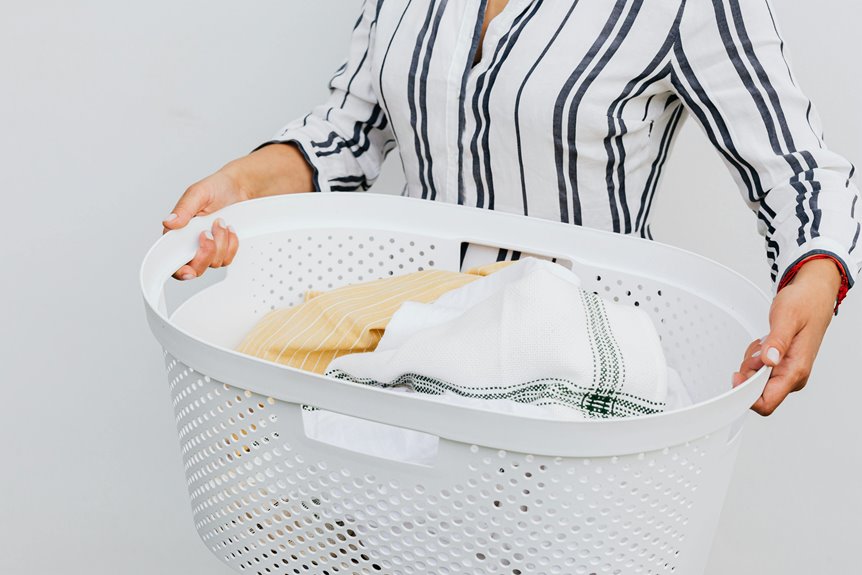
To launder your rayon batik fabric, start by turning it inside out and soaking it in cold water with salt or vinegar to set the dye. Use a mild, liquid detergent and cold water, whether hand washing gently or using your machine’s delicate cycle. Avoid wringing or hot water to prevent shrinking and fading. Lay flat to dry away from sunlight to keep colors vibrant. If you want tips on caring for and storing your fabric, there’s more helpful info ahead.
Key Takeaways
- Hand wash rayon batik in cool or lukewarm water with mild detergent, avoiding hot water to prevent shrinking and fading.
- Turn fabric inside out and soak in cold water mixed with salt or vinegar for 15 minutes to set dyes before washing.
- Use gentle agitation without scrubbing during washing and rinse thoroughly with cool water to remove all soap.
- If machine washing, select a gentle cycle with cold water and mild detergent to protect delicate fibers and patterns.
- Lay fabric flat to dry in shade, avoiding wringing, twisting, or direct sunlight to maintain fabric shape and color.
Understanding Rayon Batik Fabric
Although rayon batik fabric looks delicate, you can handle it carefully to keep its vibrant patterns intact. Rayon is a semi-synthetic fiber made from natural cellulose, which gives it a soft, breathable feel.
Batik involves applying wax to sections of the fabric before dyeing, creating intricate, colorful designs. Because rayon fibers absorb dye readily, the colors on your batik fabric tend to be vivid and rich.
However, rayon is also prone to shrinking and weakening when wet, so you’ll want to treat it gently. Unlike cotton or polyester, rayon requires special care during laundering to maintain its texture and colors.
Understanding these qualities helps you make smarter choices in handling and cleaning your rayon batik fabric, preserving its beauty for longer.
Preparing Your Rayon Batik for Washing
Before you wash your rayon batik fabric, take a few simple steps to protect its vibrant colors and delicate fibers.
First, check the fabric for any stains and spot-treat them gently using cold water. Avoid harsh scrubbing to prevent damage.
Begin by gently spot-treating stains with cold water, avoiding harsh scrubbing to protect the fabric.
Next, turn your fabric inside out to reduce abrasion during washing. To prevent color bleeding, soak the fabric in cold water mixed with a bit of salt or vinegar for about 15 minutes. This helps set the dyes.
Avoid wringing or twisting the fabric, as this can distort its shape.
Finally, always separate rayon batik from heavy or rough items to avoid friction that could harm the fabric’s surface.
These preparations will keep your fabric looking fresh and vibrant after washing.
Choosing the Right Detergent
You’ll want to pick a mild detergent that’s gentle on rayon batik fabric to keep its colors vibrant and fibers intact.
Avoid harsh chemicals like bleach or strong enzymes that can damage the material.
Also, be mindful of how much detergent you use—too much can leave residue, while too little mightn’t clean effectively.
Mild Detergent Options
Choosing the right mild detergent is essential to preserving the vibrant colors and delicate texture of rayon batik fabric. You’ll want to opt for detergents labeled “gentle” or “for delicate fabrics.”
Liquid detergents are often better than powders because they dissolve more easily and reduce residue. Look for formulas free of optical brighteners, as these can dull your fabric’s rich hues. Baby detergents or those designed for sensitive skin are great mild options.
When washing, use just a small amount—too much detergent can be hard to rinse out and may affect the fabric’s feel. Always dilute the detergent in water before adding your fabric to avoid direct contact, which might cause spotting or damage.
This careful choice helps keep your rayon batik looking fresh and vibrant longer.
Avoiding Harsh Chemicals
Picking a mild detergent is just one part of protecting your rayon batik fabric. You also need to avoid harsh chemicals like bleach, optical brighteners, and fabric softeners that can damage delicate fibers and fade colors.
When selecting detergent, look for products labeled “free and clear” or “sensitive,” as these typically lack the aggressive additives harmful to rayon batik. Stay away from detergents with strong enzymes or high alkalinity, which can weaken the fabric’s structure.
If you’re unsure, test the detergent on a small, hidden area first to confirm it doesn’t alter the fabric’s appearance.
Detergent Quantity Guidelines
Although using a gentle detergent is essential, applying the right amount is equally important to protect your rayon batik fabric. Too much detergent can leave residue, dulling the vibrant colors, while too little won’t clean effectively. Always check the detergent label for recommended amounts, adjusting based on your load size and water hardness.
| Load Size | Detergent Amount (ml) | Notes |
|---|---|---|
| Small (1-2 items) | 10-15 | Use minimal detergent |
| Medium (3-5 items) | 20-25 | Suitable for average loads |
| Large (6+ items) | 30-40 | Avoid overdosing detergent |
Hand Washing Techniques for Rayon Batik
Because rayon batik fabric is delicate, you’ll want to handle it with extra care when hand washing.
Start by filling a basin with cool or lukewarm water, avoiding hot water which can shrink or damage the fibers. Add a small amount of mild detergent designed for delicate fabrics and swirl gently to mix.
Fill a basin with cool water and mild detergent, swirling gently to prepare for delicate fabric washing.
Submerge your rayon batik piece and gently agitate it with your hands for a few minutes. Don’t scrub or wring, as this can distort the fabric and fade the colors.
After soaking, rinse thoroughly with cool water until no soap remains. To remove excess water, press the fabric gently between towels instead of twisting.
Lay your rayon batik flat to dry in a shaded area, avoiding direct sunlight to preserve its vibrant patterns.
Machine Washing Guidelines
When machine washing your rayon batik fabric, make sure to use cold water to prevent shrinking and color fading.
Always select the gentle cycle to protect the delicate fibers and preserve the fabric’s vibrant patterns.
Following these simple settings helps keep your batik looking fresh and beautiful.
Water Temperature Settings
How hot should the water be when washing rayon batik fabric in your machine? Always opt for cold or lukewarm water to protect the delicate fibers and vibrant colors. Hot water can cause shrinking, fading, or damage to the fabric. Here’s a quick guide to water temperature settings for rayon batik:
| Water Temperature | Recommended Use | Effect on Fabric |
|---|---|---|
| Cold (60°F/15°C) | Most wash cycles | Preserves color and shape |
| Lukewarm (80°F/27°C) | Lightly soiled items | Gentle cleaning |
| Warm (105°F/40°C) | Not recommended | Risk of shrinking/fading |
| Hot (130°F/54°C) | Avoid | Damages fabric fibers |
Stick to cold or lukewarm to keep your rayon batik looking fresh and vibrant wash after wash.
Gentle Cycle Use
Selecting the gentle cycle on your washing machine plays an essential role in preserving rayon batik fabric. This delicate setting reduces agitation, protecting the fabric’s intricate patterns and soft texture from damage.
When you choose the gentle cycle, you’re giving your rayon batik the care it truly deserves.
By using the gentle cycle, you will:
- Prevent stretching and distortion of the fabric’s fibers
- Maintain the vibrant colors longer without fading
- Avoid excessive wrinkling that’s tough to iron out
- Extend the life of your cherished batik pieces
Always pair the gentle cycle with cold water and a mild detergent to guarantee your rayon batik stays beautiful wash after wash.
Drying and Ironing Tips
Although rayon batik fabric dries quickly, you’ll want to avoid high heat that can damage its fibers. Instead, lay your fabric flat on a clean towel or hang it to air dry in a shaded, well-ventilated area.
Avoid direct sunlight to prevent fading. When it’s time to iron, set your iron to a low or medium heat setting without steam. Always iron the fabric inside out to protect the colors and patterns.
If you want extra protection, place a thin cloth between the iron and your batik. Move the iron gently and avoid leaving it in one spot too long.
Following these drying and ironing tips will help maintain the vibrant look and soft feel of your rayon batik fabric for a long time.
Storing Rayon Batik Properly
When you’re ready to store your rayon batik fabric, keep it away from direct sunlight and damp areas to prevent fading and mildew.
You want your fabric to stay vibrant and fresh each time you use it. Here’s how you can care for it properly:
- Fold it gently to avoid creases that can become permanent
- Use acid-free tissue paper between folds to protect delicate patterns
- Store it in a breathable cotton bag rather than plastic to prevent moisture buildup
- Keep it in a cool, dry place to maintain the fabric’s integrity
Frequently Asked Questions
Can Rayon Batik Fabric Be Bleached Safely?
You wouldn’t use a rotary phone to send a text, right? Similarly, you shouldn’t bleach rayon batik fabric—it can damage the fibers and colors. Instead, stick to gentle washing methods to keep it vibrant and intact.
Is Rayon Batik Fabric Suitable for Dry Cleaning?
You can dry clean rayon batik fabric, but it’s best to inform your cleaner about its delicate nature. Dry cleaning preserves colors and texture, preventing shrinkage or damage that water washing might cause.
How Long Does Rayon Batik Fabric Typically Last?
Rayon batik fabric typically lasts around 3 to 5 years with proper care. You’ll want to avoid harsh treatments since rayon fibers weaken over time, so gentle handling really extends its vibrant life.
Can Rayon Batik Fabric Be Dyed Again?
You can dye rayon batik fabric again, but it requires care. Since rayon absorbs dye well, you should test a small area first and use appropriate fabric dyes to avoid uneven coloring or damage to the fibers.
Are There Eco-Friendly Detergents for Rayon Batik?
Think of eco-friendly detergents as gentle rain nurturing your fabric’s colors. You’ll find many plant-based, biodegradable options that clean rayon batik softly without harsh chemicals, helping you care for both your fabric and the planet responsibly.