
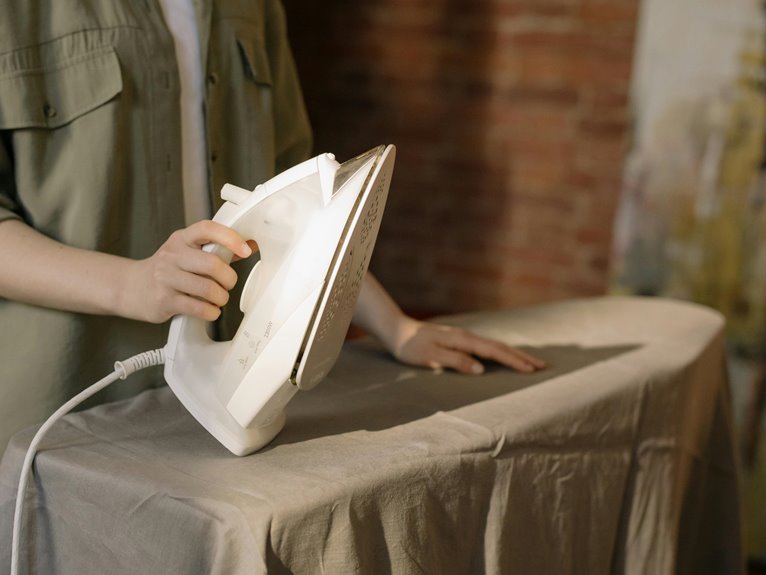
When you iron polyamide, set your iron to low heat (110°C to 140°C) and avoid steam unless labeled safe. Turn the garment inside out and use a pressing cloth to protect the fabric from shiny marks or melting. Move the iron smoothly without pressing too hard, and keep it moving to prevent damage. After ironing, hang the item to cool and hold its shape. If you want to master polyamide care, there are more helpful tips ahead.
Key Takeaways
- Set iron to low heat (110°C to 140°C) suitable for synthetic fabrics to prevent melting or damage.
- Use a pressing cloth between the iron and polyamide fabric to protect fibers and avoid shiny marks.
- Iron the garment inside out on a flat surface, moving the iron in smooth, straight strokes without applying heavy pressure.
- Avoid steam unless the garment label specifically allows it, as moisture can damage polyamide.
- Test iron settings on a hidden seam before ironing the entire garment to ensure fabric safety.
Understanding Polyamide Fabric Characteristics
Polyamide, commonly known as nylon, is a synthetic fabric prized for its strength and elasticity. When you work with polyamide, you’ll notice it’s lightweight, resistant to abrasion, and quick-drying.
It also resists wrinkles better than many natural fibers, which means you won’t have to iron it often. However, polyamide is sensitive to heat, so you need to be cautious when applying an iron. It melts or deforms easily if the temperature is too high, which can ruin your garment.
The fabric’s smooth surface can also reflect heat, so you must use the right settings and techniques. Understanding these characteristics helps you handle polyamide properly and safeguards your clothes stay in great shape.
Preparing Your Garment for Ironing
Before you start ironing, make certain your garment is clean and completely dry to prevent any damage or unwanted marks. Check for any stains or dirt that might set permanently when exposed to heat.
Lay your polyamide item flat on a sturdy ironing board to avoid stretching or misshaping. Smooth out wrinkles gently with your hands before applying the iron. If your garment has delicate or intricate details, turn it inside out to protect those areas.
Lay your polyamide flat, smooth wrinkles by hand, and turn inside out for delicate details.
It’s also a good idea to place a thin cloth, like a pressing cloth or a cotton towel, between the iron and the fabric. This extra layer helps prevent direct heat contact and reduces the risk of shiny spots or melting.
Taking these steps guarantees your polyamide stays in great shape while ironing.
Choosing the Right Iron Settings
When you adjust your iron, make certain to select a low heat setting specifically designed for synthetic fabrics. Polyamide melts easily under high temperatures, so keeping the heat low prevents damage.
Avoid using steam unless your iron’s manufacturer explicitly says it’s safe for synthetics.
Here’s what to keep in mind when choosing your iron settings for polyamide:
- Use the “synthetic” or “nylon” setting if available
- Set temperature between 110°C to 140°C (230°F to 284°F)
- Turn off steam or use minimal moisture
- Test on a hidden seam before ironing the main fabric
- Avoid using high pressure to prevent stretching or distortion
This careful approach guarantees you protect your polyamide garment while getting wrinkles out efficiently.
Step-by-Step Ironing Instructions
Start by placing your polyamide garment on a flat, heat-resistant surface to guarantee even ironing.
Set your iron to the synthetic or low heat setting as recommended. If your iron has a steam function, turn it on, but avoid using excessive steam.
Begin ironing from the inside of the garment to protect the outer surface. Move the iron gently in smooth, straight strokes, avoiding pressing too hard.
Focus on small sections, lifting the iron frequently to prevent overheating. If wrinkles persist, lightly mist the fabric with water before ironing.
Once finished, hang the garment immediately to let it cool and set the shape.
Always unplug the iron and allow it to cool before storing.
Following these steps helps maintain your polyamide’s look and durability.
Tips to Avoid Damage and Shiny Marks
Ironing polyamide carefully helps prevent damage, but you still need to watch out for shiny marks and fabric wear.
To keep your garment looking its best, follow these practical tips. Always use a pressing cloth between the iron and fabric to shield the fibers.
Keep the iron moving steadily to avoid overheating one spot. Avoid high heat settings; instead, stick to low or medium with steam.
Make sure the iron’s soleplate is clean to prevent stains or shiny patches. Finally, iron on the reverse side whenever possible to protect the fabric’s surface.
- Use a pressing cloth to protect fibers
- Keep the iron moving without pausing
- Set the iron to low or medium heat
- Clean the soleplate regularly
- Iron on the garment’s reverse side
Alternative Methods for Smoothing Polyamide Clothes
Although ironing remains a common way to smooth polyamide clothes, you might prefer alternative methods that reduce heat exposure and risk of damage.
One effective option is using a steamer. Simply hang your garment and run the steamer over the fabric to release wrinkles gently.
Use a steamer by hanging your garment and gently running it over the fabric to release wrinkles.
Another method involves hanging your clothes in a humid bathroom while taking a hot shower; the steam helps relax the fibers naturally.
You can also try dampening the fabric slightly and smoothing it out by hand or laying it flat to dry.
These techniques minimize direct heat contact, preserving your polyamide’s texture and appearance.
Frequently Asked Questions
Can Polyamide Fabric Be Safely Dry Cleaned?
You can safely dry clean polyamide fabric since it’s durable and resistant to heat. Just make sure to inform the cleaner about the fabric type, so they use appropriate solvents and avoid damage or shrinking during the process.
How Does Polyamide React to Washing Machines?
You can wash polyamide in a machine, but you should use a gentle cycle with cold water to avoid damage. Avoid high heat and harsh detergents, as they can weaken the fibers and reduce the fabric’s lifespan.
Is Polyamide Fabric Breathable for Summer Wear?
Did you know polyamide fibers can be up to 20% more moisture-wicking than cotton? You’ll find polyamide breathable for summer wear, as it efficiently draws sweat away, keeping you cooler and more comfortable in hot weather.
Can Polyamide Cause Allergic Skin Reactions?
Yes, you can experience allergic skin reactions from polyamide if you’re sensitive to synthetic fibers. It’s rare, but irritation or itching may occur. Always test new fabrics on a small skin area before prolonged wear.
How Long Does Polyamide Fabric Typically Last?
Think of polyamide fabric like a trusty bike—it usually lasts around 5-10 years with good care. You’ll enjoy its durability, but remember, frequent washing or rough use can wear it out sooner than expected.