
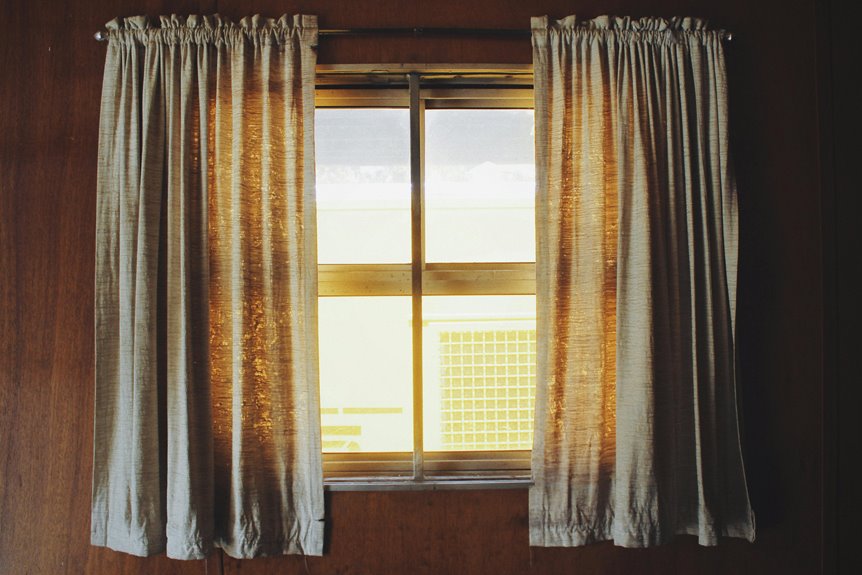
To hem your casement fabric curtains perfectly, first measure from the rod to where you want the curtain to end, adding extra for a double fold hem. Lay the curtains flat, mark the hemline with chalk, then fold and press the hem twice. Secure it with pins and sew a straight stitch close to the fold, or use fabric tape as a no-sew option. Finish with a careful press for crisp edges. Keep following for tips on neat finishing and upkeep.
Key Takeaways
- Measure curtain length from rod to desired endpoint, adding extra for hemming and considering style and obstacles.
- Launder and iron curtains before hemming to prevent shrinkage and ensure accurate measurement.
- Mark hemline evenly using pins or tailor’s chalk on flat, wrinkle-free fabric.
- Fold hem twice, press with a hot iron, pin securely, and sew close to the inner fold.
- Inspect hem for evenness, add weights or hemming tape if needed, and maintain curtains by regular cleaning and careful pressing.
Measuring Your Curtains for the Ideal Length
To get the perfect curtain length, start by measuring from the curtain rod down to where you want the curtains to end. Decide if you want your curtains to just touch the floor, hover slightly above it, or puddle for a dramatic effect.
Use a metal tape measure for accuracy, and guarantee the rod is level before measuring. Take note of any obstacles like radiators or furniture that might affect curtain length. Measure each panel separately since fabric widths can vary.
Add an extra inch or two to your measurement to allow for hemming. Finally, write down each measurement clearly. By doing this carefully, you’ll avoid curtains that are too short or dragging on the floor, guaranteeing a polished and tailored look for your space.
Tools and Materials Needed for Hemming
Once you’ve measured your curtains accurately, gathering the right tools and materials will make hemming much easier.
Accurate curtain measurements and the right tools are key to an easier, professional hemming process.
You’ll need sharp fabric scissors to trim any excess length cleanly. Pins or fabric clips are essential for holding the hem in place before sewing. A measuring tape or ruler helps guarantee your hems are even.
For marking, use tailor’s chalk or a washable fabric marker that won’t leave permanent stains. If you plan to sew by hand, a needle and thread matching your curtain color are necessary. Alternatively, a sewing machine speeds up the process.
An iron and ironing board help press the hem folds neatly, creating crisp lines for a professional finish. Having these tools ready will streamline your hemming project.
Preparing Your Curtains for Hemming
Before you start hemming, you’ll want to prepare your curtains carefully to guarantee accurate and even hems.
Begin by laundering or dry-cleaning your curtains according to the fabric care instructions to prevent shrinking after hemming. Once dry, iron the curtains to remove any wrinkles, making it easier to measure and fold precise hems.
Lay your curtains flat on a clean, smooth surface, ensuring the fabric is fully extended without any bunching or folds. If your curtains have a lining, separate it gently to avoid stretching or distorting the fabric.
Finally, secure the curtains with pins or weights along the edges to keep the fabric stable during hemming. Taking these steps will help you achieve a neat, professional finish every time.
Marking the Hemline Accurately
To mark the hemline accurately, start by measuring the curtain drop carefully to get the right length.
Use chalk or pins to mark where the fabric should be folded. This guarantees your curtains hang perfectly once hemmed.
Measuring Curtain Drop
When measuring your curtain drop, you’ll want to confirm the hemline is marked precisely to achieve a neat, professional finish.
Start by deciding where you want your curtain to end—whether just below the windowsill, at the window frame, or pooling slightly on the floor. Use a tape measure from the curtain rod or track down to your chosen length. Remember to subtract any header or top hem allowance if your curtain has one.
Make sure to measure in several spots across the fabric’s width, as floors and windows can be uneven. This helps you mark a level hemline.
Keep your fabric flat and smooth during measurement to avoid inaccuracies. Accurate measuring confirms your curtains hang beautifully and fit perfectly when you sew the hem.
Using Chalk or Pins
Two reliable tools you can use to mark your hemline accurately are tailor’s chalk and pins.
Tailor’s chalk lets you draw clear, temporary lines on your fabric without damaging it. Simply hold your curtain up to the desired length, then use the chalk to mark a straight line along the edge where the hem will fold.
If you prefer pins, insert them horizontally just above the intended hemline, keeping them evenly spaced. This method helps you see exactly where the fabric needs to be folded and stitched.
Both tools make it easier to cut and sew precisely, ensuring your curtains hang perfectly. Choose the one that feels most comfortable, and always double-check your measurements before making permanent alterations.
Choosing the Right Hemming Technique
How do you decide which hemming technique suits your curtains best? Start by considering the fabric type.
Lightweight fabrics like voile or linen work well with simple straight hems, while heavier materials may need double hems for extra durability.
Simple straight hems suit lightweight fabrics, while heavier ones benefit from double hems for added strength.
Think about the curtain’s style too; casual curtains can handle quick, no-fuss hems, but formal styles might require more precise techniques like blind hems.
Also, factor in your sewing skills and the tools you have. If you’re new to sewing, choose straightforward methods to avoid frustration.
Finally, consider how often you’ll wash the curtains—frequent washing calls for sturdier hems.
Sewing a Simple Straight Hem
Simple straight hems offer a reliable choice for many curtain fabrics, especially lightweight ones like voile or linen.
To sew one, start by measuring how much fabric you want to fold up for your hem—usually 1 to 2 inches. Press the fabric edge under that measurement with an iron to create a crisp fold. Then fold it under once more to hide the raw edge and press again.
Pin the hem in place all around the curtain to keep it secure while you sew. Using a sewing machine or hand stitching, sew close to the inner folded edge to create a neat, straight hem. Remove the pins as you go.
This method gives your curtains a clean, professional finish that lasts.
Using Fabric Tape for No-Sew Hemming
If you’re short on time or prefer to skip sewing altogether, fabric tape offers a quick and easy solution for hemming curtains.
Start by measuring and folding the curtain edge to your desired length, then press the fold with an iron to create a sharp crease.
Cut a piece of double-sided fabric tape slightly shorter than the hem width. Place the tape inside the fold, pressing firmly to secure it between the layers of fabric.
Use a hot iron to activate the adhesive, moving slowly to guarantee a strong bond without burning the fabric.
Allow the hem to cool completely before hanging your curtains.
This method works best on lightweight fabrics and provides a neat finish without the need for needles or thread.
Pressing and Finishing the Hem
Now that your hem is in place, it’s time to press it carefully to create a crisp edge.
Make certain you secure the hem edges to prevent any fraying or shifting.
Finally, take a close look to verify everything is neat and ready to hang.
Proper Ironing Techniques
Although hemming your curtains is nearly complete, pressing the hem properly guarantees a polished, professional look. Start by setting your iron to the fabric’s recommended temperature. Use steam sparingly to avoid watermarks or fabric distortion. Press the hem flat, moving the iron gently without dragging to keep edges crisp. Allow the fabric to cool before handling to set the crease. Here’s a quick guide to help you:
| Fabric Type | Iron Setting | Steam Use |
|---|---|---|
| Cotton | High | Moderate |
| Linen | Medium-High | Light |
| Polyester | Low-Medium | Minimal |
Following these tips assures your curtains hang beautifully and maintain their shape after washing.
Securing Hem Edges
Secure the hem edges by carefully folding and pressing them to create a clean, durable finish.
After ironing, you’ll want to reinforce the hem to keep it neat and long-lasting. Here’s what to do:
- Fold the hem up twice to hide raw edges.
- Press each fold firmly with a hot iron.
- Use sewing pins or clips to hold the hem in place.
- Stitch close to the inner fold using a straight or blind stitch.
- Press the finished hem flat to set the stitches.
Final Touches and Inspection
After stitching the hem, you’ll want to give it a final pressing to confirm everything lays flat and looks polished.
Use a steam iron on the fabric’s recommended heat setting, pressing gently to avoid stretching or distorting the curtain. Focus on crisp, clean edges and smooth out any puckers or wrinkles.
Next, inspect your work closely—check that the hem is even all around and that no stitches are loose or missed. If you spot any imperfections, fix them before hanging.
Finally, consider adding weights or hemming tape inside the hem for added structure and better drape. These final touches confirm your curtains hang perfectly, giving your room a professional and finished appearance.
Tips for Maintaining Your Hemmed Curtains
When you want your hemmed curtains to look fresh and last longer, regular care is essential. Proper maintenance keeps the fabric crisp and prevents damage to the hems.
Here are some quick tips to help you care for your curtains effectively:
- Vacuum your curtains regularly to remove dust and dirt buildup.
- Avoid harsh detergents; opt for gentle washing or dry cleaning.
- Iron or steam the hems carefully to maintain their shape.
- Keep curtains away from direct sunlight to prevent fading.
- Check hems periodically for loose threads or wear and repair them promptly.
Frequently Asked Questions
Can I Hem Curtains Without Removing Them From the Rod?
You can hem curtains without removing them from the rod if you’re careful. Pin or use fabric clips to mark the length, then sew or use iron-on tape directly, ensuring the hem stays even and neat.
How Do I Prevent Curtain Fabric From Fraying After Hemming?
Don’t let your curtains unravel at the seams! You can prevent fraying by using pinking shears, applying fray check liquid, or sewing a zigzag stitch along the edges. These tricks keep your fabric looking sharp.
What Is the Best Thread Color to Use for Hemming?
You’ll want to choose a thread color that closely matches your curtain fabric to keep the hem discreet. If you’re unsure, pick a slightly darker shade—it blends better and hides stitches more effectively.
Can I Hem Curtains Made of Delicate Fabrics Like Silk?
Though you wouldn’t use a quill for silk curtains, you can definitely hem delicate fabrics like silk. Just use fine needles, silk thread, and gentle stitching to avoid damage, ensuring your curtains look flawless and elegant.
How Often Should I Re-Hem Curtains for Maintenance?
You should re-hem your curtains every few years or whenever you notice fraying or uneven lengths. Regularly check for wear, especially if exposed to sunlight or frequent handling, to keep them looking neat and fresh.