
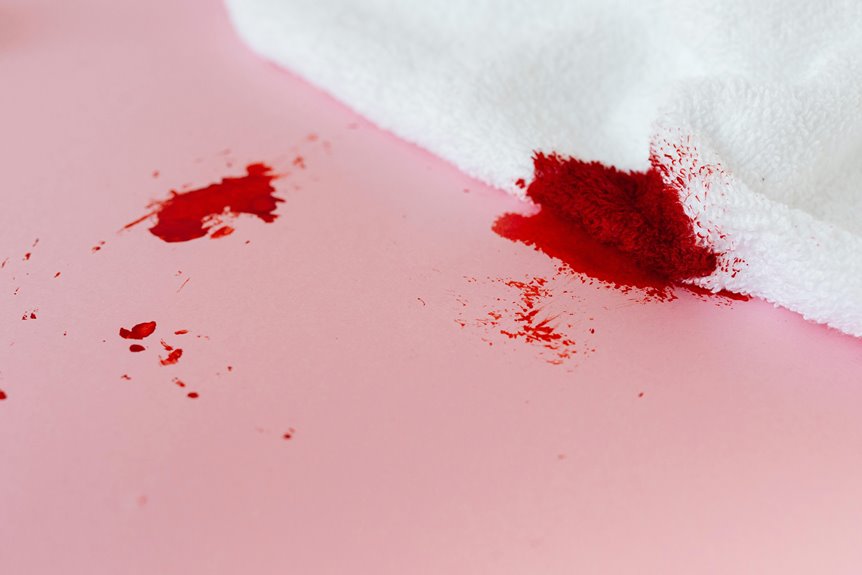
To get any stain out of polyamide, act fast by gently blotting—not rubbing—the spill. Use cool water and mild detergents or specific cleaners like isopropyl alcohol for ink or baking soda for grease. Avoid hot water and harsh scrubbing to protect the fabric. After treating, wash on a delicate cycle with gentle detergent, then air dry away from heat. Following these basics guarantees better results, and you can explore more tailored tips and tricks for all stain types.
Key Takeaways
- Act quickly by blotting stains gently with a clean cloth to avoid spreading or setting the stain on polyamide fabric.
- Use mild detergent solutions, isopropyl alcohol, or baking soda paste depending on the stain type (food, ink, grease, mud).
- Rinse treated areas with cool or lukewarm water and avoid hot water to prevent permanent stain setting.
- Wash polyamide on a delicate cycle using gentle detergent; avoid bleach and fabric softeners to maintain fabric strength.
- Air dry polyamide away from direct heat or sunlight, laying flat or hanging to preserve fabric shape and color.
Understanding Polyamide Fabric and Its Stain Resistance
Although polyamide fabric is known for its durability and lightweight feel, you mightn’t realize how its stain resistance varies depending on the specific fiber treatment and weave.
When manufacturers add special finishes, like water-repellent coatings, polyamide can resist stains more effectively. On the other hand, untreated polyamide absorbs liquids more readily, making stains harder to remove.
The type of weave also plays a role—tighter weaves tend to block stains better than loose ones.
You should keep in mind that the fabric’s synthetic nature makes it less prone to absorbing oils compared to natural fibers, yet some oily stains can still cling stubbornly.
Understanding these factors helps you choose the right cleaning approach and prevents damage during stain removal.
General Tips for Treating Stains on Polyamide
When you spot a stain on polyamide fabric, acting quickly can make all the difference in removing it effectively.
First, gently blot the stain with a clean cloth to absorb excess liquid—avoid rubbing, which can spread the stain or damage fibers. Always test any cleaning solution on a hidden area to prevent discoloration.
Gently blot stains with a clean cloth and test cleaning solutions on a hidden area to prevent damage.
Use cool or lukewarm water since hot water might set the stain or warp the fabric. Avoid harsh chemicals like bleach, which can weaken polyamide fibers. Instead, opt for mild detergents or stain removers designed for synthetic fabrics.
After treating the stain, rinse thoroughly to remove residues.
Finally, air-dry the fabric away from direct heat or sunlight to maintain its shape and color integrity.
Removing Food and Beverage Stains From Polyamide
You’ll often face food and beverage stains like coffee, wine, or tomato sauce on polyamide fabrics.
Knowing how to identify these common stains helps you choose the right cleaning solutions.
Let’s explore effective methods to tackle these spots without damaging your fabric.
Common Stains Identification
Food and beverage stains are among the most common culprits that mar polyamide fabrics. You’ll often face stains from coffee, tea, wine, chocolate, and greasy foods.
Coffee and tea usually leave brownish marks, while red wine and fruit juices tend to create vibrant, stubborn spots. Chocolate and greasy foods can leave dark, oily patches that soak deep into fibers.
Detecting the type of stain quickly helps you tackle it effectively. Look for color, texture, and residue—sticky or oily stains require different attention than dry or powdery ones.
Knowing exactly what you’re dealing with lets you choose the right cleaning approach and prevents damage. Identifying food and beverage stains accurately is your first step toward restoring your polyamide fabric’s fresh look.
Effective Cleaning Solutions
Identifying the type of stain on your polyamide fabric sets you up to choose the right cleaning method.
For food and beverage stains, picking an effective cleaning solution is key. Here are three reliable options you can use:
- Mild Detergent Solution: Mix a few drops of mild liquid detergent with warm water to gently lift most stains without damaging the fabric.
- White Vinegar and Water: Combine equal parts white vinegar and water for a natural stain remover that breaks down acidic stains like coffee or wine.
- Baking Soda Paste: Create a paste with baking soda and water to tackle tougher, dried-on stains by gently scrubbing with a soft cloth.
Using these solutions prepares your polyamide fabric for successful stain removal without harsh chemicals.
Stain Removal Techniques
When stains set in, acting quickly can make all the difference in preserving your polyamide fabric. For food and beverage stains, start by blotting excess liquid gently—never rub. Use cold water and a mild detergent to treat the area. For tougher stains, applying a diluted vinegar solution helps break down residues without harming the fabric.
| Stain Type | Recommended Solution | Application Tip |
|---|---|---|
| Coffee | Cold water + mild detergent | Blot, then rinse thoroughly |
| Tomato Sauce | Vinegar solution + detergent | Soak briefly, then wash |
| Wine | Cold water + salt | Blot immediately, then wash |
| Grease | Dish soap + warm water | Pre-treat before washing |
Following these steps helps maintain your polyamide’s look and feel.
How to Eliminate Ink and Dye Stains Safely
Although ink and dye stains can seem stubborn on polyamide fabrics, you can remove them effectively without damaging the material. Act quickly to increase your chances of success. Here’s how to tackle these stains safely:
- Blot, Don’t Rub: Gently blot the stain with a clean cloth to absorb excess ink. Avoid rubbing, which can spread the stain and damage fibers.
- Use Isopropyl Alcohol: Apply a small amount of isopropyl alcohol on a cotton swab and dab the stain gently. This breaks down ink pigments without harming polyamide.
- Rinse and Launder: Rinse the treated area with cold water, then wash the fabric according to its care label. Air dry to check if the stain is fully removed before using heat.
Following these steps helps you eliminate ink and dye stains safely and effectively.
Tackling Grease and Oil Stains on Polyamide
When grease or oil hits your polyamide fabric, it’s key to act fast with the right degreasers designed for delicate fibers.
You’ll want to pre-treat the stain carefully to break down oils without damaging the material.
Let’s explore the best products and techniques to get your polyamide looking clean again.
Best Degreasers for Polyamide
Since grease and oil can deeply penetrate polyamide fibers, you’ll need a powerful degreaser to break down and lift these stubborn stains effectively.
Choosing the right product is key to restoring your polyamide fabric without damage. Here are the top three degreasers you can trust:
- Dishwashing Liquid – Its grease-cutting enzymes are gentle yet effective on polyamide and widely available.
- Citrus-Based Degreasers – Natural and strong, these target oil stains while being safe for delicate fabrics.
- Enzymatic Stain Removers – These break down oil molecules specifically, making them ideal for tough grease spots on polyamide.
Use these degreasers following the product instructions to guarantee the best results without harming your fabric.
Pre-Treatment Techniques
Before you apply any degreaser, you should treat the stain to loosen the grease and oil trapped in the polyamide fibers. Start by blotting excess grease gently with a paper towel—don’t rub. Next, sprinkle baking soda or cornstarch on the stain and let it sit for 15 minutes; these powders absorb oil effectively. Afterward, brush off the powder carefully before applying your chosen degreaser.
| Step | Action | Why It Works |
|---|---|---|
| Blot | Remove excess grease | Prevents stain spreading |
| Apply Powder | Use baking soda/cornstarch | Absorbs oil from fibers |
| Wait | Let sit 15 minutes | Allows powder to soak grease |
| Brush Off | Remove powder gently | Prepares fabric for degreaser |
This pre-treatment guarantees better stain removal and protects your polyamide fabric.
Dealing With Mud and Dirt on Polyamide Fabrics
Although polyamide fabrics are durable, mud and dirt can still cling stubbornly to their fibers. To tackle this, start by letting the mud dry completely; wet mud can spread and worsen the stain.
Once dry, follow these steps:
- Gently brush off dried mud using a soft-bristled brush or cloth.
- Rinse the stained area under cold running water to loosen remaining dirt.
- Apply a mild detergent solution and softly rub the fabric to lift any lingering soil.
Avoid using hot water or harsh scrubbing, as they can damage the fabric.
After treating the stain, launder the item according to care instructions. This approach guarantees you remove dirt effectively without compromising your polyamide garment’s integrity.
Using Household Products for Effective Stain Removal
When you spot a stain on your polyamide fabric, you don’t always need specialized cleaners to tackle it. Common household products can be surprisingly effective and gentle. For instance, white vinegar breaks down grease, while baking soda lifts odors and light stains. Dish soap is great for oily marks, and hydrogen peroxide works well on organic stains like blood. Before applying, always test a small hidden area to avoid damage.
| Household Product | Best For |
|---|---|
| White Vinegar | Grease and oil stains |
| Baking Soda | Odors and light stains |
| Dish Soap | Oily and food stains |
| Hydrogen Peroxide | Blood and organic stains |
Use these products carefully, applying them gently to protect your polyamide fabric.
Washing and Drying Guidelines to Preserve Polyamide
To keep your polyamide fabric in top condition, you’ll want to follow specific washing and drying guidelines that prevent damage and preserve its strength.
Polyamide is sensitive to heat and harsh chemicals, so careful handling is key.
- Use cold or lukewarm water and a gentle detergent to wash polyamide. Avoid bleach or fabric softeners, which can weaken fibers.
- Select a delicate cycle on your washing machine or hand wash to reduce abrasion.
- Air dry your polyamide items flat or hang them in a shaded area. Avoid tumble drying or direct sunlight, as heat and UV rays break down the material.
Following these steps helps maintain your polyamide’s durability and appearance over time.
Preventative Measures to Keep Polyamide Stain-Free
Since polyamide can easily attract stains, taking proactive steps is essential to keep your fabric looking fresh. You can minimize stains by treating your polyamide items with care and using protective products. Quick action and smart habits help maintain its appearance longer.
| Preventative Measure | Why It Works | How to Apply |
|---|---|---|
| Use stain repellents | Creates barrier against spills | Spray evenly before wearing |
| Avoid eating/drinking | Reduces exposure to stains | Stay cautious around food/drinks |
| Prompt cleaning | Prevents stain setting | Blot spills immediately |
| Store properly | Keeps fabric clean | Use garment bags or covers |
| Follow washing tips | Preserves fabric integrity | Wash per label instructions |
Adopt these simple habits to keep your polyamide stain-free effortlessly.
Frequently Asked Questions
Can Polyamide Fabric Be Recycled or Is It Biodegradable?
You can recycle polyamide fabric, but it’s not biodegradable. It’s a synthetic material that breaks down slowly in nature, so recycling helps reduce waste and environmental impact. Always check local recycling options for polyamide.
How Does Polyamide Compare to Polyester in Stain Resistance?
You’d think polyamide resists stains like a superhero’s armor! Compared to polyester, polyamide often repels stains better due to its smoother fibers, but both fabrics need prompt care to avoid stubborn marks ruining your favorite gear.
Are There Any Eco-Friendly Stain Removers Specifically for Polyamide?
You can use eco-friendly stain removers like baking soda, white vinegar, or castile soap safely on polyamide. These natural options tackle stains effectively without harming the environment or your fabric’s integrity.
Can Polyamide Be Safely Dry-Cleaned Without Damaging the Fabric?
You can safely dry-clean polyamide, but always check the care label first. Dry cleaning usually won’t damage the fabric, but avoid harsh chemicals to keep your polyamide looking great and lasting longer.
What Common Household Items Should Be Avoided on Polyamide Stains?
You might think bleach is safe, but it can ruin polyamide. Avoid harsh chemicals, fabric softeners, and hot water—they damage fibers. Stick with mild soap and cold water to keep your polyamide looking fresh and unstained.