
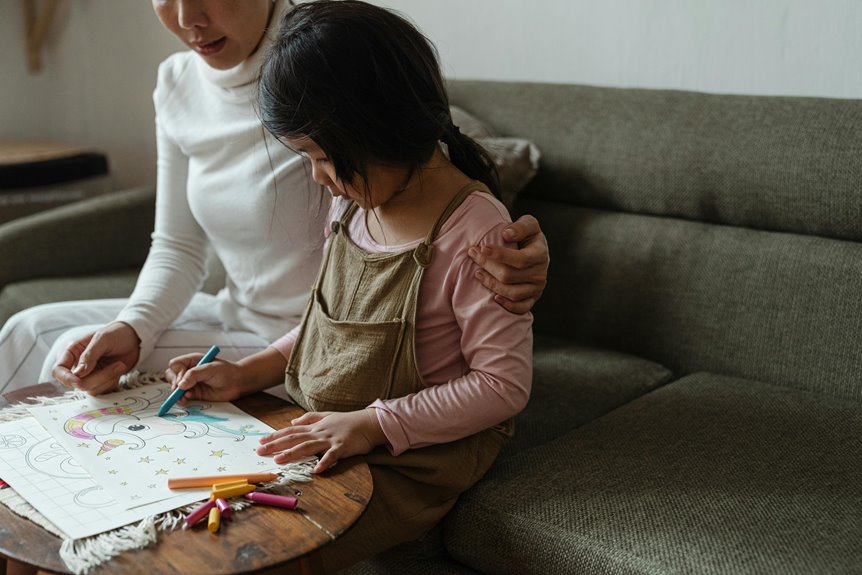
To get crayon out of upholstery, start by checking your fabric’s cleaning code to avoid damage. Use ice to harden the wax, then gently scrape it off with a dull knife. Mix mild dish soap with warm water and blot the stain carefully from the outside in. For stubborn marks, baking soda or vinegar can help. Always test solutions on a hidden spot first. Taking these steps now will help you protect your furniture and keep it looking fresh—you’ll find even more helpful tips ahead.
Key Takeaways
- Identify upholstery fabric type and stain severity before cleaning to choose the safest and most effective method.
- Harden crayon wax using ice in a sealed bag, then gently scrape off excess wax with a dull knife or spoon.
- Use a mild dish soap and warm water solution to blot the stain from outside inward, avoiding spreading.
- Test cleaning solutions on hidden fabric areas and wear gloves for safety during the process.
- Prevent future stains by supervising coloring, using washable crayons, and designating specific coloring areas.
Identifying the Type of Upholstery Fabric
Before you tackle the crayon stain, you need to identify the type of upholstery fabric you’re dealing with. Different fabrics react differently to cleaning methods, so knowing what you’re working with helps prevent damage.
Check the furniture tag for cleaning codes: “W” means water-based cleaners are safe, “S” indicates you should use solvent-based cleaners, “WS” allows either, and “X” means professional cleaning only. If there’s no tag, test a small, hidden area with water first to see if it causes discoloration or damage.
Natural fibers like cotton or linen absorb stains differently than synthetic ones like polyester or nylon. Once you know your fabric, you can choose the right approach to safely remove the crayon without ruining your upholstery’s appearance or texture.
Gathering Essential Cleaning Supplies
Effective crayon removal starts with gathering the right cleaning supplies. You’ll need a few key items to tackle the stain efficiently.
First, grab a dull knife or spoon to gently scrape off excess wax without damaging the fabric. Next, have some paper towels or a clean white cloth ready to blot and absorb.
Keep a hairdryer nearby to soften the crayon wax, making it easier to lift. You’ll also want a mild dish soap or upholstery cleaner, along with a small bowl of warm water for mixing a cleaning solution.
For stubborn stains, rubbing alcohol or vinegar can be useful, but test these on a hidden area first. Finally, gloves protect your hands during the process.
Having these supplies ready will make your cleanup smooth and effective.
Preparing the Upholstery for Cleaning
Before you start cleaning, take a close look at the crayon stain to determine how severe it is.
This helps you decide which cleaning method will work best.
Make sure you have all your supplies ready so you can tackle the stain efficiently.
Assess Stain Severity
Many factors influence how you should approach removing crayon from your upholstery, so start by carefully evaluating the stain’s severity. Identify whether the crayon marks are light smudges or deeply embedded wax. This helps you decide which cleaning method will be most effective without damaging the fabric.
| Stain Severity | Description | Recommended Action |
|---|---|---|
| Light | Faint marks, easy to wipe | Gentle cleaning |
| Moderate | Noticeable wax spots | Use mild solvents |
| Heavy | Large, deep wax buildup | Pre-treatment required |
| Fresh | Recently made marks | Easier removal |
| Old | Dried, set-in stains | May need multiple attempts |
Assessing severity lets you tailor your approach, saving time and protecting your upholstery.
Gather Cleaning Supplies
Once you’ve sized up the stain, gather the right cleaning supplies to tackle the crayon without harming your upholstery. You’ll need a dull knife or spoon to gently scrape off excess wax, a clean white cloth or paper towels, and a mild dish soap.
Have a spray bottle filled with cold water ready, plus a small bowl for mixing a cleaning solution. You might also want rubbing alcohol or a commercial upholstery cleaner for stubborn stains.
Avoid harsh chemicals or bleach, as they can damage fabric fibers or colors. Prepare a vacuum cleaner with a brush attachment to remove loosened debris after cleaning.
Having everything at hand before you start helps you act quickly and efficiently, improving your chances of completely removing the crayon mark.
Using Ice to Harden and Scrape Off Crayon
One effective way to remove crayon from upholstery is by using ice to harden the wax. First, place ice cubes in a plastic bag and press it firmly against the crayon stain for a few minutes. Once the wax hardens, gently scrape it off with a dull knife or credit card, being careful not to damage the fabric.
| Step | Action | Tip |
|---|---|---|
| 1 | Place ice in a bag | Use a sealed plastic bag |
| 2 | Apply ice to crayon spot | Hold for 3-5 minutes |
| 3 | Harden the wax | Check if wax is firm |
| 4 | Scrape gently | Use a dull edge |
| 5 | Inspect fabric | Repeat if needed |
This method helps lift wax without spreading it further.
Applying Dish Soap and Warm Water Solution
Mixing a few drops of dish soap with warm water creates an effective cleaning solution to tackle leftover crayon residue on your upholstery.
First, dip a clean cloth or sponge into the soapy water, then wring it out so it’s damp but not dripping. Gently blot the stained area, working from the outside in to prevent spreading the crayon.
Avoid rubbing harshly, as this can push the wax deeper into the fabric. Continue blotting until you see the crayon lifting.
Afterward, rinse the cloth with plain warm water and blot again to remove any soap residue. Finally, let the upholstery air dry or use a dry towel to absorb excess moisture.
This gentle method helps break down wax without damaging your fabric.
Treating Stubborn Crayon Stains With Baking Soda
If you’re dealing with crayon stains that just won’t budge, baking soda can be a powerful ally.
Start by sprinkling a generous amount of baking soda directly onto the stain. Next, dampen a clean cloth with a little water and gently rub the baking soda into the crayon mark using circular motions. The mild abrasiveness of baking soda helps lift the wax without damaging your upholstery.
After rubbing for a minute or two, blot the area with a dry cloth to absorb loosened crayon residue and moisture. Repeat the process if needed, but avoid scrubbing too hard to prevent fabric wear.
Once the stain fades, vacuum the area to remove any leftover baking soda powder. This method is simple, safe, and effective for tough crayon spots.
Using Vinegar for Persistent Crayon Marks
When tackling persistent crayon marks, vinegar can be a surprisingly effective solution. Its natural acidity helps break down wax and pigment, making the stain easier to remove.
Here’s how to use vinegar safely on your upholstery:
- Mix equal parts white vinegar and warm water in a spray bottle.
- Lightly spray the stained area—don’t soak it—and let it sit for about 5 minutes to loosen the crayon.
- Blot gently with a clean cloth, working from the outside in to prevent spreading.
Repeat if needed, then let the fabric air dry.
Vinegar is gentle yet powerful, so it’s a great option before moving on to harsher cleaners. Just test on a hidden spot first to avoid color fading.
Employing Commercial Upholstery Cleaners Safely
When choosing a commercial upholstery cleaner, pick one that’s safe for your fabric type to avoid damage.
Apply the cleaner carefully, testing a small hidden area first and following the instructions closely.
Always use gloves and work in a well-ventilated space to protect yourself while tackling those stubborn crayon stains.
Choosing Appropriate Cleaners
Although commercial upholstery cleaners can effectively remove crayon stains, you’ll want to choose one that’s safe for your specific fabric type.
Using the wrong cleaner might damage the upholstery or leave discoloration. To pick the right cleaner:
- Check the label: Look for a cleaner designed for your fabric—whether it’s leather, microfiber, or synthetic.
- Test on a hidden spot: Always apply the cleaner to a small, inconspicuous area first to verify it won’t cause fading or damage.
- Avoid harsh chemicals: Stay away from cleaners with bleach or strong solvents, as these can harm delicate fabrics.
Application Techniques and Tips
Before applying any commercial upholstery cleaner, you should carefully read the instructions to guarantee proper use and avoid damage.
Test the cleaner on a hidden spot to check for colorfastness. When applying, use a clean white cloth or sponge to prevent color transfer.
Dab the stain gently—don’t rub, as this can spread the crayon or embed it deeper. Work from the outside of the stain inward to contain the mess.
Allow the cleaner to sit for the recommended time, then blot with a dry cloth to lift the residue. Repeat if necessary, but avoid over-saturating the fabric.
Finally, let the upholstery air dry completely before using it again to prevent mildew or water marks.
Safety Precautions and Warnings
Two key safety precautions you should always follow when using commercial upholstery cleaners involve proper ventilation and protective gear.
Make sure to open windows or use fans to keep fresh air flowing, reducing harmful fumes. Always wear gloves and, if needed, a mask to protect your skin and lungs from harsh chemicals.
Additionally, to guarantee safe use, follow these three important steps:
- Read and follow the product’s instructions carefully to avoid misuse.
- Test the cleaner on a hidden area first to check for any discoloration or damage.
- Keep cleaners out of reach of children and pets to prevent accidental exposure.
Tips for Preventing Future Crayon Stains
Since crayon stains can be tough to remove, taking steps to prevent them is your best defense.
First, designate a specific area for coloring activities—preferably a washable surface or tablecloth—to keep crayons away from upholstery. Teach your kids to use crayons only in that spot and supervise younger children closely.
Create a dedicated, washable coloring area and supervise kids to protect upholstery from crayon marks.
Keep crayons out of reach when they’re not in use to reduce temptation. You can also provide washable or water-soluble crayons, making any accidental marks easier to clean.
Consider using slipcovers or washable blankets on sofas and chairs to protect upholstery.
Finally, establish clear rules about no crayons on furniture and praise your kids when they follow them.
These simple habits will save you time, hassle, and frustration down the road.
Frequently Asked Questions
Can Crayons Damage All Types of Upholstery Fabrics?
Like a stubborn stain in a classic novel, crayons can damage some upholstery fabrics, especially delicate ones like silk or velvet. You’ll need to act carefully to avoid setting the wax deeper or causing discoloration.
Is It Safe to Use Hair Dryers to Melt Crayon Stains?
You can use a hair dryer to melt crayon stains, but be careful. Don’t hold it too close or too long, or you might damage the fabric. Keep it on low heat and move it constantly for safety.
How Quickly Should I Treat a Crayon Stain for Best Results?
You should treat a crayon stain immediately—as if it’s a ticking time bomb! The faster you act, the easier it is to remove. Don’t wait; grab your supplies and start blotting right away!
Are There Any Eco-Friendly Alternatives to Commercial Cleaners?
You can use eco-friendly alternatives like a mixture of baking soda and water or white vinegar diluted in water. These natural solutions gently break down stains without harsh chemicals, keeping your upholstery safe and the environment happy.
Can Professional Upholstery Cleaning Remove Old Crayon Stains?
Did you know professional cleaners remove over 90% of tough stains? Yes, they can tackle old crayon marks on upholstery effectively. Their specialized equipment and solutions break down wax, restoring your furniture’s look quickly and safely.