
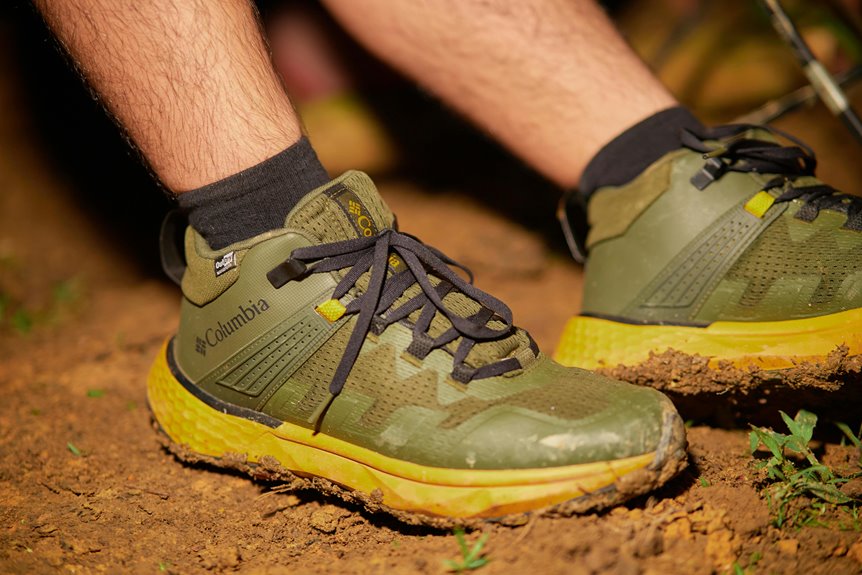
To fix leaking Gore-Tex shoes, first dry them completely and check for tears or worn seams by gently filling them with paper and pouring water over sections. Clean your shoes using mild soap and water, then let them air dry. Apply a Gore-Tex-specific waterproof spray or use repair tape for small holes. For stubborn leaks, seal seams or consider shoe goo. If leaks persist, professional repair services can help. Keep going, and you’ll find more ways to protect your shoes and extend their life.
Key Takeaways
- Inspect shoes thoroughly by filling them with paper towels and pouring water slowly over seams and sole edges to identify leaks.
- Clean shoes gently with mild soap and water, then air dry completely before any repair or waterproofing treatment.
- Apply Gore-Tex-specific waterproof spray evenly on the exterior and let dry naturally to restore water repellency.
- Use Gore-Tex repair tape on small tears after cleaning the area with rubbing alcohol to ensure a secure patch.
- For extensive damage, consider professional repair services that offer expert diagnosis, quality materials, and warranties.
Identifying the Source of the Leak
Before you can fix your leaking Gore-Tex shoes, you need to pinpoint exactly where the water is getting in. Start by drying your shoes thoroughly.
Then, fill them with paper towels or cloth to keep their shape. Next, pour water slowly over various sections while watching for leaks inside. Focus on seams, sole edges, and eyelets—common weak spots.
If you don’t see water entering immediately, try bending your shoes to mimic walking, as movement can reveal hidden leaks. Also, check for visible damage like cracks or worn areas on the membrane.
Once you identify the exact spot or spots where water seeps in, you can move on to targeted repairs. This step guarantees your efforts will be effective and saves you from unnecessary fixes elsewhere.
Cleaning Your Gore-Tex Shoes Thoroughly
After pinpointing where your Gore-Tex shoes are leaking, you’ll want to clean them thoroughly to prepare for repairs.
Remove the laces and insoles to access every part of the shoe. Use a soft brush or cloth to gently scrub away dirt, mud, and debris from the exterior. Avoid harsh detergents; instead, use a mild soap mixed with water to preserve the Gore-Tex membrane. Rinse off soap residue carefully with clean water.
Pay close attention to seams and crevices where grime can build up. Once cleaned, let your shoes air dry completely at room temperature—avoid direct heat sources that can damage materials.
Thorough cleaning guarantees better adhesion for any patches or sealants you apply later, making your repair efforts more effective.
Applying Waterproofing Spray or Treatment
Once your Gore-Tex shoes are completely dry, you can apply a waterproofing spray or treatment to reinforce their water resistance. Choose a product designed specifically for Gore-Tex or technical fabrics to maintain breathability. Spray evenly from about 6-8 inches away, covering all exterior surfaces. Let the shoes dry naturally before use.
| Product Type | Best For |
|---|---|
| Silicone-based | Durable water repellency |
| Fluoropolymer-based | Lightweight, breathable finish |
| Wax-based | Heavy-duty protection |
| Eco-friendly sprays | Safe for environment, gentle |
Apply treatments regularly, especially after cleaning or heavy use, to keep your shoes performing well in wet conditions.
Using Gore-Tex Repair Tape for Small Tears
If you spot a small tear in your Gore-Tex shoes, you can fix it quickly with repair tape designed for waterproof gear.
Start by cleaning the area, then carefully apply the tape to cover the damage completely.
Make sure the edges are sealed tightly to keep your shoes waterproof and ready for your next adventure.
Identifying Small Tears
When you notice moisture inside your Gore-Tex shoes, start by carefully inspecting the fabric for small tears or punctures.
These tiny damages often cause leaks and can be tricky to spot. Use a bright light and gently stretch the fabric to reveal any irregularities. Pay close attention to high-stress areas like near seams or underfoot, where damage is more likely.
If you see any holes, cuts, or thinning material, mark them lightly with a pencil or removable tape. Avoid wetting the shoes before inspection, as water can obscure small tears.
Identifying these small tears accurately is crucial because it determines where you’ll need to apply Gore-Tex repair tape, ensuring a proper seal and restoring waterproof protection effectively.
Applying Repair Tape
After spotting the small tears on your Gore-Tex shoes, the next step is to apply repair tape to seal those openings.
First, clean the damaged area thoroughly with rubbing alcohol to remove dirt and oils, then let it dry completely.
Cut a piece of Gore-Tex repair tape slightly larger than the tear, ensuring full coverage.
Carefully peel off the backing and press the tape firmly over the tear, smoothing out any air bubbles or wrinkles.
Pay special attention to the edges, pressing them down tightly to secure adhesion.
Avoid stretching the tape during application, as it may cause gaps.
Let the tape set for a few hours before using your shoes again.
This quick fix helps restore waterproofing and extends your shoes’ life.
Ensuring Waterproof Seal
Since small tears can quickly compromise your Gore-Tex shoes‘ waterproof ability, you need to verify the repair tape creates a tight, durable seal.
Start by thoroughly cleaning and drying the damaged area to verify the tape sticks well. Cut the repair tape slightly larger than the tear, covering it fully with some overlap.
Press the tape firmly onto the shoe, smoothing out any bubbles or wrinkles that could let water in. For best results, apply pressure for at least 30 seconds and avoid stretching the tape during application.
Let it cure for several hours before exposing your shoes to moisture. By following these steps, you’ll restore your Gore-Tex shoes’ waterproof integrity and keep your feet dry on your next adventure.
Sealing Seams With Seam Sealer
Although Gore-Tex shoes are designed to be waterproof, tiny gaps in the seams can still let moisture in. To fix this, you’ll want to apply a seam sealer.
First, clean the seams thoroughly and let them dry completely. Then, use a seam sealer specifically made for waterproof fabrics—avoid generic glues that might damage the Gore-Tex membrane.
Apply a thin, even layer along each seam, pressing it in gently to fill any gaps. Allow the sealer to cure as per the product instructions, usually for 24 hours.
This process helps restore the shoe’s waterproof integrity by preventing water from seeping through stitch holes. Regular seam sealing can extend your shoes’ life and keep your feet dry on wet trails.
Replacing Worn Out Insoles and Linings
When your Gore-Tex shoes start feeling less comfortable or develop odor issues, worn out insoles and linings might be the cause. Replacing them can restore comfort and help maintain dryness by improving moisture management inside the shoe. Remove the old insoles carefully and check the linings for damage or wear. You can find replacement insoles designed for Gore-Tex shoes or opt for moisture-wicking alternatives.
| Step | Tip |
|---|---|
| Remove insoles | Gently pull out to avoid damaging glue |
| Inspect linings | Look for holes or thinning fabric |
| Choose replacements | Use breathable, moisture-wicking materials |
| Insert new insoles | Confirm a snug fit without bunching |
| Maintain regularly | Replace insoles every 6-12 months |
This simple replacement can enhance comfort and reduce leaks caused by worn internal parts.
When to Use Shoe Goo or Waterproof Adhesive
Replacing insoles and linings can improve comfort and moisture control, but it won’t fix every leak or damage in your Gore-Tex shoes.
When you spot small holes, cracks, or separation in the shoe’s outer layers or sole, shoe goo or waterproof adhesive can be a quick and effective fix. Use shoe goo for flexible sealing on midsoles or around seams, as it bonds well and remains durable under movement.
Waterproof adhesive works best for reattaching loose Gore-Tex membranes or patching fabric tears. Make sure to clean and dry the area thoroughly before applying, and follow product instructions closely for the best seal.
Avoid these adhesives for extensive damage or sole replacement, as they’re meant for minor repairs that restore water resistance without compromising flexibility.
Professional Repair Services for Gore-Tex Shoes
If your Gore-Tex shoes have extensive damage beyond minor repairs, seeking professional repair services can save you time and guarantee a durable fix.
Professionals have the right tools and materials to restore your shoes’ waterproof integrity effectively. Here’s why you should consider it:
- Expertise: Technicians understand Gore-Tex construction and can accurately diagnose leaks and damage.
- Quality Materials: They use specialized adhesives and patches designed for Gore-Tex fabrics, ensuring repairs last longer.
- Warranty and Support: Many repair services offer guarantees, giving you peace of mind in case the fix doesn’t hold.
Preventative Tips to Avoid Future Leaks
To keep your Gore-Tex shoes performing at their best, you’ll want to adopt a few simple habits that prevent leaks before they start.
First, clean your shoes regularly; dirt and debris can damage the membrane. Use a soft brush and mild soap, then let them air dry away from direct heat.
Always apply a water-repellent spray designed for Gore-Tex to maintain the outer layer’s effectiveness. Avoid prolonged exposure to harsh chemicals or extreme conditions that might degrade the materials.
Store your shoes in a cool, dry place to prevent mold and material breakdown.
Finally, inspect your shoes frequently for small tears or worn areas and address them quickly.
These steps will help you extend your Gore-Tex shoes’ lifespan and keep your feet dry.
Frequently Asked Questions
How Does Gore-Tex Technology Actually Keep Water Out?
Gore-Tex keeps water out by using a membrane with tiny pores smaller than water droplets but larger than sweat vapor. You’ll stay dry because it blocks rain while letting moisture escape, keeping your feet comfortable.
Can Gore-Tex Shoes Be Machine Washed Safely?
You can machine wash Gore-Tex shoes, but use a gentle cycle with cold water and mild detergent. Avoid fabric softeners and high heat drying to protect the membrane. Air dry them instead to keep them waterproof.
What Are the Best Socks to Wear With Gore-Tex Shoes?
You’ll want moisture-wicking, breathable socks like merino wool or synthetic blends with Gore-Tex shoes. They keep your feet dry, reduce friction, and enhance comfort, making your outdoor adventures more enjoyable and preventing blisters.
How Long Do Gore-Tex Shoes Typically Last?
Gore-Tex shoes typically last around 3 to 5 years with regular use, depending on how often you wear and care for them. Proper maintenance can extend their lifespan, keeping them waterproof and comfortable longer.
Are There Eco-Friendly Waterproofing Options for Gore-Tex Shoes?
You can choose chemical-conscious, eco-friendly waterproofing sprays specifically designed for Gore-Tex gear. These options preserve performance while protecting the planet, letting you maintain moisture management without compromising your commitment to sustainability or style.