
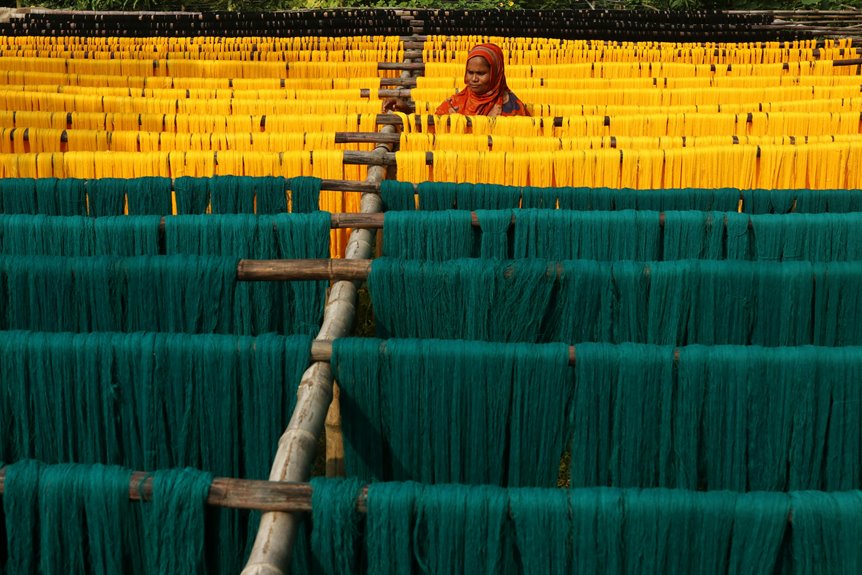
To find reliable fabric suppliers in Bangladesh, start by verifying their business licenses and quality certifications like ISO 9001 or OEKO-TEX. Request samples to check fabric quality and guarantee they can meet your production needs on time. Use trusted platforms like Alibaba or attend local trade fairs for direct connections. Communicate clearly about order details and agree on payment terms upfront. Keep these fundamentals in mind, and you’ll be better positioned to build strong supplier relationships and secure quality fabrics.
Key Takeaways
- Verify suppliers’ business licenses, quality certifications like ISO 9001, and export credentials to ensure legitimacy and compliance.
- Request fabric samples to evaluate texture, durability, and colorfastness matching your product requirements.
- Use sourcing platforms like Alibaba and attend trade fairs such as Dhaka International Textile & Garment Machinery Exhibition for verified supplier connections.
- Establish clear communication channels and confirm order details including fabric specifications, quantities, and delivery schedules upfront.
- Agree on payment terms with documented contracts to protect both parties and build long-term supplier relationships.
Understand the Textile Market Landscape in Bangladesh
The textile market in Bangladesh plays a crucial role in the global fabric industry, and understanding its dynamics is essential if you want to find reliable suppliers.
You’ll find a diverse range of textiles, from cotton and jute to synthetic blends, reflecting the country’s rich manufacturing capabilities. Bangladesh’s competitive pricing and large-scale production capacity make it attractive, but the market can be complex.
You should familiarize yourself with key textile hubs like Dhaka and Chittagong, where most manufacturers operate. Staying aware of market trends and seasonal fluctuations helps you anticipate supply availability and pricing shifts.
Verify Supplier Credentials and Certifications
You’ll want to check that your supplier holds valid business licenses to operate legally.
Make certain their quality certifications meet industry standards to guarantee product reliability.
Don’t forget to confirm their export credentials to verify smooth international shipping.
Check Business Licenses
Before partnering with any fabric supplier in Bangladesh, make certain they hold valid business licenses and certifications. This step guarantees you’re dealing with a legitimate and legally compliant company.
Here’s how you can check:
- Request copies of their business registration documents.
- Verify their trade license with the local government authority.
- Confirm their Tax Identification Number (TIN) is active and valid.
- Check for any industry-specific permits required for fabric manufacturing or trading.
Validate Quality Certifications
Once you’ve confirmed a supplier’s legal standing, focus on verifying their quality certifications to affirm their products meet industry standards.
Ask the supplier to provide official documents like ISO 9001, OEKO-TEX, or GOTS certificates, which demonstrate adherence to quality and safety benchmarks. Cross-check these certificates with the issuing bodies to confirm authenticity.
Don’t hesitate to inquire about recent audits or quality control processes they follow. This step affirms you’re working with a supplier committed to consistent quality, reducing risks of subpar fabric.
Remember, certifications also reflect compliance with environmental and social responsibility standards, which matter in today’s market.
Taking these measures helps you avoid suppliers who claim certifications without proof, ultimately securing a trustworthy partnership for your fabric sourcing needs.
Confirm Export Credentials
Even if a supplier offers impressive quality certifications, confirming their export credentials is essential to guarantee smooth international transactions.
You want to ascertain they comply with export regulations and have the right licenses. Here’s how you can verify their credentials:
- Request a copy of their Export Registration Certificate (ERC) issued by the Bangladesh Export Promotion Bureau.
- Check for a valid Business Identification Number (BIN) and Tax Identification Number (TIN).
- Verify their membership in recognized trade associations like the Bangladesh Garment Manufacturers and Exporters Association (BGMEA).
- Confirm they’ve a track record of successfully handling international shipments with proper customs documentation.
Evaluate Fabric Quality and Product Range
When you evaluate fabric quality and product range, you gain a clear understanding of whether a supplier can meet your specific needs.
Start by requesting samples to inspect texture, durability, and colorfastness firsthand. Check if the fabric aligns with your product specifications and industry standards.
Also, review the variety of fabrics the supplier offers—like cotton, silk, or synthetics—to verify they can support your current and future projects. A diverse product range indicates flexibility and innovation, which benefits your business as trends change.
Don’t hesitate to ask about customization options or certifications that attest to quality.
Assess Production Capacity and Delivery Timelines
Although quality and variety are essential, you also need to assess a supplier’s production capacity and delivery timelines to secure they can meet your deadlines.
Start by confirming their maximum output to secure they handle your order volume. Next, ask about their lead times and whether they can accommodate urgent requests.
Check if they’ve backup plans for delays caused by equipment failure or supply chain issues. Finally, evaluate their track record for on-time deliveries by requesting references or past client feedback.
- Verify maximum production output to match order size
- Confirm standard and expedited lead times
- Inquire about contingency plans for delays
- Review past delivery punctuality and client feedback
This will help you avoid disruptions and maintain a smooth supply chain.
Request and Review Samples Before Ordering
After confirming a supplier’s production capacity and delivery reliability, you should request fabric samples to verify quality firsthand.
Samples let you assess texture, color accuracy, and durability, ensuring the fabric meets your standards before committing. When reviewing samples, check for consistency with your specifications, such as weight and finish.
Don’t hesitate to test the fabric under conditions relevant to your product, like washing or stretching. If possible, request multiple samples from different batches to evaluate uniformity.
Clear communication about your expectations during this stage helps avoid misunderstandings later. By thoroughly inspecting samples, you minimize risks and gain confidence in your supplier’s ability to deliver fabric that fits your needs perfectly.
This step is essential to making informed, successful purchasing decisions.
Consider Supplier Experience and Industry Reputation
Because experience often translates to reliability, you should prioritize suppliers with a proven track record in the fabric industry.
Experience is key—choose fabric suppliers with a demonstrated history of reliability and quality.
Seasoned suppliers understand quality standards, delivery timelines, and customer needs better. To assess their experience and reputation, consider these steps:
- Check how long they’ve been in business and their specialization in fabric types.
- Look for testimonials or reviews from previous clients to gauge satisfaction.
- Verify any industry certifications or awards that highlight their credibility.
- Research their standing within the local and international fabric markets through trade publications or online forums.
Use Sourcing Platforms and Trade Fairs Effectively
Once you’ve identified experienced and reputable fabric suppliers, leverage sourcing platforms and trade fairs to connect with them directly.
Platforms like Alibaba, Fiber2Fashion, and Bangladesh’s own sourcing websites let you browse verified suppliers, compare products, and read reviews. Use filters to narrow down options based on fabric type, MOQ, and certifications.
At trade fairs such as the Dhaka International Textile & Garment Machinery Exhibition, you get face-to-face access to multiple suppliers, which helps build trust and negotiate better deals. Prepare questions in advance and request fabric samples on-site to assess quality firsthand.
Combining both digital platforms and physical fairs maximizes your chances of finding suppliers who meet your standards efficiently and reliably. Stay organized and follow up promptly to keep the connection strong.
Establish Clear Communication and Payment Terms
When you start working with fabric suppliers, establishing clear communication and payment terms is essential to avoid misunderstandings and delays.
You’ll want to set expectations upfront to guarantee smooth transactions and build trust.
Here’s how to do it effectively:
- Define preferred communication channels (email, phone, messaging apps) and response times.
- Confirm order details clearly, including fabric specifications, quantities, and delivery schedules.
- Agree on payment methods (T/T, L/C, PayPal) and set milestones or full payment terms.
- Document all agreements in writing to protect both parties and avoid disputes.
Frequently Asked Questions
What Are Common Fabric Types Produced in Bangladesh?
Wondering which fabrics Bangladesh is famous for? You’ll find cotton, jute, silk, and denim produced there. These materials suit various needs, letting you pick quality fabrics that match your style and project perfectly.
How Do Seasonal Changes Affect Fabric Availability?
Seasonal changes affect fabric availability because certain materials are harvested or produced at specific times. You’ll notice some fabrics become scarce or pricier during off-seasons, so you’ll need to plan purchases accordingly to avoid delays.
Can Suppliers Provide Eco-Friendly or Organic Fabrics?
Did you know over 60% of fabric suppliers now offer eco-friendly options? You can easily find suppliers providing organic fabrics by asking directly, checking certifications, and reviewing their sustainability practices to guarantee they meet your eco-conscious standards.
What Are Typical Payment Methods Used in Bangladesh?
You’ll typically use T/T (telegraphic transfer), L/C (letter of credit), or sometimes PayPal for payments in Bangladesh. These methods protect both you and the supplier, ensuring smooth transactions for your orders.
How to Handle Customs and Import Regulations for Fabrics?
You’ll need to research Bangladesh’s customs rules, prepare accurate invoices, and guarantee proper labeling. Work with a customs broker, declare all imports correctly, and stay updated on any regulation changes to avoid delays or fines.