
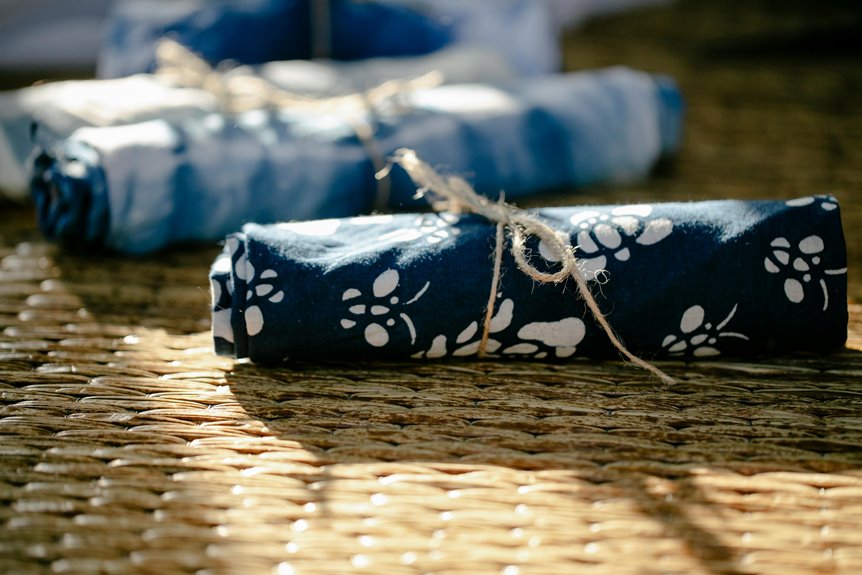
To create a perfect bullseye tie-dye pattern, start by choosing a natural, light-colored fabric and dampening it lightly. Pinch the fabric’s center and pull it up into a tight cone, securing it with rubber bands at intervals to form rings. Use squeeze bottles to apply different dye colors to each section without overlapping. Let the dye set wrapped in plastic for several hours, then rinse gently and dry. Follow these steps closely, and you’ll uncover tips for sharper, more vibrant results.
Key Takeaways
- Choose a light-colored, 100% cotton fabric for vibrant and durable dye results.
- Pull fabric from the center into a tight cone and secure with rubber bands for even bullseye rings.
- Slightly dampen fabric before dyeing to enhance dye absorption and crisp lines.
- Apply dye in sections from the center outward, avoiding color overlap for sharp contrasts.
- Let the tied fabric set wrapped in plastic for 6-8 hours before rinsing gently and drying.
Gather Your Supplies
Before you begin, make sure you have all the necessary supplies ready.
You’ll need rubber bands, squeeze bottles, gloves, and plastic bags to get started. Rubber bands help create the bullseye’s distinctive rings by tightly binding sections of your fabric. Squeeze bottles allow you to apply dye precisely where you want, so grab a few for different colors. Gloves protect your hands from stains, and plastic bags keep your dyed fabric moist during the setting process.
Don’t forget to have a workspace that can handle spills, like a covered table or a large plastic sheet. Having everything organized before you start saves time and prevents mess.
Once your supplies are gathered, you’ll be set to create a stunning bullseye tie-dye pattern.
Choose Your Fabric
You’ll want to pick the right fabric to make your bullseye tie-dye pop.
Natural fibers like cotton work best, and prepping your fabric properly will help the dye set evenly.
Also, choosing a light or white base color will give your design the brightest results.
Fabric Material Options
When selecting fabric for your bullseye tie-dye, choosing the right material can make all the difference in how vibrant and long-lasting your design turns out. Natural fibers like cotton absorb dye better, resulting in brighter colors. Synthetic fabrics often resist dye, leading to duller patterns. Blends can vary, so always check the fabric content before starting.
| Fabric Type | Dye Absorption | Durability |
|---|---|---|
| 100% Cotton | Excellent | High |
| Rayon | Excellent | Moderate |
| Polyester | Poor | High |
| Cotton Blend | Good | Moderate |
| Linen | Good | Moderate |
Pick 100% cotton for the best results, but blends and rayon offer unique textures if you want to experiment.
Fabric Preparation Tips
Preparing your fabric properly guarantees your bullseye tie-dye turns out vibrant and lasting. Start by washing your fabric to remove any sizing, oils, or dirt that could block dye absorption.
Skip fabric softener, as it can create a barrier. Use warm water and a mild detergent, then dry your fabric thoroughly.
If you want softer colors, soak the fabric in a soda ash solution for 15 minutes before tying. Soda ash helps the dye bond with the fibers, enhancing color intensity.
After soaking, wring out excess liquid but keep the fabric damp for easier tying. Remember, the cleaner and more prepared your fabric is, the better your dye will set, ensuring those crisp, vivid bullseye rings you’re aiming for.
Best Fabric Colors
Picking the right fabric color plays an essential role in making your bullseye tie-dye pop. You want a base that highlights the vibrant dye colors and brings your design to life. Here’s what to take into account:
- White or Light Colors: These are your best bet for bright, true-to-dye colors. They make every hue shine and create that classic tie-dye look you’re aiming for.
- Natural or Off-White: Gives a softer, vintage vibe. It’s perfect if you want your bullseye to feel earthy and subtle but still noticeable.
- Avoid Dark Colors: They tend to dull the dye and make your pattern harder to see. Stick with lighter fabrics to guarantee your bullseye stands out bold and clear.
Choose wisely, and your fabric will become the perfect canvas for your tie-dye masterpiece!
Prepare Your Workspace
Start by clearing a large, flat surface where you can comfortably work without interruptions. Lay down plastic sheets or old newspapers to protect your area from dye stains. Wear gloves and an apron to keep yourself clean. Arrange your dye bottles, rubber bands, and spray bottles within easy reach to stay organized.
| Item | Purpose |
|---|---|
| Plastic sheets | Protects workspace from dye |
| Rubber bands | Secures fabric for patterns |
| Spray bottles | Applies water or dye evenly |
Having everything prepared helps you focus on creating the perfect bullseye pattern without distractions. A neat workspace reduces mistakes and speeds up the process. Get ready, and you’ll enjoy a smooth tie-dye experience!
Dampen the Fabric
A slightly damp fabric holds dye better and helps create crisp lines for your bullseye pattern. Before you start, make sure your fabric isn’t soaking wet—too much water can cause colors to bleed and blur.
Here’s how to get the perfect dampness:
- Lay your fabric flat on a clean surface.
- Use a spray bottle to mist the fabric evenly, focusing on the area where you want the bullseye.
- Lightly squeeze out any excess water if the fabric feels too wet.
This balance keeps the fabric pliable and ready to absorb dye without losing definition.
Mark the Center Point
The center point acts as the anchor for your bullseye pattern, so you’ll want to mark it clearly and accurately. Start by laying your damp fabric flat on a smooth surface. Pinch the fabric where you want the bullseye’s center to be—usually the middle of your garment. Use a washable fabric marker or a small piece of tape to mark this spot. This mark will guide your folds, so precision matters. Here’s a quick reference to help:
| Step | Tip |
|---|---|
| Pinch | Choose the exact center |
| Mark | Use washable marker/tape |
| Check | Confirm visibility on wet fabric |
Marking well guarantees your bullseye stays perfectly centered throughout the dyeing process.
Create the Bullseye Folds
To create the bullseye folds, grab the fabric at the center point you marked and pull it straight up, forming a tight cone shape. This step is essential for that iconic circular pattern.
As you work, keep these tips in mind:
- Keep the fabric taut to maintain the cone’s shape, which guarantees crisp dye lines.
- Smooth out any wrinkles by gently running your hand down the cone, creating even folds.
- Make certain the folds radiate evenly from the center, like spokes on a wheel, to achieve symmetry.
Taking your time here sets the foundation for a striking bullseye effect.
Once your fabric is perfectly folded, you’ll be ready to lock in your design and bring those vibrant rings to life.
Secure the Fabric With Rubber Bands
Grab several rubber bands and tightly wrap them around your folded fabric cone at evenly spaced intervals.
These rubber bands are essential—they create the resist lines that form the bullseye pattern. Start near the top of the cone and work your way down, spacing the bands about an inch or two apart depending on how thick you want each ring to be.
Make sure the bands are snug so the fabric underneath stays compressed, but not so tight that you risk tearing the material. If you need more grip, double up the rubber bands.
Once secured, your fabric will have distinct sections where the dye won’t penetrate fully, resulting in those crisp, circular patterns. Now your fabric’s ready for the dyeing stage.
Select and Prepare Your Dyes
Although selecting your dyes might seem straightforward, choosing the right colors and preparing them correctly guarantees vibrant, lasting results.
First, pick colors that complement each other and match the energetic vibe you want.
Second, mix your powders with warm water in squeeze bottles, following package instructions for the perfect concentration.
Third, shake the bottles vigorously to dissolve all dye granules; lumps can cause uneven coloring.
Wearing gloves, prepare each color separately to avoid contamination.
Remember, fresh dye solutions work best, so mix just before use.
Taking these simple steps assures your bullseye pattern will pop with rich, bold hues that stand the test of time.
Get ready to transform your fabric into a stunning masterpiece with your carefully prepared dyes!
Apply the Dye to Each Section
Now that your dyes are perfectly mixed and ready, you can start applying color to each section of your fabric. Hold your fabric firmly, then use squeeze bottles or brushes to carefully apply dye to the exposed areas between your tied rubber bands.
Apply the dye evenly, saturating the fabric but avoiding oversaturation that could cause colors to bleed excessively. Work methodically from the center outward, applying one color per section to maintain crisp rings. If you want sharp contrasts, avoid overlapping colors.
Flip your fabric to dye the back, ensuring full coverage. Remember to wear gloves to keep your hands clean and prevent unwanted smudges. Take your time—it’s better to add more dye later than to have patchy spots from applying too little now.
Let the Dye Set Properly
Once you’ve applied the dye evenly, let your fabric sit undisturbed to allow the colors to fully penetrate the fibers. This step is essential for vibrant, lasting hues.
Here’s what you need to do:
- Wrap your tied fabric in plastic wrap to keep it moist, preventing the dye from drying out and ensuring even absorption.
- Leave it in a warm place for 6 to 8 hours, or overnight if you want richer colors.
- Resist the urge to unwrap early—patience rewards you with striking contrasts and sharp bullseye rings.
Rinse and Dry Your Tie-Dye Creation
Now that the dye has set, you’ll want to rinse your creation carefully to remove excess color without disturbing the pattern.
Use cold water first, then gradually switch to warm until the water runs clear.
Once rinsed, drying your tie-dye properly will help preserve the vibrant bullseye design.
Proper Rinsing Techniques
Before you rinse your tie-dye creation, make sure the colors have fully set to prevent bleeding. This step is essential to keep your bullseye vibrant and crisp.
When you’re ready, follow these proper rinsing techniques:
- Rinse under cold water gently, starting with the outside and moving inward to avoid spreading dyes.
- Keep rinsing until the water runs mostly clear, showing excess dye has been washed away.
- Avoid harsh scrubbing, which can distort the pattern and damage fabric fibers.
Drying Methods Overview
Although rinsing removes excess dye, drying your tie-dye creation properly is just as important to preserve its vibrant bullseye pattern.
After rinsing, gently squeeze out excess water without wringing to avoid distorting the design. Lay your garment flat on a clean surface or hang it up to air dry; this method helps maintain the shape and color intensity. Avoid direct sunlight, which can fade the hues.
If you’re short on time, use a dryer on a low-heat setting, but be aware heat might slightly dull the colors over time. Whichever method you choose, guarantee the fabric dries completely before wearing or washing again to lock in the pattern and prevent bleeding.
Proper drying keeps your bullseye tie-dye looking fresh and vibrant longer.
Frequently Asked Questions
Can I Use Bleach Instead of Dye for a Bullseye Pattern?
You can use bleach instead of dye for a bullseye pattern, but you’ll need to be careful. Bleach removes color, so work in a well-ventilated area, wear gloves, and monitor the fabric closely to avoid damage.
How Long Should I Wait Before Washing the Dyed Fabric?
You should wait about 6 to 8 hours before washing your dyed fabric. This lets the dye set properly, ensuring vibrant colors. For best results, keep it wrapped in plastic during this waiting period.
What Colors Work Best for a Vibrant Bullseye Effect?
You’ll want bright, contrasting colors like red, yellow, and blue to make your bullseye really pop. Neon shades also work great. Avoid similar tones, so the pattern stays vibrant and eye-catching.
Can I Tie-Dye Synthetic Fabrics Like Polyester?
Oh sure, tie-dye polyester—it’s like trying to dye a plastic bag! You’ll struggle because synthetic fabrics repel dye. Stick to cotton or blends; otherwise, your masterpiece might just stay stubbornly beige.
How Do I Fix Color Bleeding Between Sections?
You can fix color bleeding by using rubber bands tightly to separate sections, applying dye carefully, and letting each color dry before adding another. Also, pre-wash your fabric to remove excess starch that causes bleeding.