
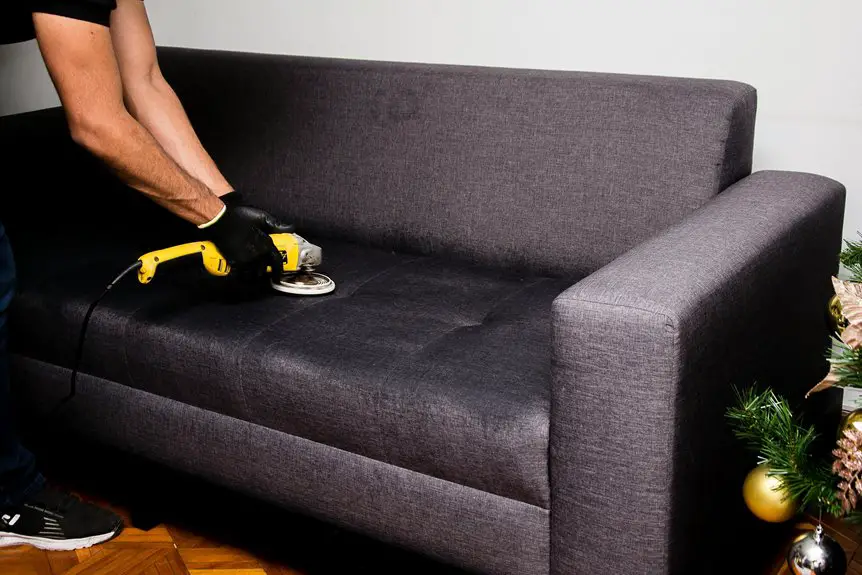
To deep clean your couch, first gather supplies like a vacuum, mild detergent, microfiber cloths, and a soft brush. Check your sofa’s tag to know its upholstery type—this guides your cleaning method. Vacuum thoroughly, removing cushions and targeting crevices. Spot clean stains by matching solutions to stain types and fabric. Then, test and apply a gentle cleaning solution over the surface. Proper drying and revitalizing techniques finish the job. Keep following for detailed tips to get your couch spotless and fresh.
Key Takeaways
- Identify your sofa’s upholstery material and check cleaning codes (W, S, WS, X) for appropriate cleaning methods.
- Vacuum thoroughly by removing cushions and using an upholstery attachment to clean seams, crevices, and under cushions.
- Spot clean stains with suitable cleaners: solvent-based for oil stains, mild detergent for water-based stains, and gentle care for protein stains.
- Prepare a mild cleaning solution (dish soap with warm water or vinegar mix) and always spot test on a hidden area first.
- Use a microfiber cloth or soft-bristled brush to deep clean the entire sofa surface, avoiding fabric damage or discoloration.
Gather the Necessary Cleaning Supplies
Before you begin deep cleaning your couch, gather five essential supplies: a vacuum cleaner, mild detergent, microfiber cloths, a soft-bristled brush, and a spray bottle filled with water.
You’ll use the vacuum cleaner to remove dust, dirt, and crumbs from every crevice. The mild detergent mixed with water will serve as your cleaning solution, gentle enough to avoid damage.
Vacuum to clear dust and debris, then gently clean with a mild detergent solution to protect your couch.
Microfiber cloths are perfect for wiping down surfaces without leaving lint behind. The soft-bristled brush helps loosen stubborn dirt embedded in the fabric.
Finally, the spray bottle lets you apply the cleaning solution evenly without soaking the upholstery. Having these supplies ready guarantees you’ll work efficiently and avoid interruptions, making your deep cleaning process smooth and effective.
Identify Your Sofa Upholstery Material
How can you guarantee you’re using the right cleaning method for your couch? First, identify your sofa’s upholstery material. Different fabrics need different care to avoid damage. Check the manufacturer’s tag for cleaning codes like W (water-based cleaner), S (solvent-based cleaner), WS (either), or X (vacuum only). If the tag’s missing, use your eyes and hands to inspect the fabric.
| Upholstery Type | Cleaning Tips |
|---|---|
| Cotton | Use mild detergent, water safe |
| Leather | Use leather cleaner, condition |
| Polyester | Use water or solvent cleaners |
| Velvet | Use dry cleaning or gentle steam |
Knowing your fabric helps you choose the safest and most effective cleaning method, protecting your couch while ensuring deep cleanliness.
Vacuum Your Couch Thoroughly
Once you know your couch’s fabric and the right cleaning approach, you can move on to vacuuming.
Start by removing all cushions and pillows to access every nook and cranny. Use your vacuum’s upholstery attachment to gently but thoroughly clean the surface.
Remove cushions and pillows, then use the upholstery attachment to clean every nook and cranny thoroughly.
Pay special attention to seams, crevices, and under cushions, where dust, pet hair, and crumbs often hide. Don’t forget to vacuum the couch’s sides and back to capture all debris.
Adjust the vacuum’s suction power to suit delicate fabrics, avoiding damage. Vacuuming not only removes loose dirt but also prepares your couch for deeper cleaning steps.
Taking your time here guarantees you lift and clear as much grime as possible, making your deep clean more effective and lasting.
Spot Clean Stains and Spills
When you spot a stain or spill, start by identifying what caused it to choose the right cleaning solution.
Different stains need different treatments, so knowing the type helps you act effectively.
You’ll want to tackle the spot quickly to prevent it from setting in.
Identify Stain Types
Although it might seem tempting to grab any cleaner at hand, you should first identify the type of stain on your couch.
Different stains require different treatments, so recognizing them helps you act quickly and effectively. Here are three common stain types to look out for:
- Oil-Based Stains: These come from food, lotions, or grease and often leave dark, greasy marks.
- Water-Based Stains: Spills like coffee, juice, or wine fall into this category and usually soak into the fabric quickly.
- Protein-Based Stains: Think blood, sweat, or dairy products, which can sometimes have a strong odor and need gentle cleaning.
Choose Cleaning Solutions
Selecting the right cleaning solution is crucial to effectively spot clean stains and spills on your couch. First, check your sofa’s care tag to identify recommended cleaning codes—this guides you in choosing safe products.
For water-safe fabrics, mix a mild detergent with warm water or use a store-bought upholstery cleaner. When dealing with oil-based stains, try a solvent-based cleaner designed for upholstery.
Always test your chosen solution on a hidden area to avoid damage or discoloration. Apply the cleaner sparingly with a clean cloth, blotting gently rather than rubbing to lift the stain.
Prepare a Cleaning Solution
To prepare an effective cleaning solution, start by choosing ingredients that suit your couch’s fabric type. For most upholstery, a gentle mix of water and mild detergent works wonders.
Begin with a gentle mix of water and mild detergent tailored to your couch’s fabric for effective cleaning.
Here’s how to create your solution:
- Combine 1 cup of warm water with a few drops of mild dish soap in a spray bottle.
- For stubborn stains, mix equal parts white vinegar and water for a natural boost.
- If you have delicate fabrics like silk or velvet, use a specialized upholstery cleaner following the label instructions.
Always test your solution on a hidden spot first to avoid discoloration or damage.
Once ready, you’ll have a safe, effective cleaner to tackle grime and refresh your sofa without harming the fabric.
Deep Clean the Entire Sofa Surface
Before you start cleaning the whole sofa, pick the right cleaning solution for your fabric type.
Always spot test the solution on a hidden area to avoid damage or discoloration.
This step helps guarantee your couch stays looking fresh without any surprises.
Choose Cleaning Solutions
Finding the right cleaning solution is key to deep cleaning your entire sofa without damaging its fabric.
Start by identifying the material your couch is made from, whether it’s leather, microfiber, or cotton blend.
Next, consider these options:
- Mild Dish Soap and Warm Water: Perfect for most upholstery, this gentle mix removes dirt without harsh chemicals.
- White Vinegar Solution: A natural deodorizer and cleaner, mix equal parts vinegar and water for a safe, effective spray.
- Upholstery Cleaner: Choose a product specifically designed for your sofa’s fabric type to guarantee safe and thorough cleaning.
Spot Test First
How can you guarantee your cleaning solution won’t damage your couch? Always perform a spot test first.
Choose a hidden area, like under a cushion or the back seam, and apply a small amount of your chosen cleaner. Wait 10 to 15 minutes to observe any color change, fabric distortion, or residue buildup.
If you notice fading, discoloration, or texture changes, don’t proceed with that cleaner on the entire sofa. Instead, try a different solution or consult the manufacturer’s care instructions.
This simple step protects your upholstery from irreversible damage and guarantees your cleaning effort is safe and effective.
Once the spot test passes, you can confidently deep clean the entire sofa surface, knowing it won’t harm your couch’s fabric or appearance.
Dry and Freshen Your Couch Upholstery
Three simple steps can help you dry and freshen your couch upholstery effectively.
First, open windows or turn on fans to promote air circulation, speeding up the drying process and preventing mold.
Second, sprinkle baking soda evenly over the upholstery. Let it sit for about 15 minutes to absorb odors and moisture.
Third, vacuum the baking soda thoroughly using the upholstery attachment to remove dirt and refresh the fabric.
This method not only dries your couch but also leaves it smelling clean and inviting.
Avoid sitting on the couch until it’s completely dry to maintain these fresh results.
Frequently Asked Questions
How Often Should I Deep Clean My Couch?
You live on your couch, so it deserves a deep clean every six to twelve months. Don’t wait for dirt to shout—keep it fresh and inviting, ensuring your sofa stays comfy and vibrant year-round.
Can I Use a Steam Cleaner on All Upholstery Types?
You can’t use a steam cleaner on all upholstery types because some fabrics, like silk or velvet, can get damaged. Always check the care label first, and test a hidden spot before cleaning the entire surface.
What Are the Best Natural Cleaning Alternatives for Sofas?
You can use a mix of white vinegar and water, baking soda for odor, and mild dish soap with warm water. These natural cleaners are safe, effective, and won’t damage your sofa’s fabric or cause harsh chemical exposure.
How Do I Prevent Mold Growth on My Couch?
Think of your couch as a treasure chest; keep it dry and well-ventilated to guard against mold pirates. You’ll want to clean spills immediately and use a dehumidifier, so mold doesn’t sneak in unnoticed.
Are Professional Couch Cleaning Services Worth It?
Professional couch cleaning services are worth it if you want a deep, thorough clean without the hassle. They use specialized equipment and solutions, saving you time and ensuring your couch stays fresh and allergen-free longer.