
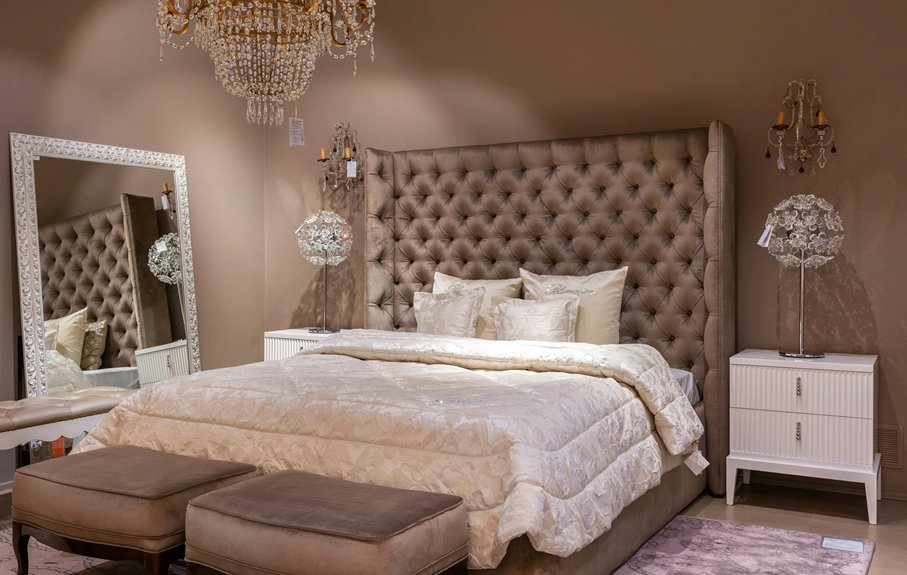
To decorate with blue herringbone upholstery fabric, start by choosing a shade that fits your room’s natural light—lighter blues brighten darker spaces, while deeper ones suit well-lit rooms. Pair it with neutrals, warm rusts, or soft greens to create balance. Consider using it on statement furniture like sofas or accent chairs, then mix in textures and subtle patterns. Keep materials natural, like wood and metals, for warmth and contrast. Exploring these tips will help you style with confidence and flair.
Key Takeaways
- Choose blue shades based on natural light: deeper blues for bright rooms, lighter blues for limited light, and test swatches throughout the day.
- Pair blue herringbone with warm tones like burnt orange or cool neutrals like soft grays to create cozy or fresh atmospheres.
- Use blue herringbone on statement furniture such as sofas, armchairs, or headboards to add sophistication and visual interest.
- Combine blue herringbone with natural woods, metals, and soft textiles for balanced, stylish decor themes like coastal or modern.
- Maintain upholstery by vacuuming weekly, spot-cleaning spills immediately, avoiding direct sunlight, and scheduling professional cleaning annually.
Choosing the Right Shade of Blue for Your Space
How do you pick the perfect blue shade for your room? Start by considering the room’s natural light. If your space gets plenty of sunlight, you can choose deeper or more vibrant blues without worrying about it feeling dark.
For rooms with limited light, lighter or muted blues keep the atmosphere airy and open. Think about the mood you want to create: navy blues feel classic and calming, while brighter blues add energy.
Don’t forget to test fabric swatches in your room at different times of day to see how the hue changes.
Pairing Blue Herringbone Fabric With Complementary Colors
When you pair blue herringbone fabric with warm tones like burnt orange or mustard, you create a cozy, inviting feel.
Cooler shades such as soft grays or icy whites offer a fresh, balanced look.
Don’t forget to use neutrals to ground your palette and keep the space harmonious.
Warm Vs Cool Tones
Although blue herringbone fabric naturally leans toward cool tones, you can balance or enhance its look by choosing either warm or cool complementary colors.
Warm tones like burnt orange or mustard yellow add vibrancy and coziness, creating a striking contrast that energizes your space. On the other hand, cool tones such as soft grays or mint greens maintain a calming, cohesive atmosphere, perfect for a tranquil setting.
Consider your room’s mood and lighting when deciding between warm or cool palettes.
- Pair with warm rust or terracotta accents for warmth
- Use cool gray or silver for a sleek, modern vibe
- Introduce soft greens to keep things fresh and natural
- Add mustard yellow pillows for a pop of color
- Balance with navy or teal for layered cool tones
Neutral Color Balancing
Balancing blue herringbone fabric with neutral colors helps create a versatile foundation for your space. When you pair this patterned fabric with shades like soft grays, creamy whites, or warm beiges, you allow the blue to stand out without overwhelming the room.
These neutrals act as a calming backdrop, highlighting the fabric’s texture and color depth. You can incorporate neutral-colored walls, rugs, or accent pieces to maintain balance.
Adding metallic accents like brushed nickel or matte gold can also enhance the look without clashing. By choosing complementary neutrals, you keep your design cohesive and inviting.
This approach guarantees your blue herringbone upholstery remains the focal point while your space feels grounded and harmonious.
Incorporating Blue Herringbone Into Living Room Furniture
When you bring blue herringbone fabric into your living room furniture, focus on choosing colors that complement its rich tones.
Don’t hesitate to mix textures and patterns to add depth and interest.
Highlight a statement piece, like a sofa or armchair, to make the fabric the room’s focal point.
Choosing Complementary Color Schemes
Since blue herringbone upholstery carries both texture and a cool tone, you’ll want to select complementary colors that enhance its depth without overwhelming your living room.
Choose shades that balance the richness of blue while creating a harmonious vibe. Consider warm and neutral hues to soften the coolness and add dimension.
Here are five color ideas to complement your blue herringbone furniture:
- Soft beige or cream for a warm, inviting feel
- Mustard yellow to add a vibrant contrast
- Dusty rose or blush for a subtle, elegant touch
- Charcoal gray to maintain a modern, sophisticated look
- Olive green to introduce natural warmth and depth
These schemes help your blue upholstery stand out while keeping the space balanced and cozy.
Mixing Textures and Patterns
Although blue herringbone upholstery offers a distinct texture and pattern on its own, mixing it thoughtfully with other textures and patterns can elevate your living room’s style.
Start by pairing the herringbone fabric with smooth materials like leather or velvet to create a tactile contrast that feels inviting. You might add cushions in subtle geometric prints or soft florals that complement the blue without overwhelming the space.
Don’t be afraid to combine different shades of blue or introduce neutral tones like gray or beige to balance complexity.
Keep scale in mind—larger patterns work well with the fine lines of herringbone. By layering these elements, you’ll create a dynamic, cohesive look that highlights the fabric’s unique character while adding depth to your living room décor.
Highlighting Statement Furniture Pieces
Statement furniture pieces instantly draw attention and set the tone for your living room, making blue herringbone upholstery a perfect choice to showcase distinctive style.
When you choose a bold armchair or a plush sofa covered in blue herringbone, you create a focal point that combines classic pattern with modern color.
To highlight these pieces effectively, consider:
- Positioning them centrally to naturally draw eyes
- Pairing with neutral walls to let the fabric pop
- Adding complementary cushions in solid or subtle prints
- Using lighting to accentuate the texture and weave
- Keeping surrounding furniture minimal to avoid visual clutter
Using Blue Herringbone Upholstery in Bedroom Decor
When you incorporate blue herringbone upholstery into your bedroom decor, you instantly add a touch of timeless elegance and texture.
Consider upholstering your headboard with this fabric to create a calm, inviting focal point that complements neutral walls and bedding. A blue herringbone bench at the foot of your bed adds both style and functionality, offering a cozy spot to sit or lay out clothes.
Don’t overlook accent chairs or ottomans upholstered in blue herringbone—they provide subtle sophistication without overwhelming the space. This fabric’s rich texture enhances the room’s warmth, making it feel more intimate and layered.
Mixing Patterns and Textures With Blue Herringbone
When mixing patterns with blue herringbone, you’ll want to combine prints that complement rather than compete.
Pay attention to balancing textures to keep the space inviting and dynamic.
Combining Prints Seamlessly
Although mixing patterns can feel intimidating, combining prints with blue herringbone upholstery fabric adds depth and personality to your space.
Start by choosing prints that share a similar color palette to keep everything cohesive. Don’t be afraid to mix scale—pair large florals or geometrics with smaller, subtle patterns to create visual interest.
Use solid colors or simple textures to break up prints and avoid overwhelming the room. You can also repeat the blue from the herringbone in other elements like pillows or rugs to tie everything together.
Finally, trust your instincts and adjust as you go; the right balance often emerges through experimentation.
- Match color tones across prints
- Mix large and small pattern scales
- Incorporate solids to balance prints
- Repeat blue accents throughout
- Experiment and adjust as needed
Balancing Fabric Textures
Since blue herringbone upholstery fabric already offers a subtle texture, balancing it with complementary fabrics can elevate your room’s tactile appeal without overwhelming your design.
Pair it with smooth materials like velvet or silk to create contrast and add softness. You can also mix in rougher textures, such as woven linen or burlap, to enhance depth.
Keep your color palette cohesive to prevent clashing; neutral tones or shades of blue work well. Avoid combining too many bold patterns alongside herringbone, as the texture itself is a statement.
Instead, focus on layering different fabric weights and finishes. This approach will create a harmonious, inviting space where the blue herringbone fabric stands out beautifully while blending effortlessly with other elements.
Styling Accent Chairs With Blue Herringbone Fabric
To style accent chairs with blue herringbone fabric effectively, you’ll want to balance texture and color to create a striking focal point.
Start by pairing the rich pattern with neutral walls to let the fabric shine. Add cushions in complementary shades like soft grays or muted yellows to enhance warmth. Consider wooden or metal chair legs for contrast and durability. Incorporate lighting that highlights the fabric’s texture without overwhelming the room.
- Choose cushions with subtle patterns or solid colors to avoid clashing
- Position chairs near natural light to emphasize the herringbone weave
- Use throws in coordinating hues to add softness
- Pair with minimalist furniture to keep focus on the chairs
- Include metallic accents like brass or chrome for a modern touch
These tips help your blue herringbone chairs stand out beautifully.
Selecting the Best Materials to Combine With Blue Herringbone
After styling your accent chairs with blue herringbone fabric, you’ll want to think about the other materials in the room that complement this distinctive pattern.
Natural woods, like oak or walnut, bring warmth and balance the cool blue tones beautifully. Pairing blue herringbone with metals such as brushed brass or matte black adds a modern edge without overpowering the fabric’s texture.
Consider incorporating soft textiles like linen or velvet in neutral shades to create depth and comfort. Avoid overly busy patterns that compete with the herringbone; instead, choose solids or subtle prints.
Mixing these materials thoughtfully helps highlight the fabric’s unique weave while crafting a cohesive, inviting space you’ll love spending time in.
Maintaining and Cleaning Blue Herringbone Upholstery
Keeping your blue herringbone upholstery looking fresh requires regular care and attention. You’ll want to address spills and dirt promptly to prevent stains and fabric damage.
Vacuum your upholstery weekly using a brush attachment to remove dust and debris. Spot clean with a mild detergent mixed in water, testing first on a hidden area. Avoid harsh chemicals that might fade the fabric or weaken fibers. For deeper cleaning, consider professional upholstery services annually.
Here are five maintenance tips to keep in mind:
- Vacuum regularly to remove dust and dirt
- Blot spills immediately with a clean cloth
- Use mild soap and water for spot cleaning
- Avoid direct sunlight to prevent fading
- Schedule professional cleaning once a year
This routine guarantees your blue herringbone fabric stays vibrant and inviting.
Creating a Coastal or Nautical Theme With Blue Herringbone
Blue herringbone upholstery offers a perfect foundation for creating a coastal or nautical theme in your space. Its classic pattern and blue tones evoke the sea and sky, instantly setting a maritime mood.
Pair your herringbone-upholstered furniture with crisp white walls and natural textures like driftwood or jute to enhance the seaside vibe. Add accents in navy, white, and sandy beige to keep the palette cohesive and fresh.
Incorporate nautical elements such as rope details, lantern-style lighting, or seashell decor to reinforce the theme without overwhelming the room. Keep the overall look airy and light by choosing furniture with clean lines and minimal ornamentation.
This approach turns your blue herringbone pieces into anchors for a serene, stylish coastal retreat.
Adding Blue Herringbone Fabric to Decorative Pillows and Throws
When you incorporate herringbone fabric into your decorative pillows and throws, you instantly add texture and visual interest to your space.
Blue herringbone’s subtle pattern brings sophistication without overwhelming other design elements. You can mix and match fabrics to create cozy layers and a dynamic look. Try pairing it with solids, florals, or even leather for contrast. Plus, the durable weave makes it perfect for everyday use.
Blue herringbone adds subtle sophistication and pairs beautifully with solids, florals, or leather for cozy, layered style.
Consider these ideas to enhance your décor with blue herringbone fabric:
- Use blue herringbone pillows on a neutral sofa for a pop of pattern
- Add a herringbone throw at the foot of your bed for warmth and style
- Mix different shades of blue to create depth
- Combine with natural textures like wood or linen
- Choose oversized pillows for a bold statement
These touches make your space inviting and stylish.
Frequently Asked Questions
Where Can I Buy Blue Herringbone Upholstery Fabric?
You can find blue herringbone upholstery fabric at fabric stores, online retailers like Etsy or Joann, and specialty upholstery shops. Don’t forget to check local craft stores or order swatches to guarantee the perfect shade and texture.
Is Blue Herringbone Fabric Suitable for Outdoor Furniture?
Blue herringbone fabric isn’t typically made for outdoor use since it may fade or wear quickly. You’ll want weather-resistant, UV-protected materials to keep your furniture looking fresh and vibrant outside.
How Durable Is Blue Herringbone Upholstery Fabric?
You’ll find blue herringbone upholstery fabric quite durable, as it’s typically woven tightly with strong fibers. It resists wear and tear well, making it ideal for everyday use in busy households or commercial spaces.
Can Blue Herringbone Fabric Be Custom Dyed?
Think of blue herringbone fabric as a canvas waiting for your personal touch. You can absolutely custom dye it, but be sure to test a small patch first to avoid unexpected color shifts or fabric damage.
What Is the History of Herringbone Fabric Pattern?
You’ll find that herringbone’s history dates back to ancient Rome, where it was used in road paving. Later, it became popular in textiles for its distinctive zigzag pattern, symbolizing durability and style.