
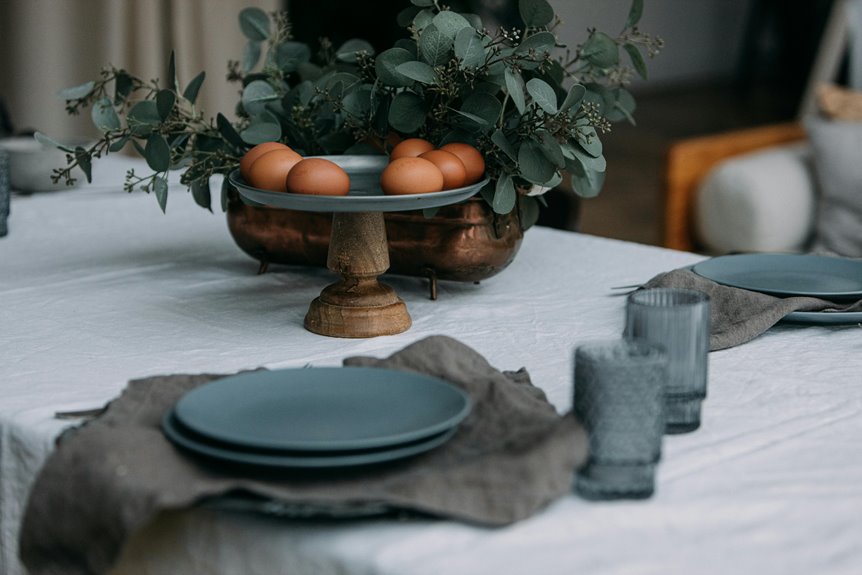
To create a stunning gauze fabric table runner, start by choosing soft yet durable gauze with a consistent weave that suits your event’s color scheme. Measure and cut your fabric carefully, then prepare neat edges by folding and pressing hems. Add decorative touches like lace or embroidery to personalize it. Whether you sew or use no-sew methods, style your runner to match the occasion with complementary elements. Keep it fresh with gentle care, and explore more ways to make it truly unique.
Key Takeaways
- Choose soft yet durable gauze fabric with an even weave and colors that complement your event theme and décor.
- Measure and cut fabric precisely, then prepare edges by folding, pinning, and pressing for a neat hem.
- Add decorative accents like lace trim, fabric flowers, or subtle sequins to enhance texture and visual appeal.
- Use basic sewing techniques or no-sew adhesives for securing edges and decorations based on your skill level.
- Style your runner with contrasting tableware, seasonal elements, and an eye-catching centerpiece to suit the event.
Choosing the Right Gauze Fabric for Your Table Runner
When selecting gauze fabric for your table runner, you’ll want to focus on both texture and durability to confirm it suits your dining space.
Choose a gauze that feels soft yet sturdy enough to withstand regular use. Look for a weave that’s even and consistent, as this will confirm your runner drapes beautifully.
Select gauze that’s soft, sturdy, and evenly woven for a beautifully draped table runner.
Consider the fabric’s weight; lightweight gauze offers an airy, delicate look, while a slightly heavier option provides more structure.
Also, think about the color and pattern—select hues that complement your table setting and overall décor.
If you plan to wash it often, pick a fabric that holds up well after laundering.
Measuring and Cutting Your Fabric Accurately
You’ll want to measure your gauze fabric carefully to guarantee your table runner fits perfectly.
Use a clear ruler or measuring tape and mark your cutting lines with fabric chalk for accuracy.
When cutting, sharp fabric scissors or a rotary cutter will help you achieve clean, precise edges.
Precise Measuring Techniques
Accurate measuring is the foundation of a well-crafted gauze fabric table runner. Begin by determining your desired length and width, considering any overhang for your table. Use a flexible measuring tape for precision, laying your fabric flat on a smooth surface.
Mark your measurements clearly with a fabric-safe pencil or tailor’s chalk to avoid permanent marks. Double-check each measurement to prevent mistakes—measure twice, cut once. Align your measuring tape parallel to the fabric edges to guarantee straight lines.
When measuring multiple pieces, stack them evenly and measure all layers together for consistency. Taking these careful steps guarantees your gauze runner fits perfectly and looks professional, setting the stage for a beautiful, polished final product.
Cutting Tools and Tips
Selecting the right cutting tools is essential to achieve clean, precise edges on your gauze fabric table runner. Use sharp fabric scissors or a rotary cutter for smooth cuts without fraying.
Before cutting, lay your gauze fabric flat on a cutting mat to prevent slipping. Measure twice, cut once—mark your lines lightly with tailor’s chalk or a washable fabric marker for accuracy.
When using scissors, cut in long, steady strokes rather than short snips to avoid jagged edges. If you opt for a rotary cutter, hold the ruler firmly to guide your cut straight.
Keep your tools sharp and clean to maintain precision throughout your project. Taking these steps guarantees your table runner looks professionally finished and enhances your event décor.
Preparing the Edges for a Clean Finish
Before you move on to sewing, make certain to trim any uneven edges on your gauze fabric.
Use sharp fabric scissors to get a clean, straight line, which will prevent fraying and give your table runner a polished look.
Next, consider folding the edges over by about half an inch to create a neat hem.
Pin the folds in place carefully, so the fabric stays flat and even.
If you want extra durability, you can press the edges lightly with an iron on a low setting before pinning.
This step helps the fabric hold its shape, making sewing easier.
Taking the time to prepare your edges properly will guarantee your table runner looks professional and lasts through many events.
Adding Decorative Elements to Enhance the Design
Anyone can transform a simple gauze table runner into a stunning centerpiece by adding decorative elements.
You might consider attaching delicate lace trims along the edges to give your runner a vintage charm. Small fabric flowers or embroidered accents can add texture and personalize the look.
If you prefer a bit of sparkle, sew on subtle sequins or beads to catch the light without overwhelming the gauze’s airy feel. Ribbon overlays or tassels at the ends also enhance visual interest and movement.
Keep your theme and event in mind—soft pastels for weddings or bold colors for festive occasions.
Techniques for Sewing or No-Sew Options
You can choose to sew your gauze fabric table runner using basic stitches or opt for no-sew fabric adhesives for a quicker finish.
Both methods require attention to edge finishing to prevent fraying and keep your runner looking polished.
Let’s explore simple techniques that fit your skill level and project needs.
Basic Sewing Techniques
Mastering basic sewing techniques can turn your gauze fabric table runner project from simple to stunning. Start by threading a needle with matching thread, knotting the end securely.
Use a running stitch to join pieces or hem edges—this simple stitch moves in and out of the fabric evenly. For stronger seams, try the backstitch, which creates a solid line of stitching perfect for areas that need durability.
If you want a neat finish, fold the edges under twice and sew a small hem. Press your seams flat with an iron to keep everything smooth.
No-Sew Fabric Adhesives
Three popular no-sew fabric adhesives can simplify your gauze table runner project while keeping it sturdy and neat.
Fabric glue is perfect for quick bonds; just apply a thin line along edges or seams, press firmly, and let it dry.
Double-sided fabric tape offers an instant hold without mess—ideal if you want to reposition the fabric before finalizing.
Fusible webbing or iron-on adhesive sheets bond layers when you press with a hot iron, creating a strong, permanent hold without stitches.
When using these adhesives, make sure your gauze is clean and dry for best results.
These no-sew options save time and avoid the hassle of sewing while maintaining a polished look, making them great for beginners or those short on time.
Edge Finishing Tips
Finishing the edges of your gauze table runner guarantees durability and a polished look, whether you choose to sew or go no-sew.
You can easily prevent fraying and add a professional touch with simple techniques. Here are four effective edge finishing tips:
- Sew a narrow hem – Fold edges twice and stitch close to the fold for clean, sturdy edges.
- Use fabric glue or no-fray liquid – Perfect for a quick, no-sew finish that stops unraveling.
- Apply bias tape – Encases raw edges neatly and adds a decorative border.
- Try a serger or zigzag stitch – Offers flexible, durable edge protection if you have a sewing machine.
Choose the method that fits your skill level and desired look to enhance your gauze runner beautifully.
Styling Tips for Different Event Themes
When you choose a gauze fabric table runner, you can easily adapt it to suit various event themes by pairing it with complementary colors, textures, and accessories. Whether you want a rustic, elegant, or boho vibe, gauze’s versatility lets you style it effortlessly. Use natural elements for earthy themes or metallic accents for glam events. Here’s a quick guide to inspire your styling choices:
| Event Theme | Styling Tip |
|---|---|
| Rustic | Add burlap, twine, and wildflowers |
| Elegant | Pair with silk napkins, candles |
| Boho | Use feathers, macramé, bright hues |
| Beach | Incorporate shells, driftwood |
| Minimalist | Keep it simple with neutral tones |
These combos elevate your gauze runner, making every event uniquely memorable.
Caring for and Maintaining Your Gauze Table Runner
After choosing the perfect style for your gauze table runner, keeping it looking fresh and beautiful takes some care.
You’ll want to handle it gently to maintain its delicate texture and airy look.
Here are four key tips to care for your gauze table runner:
- Hand wash in cold water with mild detergent to avoid damaging the fabric.
- Air dry flat on a clean surface to prevent stretching or misshaping.
- Avoid direct sunlight when drying to preserve the fabric’s color and softness.
- Store it rolled or folded loosely in a cool, dry place to prevent wrinkles and creases.
Following these steps will keep your gauze table runner looking stunning for every event you host.
Creative Variations to Personalize Your Table Runner
Although a simple gauze table runner can add charm to your table, you can easily personalize it to match your style and occasion.
Try adding delicate lace trim or attaching small fabric flowers along the edges for a romantic touch. You might also experiment with dyeing the gauze in soft pastels or bold hues to complement your event’s color scheme.
Consider layering multiple runners of different lengths or widths for a dynamic look. If you enjoy embroidery, stitch subtle patterns or initials to make it uniquely yours.
For a boho vibe, attach feathers or beads at the ends. These creative variations let you transform a basic gauze runner into a statement piece that reflects your personality and enhances your table setting effortlessly.
Frequently Asked Questions
Where Can I Buy High-Quality Gauze Fabric Online?
Imagine soft, airy layers waiting to become your perfect table runner. You can find high-quality gauze fabric on sites like Etsy, Fabric.com, and Mood Fabrics. Don’t hesitate to check reviews to guarantee quality before buying!
What Tools Do I Need Besides Fabric and Scissors?
You’ll need pins to hold the fabric, a measuring tape for accuracy, fabric chalk to mark cuts, a sewing machine or needle and thread for stitching, and an iron to press seams. These tools simplify your project.
Can Gauze Fabric Be Dyed to Match Event Colors?
Imagine dyeing gauze fabric a vibrant teal for a beach wedding! Yes, you can dye gauze easily using fiber-reactive dyes. Just soak it evenly, rinse well, and you’ll get perfect colors matching your event’s theme.
How Long Does It Typically Take to Make a Table Runner?
You’ll typically spend 1 to 3 hours making a table runner, depending on your skill and design complexity. Gauze fabric is lightweight, so cutting and sewing go pretty quickly, especially if you’re experienced.
Are Gauze Table Runners Suitable for Outdoor Events?
You’ll find gauze table runners great for outdoor events since they’re lightweight and breathable. Just watch out for wind—they can be delicate. Securing them properly guarantees they stay put and look stunning throughout your event.