
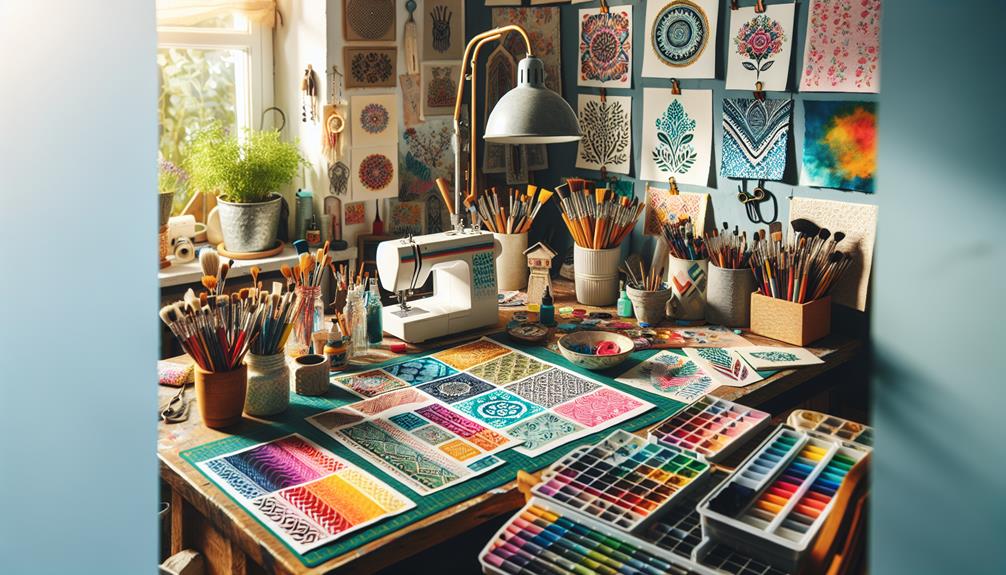
Creating custom fabric prints at home can be a rewarding project that allows you to bring your unique designs to life. Start by gathering necessary supplies like fabric paint, brushes, stencils, and wax paper. Choose the right fabric for your needs, whether it's breathable cotton or durable polyester. Preparing your workspace with good lighting and easy access to materials is essential. With your design theme in mind, sketch out ideas and consider digitizing your artwork. But how do you translate these preparations into actual prints? Let's explore the different techniques and steps you can take to achieve professional-quality results.
Key Takeaways
- Choose the right fabric considering factors like breathability, dye absorption, and colorfastness for optimal print results.
- Prepare a clear and organized workspace with essential materials like fabric paint, brushes, and stencils within reach.
- Select and digitize your design, creating mood boards and sketches to refine your ideas.
- Apply printing techniques like screen printing, heat transfer, and block printing based on fabric type and desired effect.
- Set prints using a heat press or iron and follow specific washing and storage instructions to maintain print quality.
Gather Your Supplies
To create custom fabric prints at home, you'll need to gather some essential supplies. Start with fabric paint, which is specifically formulated to adhere to fabric fibers, ensuring your DIY printing projects result in unique designs that endure.
You'll also need brushes or sponges for applying the paint, depending on the level of detail you want in your fabric patterns.
Next, acquire stencils or stamps to help you achieve precise and consistent designs. These tools are invaluable for translating your creative ideas into reality. If you're feeling adventurous and want to create truly unique designs, consider carving your own stamps from materials like linoleum or potatoes. This adds a personal touch that mass-produced stamps can't match.
Don't forget a palette or tray for mixing colors, giving you the freedom to experiment with shades and tones. A few sheets of wax paper can also come in handy to protect your workspace from spills.
Choose the Right Fabric
When creating custom fabric prints, choosing the right fabric is essential.
You need to assess whether cotton or polyester will best suit your project, as each has its own advantages.
Cotton offers breathability and easy dye absorption, while polyester provides durability and vibrant color retention.
Fabric Types Matter
Selecting the right fabric for your custom print is important because it directly impacts the quality and durability of your design. When choosing a fabric, consider its durability, as it will determine how well your print withstands wear and tear over time. Different printing techniques require specific fabric types to achieve the best results.
For instance, screen printing works well on heavier fabrics, while digital printing is more versatile and can be used on a variety of weights.
Colorfastness is another critical factor. You'll want a fabric that retains its color through multiple washes. Natural fibers like cotton are generally more colorfast than synthetic ones, but this can vary depending on the dye and printing method used. Always test a small swatch to make sure the colors remain vibrant.
Lastly, consider the fabric weight. Lighter fabrics are easier to work with for certain projects but may not hold up as well to frequent use. Heavier fabrics offer more durability but can be cumbersome to handle, especially for beginners.
Balancing these elements will help you select a fabric that not only supports your design but also guarantees its longevity.
Cotton Vs. Polyester
Choosing between cotton and polyester can make a notable difference in the quality and functionality of your custom fabric print. In your fabric comparison, you'll find that cotton is a natural fiber, known for its softness, breathability, and comfort. However, it tends to shrink and wrinkle more easily.
Polyester, a synthetic fiber, is durable, resistant to shrinking and wrinkling, but it may not be as breathable as cotton. Understanding these pros and cons will help you choose the right fabric for your project.
When it comes to dyeing methods, cotton and polyester also differ significantly. Cotton fibers absorb dye well, resulting in vibrant, long-lasting colors. Natural dyes and reactive dyes work best with cotton, offering a wide range of rich hues.
In contrast, polyester requires disperse dyes and high heat for the dyeing process, which can be more intricate and less environmentally friendly. However, the results are often bright and fade-resistant, making polyester a good choice for items that need to withstand frequent washing and wear.
Select Your Design
Start by choosing a design theme that inspires you and fits your project's purpose.
Sketch your ideas on paper to visualize your concepts clearly.
Choose Design Theme
When picking a design theme for your custom fabric print, consider what inspires you and aligns with the project's purpose. Begin by reflecting on your passions, hobbies, and the overall vibe you want to convey. Whether it's a nature-inspired theme or a bold geometric pattern, your design should be a true reflection of your vision.
Next, think about your color palette. Do you want a monochromatic scheme, or are you drawn to vibrant, contrasting hues? Your choice will set the tone for the entire design. Gather design inspiration from various sources such as magazines, online galleries, and even nature itself. This will help you pinpoint the styles and elements that resonate with you.
Creating a mood board is an excellent way to organize your thoughts and visualize your design. Collect images, color swatches, and textures that appeal to you. This collage will serve as a reference point, ensuring your design elements harmonize well together.
Pay close attention to the balance and flow of your design, ensuring each element contributes to the overall theme without overwhelming the fabric.
Sketch Your Ideas
Now that you have your design theme, it's time to bring your ideas to life with some preliminary sketches. Start by gathering your inspiration sources. These could be anything from nature, architecture, or even your favorite pieces of art. Allow these sources to fuel your creativity and guide your hand.
Think about the color palette you want to use. A well-chosen color palette can make your design pop and convey the mood you're aiming for. Consider how colors interact with each other and how they'll look on fabric. Sketch several variations, experimenting with different combinations until you find the perfect harmony.
Don't be afraid to iterate. Your first sketch is just a starting point. Refine your ideas by adding details, adjusting shapes, and playing with scale. Remember, your goal is to create a design that's both visually appealing and suitable for fabric printing.
Lastly, keep your end product in mind. Will your design work well as a repeat pattern, or is it better suited for a single large print? These considerations will help you craft a design that not only looks great but is also functional.
Digitize the Artwork
With your refined sketches in hand, it's time to digitize your artwork and select the final design. Start by scanning your sketches at a high resolution to guarantee all details are captured.
Open the scanned image in your preferred editing software, such as Adobe Photoshop or Illustrator. These programs offer robust tools for refining your design, adjusting lines, and confirming clean edges.
Next, focus on color selection. Use the color palette tools within the software to experiment with different hues and shades. This is your opportunity to bring your vision to life, so don't hesitate to explore various combinations until you find the perfect match.
Once your colors are set, consider your design placement. Think about how your pattern will repeat on the fabric. Most editing software allows you to create a seamless repeat, confirming that your design looks consistent across the entire fabric.
Preparing Your Workspace
A well-organized workspace guarantees a smooth and enjoyable fabric printing process. To set up your area efficiently, start by clearing a space spacious enough to accommodate your fabric and tools. Remove any unnecessary items to avoid clutter. A clean, open surface will help you focus and maintain precision.
Next, organize your supplies. Gather all essential materials like your fabric, printing inks, brushes, stencils, and any other tools you plan to use. Place them within arm's reach so you won't waste time searching for them mid-project. Use containers or drawers to keep smaller items sorted and easily accessible. This step ensures you can work effectively and maintain a steady workflow.
Lighting is vital for detailed work, so make sure your workspace is well-lit. Natural light is ideal, but if that's not possible, invest in a good-quality lamp. Proper lighting helps you see colors accurately and reduces eye strain.
Printing Techniques Overview
Exploring different printing techniques will empower you to create unique and personalized fabric designs. Each method offers distinct advantages, allowing you to experiment with various styles and effects. Understanding these techniques will help you make informed decisions about which approach best fits your project.
| Technique | Key Benefits |
|---|---|
| Screen Printing | Consistent, repeatable designs |
| Heat Transfer | Vivid, photo-quality prints |
| Stenciling | Simple, great for novices |
| Digital Printing | Unlimited color options |
Screen printing is ideal for creating consistent patterns, especially when working with multiple colors. By mastering color mixing techniques, you can achieve a wide range of hues and shades. Heat transfer printing is perfect for detailed designs and photographs, offering vibrant results.
Stenciling is straightforward and perfect for beginners, allowing for easy replication of designs without requiring complex equipment. Digital printing offers the most versatility regarding color options and design complexity, making it a favorite for intricate patterns.
Fabric texture considerations are essential. The texture impacts ink absorption and the final look of your design. For example, smooth fabrics like cotton work well with most techniques, while textured fabrics may require more specialized approaches. By understanding these techniques and considerations, you're well on your way to mastering custom fabric printing.
Block Printing Basics
Block printing, a traditional technique with roots in ancient cultures, offers a hands-on approach to creating unique fabric designs. To master this art, begin with the essential step of block carving. Choose your carving material – linoleum, rubber, or wood – and transfer your design onto it. Using carving tools, carefully cut away the negative space, leaving your design raised on the block.
Next, focus on ink selection and color mixing. Opt for fabric-specific inks to guarantee durability and vibrancy. Mix colors on a palette to achieve your desired shades, and test them on scrap fabric before committing to your final piece. This step is important for achieving the perfect hue and consistency.
Now, let's explore the stamping techniques. Evenly apply ink to your carved block using a brayer or sponge. Press the block firmly onto the fabric, making sure consistent pressure across the surface. Lift the block carefully to reveal your print. For intricate designs, consider using a registration system to align multiple prints accurately.
Screen Printing Steps
Now that you've got a handle on block printing, let's walk through the steps for screen printing your own custom fabric designs.
First, gather your materials: a screen, squeegee, fabric ink, stencil, and your chosen fabric. Ensure your workspace is tidy and well-lit.
Begin by securing the stencil to the bottom of the screen. This is essential for achieving sharp, precise designs. Place your fabric on a flat surface and position the screen over it.
Add a generous amount of fabric ink at the top of the screen. Holding the squeegee at a 45-degree angle, drag it firmly down the screen in one smooth motion. This technique guarantees even ink distribution.
Lift the screen carefully to reveal your print. If you're repeating the design, clean the screen to prevent ink buildup and start fresh.
For multi-colored designs, let each layer dry before applying the next color to avoid smudging.
Mastering these screen printing techniques takes practice, so don't get discouraged by initial imperfections. Experiment with different inks and fabrics to find what works best for your DIY fabric printing projects. With dedication, you'll create professional-quality prints right at home.
Heat Transfer Methods
Heat transfer methods offer a versatile and straightforward way to create custom fabric prints at home. To get started, you'll need transfer paper designed for fabric and a heat source, either an iron or a heat press. Begin by printing your design on the transfer paper, making sure to mirror the image if needed.
Design placement is essential. Position your fabric on a flat, heat-resistant surface and carefully place the transfer paper with the printed side down. Precise alignment guarantees your design looks professional.
If using an iron, set it to the highest temperature without steam. Apply firm, even pressure as you move the iron over the transfer paper. Pay attention to these ironing tips: press in small, overlapping sections and avoid shifting the paper to prevent smudging. Generally, it takes about 3-5 minutes to transfer the design, but always follow the specific instructions on your transfer paper.
For those seeking greater consistency and efficiency, a heat press is your best choice. Preheat the press to the recommended temperature, usually around 350°F. Place the fabric and transfer paper in the press, close it firmly, and apply pressure for the specified time. The result? A vibrant, custom print with professional quality right at home.
Setting and Caring for Prints
After successfully transferring your design, it's significant to properly set and care for your prints to maintain their longevity. Begin by using a heat press or an iron to firmly set the ink or dye. This step ensures that the colors bond well with the fabric fibers, making them more resistant to washing and wear. Always follow the manufacturer's guidelines for temperature and duration to avoid damaging the fabric.
When it comes to washing instructions, opt for a gentle cycle with cold water. Turn the fabric inside out to protect the print, and use a mild detergent. Avoid bleach and fabric softeners, as they can degrade the print quality. To dry, air drying is preferred, but if you must use a dryer, select a low heat setting.
Storing prints correctly is equally important. Fold the fabric neatly and place it in a cool, dry place away from direct sunlight. If you're storing multiple prints, use acid-free paper between layers to prevent colors from bleeding or sticking.
Frequently Asked Questions
How Do I Fix Mistakes on Fabric During Printing?
To fix mistakes on fabric during printing, you should first identify the error. Use fabric printing techniques like spot cleaning or overprinting. Effective fabric printing troubleshooting guarantees a flawless finish and helps you achieve mastery.
Can I Print on Dark-Colored Fabrics?
You can print on dark-colored fabrics by using specialized printing techniques like screen printing or heat transfer. Guarantee color fastness by using high-quality inks. Your fabric prints will pop like fireworks against a night sky!
What Type of Paint Is Best for Fabric Printing?
For the best results in fabric painting techniques, use fabric paint. It's specially formulated to bond with fibers. Pair it with fabric printing tools like stencils or stamps for precise, professional-looking designs. You'll master it quickly!
How Can I Ensure the Design Does Not Fade Over Time?
To maintain your design doesn't fade, prioritize fabric care by using heat-setting techniques. This enhances color fastness, print durability, and design longevity. Wash your fabric gently and avoid harsh detergents to uphold vibrant prints.
Are There Eco-Friendly Ink Options for Fabric Printing?
Imagine painting the future green! You can use sustainable options like water-based inks for your DIY techniques. In screen printing, these eco-friendly inks are perfect for vibrant designs without harming the environment.