
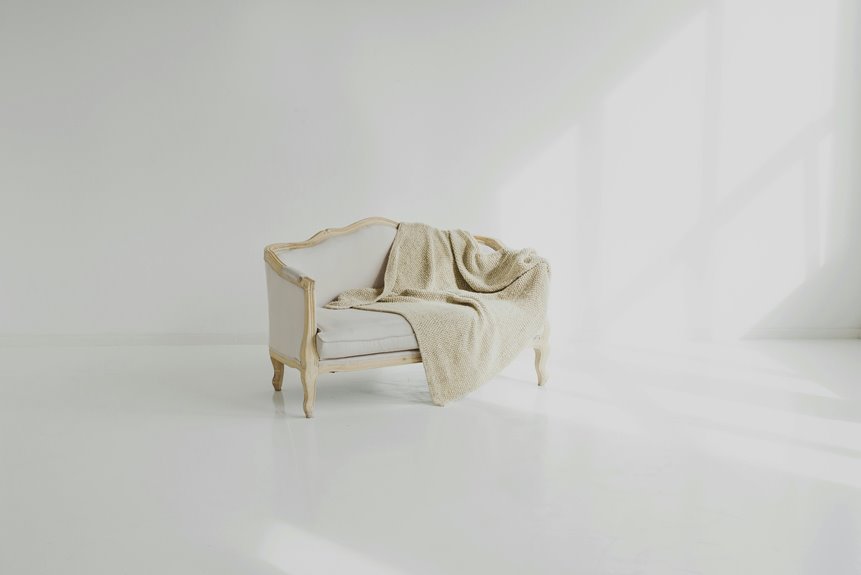
To clean white upholstery and keep it bright, start by vacuuming regularly with a soft brush attachment to remove dust. Blot spills immediately using gentle cleaners suitable for your fabric type—avoid scrubbing to prevent damage. For tough stains, apply mild detergent or specialized upholstery cleaner, then air dry. Protect your furniture with fabric spray and rotate cushions to distribute wear evenly. If you want to discover more about stain removal, deep cleaning, and protecting your white upholstery, keep exploring these tips.
Key Takeaways
- Vacuum white upholstery weekly with a soft brush attachment to remove dust and prevent dirt buildup.
- Treat stains immediately by blotting gently and using fabric-appropriate cleaners or natural solutions like baking soda.
- Use a gentle upholstery cleaner and a soft-bristled brush for deep cleaning, avoiding excess moisture to prevent damage.
- Apply fabric protector sprays regularly to repel stains and maintain brightness.
- Rotate cushions and avoid direct sunlight to prevent uneven wear and yellowing.
Understanding Different Types of White Upholstery Fabrics
Before you start cleaning, it’s important to recognize that white upholstery comes in various fabric types, each requiring a different care approach.
You might’ve cotton, linen, leather, microfiber, or synthetic blends. Cotton and linen are natural fibers and tend to absorb stains quickly, so you’ll want to act fast but gently.
Leather needs special cleaners and conditioners to avoid drying or cracking. Microfiber is durable and water-resistant but can attract oils, so you’ll need a specific method.
Synthetic blends vary widely, so check the manufacturer’s tag for cleaning codes. Understanding your fabric helps you pick the right technique and avoid damage.
Always test any cleaner on a hidden spot before treating the entire surface. This way, you keep your white upholstery looking fresh without the risk of ruining it.
Essential Supplies for Cleaning White Upholstery
Knowing your upholstery fabric guides you in choosing the right cleaning tools and products. To keep your white upholstery bright, gather essential supplies that suit your fabric type and cleaning needs.
Start with a gentle upholstery cleaner or a mild detergent, ensuring it’s safe for your material. Next, have a soft-bristled brush or microfiber cloth on hand to gently lift dirt without damaging fibers.
Finally, you’ll need a spray bottle filled with water or a vinegar-water solution for spot cleaning and revitalizing the fabric.
- Gentle upholstery cleaner or mild detergent
- Soft-bristled brush or microfiber cloth
- Spray bottle with water or vinegar-water mix
With these supplies ready, you’ll be prepared to tackle stains and brighten your white upholstery effectively.
Routine Maintenance Tips to Prevent Stains
Although white upholstery can brighten any space, it also shows dirt and stains more easily, so you’ll want to stay on top of routine maintenance.
Start by vacuuming your upholstery weekly to remove dust and debris before they settle deep into the fabric. Use a soft brush attachment to avoid damaging delicate fibers.
Rotate cushions regularly to guarantee even wear and prevent discoloration in high-use spots. Avoid eating or drinking on white furniture to reduce the risk of spills.
If you have pets, keep their nails trimmed and provide them with their own bedding to minimize dirt transfer.
Finally, consider applying a fabric protector designed for upholstery; it creates a barrier that helps repel stains, making future cleaning easier and preserving your upholstery’s bright appearance.
How to Remove Common Stains From White Fabric
When you spot red wine, ink, or grease stains on your white fabric, acting quickly is key to preventing permanent damage.
You’ll need different techniques to tackle each stain effectively without harming your upholstery.
Let’s go over simple steps that help you restore your fabric’s bright, clean look.
Removing Red Wine Stains
How do you tackle a stubborn red wine stain on your white upholstery? Act quickly to prevent the stain from setting.
First, blot the spill gently with a clean cloth to soak up excess wine—avoid rubbing, which spreads the stain.
Next, sprinkle baking soda or salt over the damp area; these absorb the wine and lighten the mark. After letting it sit for 10-15 minutes, vacuum or brush away the powder.
Finally, apply a mixture of mild dish soap and cold water to the stain, gently dabbing with a sponge. Rinse with a damp cloth and let it air dry.
- A deep red splash against bright white fabric
- Soft cloths blotting carefully without smearing
- White powder covering the wine spot, lifting color away
Tackling Ink Marks
Since ink can quickly soak into white upholstery, you should act fast to prevent permanent stains.
First, blot the ink spot gently with a clean cloth to absorb excess ink—don’t rub, or you’ll spread it.
Next, apply a small amount of rubbing alcohol or an ink stain remover to a cotton swab and dab the stain carefully. You’ll see the ink begin to lift.
Continue dabbing, switching to a fresh area of the cloth frequently. Afterward, rinse the spot with a damp cloth to remove any residue.
Finally, blot dry with a clean towel and let the upholstery air dry completely.
If the stain persists, repeat these steps or consider consulting a professional cleaner to avoid damaging your fabric.
Eliminating Grease Spots
Although grease spots can be stubborn, you can usually remove them quickly if you treat the stain properly.
Start by blotting the spot gently with a paper towel to absorb excess oil without spreading it. Next, sprinkle baking soda or cornstarch on the stain and let it sit for 15 minutes to draw out the grease.
Once absorbed, vacuum or brush off the powder carefully. Then, apply a small amount of dish soap mixed with warm water directly to the stain and gently blot with a clean cloth until the grease lifts.
Rinse the area with a damp cloth and let it air dry.
Visualize this process:
- Blotting with a white paper towel, watching it darken as it soaks oil.
- A layer of fine white powder covering the grease spot.
- A gentle circular motion lifting the stain with soapy water.
Deep Cleaning Techniques for White Upholstery
When you want to restore your white upholstery’s brightness, deep cleaning techniques can make a significant difference.
Start by vacuuming thoroughly to remove loose dirt and dust. Next, use a fabric-safe upholstery cleaner designed specifically for white materials. Apply the cleaner evenly and gently scrub with a soft-bristled brush to lift embedded grime.
Avoid soaking the fabric; use minimal moisture to prevent damage. After scrubbing, blot the area with a clean, damp cloth to remove residue.
For stubborn stains, consider renting a steam cleaner with upholstery attachments, which can penetrate fibers without harsh chemicals. Always test any method on a hidden spot first to guarantee fabric safety.
Following these steps helps maintain your white upholstery’s fresh, bright appearance for longer.
Using Homemade Solutions Safely on White Fabrics
When using homemade solutions on white fabrics, you’ll want to choose safe ingredients like mild detergents or vinegar.
Always spot test a small, hidden area first to avoid damage.
Keep in mind that different fabrics may require extra precautions to protect their fibers.
Safe Ingredients Overview
Since white upholstery can be delicate, you need to choose homemade cleaning ingredients that won’t cause discoloration or damage.
Opt for gentle, natural substances that effectively lift stains without harsh chemicals. When preparing your solution, use ingredients you trust will maintain the fabric’s brightness and texture.
Here are three safe options to take into account:
- White vinegar: Cuts through grime and neutralizes odors without fading colors.
- Baking soda: Acts as a mild abrasive and deodorizer, perfect for freshening fabric.
- Mild dish soap: Gently breaks down dirt while preserving fabric integrity.
Spot Testing Importance
Although homemade cleaning solutions are gentle, you should always spot test them on a hidden area of your white upholstery first.
This simple step helps you avoid unwanted discoloration or fabric damage before applying the solution more broadly. Dab a small amount of the mixture onto an inconspicuous spot and wait about 10 to 15 minutes.
Check for any changes in color, texture, or fabric integrity. If you notice fading, staining, or weakening, don’t use that solution on the visible parts.
Spot testing gives you peace of mind and guarantees your upholstery stays bright and intact.
Always remember, even natural ingredients can react differently depending on the fabric, so testing protects your investment and keeps your furniture looking fresh.
Fabric-Specific Precautions
Because different fabrics react uniquely to cleaning agents, you’ll want to tailor your homemade solutions carefully to each type of white upholstery.
For delicate silks or linens, dilute your mixture to avoid weakening fibers. Cotton and polyester blends tolerate stronger solutions but still require gentle blotting rather than scrubbing. Always test in an inconspicuous spot first to prevent damage.
Here’s how to adjust your approach based on fabric:
- Silk: Use a mild soap diluted with water, avoiding vinegar or lemon juice.
- Cotton: Mix baking soda and water for a gentle but effective cleaner.
- Polyester: Combine equal parts dish soap and water for safe stain removal.
Protecting White Upholstery From Future Damage
To keep your white upholstery looking fresh, you’ll need to take proactive steps that minimize wear and prevent stains.
Start by applying a fabric protector spray designed for your upholstery type; this creates a barrier against spills and dirt. Regularly vacuum your furniture to remove dust and debris that cause fabric breakdown over time.
Apply fabric protector spray and vacuum regularly to shield your upholstery from spills and dust buildup.
Avoid placing your white pieces in direct sunlight to prevent fading and yellowing. Rotate cushions frequently to distribute wear evenly, and encourage family members and guests to avoid eating or drinking on the upholstery.
Finally, keep pets off your white furniture to prevent fur buildup and accidental stains. These simple habits will help preserve your upholstery’s bright appearance and extend its life.
When to Call a Professional Cleaner for White Upholstery
Taking care of your white upholstery daily helps prevent many common issues, but some stains and wear require expert attention.
You should call a professional cleaner when you face stubborn stains that won’t budge, such as red wine or ink spills. Additionally, if your upholstery shows signs of extensive dirt buildup or discoloration that home methods can’t fix, it’s time to get expert help.
Finally, when your furniture fabric is delicate or antique, professionals have the right tools to clean without damaging it.
Here are three clear signs you need a pro:
- Persistent, deep-set stains despite your efforts
- Faded or yellowed fabric that looks dull
- Upholstery with fragile or vintage materials needing gentle care
Don’t hesitate to protect your investment with professional cleaning.
Frequently Asked Questions
Can Sunlight Damage White Upholstery Fabric?
Yes, sunlight can damage white upholstery fabric by causing fading and weakening fibers. You should avoid prolonged exposure to direct sunlight to keep your upholstery looking bright and lasting longer. Use curtains or shades for protection.
How Often Should White Upholstery Be Professionally Cleaned?
You might think frequent professional cleaning is necessary, but generally, you should get white upholstery professionally cleaned every 12 to 18 months. This keeps it bright without overdoing it or risking fabric damage.
Are There Specific Vacuum Attachments for White Fabric?
Yes, you’ll want to use soft brush or upholstery vacuum attachments to avoid damaging delicate white fabric. These attachments gently remove dirt and dust without grinding particles into the fibers, helping keep your upholstery looking fresh and bright.
Can Pets Affect the Brightness of White Upholstery?
Wonder if your pets can dull your white upholstery? Absolutely—they shed dirt, oils, and stains that reduce brightness. You’ll need regular cleaning and protective measures to keep your furniture looking fresh despite your furry friends.
What Is the Best Storage Method for White Upholstery Cushions?
You should store white upholstery cushions in a cool, dry place away from direct sunlight to prevent fading. Use breathable fabric covers to protect them from dust and moisture, ensuring they stay fresh and bright longer.