
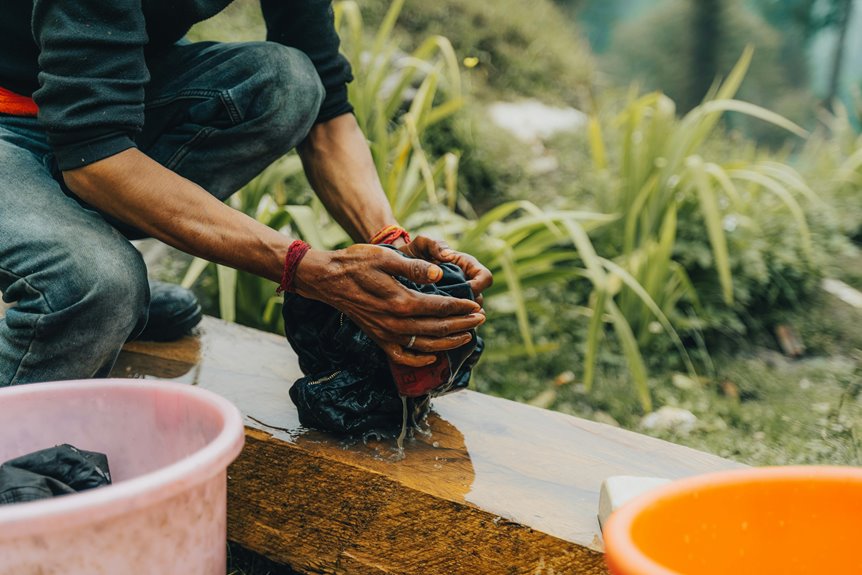
To clean 100% polypropylene fabric, use a mild detergent mixed with lukewarm water and avoid hot water or bleach to protect fibers. You can spot clean stains by gently blotting with a soft cloth, or machine wash on a gentle cycle using cold or warm water. Always air dry the fabric flat or hung, steering clear of dryers or direct sunlight to prevent damage. Follow these steps, and you’ll keep your fabric fresh and long-lasting while discovering more ways to care for it properly.
Key Takeaways
- Blot stains gently using a clean cloth and mild detergent mixed with warm water, then rinse and air dry completely.
- Machine wash polypropylene fabric inside out on a gentle cycle with cold or warm water, avoiding bleach and fabric softeners.
- Hand wash with lukewarm water and mild detergent, gently swishing without vigorous scrubbing, then rinse thoroughly and press dry with towels.
- Air dry flat or hang in a shaded area, avoiding wringing, tumble dryers, and direct sunlight to prevent fiber damage.
- Store clean fabric in a cool, dry place using breathable bags, avoiding tight folds and regular inspection for damage or wear.
Understanding the Properties of Polypropylene Fabric
Polypropylene fabric stands out for its durability and resistance to moisture, making it a popular choice in various applications.
When you work with polypropylene, you’ll notice it’s lightweight yet strong, resisting stains and mold effectively. This fabric doesn’t absorb water, so spills tend to bead up on the surface, which simplifies cleaning.
However, it’s sensitive to high heat, so you should avoid hot water or dryers when caring for it. Its synthetic nature means it resists many chemicals, but harsh solvents might damage the fibers.
Avoid high heat and harsh solvents to keep polypropylene fabric in good condition.
Understanding these properties helps you choose the right cleaning methods that preserve the fabric’s integrity while removing dirt and stains efficiently. Keep these traits in mind as you maintain your polypropylene items.
Preparing Your Cleaning Supplies
Before you start cleaning, gather the essential tools like a soft brush, clean cloths, and a spray bottle.
Make sure to pick detergents that are gentle and safe for polypropylene fabric to avoid damage.
Having the right supplies ready will make the cleaning process smoother and more effective.
Essential Cleaning Tools
Gathering the right cleaning tools makes tackling polypropylene fabric much easier.
You’ll want a soft-bristle brush to gently remove dirt without damaging the fibers. A microfiber cloth works well for blotting stains and wiping surfaces. Have a spray bottle handy if you plan to apply water or cleaning solutions evenly.
A vacuum cleaner with an upholstery attachment can also help remove loose debris before deep cleaning. Don’t forget a bucket for mixing your cleaning solution and warm water.
Gloves are essential to protect your hands during cleaning, especially if you’re sensitive to cleaning agents.
These tools will help you clean efficiently while preserving the fabric’s integrity, making your polypropylene items look fresh and well-maintained.
Choosing Safe Detergents
How do you pick a detergent that cleans effectively without harming your polypropylene fabric? Start by choosing a mild, liquid detergent free from bleach, fabric softeners, and harsh chemicals.
These additives can degrade polypropylene fibers or leave residues that attract dirt. Look for detergents labeled safe for synthetic fabrics or those marked as gentle or hypoallergenic.
Avoid powder detergents, as they mightn’t dissolve completely and can cause buildup. If you want an eco-friendly option, opt for biodegradable detergents that clean without harsh ingredients.
Always test the detergent on a small, hidden area first to verify it doesn’t cause discoloration or damage.
Spot Cleaning Small Stains on Polypropylene
Anyone dealing with a small stain on polypropylene fabric can tackle it quickly to prevent permanent marks.
Start by blotting the stain gently with a clean cloth or paper towel to absorb excess liquid—avoid rubbing, which can spread the stain.
Mix a mild detergent with warm water, then dip a soft cloth or sponge into the solution. Gently dab the stained area, working from the outside inward to contain the stain.
Rinse the spot with a cloth dampened in clean water to remove any detergent residue. Finally, blot dry with a dry towel and let the fabric air dry completely.
If the stain persists, repeat the process. Avoid harsh chemicals or bleach, as they can damage polypropylene fibers. Acting swiftly is key to maintaining your fabric’s appearance.
Machine Washing Polypropylene Fabric
You can safely machine wash polypropylene fabric by following a few simple steps to preserve its quality.
First, turn the item inside out to protect the surface. Use cold or warm water on a gentle cycle to avoid damaging the fibers.
Skip bleach and fabric softeners—they can break down polypropylene and reduce its durability. Choose a mild detergent designed for synthetic fabrics.
Avoid overloading the machine, so the fabric moves freely and gets cleaned evenly.
After washing, air dry the fabric by laying it flat or hanging it up; polypropylene dries quickly and heat from a dryer can cause shrinking or warping.
Hand Washing Techniques for Polypropylene
When hand washing polypropylene fabric, you’ll want to pick a mild detergent that won’t damage the fibers.
Use gentle agitation to avoid stretching or stressing the material.
This careful approach helps keep your fabric looking its best.
Choosing Mild Detergents
Although polypropylene fabric is durable, selecting a mild detergent is vital to prevent damage during hand washing. Harsh chemicals or strong detergents can break down the fibers, reducing the fabric’s lifespan and causing color fading.
Choose detergents labeled as gentle or formulated for delicate fabrics. Avoid bleach, fabric softeners, and anything with strong enzymes. These ingredients can degrade polypropylene’s structure.
You can also opt for a small amount of liquid detergent instead of powders, as they dissolve more easily and rinse out thoroughly. If you want, test the detergent on a small, hidden area first to check for any adverse reactions.
Using a mild detergent guarantees your polypropylene items stay clean without compromising their strength or appearance.
Gentle Agitation Methods
Selecting a mild detergent sets the foundation for preserving polypropylene fabric, but how you handle the washing process matters just as much.
When hand washing, use gentle agitation to avoid damaging the fibers. Fill a basin with lukewarm water and add your mild detergent, then submerge the fabric. Instead of scrubbing vigorously, gently swish the fabric back and forth for a few minutes. This motion loosens dirt without stressing the material.
Avoid wringing or twisting, which can deform the fabric’s shape. After washing, rinse thoroughly with cool water, repeating gentle motions to remove soap residue.
Finally, press the fabric between towels to absorb excess water. By treating polypropylene with this careful hand washing technique, you’ll extend its lifespan and maintain its appearance.
Removing Tough Stains Safely
Since polypropylene fabric resists many common cleaning agents, you’ll need to choose stain removers carefully to avoid damaging the material.
Start by blotting the stain gently with a clean cloth to lift excess residue without spreading it. Use a mild detergent mixed with lukewarm water to treat the stain, applying it with a soft brush or sponge.
Avoid harsh chemicals like bleach or solvents, as they can weaken the fibers. For tougher stains, try a diluted solution of white vinegar or rubbing alcohol, testing it on a hidden area first to verify colorfastness.
Always work from the stain’s edges inward to prevent it from spreading. After treatment, rinse the spot thoroughly with water to remove any cleaning residue.
Drying and Maintaining Polypropylene Fabric
Once you’ve treated and rinsed your polypropylene fabric, drying it properly helps preserve its durability and appearance.
Start by gently squeezing out excess water without wringing, which can distort the fibers. Lay your fabric flat on a clean, dry towel and roll it up to absorb more moisture.
Gently squeeze out excess water; roll fabric in a dry towel to absorb moisture without twisting fibers.
Then, air-dry your fabric in a well-ventilated area away from direct sunlight or heat sources, as excessive heat can cause warping or fading. If you need to speed up drying, use a fan but avoid a dryer’s high heat setting.
To maintain polypropylene’s shape and texture, store it folded or hung in a cool, dry place. Regularly brushing off dirt and avoiding prolonged exposure to harsh elements will keep your fabric looking fresh and lasting longer.
Avoiding Damage During Cleaning
Though polypropylene fabric is durable, you need to handle it carefully during cleaning to avoid damage.
Avoid using harsh chemicals or bleach, as they can weaken the fibers and cause discoloration. Always test any cleaning solution on a small, hidden area first.
Use gentle motions when scrubbing; aggressive scrubbing can cause pilling or fraying. Avoid high heat sources like hot water or direct sunlight during washing and drying, as excessive heat can warp or shrink the fabric.
Don’t use abrasive brushes or rough sponges that might scratch the surface. Finally, steer clear of dry cleaning unless the care label explicitly allows it, since some solvents can harm polypropylene.
Tips for Long-Term Care and Storage
When you want your polypropylene fabric to last, proper care and storage play an essential role.
Always clean the fabric thoroughly before storing it to prevent stains from setting and odors from developing. Make sure the fabric is completely dry to avoid mold and mildew growth.
Store it in a cool, dry place away from direct sunlight, as UV rays can weaken the fibers over time. Use breathable storage bags or containers to allow air circulation and prevent moisture buildup.
Avoid folding the fabric too tightly to reduce creases and stress on the fibers. Regularly inspect stored items to catch any issues early.
Frequently Asked Questions
Can Polypropylene Fabric Be Recycled After Cleaning?
Yes, you can recycle polypropylene fabric after cleaning, but you’ll need to check local recycling guidelines since not all centers accept textiles. Properly cleaned fabric increases recycling chances, so make sure it’s free from dirt and contaminants first.
Is Polypropylene Fabric Hypoallergenic?
Like a refreshing change, polypropylene fabric is hypoallergenic, so you won’t have to worry about irritation or allergies. It’s a great choice if you’ve got sensitive skin or want to avoid common allergens.
How Does Polypropylene Compare to Polyester in Durability?
You’ll find polypropylene is generally more durable than polyester because it resists stains, moisture, and chemicals better. It’s less likely to fade or wear out quickly, making it a sturdy choice for long-term use.
Are There Eco-Friendly Detergents Safe for Polypropylene?
Think of eco-friendly detergents as gentle rain nourishing your garden—they’re safe for polypropylene, preserving its strength without harsh chemicals. You can trust plant-based, biodegradable formulas to keep your fabric clean and the planet happy.
Can Polypropylene Fabric Be Dyed After Cleaning?
You can’t easily dye polypropylene fabric after cleaning because it’s hydrophobic and resists most dyes. You’ll need special disperse dyes and high heat, but results vary. Consider professional dyeing services for best outcomes.