
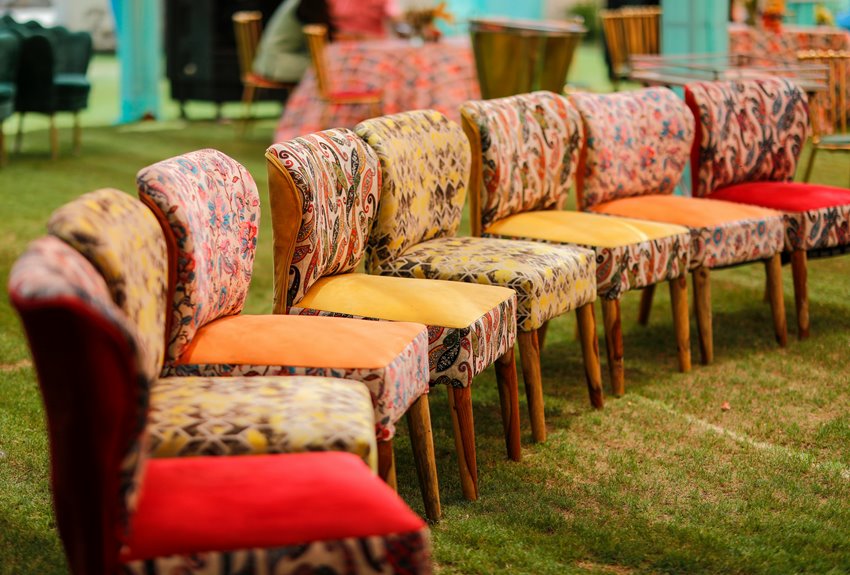
To clean your lawn furniture fabric, first brush off loose dirt and check the fabric type for proper care. Mix mild detergent with warm water, then scrub gently with a soft brush or sponge, focusing on stains. Rinse thoroughly to remove soap residue, and air dry in sunlight to prevent mildew. Treat fresh stains quickly by blotting before cleaning. Following these basic steps will keep your fabric fresh and durable; learn more about protecting and maintaining it for longer use.
Key Takeaways
- Identify the fabric type (polyester, acrylic, olefin, canvas) to choose the appropriate cleaning method.
- Remove loose dirt and debris before applying a mild detergent and warm water solution.
- Gently scrub stains with a soft-bristle brush or sponge, then rinse thoroughly with clean water.
- Air dry the fabric in sunlight to prevent mildew and maintain freshness.
- Store fabric in a dry place and apply fabric protector regularly to extend its lifespan.
Identifying Different Types of Lawn Furniture Fabrics
Before you clean your lawn furniture fabric, you need to know what type it is. Different fabrics require different care to avoid damage.
Knowing your lawn furniture fabric type is essential to choosing the right cleaning method and preventing damage.
Common types include polyester, acrylic, olefin, and canvas.
Polyester is smooth and water-resistant, often found on sling chairs. Acrylic feels soft and resists fading, commonly used in high-end cushions. Olefin is durable and quick-drying, suitable for heavy-use furniture. Canvas is natural and breathable but can absorb moisture, so it needs gentle cleaning.
Check the manufacturer’s tag or test a small hidden area if you’re unsure. Identifying your fabric properly guarantees you pick the right cleaning method, protect the material, and extend your furniture’s life.
Don’t skip this step—it makes all the difference in successful cleaning.
Essential Cleaning Supplies for Lawn Furniture
Knowing your lawn furniture fabric helps you choose the right cleaning supplies that won’t harm the material.
Having the correct tools on hand makes cleaning easier and more effective. Here are four essential items you should gather before you start:
- Mild detergent or fabric cleaner – Choose a gentle cleaner suitable for outdoor fabrics to avoid damage.
- Soft-bristle brush or sponge – These help remove dirt without scratching the fabric.
- Bucket of warm water – Necessary for diluting the cleaner and rinsing.
- Clean microfiber cloths or towels – Use these to blot excess moisture and dry the fabric.
With these supplies ready, you’ll be set to clean your lawn furniture fabric safely and efficiently.
Preparing the Fabric for Cleaning
Before you start cleaning, make sure to remove any loose debris like leaves or dirt from the fabric.
Next, check the care tags to understand the best cleaning methods and avoid damage.
Taking these steps will help you get the fabric ready for a thorough clean.
Remove Loose Debris
Start by removing all loose debris from your lawn furniture fabric to make the cleaning process more effective. This simple step prevents dirt from embedding further into the fabric during washing.
Here’s how to get started:
- Use a soft brush or broom to gently sweep off leaves, dust, and dirt.
- Shake cushions and fabric parts outside to dislodge any hidden debris.
- Vacuum the fabric using a brush attachment for thorough removal, especially in crevices.
- Inspect the fabric for any stubborn particles and remove them by hand.
Check Fabric Care Tags
After clearing away loose debris, the next step is to check the fabric care tags on your lawn furniture.
These tags give you essential information about the material and recommended cleaning methods. You’ll find symbols and instructions that tell you whether the fabric is machine washable, requires hand washing, or needs special cleaners. Ignoring these tags can lead to damage or color fading.
If the tag says “dry clean only,” avoid water-based cleaning. For fabrics marked with specific solvents, use only approved cleaners. When in doubt, test a small, hidden area first to guarantee no adverse reaction.
Removing Loose Dirt and Debris
Before you start washing, you’ll want to get rid of any loose dirt and debris on the fabric.
Use a soft brush to gently sweep away particles without damaging the material.
If you have access to compressed air, it can quickly blow out dust from hard-to-reach spots.
Gentle Brushing Techniques
Although it may seem simple, gently brushing your lawn furniture fabric is essential for removing loose dirt and debris without damaging the material. To do this effectively, follow these steps:
- Choose a soft-bristled brush to protect the fabric’s fibers.
- Brush in one direction to avoid pushing dirt deeper into the weave.
- Start at the top and work your way down to catch all debris.
- Use light, even strokes to prevent fraying or snagging.
Brushing regularly keeps your furniture looking fresh and extends its lifespan.
Avoid scrubbing hard or using stiff brushes, which can wear out the fabric quickly.
Using Compressed Air
When you want to quickly remove loose dirt and debris from your lawn furniture fabric, using compressed air can be a highly effective method.
Simply direct the nozzle at the fabric surface and let the powerful air blast dislodge dust, pollen, and small particles trapped in the weave. Compressed air reaches areas that brushing might miss, like seams and crevices, without causing any damage.
Make sure to hold the can or air compressor at a safe distance—about 6 to 12 inches—to avoid forcing dirt deeper into the fabric. This technique works best as a preliminary step before deeper cleaning, helping you maintain your furniture’s appearance with minimal effort.
Just be cautious not to use compressed air on delicate or fragile materials.
Cleaning Techniques for Synthetic Fabrics
Since synthetic fabrics are designed to resist stains and moisture, cleaning your lawn furniture’s fabric becomes a straightforward task.
You can quickly refresh the look without much hassle. Here’s how to clean synthetic fabric effectively:
- Brush off loose dirt: Use a soft brush to remove dust and debris before washing.
- Mix mild soap and water: Combine a gentle detergent with warm water for a safe cleaning solution.
- Scrub gently: Use a sponge or soft cloth to scrub the fabric, focusing on stained areas.
- Rinse thoroughly: Hose down the fabric or wipe it with a clean, damp cloth to remove soap residue.
Dry the fabric in the sun to prevent mildew and keep your furniture looking great.
Cleaning Techniques for Natural Fabrics
Natural fabrics require more careful handling than synthetic ones to avoid damage and maintain their appearance.
When cleaning, start by gently brushing off loose dirt with a soft-bristle brush. Use a mild detergent mixed with lukewarm water to create a gentle cleaning solution. Dip a clean cloth or sponge into the solution, wring it out well, and softly wipe the fabric.
Avoid soaking natural fibers, as excessive moisture can weaken them or cause shrinkage. After cleaning, rinse the area with a cloth dampened in plain water to remove any soap residue.
Let the fabric air dry completely in a shaded, well-ventilated space to prevent fading. By following these steps, you’ll keep your natural fabric lawn furniture looking fresh without risking damage.
Treating Stains and Spots Effectively
Although stains can be frustrating, you can tackle them effectively with the right approach. Start by acting quickly to prevent stains from setting in.
Here’s how to treat spots on your lawn furniture fabric:
- Blot the stain gently with a clean cloth to absorb excess moisture—don’t rub, as that spreads the stain.
- Mix a mild detergent with warm water, then apply it to the stained area using a soft brush or sponge.
- Let the solution sit for 10-15 minutes to break down the stain.
- Rinse thoroughly with clean water to remove soap residue, then blot dry.
Drying and Protecting Lawn Furniture Fabric
After treating stains, make sure your lawn furniture fabric dries completely to prevent mildew and odors. Hang cushions or fabric pieces in a well-ventilated area or under direct sunlight. Avoid folding damp fabric, as trapped moisture fosters mold growth. Once dry, apply a fabric protector spray to repel water and stains, extending your furniture’s lifespan.
| Step | Method | Benefit |
|---|---|---|
| Drying | Air dry in sunlight | Prevents mildew and odors |
| Storage | Store in dry place | Keeps fabric mold-free |
| Protection | Use fabric protector | Repels stains and water |
Following these steps keeps your lawn furniture fabric fresh and ready for every outdoor gathering.
Tips for Regular Maintenance and Longevity
To keep your lawn furniture fabric looking great year-round, you should establish a regular maintenance routine. This helps prevent stains, mold, and fabric wear.
Here are four essential tips to extend your fabric’s life:
- Clean spills immediately to avoid permanent stains.
- Brush off dirt and debris weekly to prevent buildup.
- Store cushions and fabric items indoors or cover them during harsh weather.
- Apply a fabric protector spray once or twice a season to repel water and stains.
Frequently Asked Questions
How Often Should I Clean My Lawn Furniture Fabric?
You should clean your lawn furniture fabric every few weeks during the active season to prevent buildup. If it’s exposed to heavy dirt or pollen, give it a quick wash more often to keep it fresh and durable.
Can I Use a Pressure Washer on Lawn Furniture Fabric?
You can use a pressure washer on lawn furniture fabric, but be cautious. Use a low-pressure setting to avoid damaging the material. Test a small area first, and keep the nozzle at least a foot away to prevent tearing.
Are There Eco-Friendly Cleaning Products for Lawn Furniture Fabric?
You want safe, green, and effective cleaners; you want products that protect your fabric and the planet. You’ll find eco-friendly options like vinegar, baking soda, and plant-based sprays that clean gently and responsibly.
How Do I Store Lawn Furniture Fabric During Winter?
You should remove and clean the fabric before storing it. Let it dry completely, then fold it neatly. Store it in a cool, dry place inside a breathable bag to prevent mold and damage during winter.
Can Cleaning Damage the Color or Texture of the Fabric?
Think of your fabric as a delicate flower—clean it gently, or you risk fading colors and rough textures. If you don’t, harsh scrubbing or strong chemicals can damage it, so always use mild cleaners and soft brushes.